

Sports
Pakistan names preliminary U-17 squad for SAFF Championship | The Express Tribune

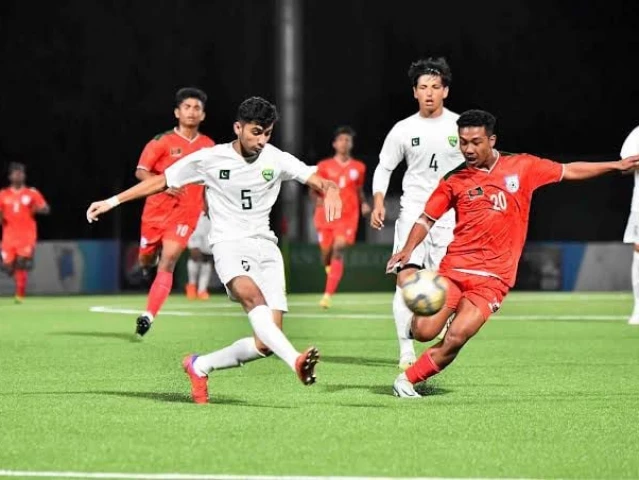
The Pakistan Football Federation (PFF) has unveiled a 35-member preliminary squad for the upcoming South Asian Football Federation (SAFF) U-17 Championship.
The announcement marks an important step in Pakistan’s preparations for the regional tournament, as the young footballers gear up to represent the country on the international stage.
The shortlisted players include promising talents from across the country, with names such as Khalil Jibran, Adil Ali Khan, Waheed Aslam, Nadeem Hussain, Muhammad Alam, Hamza Yasir, Hasnain Wali Raza, Shahzaib Nawaz, and Muhammad Essa making the initial cut.
The squad features a mix of defenders, midfielders, and forwards, all vying for a place in the final team that will compete in the SAFF U-17 Championship. Coaches and selectors will now assess the players in training camps before finalizing the lineup.
The PFF has emphasized that this selection reflects its continued commitment to nurturing grassroots football and providing opportunities for young athletes to shine at the international level.
The final squad announcement is expected ahead of the team’s departure for the tournament.




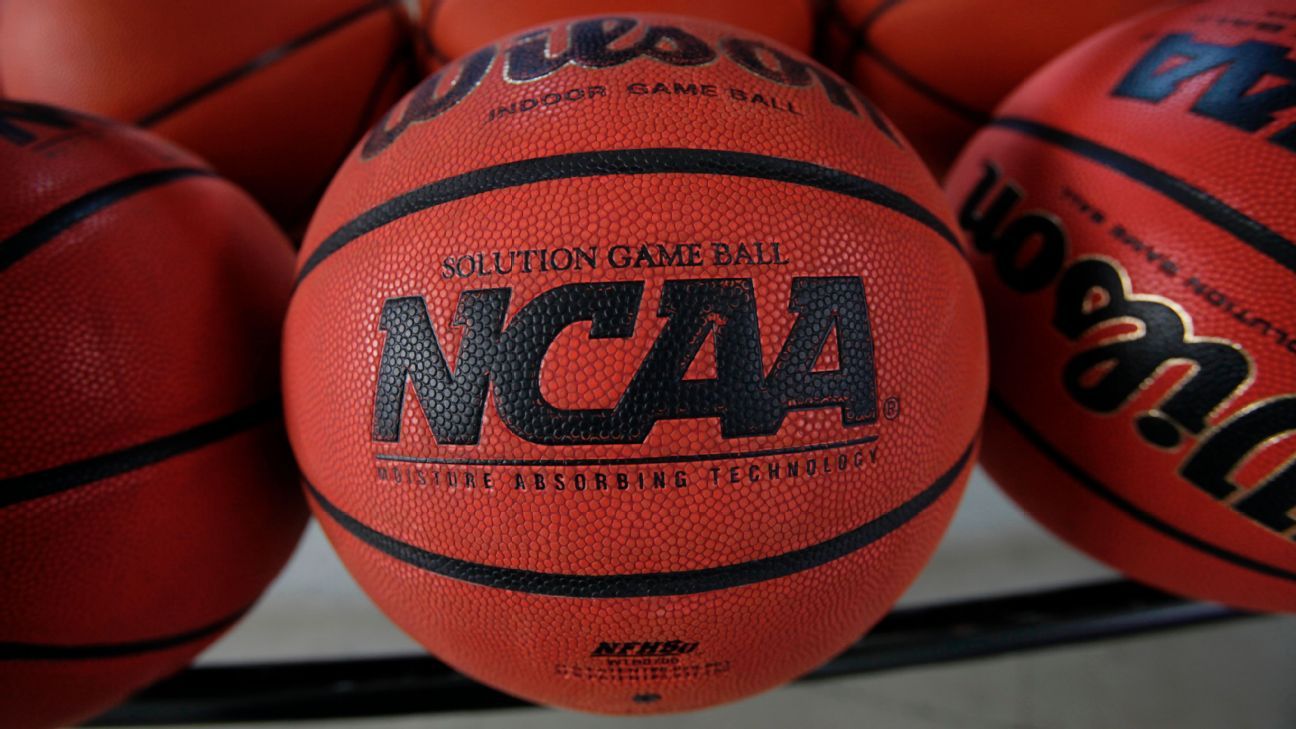
Notre Dame and Villanova will play a men’s and women’s basketball doubleheader Nov. 1 in Rome to open the season.
The universities are promoting the matchups as a chance to celebrate their shared mission and heritage as Catholic schools. The jointly hosted event will include “special programming that brings together academics, athletics and spirituality,” Villanova said in its announcement.
“From academic engagement and cultural immersion to shared worship and athletics, this journey offers a profound opportunity to grow in mind, body and spirit,” said the Rev. Peter Donohue, Villanova’s school president.
The schools said the election of Pope Leo XIV, an Augustinian friar and Villanova alumnus, was the inspiration for scheduling the game.
Those attending the Italian excursion will have the opportunity for a shared Mass in St. Peter’s Basilica, a planned papal audience with Pope Leo XIV before the games and private tours of the Vatican Museums.
College teams playing overseas is expected to become more common amid a growing influx of international talent. Twenty-three of the 62 players on Final Four rosters listed their hometown as being in another country, and NCAA data shows the number of international players on Division I rosters (888) has more than doubled since 2010.
Games in Croatia and Serbia are in the works and planned for November as part of a new College Basketball International Series launched by Intersport and Rochelle Management Group.

The 2026 NBA playoffs began Saturday, and our NBA insiders have you covered for every game in the march to the Finals.
The Denver Nuggets and Minnesota Timberwolves kicked things off for the Western Conference on Saturday. Jamal Murray, who was a first-time All-Star this season, led all players with 30 points to help the Nuggets take a 1-0 lead. Nikola Jokic added 25 points despite a slow first half. Anthony Edwards kept the Wolves in the game with 22 points, but it wasn’t enough.
The Los Angeles Lakers beat the Houston Rockets 107-98 in the day’s final game. The Lakers have had to turn to LeBron James at the end of the regular season after losing Luka Doncic and Austin Reaves indefinitely to injuries, but the Rockets were also without a star. Kevin Durant missed Game 1 because of a knee contusion, and his availability for Game 2 is uncertain.
On Sunday, the No. 1-seeded Oklahoma City Thunder blew out the No. 8-seeded Phoenix Suns 119-84 despite an off-game from Shai Gilgeous-Alexander, who scored 25 points but shot just 5 for 18 in 29 minutes. The San Antonio Spurs also opened the playoffs with an impressive performance in their 111-98 win over the Portland Trail Blazers.
More coverage:
East takeaways | Schedules and results | Offseason guides


Game 1: Spurs 111, Trail Blazers 98
Biggest takeaway from Game 1: San Antonio showed up at Frost Bank Center outfitted for the occasion, eschewing its usual casual dress code and opting for all-black suits. The Spurs took a business approach into their Game 1 demolition, led by Victor Wembanyama, who enhanced his jaw-dropping physical skill set by deploying it in an intelligent and efficient manner.
Wembanyama, who was making his postseason debut, poured in 21 points in the first half, the highest scoring output in a player’s first career playoff opening half in the play-by-play era, according to ESPN Research. Before halftime, he scored or assisted on 24 points and held Portland’s shooters scoreless (0-of-6) as the contesting defender, helping San Antonio build a 10-point lead at the break that it would never relinquish.
Wembanyama became the third player in NBA history to have at least 30 points and hit five 3-pointers in his postseason debut, joining Kyrie Irving (2015) and Jordan Poole (2022), according to ESPN Research. — Michael C. Wright
Game 2: Trail Blazers at Spurs (8 p.m. ET, NBC/Peacock)
What to watch in Game 2: Portland is the underdog, but its chances to make a mark in this series would increase if the Trail Blazers can supplement Deni Avdija‘s offensive production. Through the first three quarters, Portland had just two scorers in double figures other than Avdija (Scoot Henderson and Robert Williams III), while the Spurs had five players with at least 10 points.
Toumani Camara, Donovan Clingan and Jrue Holiday shot a combined 4-of-23 over the first three quarters. So, with San Antonio loading up to slow down Avdija, his teammates should be able to capitalize if they can knock down some of their solid looks.
San Antonio, meanwhile, will look to apply more pressure if it gains a sizable lead in Game 2 after nearly letting Portland back into this contest. The Spurs built a 10-point halftime lead, and the Blazers cut it to two points by scoring the first eight points of the second half. — Wright


Game 1: Thunder 119, Suns 84
Biggest takeaway from Game 1: A series-opening Sunday afternoon tip in Oklahoma City isn’t a fair fight for a No. 8 seed that had to fight to punch its playoff ticket Friday night.
For the second straight year, the Thunder had all but sealed the victory by halftime of Game 1 in the first round. Oklahoma City, which was a 14.5-point favorite, led by 21 at the half, fueled by scoring 21 points off 10 Phoenix turnovers. It was the largest halftime lead of any playoff game this weekend, but it’s familiar territory for Oklahoma City, which led by at least 20 at the half three times during its title run last postseason.
To their credit, the Suns had a much more respectable showing than the Memphis Grizzlies did a year ago, when the Thunder rolled to a 51-point victory in Game 1. — Tim MacMahon
Game 2: Suns at Thunder (Wednesday, 9:30 p.m. ET, ESPN)
What to watch in Game 2: The Suns need to find a solution to slow down Jalen Williams, Gilgeous-Alexander’s sidekick who is as healthy as he has been all season after coming off summer wrist surgery and dealing with recurring hamstring issues.
Williams finished with 22 points on 9-of-15 shooting and six assists in 29 minutes. It didn’t help Phoenix that guard Jordan Goodwin, who took the defensive assignment on Gilgeous-Alexander to start the game, got into early foul trouble. That forced the Suns to switch Dillon Brooks onto Gilgeous-Alexander and use lesser defenders on Williams, whose penetration into the paint created all kinds of problems.
The game got out of reach during Gilgeous-Alexander’s seven-minute rest to start the second quarter, a span in which Williams had four points and four assists. — MacMahon


Game 1: Lakers 107, Rockets 98
Biggest takeaway from Game 1: The Lakers were dealt a terrible hand when Luka Doncic and Austin Reaves suffered injuries a couple of weeks before the playoffs began. On Saturday, Los Angeles caught a break when Rockets star Kevin Durant was a late scratch because of a right knee injury. And the Lakers seized the opportunity.
Other than the final four minutes of the second quarter, when the Lakers struggled and turned the ball over five times to allow Houston to cut the lead from eight to two points, L.A. played a brilliant offensive game. LeBron James (19 points, 12 assists, 8 rebounds) ignited the action with eight assists in the first quarter — the most assists in any quarter of his playoff career, according to ESPN Research — and the ball flowed the rest of the night, with all five starters scoring in double digits.
Luke Kennard, who scored a career-playoff-high 27 points on 9-for-13 shooting, was a favorite target of James, but Deandre Ayton (18 points on 8-of-10 shooting) and Rui Hachimura (14 points on 6-of-10 shooting) also made the most of their touches. The Lakers said all week they had rediscovered their belief after their backcourt went down. That belief will only grow going into Game 2. — Dave McMenamin
Game 2: Rockets at Lakers (Tuesday, 10:30 p.m. ET, NBC/Peacock)
What to watch in Game 2: The obvious question for Houston is whether Durant will be available. Without the fifth-leading scorer in league history, the Rockets’ offense was rudderless. Houston shot just 37.6%, with Alperen Sengun missing 13 of his 19 shots, Reed Sheppard missing 14 of his 20, Amen Thompson missing 11 of his 18 and Jabari Smith Jr. missing nine of his 14.
The Lakers had the final five games of the regular season and all week during the play-in tournament to tinker with their game plan to survive without Doncic and Reaves, but the Rockets had to adjust to Durant’s injury on the fly. How Durant heals in the next 48 hours, or how the Rockets game plan for Tuesday if he isn’t available, could well decide the series. — McMenamin


Game 1: Nuggets 116, Timberwolves 105
What we learned from Game 1: Playoff Jamal Murray launched early this year. In years past, Murray came up with big games or big shots when the Nuggets had fallen into a hole or needed some heroics. This year, Murray came out of the gate in peak form, propelling Denver with 30 points, seven assists and five rebounds on a remarkable 16-for-16 from the free throw line. Denver needed every one of those points as Aaron Gordon got into early foul trouble and Nikola Jokic started slow with just six points in the first half. Jokic got on track in the second half, finishing with 25 points, 13 rebounds and 11 assists for his 22nd postseason triple-double, third most in NBA history behind Magic Johnson (30) and LeBron James (28).
Denver broke open the game with a 14-0 run in the third quarter, during which Minnesota missed nine straight field goal attempts. Anthony Edwards was on the bench for the end of that run as Timberwolves head coach Chris Finch tried to get him some rest before the fourth quarter. Edwards is still managing pain in his right knee and will be doing so for as long as the season continues. He finished with a pedestrian-for-him 22 points in 37 minutes. — Ramona Shelburne
Game 2: Timberwolves at Nuggets (Monday, 10:30 p.m. ET, NBC)
What to watch for Game 2: These two teams have played more times than any two teams in the league the past three seasons. With the win in Game 1, the Nuggets now have a 15-14 advantage. That past is prologue to everything that happens in this series, and it is a fascinating chess match to behold.
Minnesota has to use its length and athleticism to do a better job of containing Murray on the perimeter — without fouling. His 16 free throws is a Denver postseason record (the entire Minnesota team shot 19 free throws), which is a reflection of his aggressiveness and the way the game was officiated. That dynamic has been a major point of contention throughout this rivalry, and it noticeably affects the results each game. It’ll be interesting to see whether that changes in Game 2, because the Timberwolves did well in virtually all the other facets of the game in which they usually thrive — finishing with 54 points in the paint. — Shelburne
Video assistant referee causes controversy every week in the Premier League, but how are decisions made and are they correct?
This season, we take a look at the major incidents to examine and explain the process, both in terms of VAR protocol and the Laws of the Game.
Andy Davies (@andydaviesref) is a former Select Group referee, with over 12 seasons on the elite list, working across the Premier League and Championship. With extensive experience at the elite level, he has operated within the VAR space in the Premier League and offers a unique insight into the processes, rationale and protocols that are delivered on a Premier League matchday.


Referee: Anthony Taylor
VAR: John Brooks
Time: 83 minutes
Incident: Possible red card for violent conduct
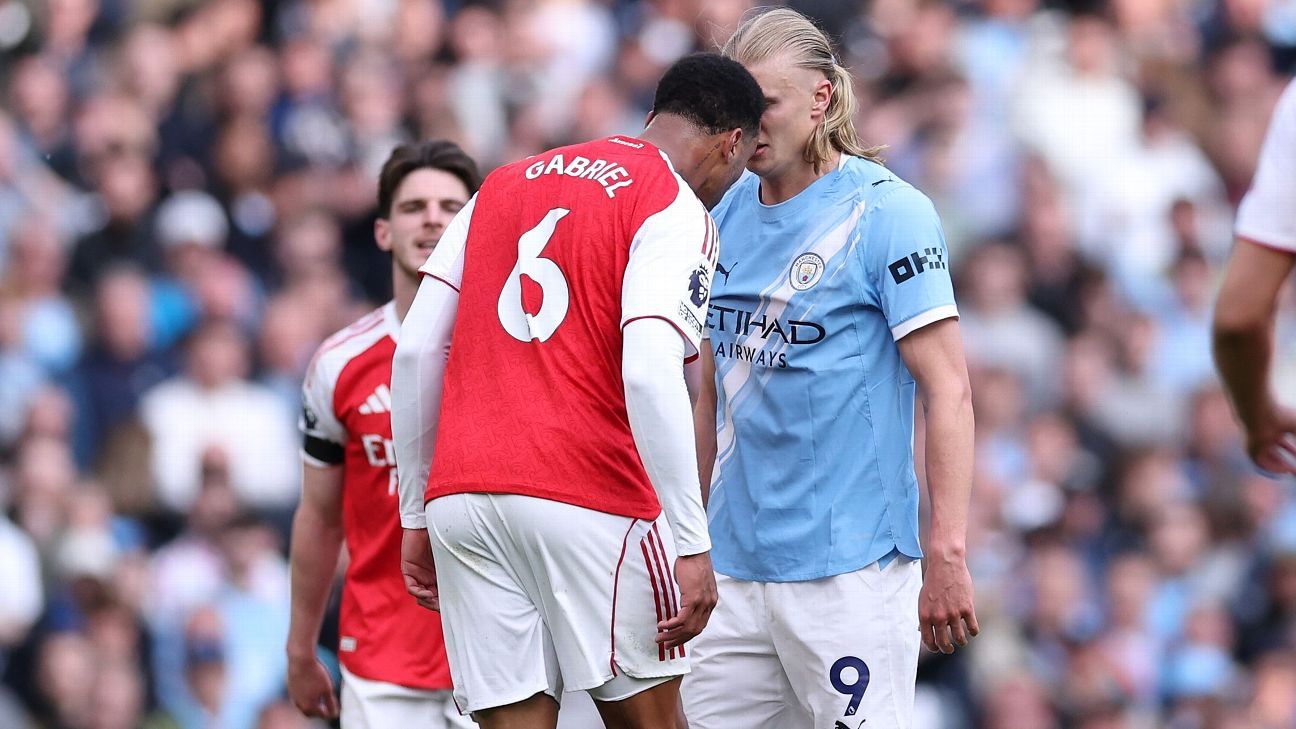
What happened: An altercation between Arsenal’s Gabriel and City’s Erling Haaland ended with the defender seemingly headbutting Haaland. Referee Anthony Taylor decided to give a yellow card to Gabriel, and the VAR did not intervene.
VAR decision: The VAR did not feel that a clear error had been made by the referee and confirmed the yellow card.
VAR review: VAR John Brooks would have taken the lead from the on-field communications from Anthony Taylor when reviewing this incident. Taylor’s view of the possible violent act by Gabriel and its subsequent contact was very credible, having all the information available to him, and he gave his rationale accordingly.
In law, a red card for violent conduct is considered when a player uses or attempts to use excessive force or brutality against an opponent when not challenging for the ball. However, such an action can be judged as a yellow card for adopting an aggressive attitude if the referee deems the contact as negligible.
This was the explanation given by Taylor, and the VAR did not fully disagree. In this situation and its specific circumstances, the VAR would not have looked to intervene and would have backed either a yellow or a red card based on the referee’s comms.
Verdict/insight: Let’s be clear, Gabriel is very fortunate to not receive a red card for violent conduct. His action in pushing his head toward Haaland in an aggressive manner was unwise, to say the least. Haaland’s ability to stay on his feet (many wouldn’t) certainly allowed Taylor the opportunity to manage the incident with a wider perspective.
The contact, in truth, probably wasn’t with excessive force, and therefore, you could argue a credible outcome was reached. However, it was a risk for Taylor, because if the game had a different outcome, his decision to give Gabriel only a yellow would have been a potential game changer.
In my opinion, Gabriel should have been sent off. It was an attempted violent act, and regardless of the level of contact or injury to his opponent, the action met the criteria for a red card.


Notre Dame, Villanova to start men’s, women’s hoops season in Rome

2026 NBA playoffs: Western Conference first-round takeaways

Sarah Ferguson speaks out over Beatrice, Eugenie troubles: ‘Difficult’

-

 Fashion4 days ago
France’s LVMH Q1 revenue falls 6%, shows resilience amid Iran war
-

 Entertainment1 week ago
Palace left in shock as Prince William cancels grand ceremony
-

 Sports7 days ago
The case for Man United’s Fernandes as Premier League’s best
-
 Business7 days ago
UK could adopt EU single market rules under new legislation
-
 Sports1 week ago
Lamar Jackson hits back at critics with faithful message on social media
-

 Entertainment5 days ago
Is Claude down? Here’s why users are seeing errors
-

 Fashion7 days ago
Energy emerges as biggest cost driver in textile margins
-
 Business1 week ago
Road accidents: a massive economic challenge | The Express Tribune