

Business
Pakistan targets $15 billion in IT exports by 2030 | The Express Tribune


IT minister says Rinova AI-RCM Matter deal to bring AI medical billing, create thousands of skilled jobs in Pakistan
Minister for Information Technology and Telecom, Shaza Fatima Khawaja, said Pakistan has witnessed a 25 percent growth in IT exports, and the government aims to maintain this momentum to achieve an export target of $15 billion by 2030.
“Government is working to boost a technology-driven and knowledge-based economy under the concept of a True Digital Pakistan,” the IT minister said, while addressing a signing ceremony between Rinova AI and RCM Matter. The agreement between the two companies aims to bring AI-enabled medical billing to Pakistan and create thousands of skilled jobs that strengthen the country’s digital economy.
Shaza highlighted the contribution of private-sector IT companies to the economy and said the government is focusing on two priorities: supporting the private sector to position Pakistan as a tech destination, and transforming the country into a digital nation.
“The government is training half a million human resources annually at no cost, with a focus on demand-driven training,” she said. She added that a roadmap for True Digital Pakistan has been developed, and a commission led by Prime Minister Shahbaz Sharif is ensuring data access for both government and private sectors.
Read More: PSX surges past 165k milestone as optimism builds over IMF meeting
“Data will be made available for technology-driven private sector initiatives,” she said. She also highlighted that Pakistan has approved a national AI policy to facilitate patenting of AI products, and that data centers and cloud infrastructure are available locally. The government is establishing Centres of Excellence at universities to train IT professionals, she added.
During the ceremony, Edge Co-Founder Iffi Wahla announced plans to scale up investment from $17 million to $50 million over the next eighteen months, providing employment for more than 1,000 people in Pakistan.
Edge CEO Iffi Wahla said the company will provide more than 1,000 jobs in the next 18 months, with a minimum salary benchmark of Rs350,000. He described Rinova AI as an advanced tool to grow the medical billing industry. RCM Matter CEO Mudassar Hanif said the partnership represents a positive step for growth in the healthcare sector and will create 1,000 jobs in the coming months.
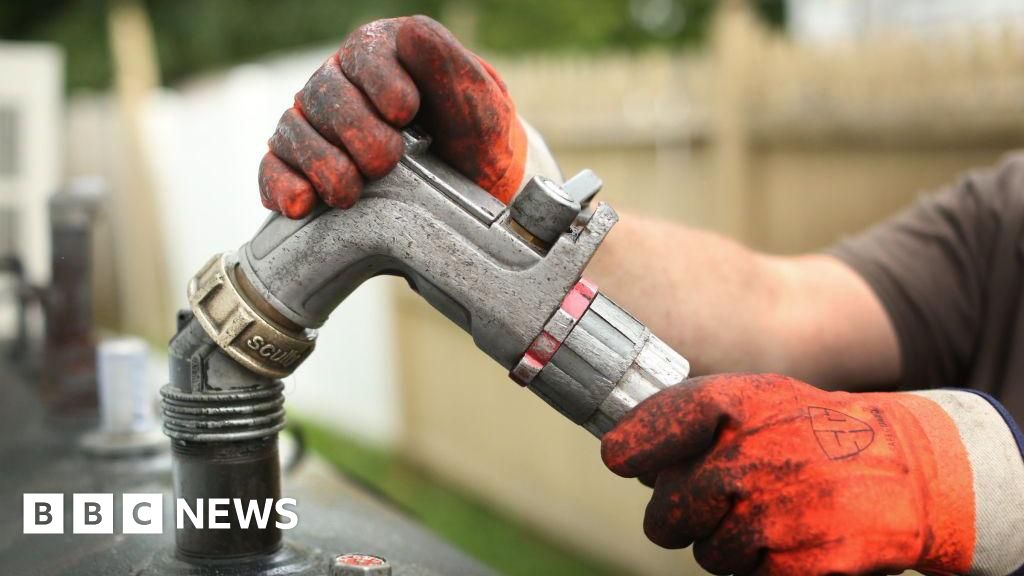
Global oil prices spike after Iran launched strikes across the Middle East in response to attacks by the US and Israel.
Source link

The Pakistan Stock Exchange (PSX) staged a strong comeback on Tuesday, recovering more than 2,000 points after suffering its steepest one-day decline in history.
The benchmark KSE-100 Index climbed to an intraday high of 156,106.01, gaining 4,133.02 points (2.72%) from the previous close of 151,972.99.
However, volatility persisted, with the index also dipping to an intraday low of 151,258.85, reflecting continued investor caution.
After Monday’s Historic Slump
The rebound follows Monday’s massive crash, when the KSE-100 plunged 16,089.17 points (-9.57%), marking its largest single-day fall ever.
The sell-off was triggered by escalating Middle East tensions and panic-driven mutual fund selling.
Analysts described Tuesday’s rise as a technical rebound, with value investors stepping in after excessive pressure eased.
Global Markets Under Pressure
While PSX showed recovery, global markets remained under strain:
MSCI Asia-Pacific index (ex-Japan) fell 1.5%
Japan’s Nikkei dropped 2.3%
US futures slipped 0.6%
Rising geopolitical tensions have intensified concerns about energy prices and global economic stability.
Oil Prices Surge
Fears of disruption in the Strait of Hormuz pushed energy markets higher:
Brent crude rose 2% to $79.22 per barrel
Shipping costs for oil tankers surged sharply
European and Asian natural gas prices jumped nearly 40% earlier
Higher oil prices pose inflationary risks for import-dependent economies like Pakistan.
What’s Next?
Market experts say the key question is whether the recovery gains momentum or remains a short-term bounce.
Investor sentiment remains fragile amid geopolitical uncertainty and volatile global energy markets.
Business
US-Israel-Iran war hits oil supplies: How India is preparing for the economic fallout – The Times of India

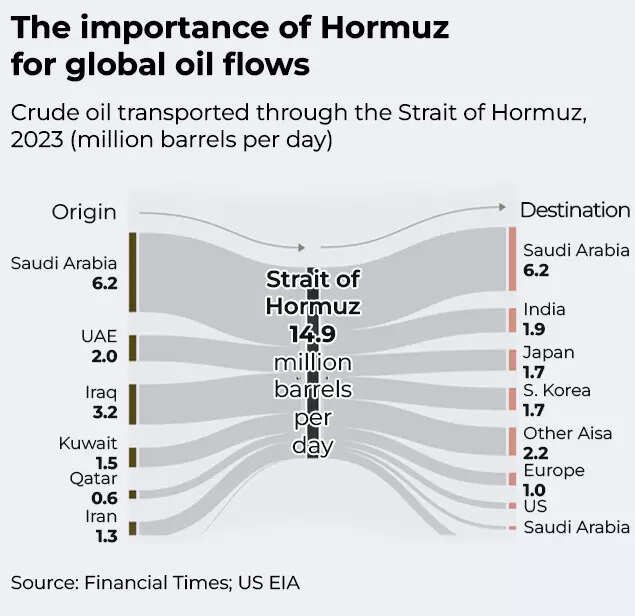
India is looking at several emergency measures to tackle the risk of fuel shortages if shipping through the Strait of Hormuz remains affected for an extended period. Strait of Hormuz in the Persian Gulf is a prominent and vital maritime route for transmit of oil and goods. According to people aware of discussions between the government and industry stakeholders, the options under consideration include curbing exports of petrol and diesel, stepping up crude purchases from Russia, and implementing demand-side steps such as rationing LPG supplies.Even as the Centre and oil firms maintained that there is no immediate scarcity, refiners have begun scouting for alternative crude sources to offset supplies affected by the conflict in West Asia.
The geopolitical strain has pushed up global oil and gas prices. For India, which relies heavily on imports, this surge translates into a higher import bill and adds to inflationary pressures.
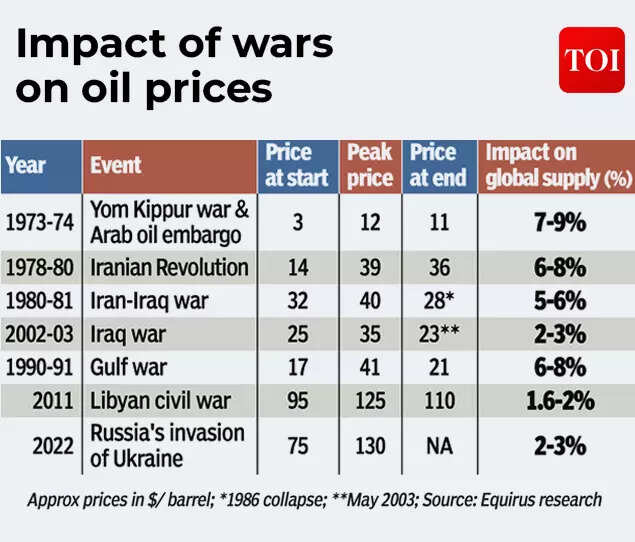
India depends on overseas purchases for almost 90 per cent of its crude oil needs. It also relies on imports to meet around 60–65 per cent of its LPG consumption and roughly 60 per cent of its LNG requirement. A significant portion of these supplies originates in West Asia and moves through the Strait of Hormuz, a vital corridor that faces the risk of disruption amid the ongoing conflict.
India to curb oil exports?
With concerns mounting over potential disruptions in crude oil availability, the government is considering measures to encourage refiners to channel a larger share of automobile fuels and LPG toward the domestic market by trimming exports, according to a TOI report. It is also exploring ways to step up cooking gas output to ensure uninterrupted supplies for local consumers.Currently, India sends abroad roughly one-third of its petrol production, about a quarter of its diesel output, and nearly half of the aviation turbine fuel it produces. If necessary, refiners can also channel excess ATF into alternative product streams, they said.
Data from the International Energy Agency shows that 5.9 per cent of India’s petroleum output was exported in 2023. During the period from April to December 2025, the country shipped petroleum products worth nearly $330 billion, with key markets including the Netherlands, the UAE, the US, Singapore, Australia and China. In 2024, petroleum gas exports totalled $454 million, largely destined for Nepal, China and Myanmar. The Reliance Industries Limited refinery at Jamnagar remains the country’s biggest exporter.An executive at an oil company said refiners have already initiated discussions with traders to secure capacity amid concerns over a potential blockade of the Strait of Hormuz. By Monday, global markets were unsettled following QatarEnergy’s decision to halt gas shipments.
LNG and LPG disruptions
The most pressing area of concern is LPG, as the country relies on imports to meet close to two-thirds of its consumption and keeps relatively limited stockpiles. Around 85–90 per cent of LPG imports originate from Gulf nations.Industry assessments indicate that existing inventories, including domestic storage and cargoes that have already passed through the Strait of Hormuz, would be sufficient for less than a fortnight if fresh supplies are halted. To prepare for such a scenario, Indian Oil Corporation, Hindustan Petroleum Corporation Limited, and Bharat Petroleum Corporation Limited have started raising LPG production at select refineries integrated with petrochemical units.Officials are also examining focused demand-management strategies, including the possibility of rationing LPG for consumers who have access to alternate cooking fuels, particularly in rural regions, the people said. India’s crude oil stockpiles are estimated to cover around 17–18 days of consumption, while reserves of refined products such as petrol and diesel could last approximately 20–21 days.LNG inventories are sufficient for about 10–12 days. Without additional shipments through the Strait of Hormuz, these reserves would gradually diminish. Increasing purchases of Russian crude is another option being evaluated, sources told ET.Another industry executive noted that while any disruption could pose short-term challenges, Indian companies maintain a diversified LNG sourcing portfolio, including supplies from the US, with vessels routed via the Suez Canal.“Even if there is a force majeure, we have other sources of supply, which we can tap. Besides, no one is going to stop supplies indefinitely,” the executive said. Although oil and gas prices climbed on Monday, efforts remain focused on keeping supply chains operational.
No rise in petrol, diesel prices expected
Officials indicated that pump prices of petrol and diesel are unlikely to be revised upward in the near term. Oil marketing companies continue to adhere to a calibrated pricing strategy, absorbing losses when international rates climb and recovering margins when they ease. Retail fuel prices have effectively remained frozen since April 2022.On a day when Iranian drone strikes damaged sections of a Saudi Aramco refinery and QatarEnergy, the world’s largest LNG producer, announced a temporary halt to exports, Petroleum Minister Hardeep Singh Puri convened a meeting with senior officials and oil company representatives to review the status of crude and gas supplies.“We are closely tracking the fast-changing developments and will take every necessary measure to maintain both the supply and affordability of key petroleum products across the country,” the oil ministry said in a message posted on X.
Measures for Exporters
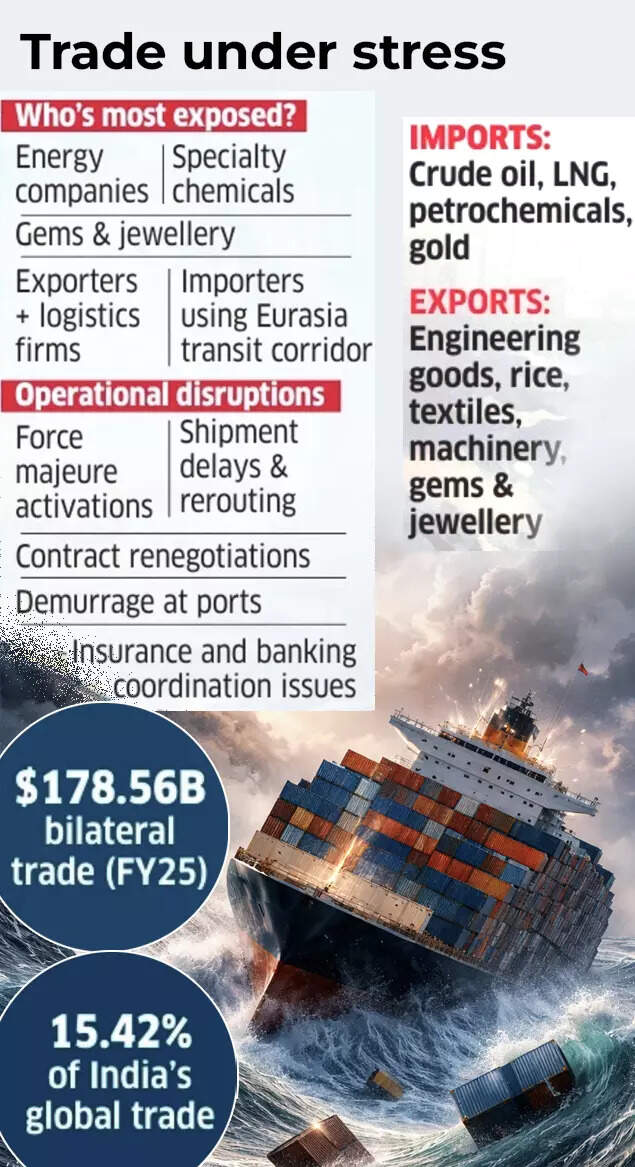
The government has sought to reassure exporters, saying that it stands prepared to extend necessary support and introduce flexible measures to ease trade operations in view of the uncertainty stemming from tensions in West Asia.At a meeting held in the commerce department and chaired by special secretary Suchindra Misra and DGFT Lav Agarwal, exporters highlighted several areas of concern.
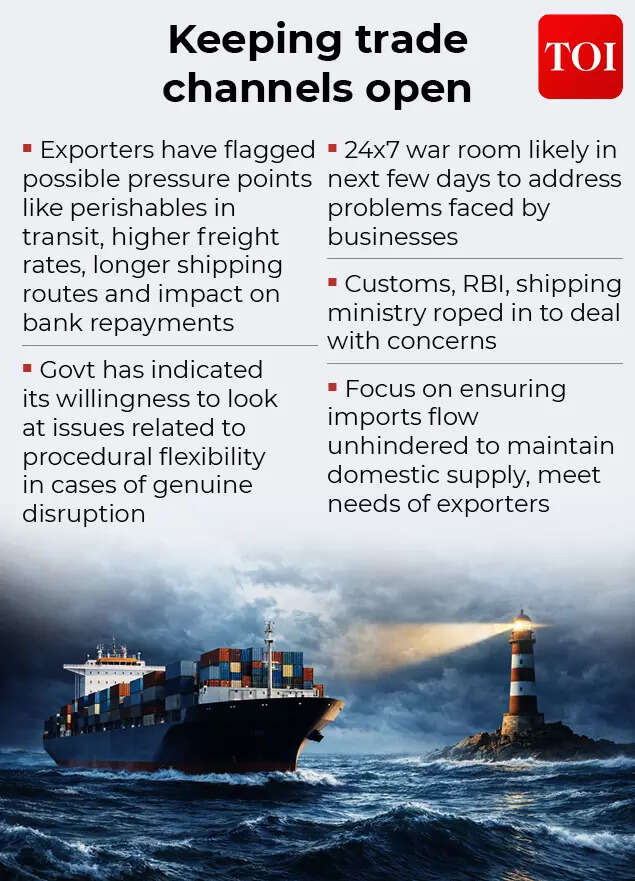
These included risks to perishable consignments already in transit, escalating freight costs, demurrage charges, rerouting of shipments leading to longer transit times, dependence on imported inputs for exports, and potential strain on loan repayments to banks.According to an official statement, authorities are considering setting up a monitoring mechanism or round-the-clock control room to improve inter-agency coordination and swiftly address emerging challenges. The government reiterated its commitment to facilitating trade and signalled openness to granting procedural relaxations in instances of genuine disruption. It also indicated that it would work closely with customs officials to ensure timely clearances and coordinate with banks and insurance companies to ease operational bottlenecks.


Ind-Ra expects India’s apparel retail revenues to grow 9% YoY in FY26

Yamal is eclipsing young Ronaldo, Messi. Are Barcelona too dependent on him already?
Beatrice, Eugenie feud with Prince William revealed after Ascot snub

-

 Politics5 days ago
What are Iran’s ballistic missile capabilities?
-
 Business6 days ago
Households set for lower energy bills amid price cap shake-up
-

 Sports5 days ago
Sri Lanka’s Shanaka says constant criticism has affected players’ mental health
-
 Business6 days ago
Lucid widely misses earnings expectations, forecasts continued EV growth in 2026
-

 Sports1 week ago
Top 50 USMNT players of 2026, ranked by club form: USMNT Player Performance Index returns
-

 Tech6 days ago
Here’s What a Google Subpoena Response Looks Like, Courtesy of the Epstein Files
-
 Business6 days ago
Income Tax Draft Rules 2026: Key Changes On How And When Pan Card Will Be Required?
-

 Tech6 days ago
Cisco Catalyst SD-WAN users targeted in series of cyber attacks | Computer Weekly