

Entertainment
Pakistan’s external liabilities stands at $130bn, dollar amounts to 58% of total debt

- External financing to rely on multilateral, bilateral sources.
- $1bn Panda Bond programme established, first issuance in FY26.
- Preparatory work underway for launch of Sustainable Bonds.
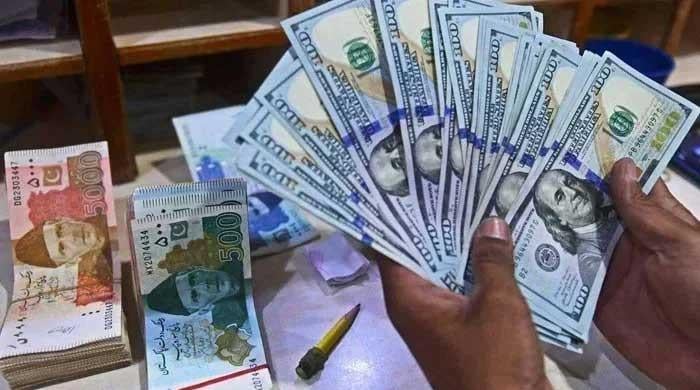
ISLAMABAD: Pakistan’s external debt and liabilities, currently standing at around $130 billion, are heavily concentrated in five major currencies, with the US dollar alone accounting for nearly 58% of the total burden, The News reported on Thursday
“The external debt portfolio is predominantly denominated in a few major currencies. The US dollar leads with a 57.8% share, followed by Special Drawing Rights (SDRs) at 29.88%, Chinese Yuan 5.21%, Japanese Yen 3.95%, and the Euro 2.62%,” reads the government’s latest Debt Management Strategy (DMS) for 2026-2028.
The Finance Ministry’s strategy underscores that external financing will continue to rely mainly on multilateral and bilateral sources offering concessional terms and longer maturities.
However, in an effort to diversify, Pakistan plans to re-enter international capital markets with new instruments, including Panda Bonds, Sustainable Bonds, and Eurobonds — subject to favourable global interest rate conditions and domestic economic stability.
A $1 billion Panda Bond programme has already been established, with the first issuance of $200-250 million scheduled for FY2026, followed by additional tranches in the medium term.
Preparatory work is also underway for the launch of Sustainable Bonds, backed by a newly developed Sustainable Financing Framework, which is currently under cabinet review. This framework will guide the structure, maturity, and repayment terms of all future sustainable bond issuances.
Although access to Eurobond markets has remained constrained since 2022, the strategy outlines a plan for re-entry into international capital markets as conditions improve.
In the meantime, Panda Bonds — Renminbi-denominated securities in the Chinese market — are being developed as an alternative, supporting diversification of funding sources, lowering borrowing costs, reducing refinancing risk and enhancing Pakistan’s financial integration with Chinese markets.
To actively manage foreign exchange risks, the government intends to employ hedging instruments while also developing domestic futures and interest rate swap markets.
Innovative options, including debt-for-nature swaps, are under consideration to help manage external liabilities while aligning with climate goals.
Domestic debt is expected to remain the primary source of government financing during the strategy period. Under the International Monetary Fund (IMF) programme, the ceiling for government guarantees is set at Rs5,600 billion as of end-June 2025.
By March 2025, guarantees worth Rs405 billion —equivalent to 0.35% of GDP — had been issued, raising the total outstanding stock to Rs4,548 billion.
These include guarantees extended to state-owned enterprises such as TCP and PASSCO for commodity-related financing.


John Mayer and Kat Stickler’s relationship has come to an end after they were reportedly planning on settling down together.
The musician and the influencer sparked dating rumours in October 2025, and were frequently spotted dining together and spending time with each other in New York City.
While the Gravity hitmaker was believed to be actively pursuing the social media star, and introducing her to his friends and family, the couple suddenly broke off in March.
Mayer and Stickler quietly split ways as an insider told the celebrity gossip account DeuxMoi, which came as a surprise to people.
Following the news social media sleuths noticed that the pair stopped ‘liking’ each other’s posts in February this year.
The breakup news surfaced after an insider revealed that the New Light singer was “looking to seriously date” and settle down with Stickler.



The unlikely rise of Iowa’s Ben McCollum, Bennett Stirtz: Division II to Elite Eight
India opposes China-led IFD pact’s inclusion; flags risks to WTO framework and core principles – The Times of India

Patriots’ Super Bowl appearance was no fluke, team legends say: ‘They’re for real’

-
 Business1 week ago
Flipkart group CFO to leave co amid IPO plans – The Times of India
-

 Fashion1 week ago
China’s textile & apparel exports surge 17% to $50 bn in Jan-Feb 2026
-

 Sports1 week ago
Rating Adidas’ 2026 World Cup away shirts: Argentina, Spain, Mexico and more
-

 Sports1 week ago
American Conference Commissioner Tim Pernetti thanks Trump for Army-Navy game executive order
-
Tech1 week ago
The Corsair 4000D RS PC Case Keeps Your System Cool
-

 Tech1 week ago
Gamers Hate Nvidia’s DLSS 5. Developers Aren’t Crazy About It, Either
-

 Tech1 week ago
‘Uncanny Valley’: Nvidia’s ‘Super Bowl of AI,’ Tesla Disappoints, and Meta’s VR Metaverse ‘Shutdown’
-
 Business4 days ago
Property Play: Home flippers see smallest profits since the Great Recession, real estate data firm says