

Fashion
Pandora’s Aurélie Alexandre: ‘The initiatives under way in Spain and Portugal serve as a benchmark for other markets”


Published
October 21, 2025
At the end of last August, the Danish jewellery giant Pandora appointed Aurélie Alexandre as its new director for Spain and Portugal. From the company’s Madrid headquarters, she succeeded Alizée Huitorel, who at the beginning of the year became the company’s general manager for Western Europe. A couple of months after taking the helm of the Iberian division, FashionNetwork.com speaks with the executive about her challenges at Pandora, future plans and the role of the Spanish and Portuguese markets within the company.
FashionNetwork.com: How are your first months in the role going?
Aurélie Alexandre: I’m getting to know the region, the market, the teams and the stores, and travelling a lot. I already knew these two countries because I worked as marketing director for Western Europe, including France, but right now I’m focused on Portugal and Spain.
FNW: What are your main challenges in this new role?
A. A.: On the one hand, we face the same macroeconomic challenges as the rest of the sector. For example, in jewellery, the price of silver is something that affects us. Beyond that, in the Portuguese and Spanish markets, I’d say the main challenge is to strengthen our position as a brand. Pandora has a very strong brand position in Spain and Portugal and is very well known, but our task is to remain a relevant and inspiring brand in these markets. We need to strengthen the brand beyond ‘charms’ and our bracelets, which distinguished Pandora and put it on the map. Now, without losing our essence, we have to go further.
FNW: What is your strategy for achieving that goal?
A. A.: It rests on several pillars. We will back different product categories within the jewellery segment; and, in terms of customer connection, we’ll aim to be less product-centric, putting greater emphasis on emotions, on our connection with customers, on building bonds. At the end of October, we will unveil a campaign along these lines, focusing on that emotional connection with the brand.
FNW: A global campaign or a local one for the Iberian market?
A. A.: It’s a global campaign that will launch in these two markets.
FNW: What are the other pillars of the strategy?
A. A.: Retail is a key piece. We have a very solid, established network in both Spain and Portugal, so we’re no longer in a phase of growing the network for its own sake. It’s about continuing to open where it makes sense. In fact, rather than increasing the number of stores [Pandora has over 90 in Spain and around 40 in Portugal], our strategy is focused on relocations. We have stores in very good locations, but many of them are small. We obviously can’t push out the walls to make them bigger, so our challenge is to find new sites. This is something to develop in the medium term, as finding the right spaces doesn’t happen quickly.
In parallel, we’re rolling out our new Evoke store concept, launched a year and a half ago. Some stores already have it in place, but one of our objectives is to invest in expanding it and bringing it to more locations.

FNW: And beyond physical stores?
A. A.: Another pillar of our strategy is the digital environment. We recently launched a new e-commerce site. And we continue to champion omnichannel: the click-and-collect format works very well, and we’re also enabling customers to buy online from our physical stores those products they want that aren’t available in-store at that moment. And we have a partnership with El Corte Inglés to operate on its marketplace.
FNW: What is your relationship with El Corte Inglés?
A. A.: It’s a key partner. In addition to the digital channel, we are present in 70 shop-in-shops in its department stores in Spain and two in Portugal, and it is an essential part of our distribution. In the multi-brand channel we operate in 220 locations in Spain and 130 in Portugal.
FNW: What do the Spanish and Portuguese markets represent for Pandora?
A. A.: They are two of the fastest-growing markets, if not the fastest. Pandora has a unique brand positioning in these two countries, and some of the initiatives developed here are a benchmark for other markets. One example is the influencer marketing strategy followed in Spain and Portugal: a community has been created that is highly connected with Gen Z, where most of the content produced is organic, not paid. The influencers are part of the Pandora family; that’s how they feel and that’s how it comes across to customers. Moreover, the paid media model used in the Iberian market is also successful and a template to follow.
FNW: In recent times, you’ve reached a new generation of consumers through social profiles. But what about the more traditional customer, the one who first connected with the brand through its ‘charms’?
A. A.: Of course, we remain connected with our long-standing customers, paying attention to them and engaging with them. ‘Charms’ are our core and they’re not going anywhere; in fact, we constantly launch new collections, such as ‘Talisman’, which was released recently.
This article is an automatic translation.
Click here to read the original article.
Copyright © 2025 FashionNetwork.com All rights reserved.











The model will be fuelled by both domestic and foreign direct investment. The country’s tax-to-GDP ratio currently sits at the bottom level globally.
Rashed Al Mahmud Titumir, Prime Minister’s Adviser Finance and Planning, recently outlined a comprehensive road map to overhaul the country’s economic framework, setting a target to raise the tax-GDP ratio to 15 per cent by 2035, while taking the nation forward on a path of investment-led growth.
A key pillar of this transition is a significant increase in internal resource mobilisation, he said.
A key pillar of this transition is a significant increase in internal resource mobilisation, he said.
“The previous consumption-led growth model was unsustainable and had left the country burdened by a mountain of debt accumulated particularly between 2009 and 2024,” he told a recent roundtable on the government’s priorities in the short-to-medium term.
The roundtable was organised by the Centre for Policy Dialogue (CPD) and The Daily Star newspaper.
There is a need for a tax culture rooted in investment, production and employment, he was cited as saying by domestic media reports.
He identified several systemic maladies in the current revenue structure that require urgent reform.
The government intends to move from greenfield incentives (based on identity and influence) to performance-based subsidies (ex-post subsidies), he said, adding that this model, which proved successful in the garments sector, will reward actual results rather than potential.
Fibre2Fashion News Desk (DS)
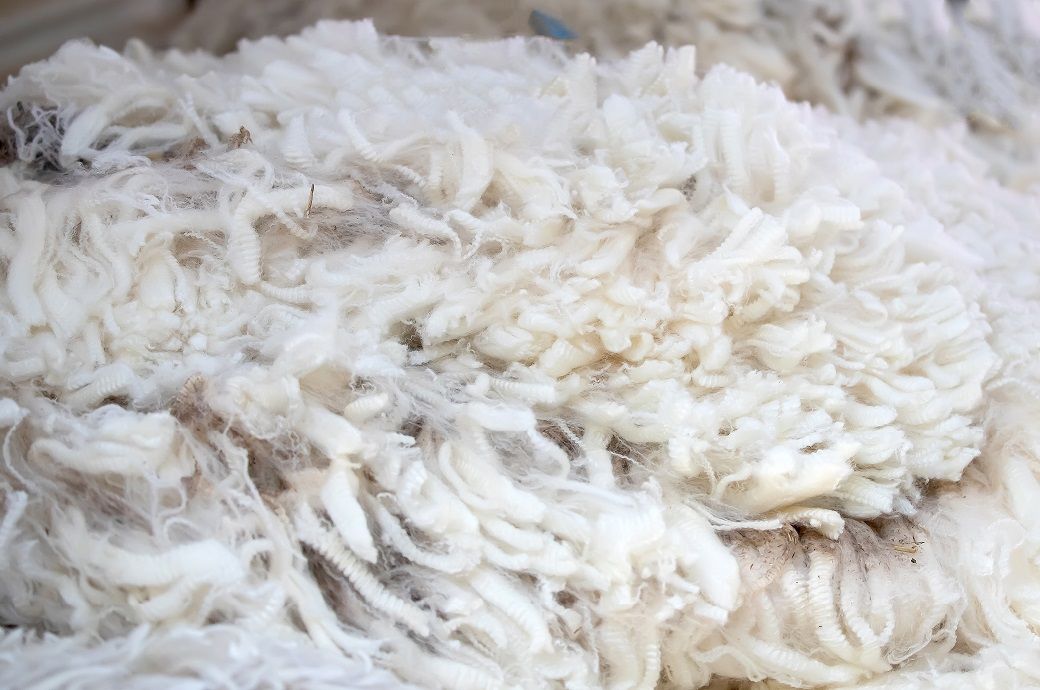
“A smaller offering of 37,212 bales, combined with a softer Australian dollar, helped support the market and drive solid gains, particularly in the Merino sector. Year-on-year, the EMI now sits 542 cents (44.2 per cent) higher,” the Australian Wool Innovation (AWI) Limited said in its Commentary for week 36 of the current Australian wool marketing season.
Strong demand for finer Merino wool, supported by a weaker Australian dollar and tighter supply, continues to lift Australian wool prices.
While Merino segments posted significant gains, crossbred wools lagged.
With higher offerings expected next week, the market’s resilience will depend on sustained global demand and buyer confidence in premium-quality fibre.
Premium prices were recorded for high-strength, well-styled Merino fleece, while discounts remained evident in lots with higher vegetable matter, poorer colour and lower style grades. Finer Merino wools showed the strongest gains, increasing by 90 to 95 cents across selling centres, with Fremantle leading the rise as these types advanced by 115 to 120 cents. Medium Merino wool also attracted solid demand, gaining around 80 to 85 cents, the AWI commentary noted.
In contrast, the crossbred segment experienced a quieter week, slipping by 5 to 10 cents. The cardings market in the eastern selling centres maintained its positive momentum, rising 35 to 40 cents, while cardings in the western region eased by 5 to 10 cents.
Following the latest price surge, next week’s offering is expected to expand as sellers respond to favourable market conditions. A total of 45,973 bales is scheduled for auction across all three centres. Fremantle and Sydney will conduct sales on Tuesday and Wednesday, while Melbourne will auction wool on Wednesday and Thursday.
Fibre2Fashion News Desk (CG)
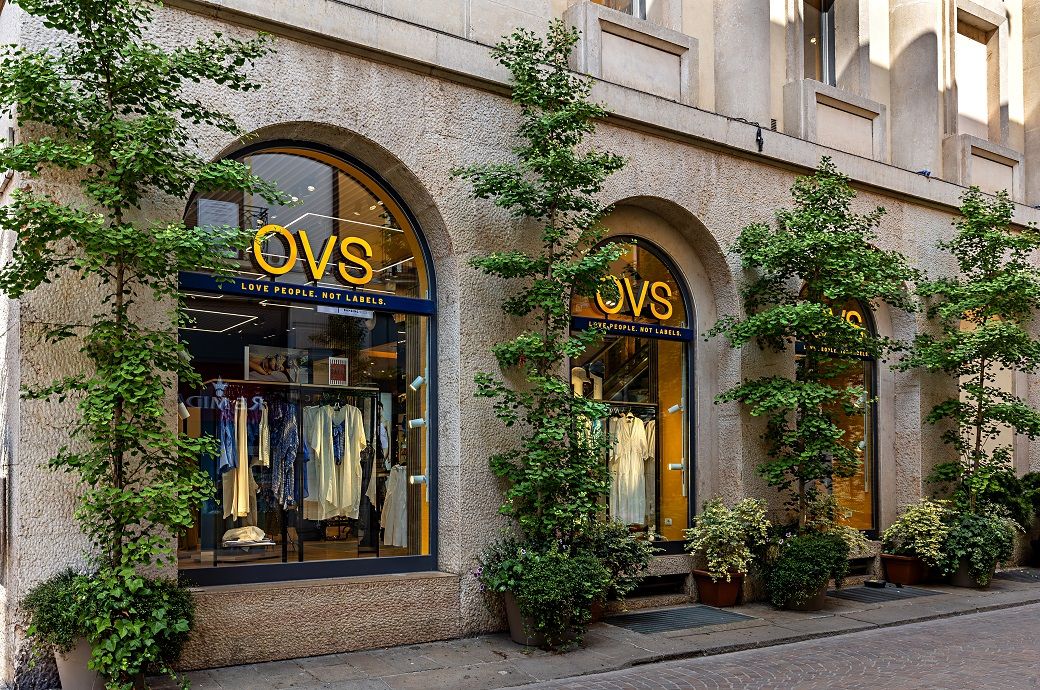
This opening will mark OVS’ second store in India, following its flagship debut in New Delhi in October 2025, and underscores the brand’s long-term commitment to the Indian market.
OVS will launch its first Mumbai store on March 14 at Sky City Mall, Borivali, expanding its India presence after debuting in New Delhi in October 2025.
The 11,000 sq ft outlet will feature womenswear, menswear and kidswear, including premium labels such as PIOMBO and Les Copains.
The move reflects strong early performance and OVS’ long-term growth plans in India.
Spanning approximately 11,000 sq. ft., the Mumbai store will introduce customers to OVS’ latest global retail concept, designed to deliver a modern and seamless shopping experience. Reflecting Mumbai’s diverse fashion sensibilities, where style ranges from everyday comfort to trend-forward dressing, the store offers a versatile mix across womenswear, menswear and kidswear, making Italian style affordable to all. The assortment spans accessible everyday fashion from OVS alongside premium and contemporary collections, including PIOMBO, Les Copains, B.Angel, Altavia, and OVS Kids, designed to meet the style needs of a wide spectrum of consumers.
Sharing his thoughts on the Mumbai launch, Sundeep Chugh, Managing Director at OVS India, said: “The response to our New Delhi launch has been highly positive and has validated our belief that Indian consumers are seeking global fashion that delivers both style and value. Mumbai is a natural next step for us, given its strong fashion consciousness and retail maturity. Our vision is to establish OVS as a trusted destination for the entire family, offering a distinctive Italian aesthetic at democratic price points while maintaining high standards of quality and sustainability.”
Carmine Di Virgilio, Global Chief Retail Officer at OVS S.p.A, added: “India represents an important growth market in our international strategy and Mumbai is among the country’s most influential retail destinations. This opening will allow us to further strengthen our global footprint while introducing consumers to a retail experience that reflects our heritage, the contemporary Italian design philosophy and commitment to responsible fashion. We are very satisfied with our Delhi debut and the enthusiastic response from a wide range of customers, particularly younger generations. At the same time, we are actively evaluating additional expansion opportunities across the Indian market to support our long term growth strategy.”
Globally, OVS operates over 2,200 stores across multiple markets and has built a strong position in accessible, everyday fashion by combining Italian design excellence with quality materials and affordable pricing. Sustainability remains central to the brand’s approach, with responsible sourcing, recyclable materials, water-efficient processes and transparency.
Note: The headline, insights, and image of this press release may have been refined by the Fibre2Fashion staff; the rest of the content remains unchanged.
Fibre2Fashion News Desk (RM)


German media group Axel Springer to buy Telegraph for £575m

Dua Lipa shares sweet birthday tribute for father
Maharashtra’s Rs 7.69-Lakh-Crore Budget: Who Gains? Who Pays More?

Attock Cement’s acquisition approved | The Express Tribune

Policy easing drives Argentina’s garment import surge in 2025

India Us Trade Deal: Fresh look at India-US trade deal? May be ‘rebalanced’ if circumstances change, says Piyush Goyal – The Times of India

-
Business1 week ago
Attock Cement’s acquisition approved | The Express Tribune
-
 Fashion1 week ago
Policy easing drives Argentina’s garment import surge in 2025
-
Business1 week ago
India Us Trade Deal: Fresh look at India-US trade deal? May be ‘rebalanced’ if circumstances change, says Piyush Goyal – The Times of India
-

 Politics1 week ago
What are Iran’s ballistic missile capabilities?
-

 Politics1 week ago
US arrests ex-Air Force pilot for ‘training’ Chinese military
-

 Sports7 days ago
LPGA legend shares her feelings about US women’s Olympic wins: ‘Gets me really emotional’
-
 Business7 days ago
Greggs to reveal trading amid pressure from cost of living and weight loss drugs
-

 Sports1 week ago
Sri Lanka’s Shanaka says constant criticism has affected players’ mental health