

Business
Paramount questions Warner Bros. Discovery on ‘fairness and adequacy’ of sale process: Read the full letter


A bus passes near Warner Bros. Studio on Sept. 12, 2025 in Burbank, California.
Mario Tama | Getty Images
Paramount Skydance is calling foul on how Warner Bros. Discovery has conducted its sale process.
In a letter reviewed by CNBC, Paramount attorneys told Warner Bros. Discovery CEO David Zaslav that Paramount was questioning the “fairness and adequacy” of the process, which officially launched in October. This week, Paramount, Netflix and Comcast submitted second-round bids to acquire some or all of Warner Bros. Discovery’s assets, CNBC previously reported.
“It has become increasingly clear, through media reporting and otherwise, that WBD appears to have abandoned the semblance and reality of a fair transaction process, thereby abdicating its duties to stockholders, and embarked on a myopic process with a predetermined outcome that favors a single bidder,” reads the letter from attorneys at Quinn Emanuel. “We specifically request and expect this letter will be shared and discussed with the full board of directors of WBD.”
In particular, Paramount’s letter calls out reports that WBD’s management appears to favor Netflix’s offer.
Netflix has made an offer of mostly cash, while Paramount’s latest bid was all cash, according to people close to the matter who declined to be named speaking about confidential dealings. All three companies submitted higher bids than their initial offers, the people told CNBC.
As of Thursday morning, Netflix was the leading bidder based on how WBD is valuing the offers, people familiar told CNBC. Comcast executives, for their part, continue to be disciplined in the company’s offer as to not anger shareholders by taking on additional debt and risking its balance sheet, according to people familiar with that company’s thinking. Comcast leadership has previously said that its bar for M&A is generally high.
Warner Bros. Discovery told CNBC it confirmed to Paramount that it had received the letter and would share it with members of the WBD board.
“Please be assured that the WBD Board attends to its fiduciary obligations with the utmost care, and that they have fully and robustly complied with them and will continue to do so,” the company said in its response to Paramount.
WBD requested third-round bids from the potential buyers, due Thursday, sources told CNBC. The company expects to announce a winner as early as next week, sources said.
While first-round bids arrived in mid-November, Paramount has been vying to acquire the entirety of Warner Bros. Discovery — which includes its streaming service HBO Max, film studio Warner Bros. and a portfolio of cable TV networks like TNT and TBS — since September, CNBC previously reported.
Warner Bros. Discovery rebuffed three offers made by Paramount, the last of the those for $23.50 a share, before launching a formal sale process to beckon other buyers, CNBC previously reported.
Netflix and Comcast are interested only in WBD’s streaming and film studio business, CNBC has reported. Prior to the sale process Warner Bros. Discovery had begun the process of splitting its company into two — Warner Bros., the streaming and studio businesses which would be led by Zaslav, and Discovery Global, the cable TV networks division that would be run by current WBD CFO Gunnar Wiedenfels.
Paramount attorneys sent the letter as the company suspects that Zaslav has been biased against a merger with Paramount since the outset, and instead, would rather complete its path toward a separation, some of the people familiar told CNBC. Paramount and its advisors have viewed WBD’s contact with them as more obstructionist rather than constructive, two of the people said.
Before the sale process, Zaslav had been known to tell colleagues that Amazon’s Prime Video or Netflix would likely be interested suitors in Warner Bros. Discovery, or specifically HBO Max and the film studio, the people said. In the letter, Paramount asks the WBD board if reporting that WBD management has “chemistry” with Netflix management is accurate.
Paramount is seeking confirmation, according to the letter, of whether Warner Bros. Discovery appointed an independent special committee of disinterested members of its board to steer the sale process and consider offers.
“If not, we strongly urge you to empower such a special committee comprised of directors with no potential appearance of bias or beholdenness to others whose interests may differ from those of the stockholders,” the letter reads. “This would seem to be an important step at this stage, to ensure the fairness and unimpeachability of the transaction process and to maximize the value of whatever outcome WBD determines to pursue.”
Read the full letter from Paramount to WBD:
Dear Mr. Zaslav: We write on behalf of Paramount Skydance Corporation (“Paramount”, “we” or “us”) to express our serious concerns about the fairness and adequacy of the bidding process for a potential combination with Warner Bros. Discovery (“WBD” or “you”). It has become increasingly clear, through media reporting and otherwise, that WBD appears to have abandoned the semblance and reality of a fair transaction process, thereby abdicating its duties to stockholders, and embarked on a myopic process with a predetermined outcome that favors a single bidder. We specifically request and expect this letter will be shared and discussed with the full board of directors of WBD.
We have recently seen reporting in the U.S. and foreign media that gives serious cause for concern. The German newspaper Handelsblatt recently reported on a meeting that reportedly took place in Brussels between Gerhard Zieler, President of WBD’s International Business and a direct report to WBD’s Chief Executive Officer, who “arrived with a three-person team,” with the E.U. Commission Vice President Hena Virkkunen, to discuss the potential merger prospects for WBD. In that conversation, the article reports that “concerns were raised that the Ellison family’s planned acquisition of Warner Bros. Discovery could lead to excessive media concentration,” and that the E.U. Commission would consider intervening in a potential merger with Paramount for this reason. The article quotes “sources close” to Zeiler as saying “that the talks with the Commission were important because both Warner and the EU wanted to preserve media diversity.” The implications of such a meeting, if it occurred, are clear and evince a tacit resistance to, if not active sabotage of, a Paramount offer.
While this report is concerning in itself, this is not an isolated report regarding purported WBD resistance to a combination with Paramount. Several U.S. media outlets have reported on the enthusiasm by WBD management for a transaction with Netflix, and on statements by management that a transaction between WBD and Netflix would be a “slam dunk,” while also referring to Paramount’s bid in a negative light. Additional reporting since the submission of revised bids on December 1 has indicated that WBD’s “board has really warmed to” a transaction with Netflix due to the “chemistry between” WBD management and Netflix management. We have come to you first to inquire whether this reporting is accurate, and to engage in a productive discussion with you around any actual or perceived issues that it may reflect.
Moreover, these media reports echo similar indications that we have been hearing throughout this process, despite what we viewed as otherwise productive conversations that we have had with WBD leadership. Paramount has a credible basis to believe that the sales process has been tainted by management conflicts, including certain members of management’s potential personal interests in post-transaction roles and compensation as a result of the economic incentives embedded in recent amendments to employment arrangements. These concerns are amplified by indications of director bias and beholdenness to others whose interests may not align with the stockholders’, and the fact that alternatives involving only certain WBD assets are being prioritized notwithstanding their heightened regulatory risk and potential to deprive stockholders of consideration for the entirety of WBD’s enterprise value.
Further, as you know, Paramount agreed to certain standstill arrangements in exchange for the opportunity to participate in a truly competitive and unbiased bidding process. Paramount did not bargain for WBD to foster, whether intentionally or unintentionally, a tilted and unfair process. We believe that all parties to this process should have a shared desire for, and will mutually benefit from, an unimpeachable transaction process. As we assume you agree, even discounting the accuracy of any media reports, just the appearance of a flawed process imperils any potential transaction that might result and may undermine the potential value maximization to WBD stockholders from any prospective transaction.
In light of our grave concerns regarding the integrity of WBD’s process, we seek confirmation as to whether WBD has appointed an independent special committee of disinterested members of its board to consider the potential transaction opportunities and to make a final determination regarding a sale or break-up of all or part of the company. If not, we strongly urge you to empower such a special committee comprised of directors with no potential appearance of bias or beholdenness to others whose interests may differ from those of the stockholders. This would seem to be an important step at this stage, to ensure the fairness and unimpeachability of the transaction process and to maximize the value of whatever outcome WBD determines to pursue. Engaging with WBD throughout this process, we have been encouraged by the enormous potential from a combination of our entities. We remain confident that the Paramount offer would provide the maximum value to WBD stockholders and look forward to the opportunity to continue to engage with you productively in this process. But at this point we must insist on assurances and steps taken to ensure that a truly fair and independent process is being conducted, both for Paramount’s benefit and in the interest of WBD’s stockholders.
Disclosure: Comcast is the parent company of NBCUniversal, which owns CNBC. Versant would become the new parent company of CNBC upon Comcast’s planned spinoff of Versant.





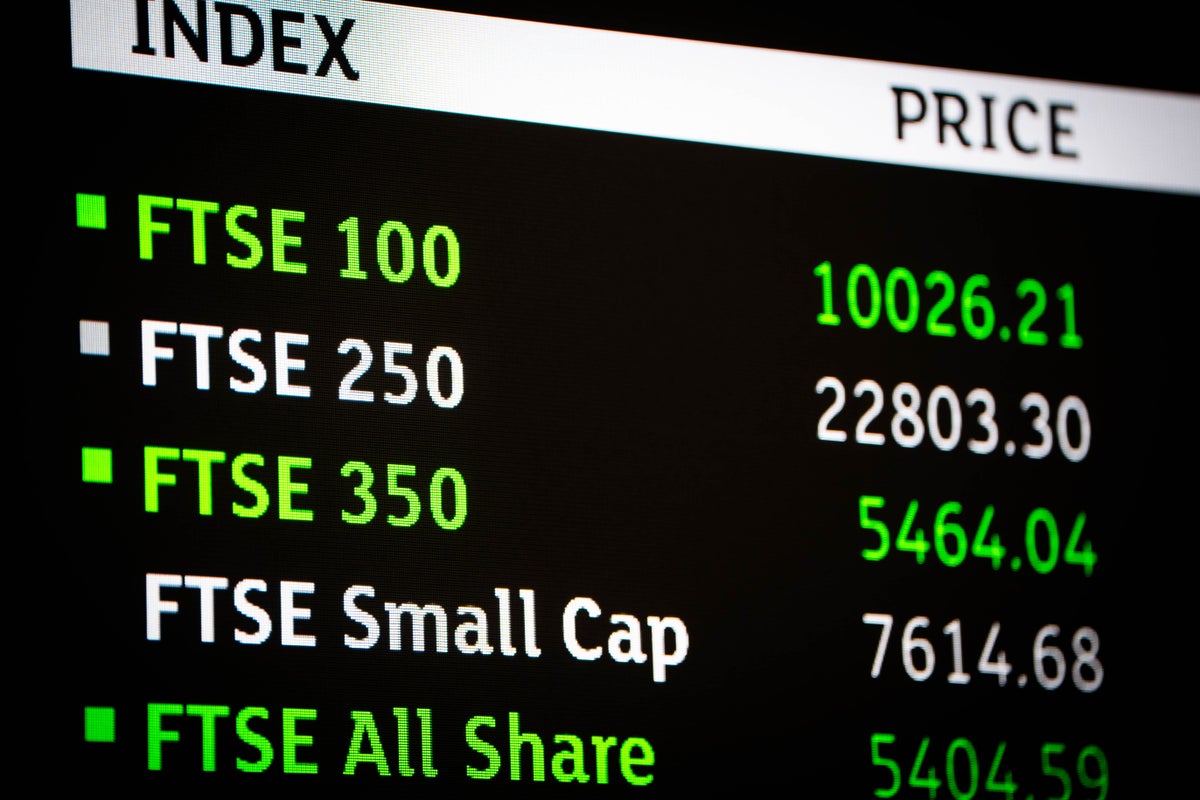
The FTSE 100 closed higher on Monday, recouping most of Friday’s hefty falls amid a calmer bond market and as Iran responded to the latest US peace proposal.
The FTSE 100 closed up 128.38 points, 1.3%, at 10,323.75. The FTSE 250 ended up 15.56 points, 0.1%, at 22,611.70, but the AIM All-Share fell 8.72 points, 1.1%, at 800.17.
Iran said it had responded to a new US proposal aimed at ending the war, adding that diplomatic exchanges continue despite Iranian media reports describing Washington’s demands as excessive, AFP reported.
Washington and Tehran have been swapping proposals in an effort to end the conflict, which the US and Israel launched on February 28, but they have held only a single round of talks despite a fragile ceasefire.
“As we announced yesterday, our concerns were conveyed to the American side,” foreign ministry spokesman Esmaeil Baqaei told a news briefing, adding that exchanges were “continuing through the Pakistani mediator”.
Mr Baqaei defended Iran’s demands, including the release of Iranian assets frozen abroad and the lifting of long-standing sanctions.
“The points raised are Iranian demands that have been firmly defended by the Iranian negotiating team in every round of negotiations,” he said.
But with no signs of clear progress, the oil price remained inflated and volatile.
Brent crude for July delivery was trading at 110.80 dollars a barrel on Monday, up compared to 108.83 at the time of the equities close in London on Friday.
After a frantic Friday, the bond markets calmed, while sterling also rebounded as investors weighed the latest political developments.
The yield on UK 10-year gilts traded at 5.14% compared to 5.17% at the same time on Friday.
The pound traded at 1.3397 dollars on Monday afternoon, up from 1.3319 on Friday. Against the euro, sterling firmed to 1.1506 euros from 1.1462 on Friday.
Prime Minister Sir Keir Starmer insisted he would not set out a timetable to leave No 10 as potential leadership challenger Andy Burnham vowed to “change Labour” if he is successful in his effort to return to Parliament.
The Prime Minister said he still wants to lead Labour into the next general election amid calls from within the party to set out a timetable for his exit.
Greater Manchester Mayor Mr Burnham hopes to be Labour’s candidate in the Makerfield by-election, which could provide him with a route back to the Commons to challenge for the party leadership and the keys to Downing Street.
Speaking to broadcasters in London, Sir Keir said he was not going to set out a timetable to stand down if Mr Burnham returns to Westminster.
He added: “I do want to fight the next election. Obviously, I recognise that after the local election results, the elections in Wales and Scotland as well, that the first task is obviously turning things around and making sure that my focus is in the right place.”
Meanwhile, the International Monetary Fund said growth in the UK economy will be stronger this year than previously thought.
The IMF updated its growth projections a month after warning of a sharp slowdown caused by the global energy shock from the US-Iran war.
The influential financial body said it was now predicting UK gross domestic product to rise by 1% in 2026, higher than the 0.8% growth it was forecasting last month.
Responding to the latest report, Chancellor Rachel Reeves said: “The IMF upgrading its growth forecasts and backing our fiscal strategy is yet more proof that this Government has the right economic plan.”
In Europe, equity markets on Monday, the Cac 40 in Paris ended up 0.4%, and the Dax 40 in Frankfurt advanced 1.5%.
In New York, the Dow Jones Industrial Average was down 0.1%, the S&P 500 fell 0.4%, and the Nasdaq Composite was 0.7% lower.
On the FTSE 100, Whitbread closed up 2.3% after Corvex Management urged the Premier Inn owner to put itself up for sale, slamming its recently announced new five-year strategic plan.
In a damning letter to Whitbread management, the New York-based activist hedge fund called the status quo “untenable” and said that the need to pursue “meaningful strategic and structural reform had become unignorable”.
As a result, Corvex, which holds a stake of around 7% in Whitbread, said the only “credible” path to unlocking value at Whitbread is a sale of the company.
Anglo America fell 1.4% as it struck a deal to sell its portfolio of steelmaking coal mines in Australia to Dhilmar for up to 3.88 billion dollars in cash.
The London-based mining house said Dhilmar will pay the FTSE 100-listing 2.3 billion dollars upfront, and the deal has a price-linked earnout of up to 1.58 billion dollars.
Anglo American chief executive officer Duncan Wanblad said: “This agreement represents another major step in the simplification of our portfolio ahead of completing our merger with Teck. Through this transaction, we will complete our exit from steelmaking coal.”
Susannah Streeter, chief investment strategist at Wealth Club, said: “This not only strengthens the balance sheet, ahead of its planned merger with Canada’s Teck Resources, but also keeps it exposed to future strength in coal prices.”
Capita shares rose 8.9% as the London-based outsourcing and business services company said adjusted revenue rose 2.9% on-year in the first four months of 2026, which it said was in line with expectations.
Looking ahead, Capita said it continues to expect a low to mid-single digit revenue climb in Capita Public Service and expects mid-teen revenue growth in its Pension Solutions business.
The biggest risers on the FTSE 100 were Centrica, up 7.70p at 196.95p, National Grid, up 43.50p at 1,231.50p, Pearson, up 37.00p at 1,136.50p, Relx, up 81.00p at 2,504.00p, and SSE, up 74.00p at 2,345.00p.
The biggest fallers on the FTSE 100 were 3i Group, down 128.00p at 2,082.00p, Airtel Africa, down 15.60p at 312.80p, Mondi, down 16.40p at 734.60p, Polar Capital Technology Trust, down 12.50p at 659.00p and Diploma, down 95.00p at 6,625.00p.
Tuesday’s global economic calendar has UK consumer and wholesale inflation figures, eurozone inflation data and the minutes of the last Federal Open Market Committee meeting.
Tuesday’s local corporate calendar has full-year results from business services group DCC, half-year numbers from supplier of specialised technical products and services, Doploma, and electricals retailer Currys.
The Reserve Bank of India (RBI) on Monday decided against activating the countercyclical capital buffer (CCyB), indicating that current financial and credit conditions do not warrant an additional capital requirement for banks, PTI reported.The central bank said the decision followed a review and empirical assessment of indicators used under the CCyB framework.“Based on review and empirical analysis of CCyB indicators, it has been decided that it is not necessary to activate CCyB at this point in time,” RBI said in a statement.Under the RBI (Commercial Banks – Prudential Norms on Capital Adequacy) Directions, 2025, the CCyB framework is activated when financial conditions indicate rising systemic risks linked to excessive credit growth.The framework primarily relies on the credit-to-GDP gap as a key indicator, along with supplementary metrics.According to the RBI, the CCyB mechanism is intended to serve two broad objectives.Firstly, it requires a bank to build up a buffer of capital in good times, which may be used to maintain the flow of credit to the real sector in difficult times.Secondly, it achieves the broader macro-prudential goal of restricting the banking sector from indiscriminate lending in the periods of excess credit growth that have often been associated with the building up of system-wide risk.The framework was introduced globally after the 2008 financial crisis as part of measures proposed by the Group of Central Bank Governors and Heads of Supervision (GHOS) under the Basel framework to strengthen financial system resilience.
The company has announced plans to build seven new models in Europe including a small electric hatchback.
Source link


What to expect from "Survivor 50" finale
FTSE 100 up amid calmer bonds but oil rises again

Two Americans arrested at Japanese zoo

-

 Entertainment6 days ago
Conan O’Brien hat tricks as Oscar host
-

 Tech1 week ago
Could Contact-Tracing Apps Help With the Hantavirus? Not Really
-

 Fashion5 days ago
Italy’s Zegna Group’s Q1 growth boosted by strong organic performance
-

 Sports1 week ago
Bobby Cox, legendary Atlanta Braves manager who led 1995 World Series champions, dead at 84
-

 Entertainment1 week ago
Martin Short: Facing tragedy with joy
-

 Entertainment1 week ago
Tom Brady gets back at Kevin Hart during Netflix roast
-

 Sports1 week ago
Jacob Fatu unleashes vicious assault on Roman Reigns after World Heavyweight Championship loss at WWE Backlash
-

 Entertainment1 week ago
Martha Stewart: How to make an omelet