

Business
‘Petrol, Diesel Adequately Available In India’: Govt Urges Citizens Not To Hoard Fuel Amid US-Iran War

Last Updated:
‘Consumers are advised not to take or store fuel in loose or inappropriate containers, as it poses serious safety risks,’ says the Ministry of Petroleum and Natural Gas.




The government said all retail outlets and dealers have been instructed to strictly follow safety guidelines while dispensing fuel. Any violation will invite strict action.
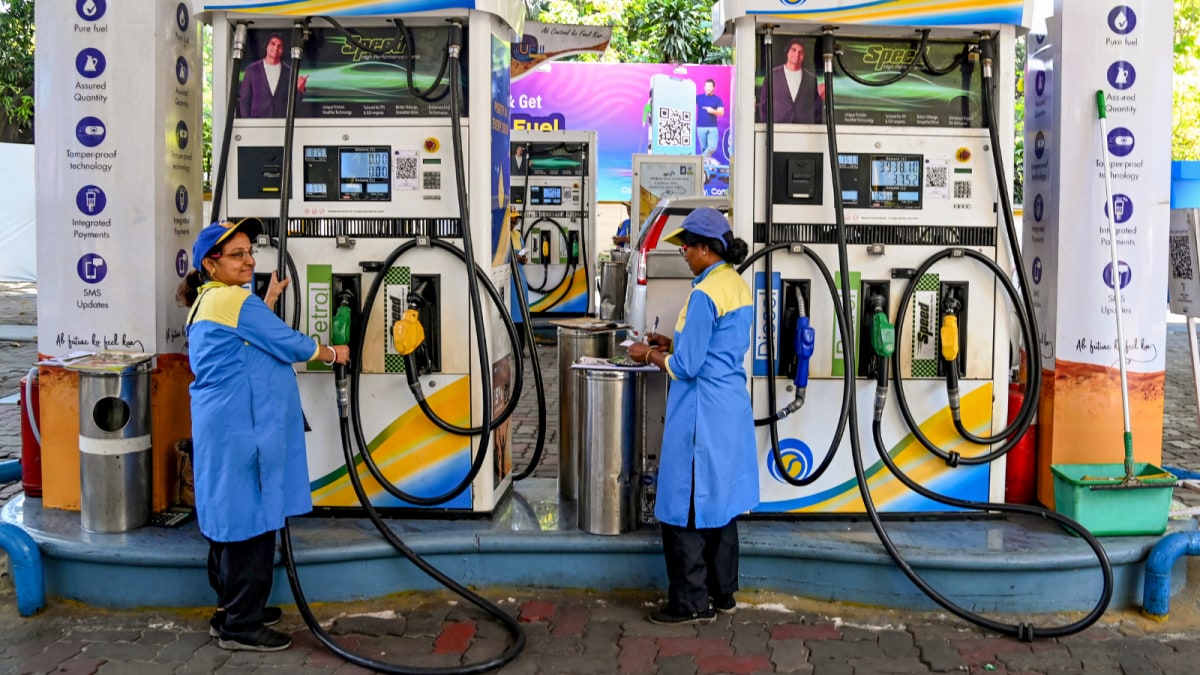
Amid rising concerns over fuel supply due to escalating geopolitical tensions in the West Asia, the Ministry of Petroleum and Natural Gas on Saturday issued an advisory assuring citizens that petrol and diesel remain adequately available across the country. It also urged people to avoid unsafe practices such as storing petrol or diesel in loose containers.
In a post on X, the ministry said, “Petrol and diesel are adequately available at retail outlets across the country. Consumers are advised not to take or store fuel in loose or inappropriate containers, as it poses serious safety risks.”
Important advisory for citizens.Petrol and diesel are adequately available at retail outlets across the country. Consumers are advised not to take or store fuel in loose or inappropriate containers, as it poses serious safety risks.
Retail outlets have been instructed to… pic.twitter.com/5KtQW5dbnR
— Ministry of Petroleum and Natural Gas #MoPNG (@PetroleumMin) March 14, 2026
The advisory comes after authorities detected a case in Tamil Nadu where petrol was reportedly being dispensed in a loose container at a retail outlet, which violates safety norms.
“It has come to notice that at one retail outlet in Tamil Nadu, petrol was being taken in a loose container, which is unsafe and not advisable,” the ministry said.
Govt warns of strict action for violations
The ministry added that strict action has already been taken in the matter.
“The concerned petrol pump has been suspended, and appropriate action has been taken,” the ministry said.
The ministry also said all fuel retailers across the country have been directed to strictly adhere to safety guidelines while dispensing petrol and diesel.
“All retail outlets and dealers have been instructed to strictly follow safety guidelines while dispensing fuel. Any violation will invite strict action,” the advisory said.
Advisory comes amid supply concerns
The government’s clarification comes at a time when concerns over fuel availability have risen due to disruptions in global energy supply chains due to closure of the Strait of Hormuz amid US-Iran-Israel war.
Rumours of shortages have also triggered panic buying in some areas, temporarily affecting supplies at a few petrol pumps despite adequate overall stock levels.
Authorities have urged the public not to believe unverified information and assured that the country’s fuel supply chain remains stable.
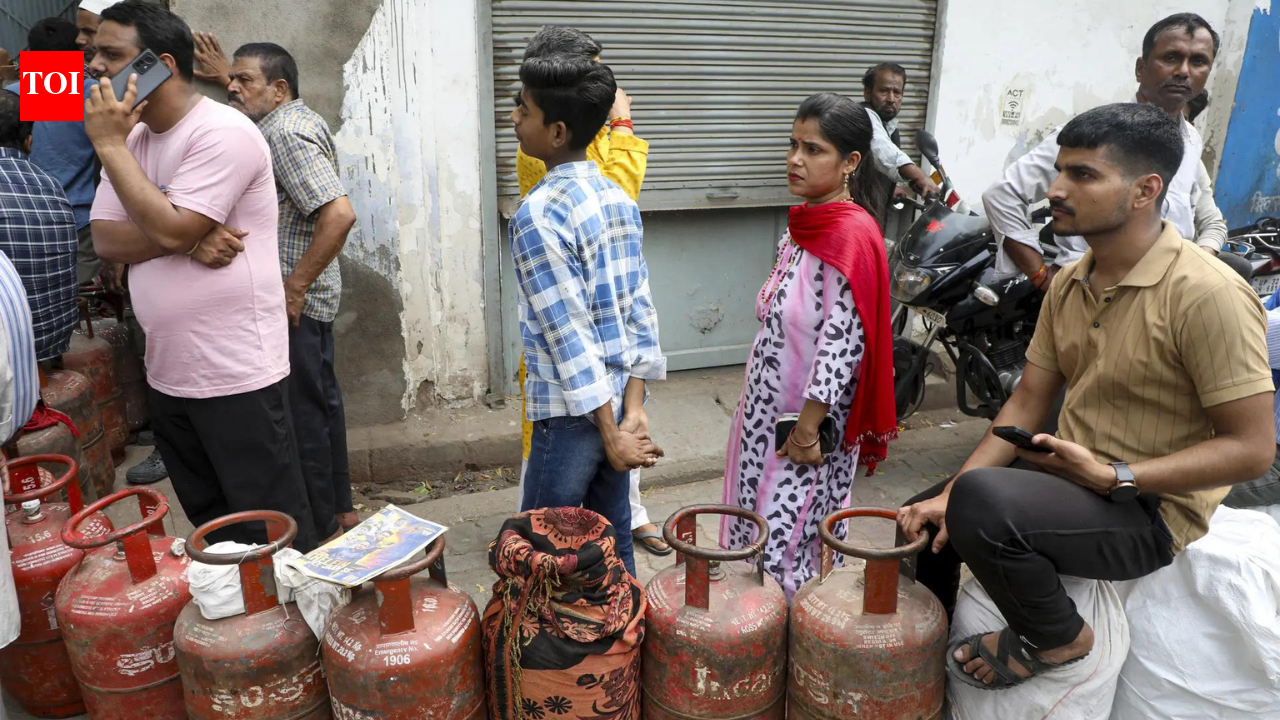
The country saw a huge shortage of LPG cylinders after the supply was stopped in the West Asia amid the ongoing Iran war. However, two Indian cargo ships carrying LPG have been allowed by the Iranian authorities to pass through the Strait of Hormuz. The first Indian LPG vessel, Shivalik, had already begun its movement through the Strait of Hormuz after negotiations helped secure safe passage. The ship has since reached open sea and is sailing safely under Indian Navy guidance. Now, India’s second LPG carrier Nanda Devi has successfully exited the Strait of Hormuz and entered open waters, government sources told CNN-News18, marking another step forward in India’s efforts to safely move its energy cargo through the tense Gulf region.
Nanda Devi is carrying more than 46,000 metric tonnes of liquefied petroleum gas (LPG).
March 14, 2026, 15:35 IST
Read More
Business
A Paramount-Warner Bros. movie slate could rule the 2027 box office, but is it sustainable?

Paramount Skydance CEO David Ellison speaks during the Bloomberg Screentime conference in Los Angeles on October 9, 2025.
Patrick T. Fallon | Afp | Getty Images
Hollywood could soon have a new king of the box office.
With Paramount Skydance set to take over Warner Bros. Discovery, the combined film studios could dominate the theatrical slate.
Paramount CEO David Ellison has repeatedly promised not to pull back on production from either studio, with the goal of making 30 movies a year — 15 from Paramount and 15 from Warner Bros. The pending transaction, with an enterprise value of $111 billion, must still win regulatory approval both in the U.S. and in Europe.
As the current 2027 slate stands, the combination of WBD and Paramount would result in 26 theatrical releases. However, additions to that calendar could come as soon as April at the annual CinemaCon conference in Las Vegas.
This behemoth of a slate is dominated by Warner Bros. titles, and it’s likely that those films would account for the bulk of ticket sales.
The studio is set to release films from major franchises including Godzilla-Kong, Superman, Batman, Minecraft, The Conjuring universe, Gremlins and Lord of the Rings.
Meanwhile, Paramount will have new entries for Sonic the Hedgehog, Paranormal Activity, A Quiet Place and its animated Teenage Mutant Ninja Turtles franchises.
Still from Paramount’s “Sonic the Hedgehog 2.”
Paramount
While Paramount’s franchises are popular and have generated solid ticket sales at the box office, its major releases in 2027 are smaller budget features. In fact, no film in any of those four franchises has generated more than $350 million globally, according to data from Comscore. But with smaller budgets, they don’t have to in order to be profitable.
Warner Bros.’ part of the slate, on the other hand, has bigger budget features that in the past have generated bigger box office returns. The most recent Godzilla-Kong film generated $572 million globally, 2025’s “The Conjuring: Last Rites” tallied nearly $500 million, “The Batman” took in $772 million and “A Minecraft Movie” nearly hit $1 billion.
“When you look at the films on the horizon from the PAR/WBD combo it is most impressive,” Paul Dergarabedian, head of marketplace trends at Comscore, told CNBC. “And it may not be an overstatement to say that that slate could indeed have the potential to generate the biggest single studio box office in 2027.”
The Warner Bros. movie studio is a big part of why Ellison was so committed to winning over WBD’s board and its shareholders in a bidding war against Comcast and Netflix. Last year, Warner Bros. was the second-highest grossing studio at the domestic and global box office. Paramount was fifth.
Disney has long held the box office heavyweight title, although it was briefly overthrown in 2023 by Universal. Warner and Universal have jockeyed between second and third position, with Sony, Lionsgate and Paramount falling in line behind them.
A tricky feat
“Doubling up two major slates adds to the potential for a very strong 2027, but nothing is ever certain when it comes to assuming a potential annual box office winner among studios,” said Shawn Robbins, director of analytics at Fandango and founder of Box Office Theory. “That’s especially true when the likes of Disney and Universal will each bring out their own heavy-hitters next year.”
Disney, in particular, has franchises like Ice Age, Star Wars, Frozen and Avengers on the docket for 2027.
Of course, franchise tentpoles are not always guaranteed to succeed at the box office, but the combined efforts of Paramount and Warner Bros. is a compelling offering for an industry that has been shrinking dramatically over the last decade.
“The notion of two major studio slates under one large umbrella in 2027 makes for an intriguing prospect while raising some fair speculation,” said Robbins. “We’ve seen the decline in theatrical output in the years following Disney’s acquisition of Fox, although caveats such as the pandemic and streaming explosion somewhat skew that comparison.”
A combined Paramount and Warner Bros. slate also faces some logistic issues. There are only 52 weekends on the calendar, and with 30 movies, the studio would need to strategically place its releases as not to cannibalize its own ticket sales.
David Corenswet stars are Superman in Warner Bros.’ “Superman.”
Warner Bros. Discovery
Robbins noted that rival studios typically only go head-to-head on the same weekend or on back-to-back weekends if they are certain there isn’t a major overlap in audience demographics. It’s why there is often a horror movie set for release at the same time as a family-friendly animated feature, for example.
In contrast, Robbins noted, Paramount is scheduled to release “Sonic the Hedgehog 4” just one week ahead of Warner Bros.’ “Godzilla X Kong: Supernova.”
“It wouldn’t be a shock to see one of those shifted earlier or later on the calendar since the parent studio will want to minimize risk and do what’s best for the financial bottom line while remaining competitive,” he said.
And while Ellison has touted a 30-movie slate in the years after 2027, it’s unclear if that future is feasible.
Traditionally, when two major studios merge, the number of films released declines and there is a major wave of layoffs as consolidation weeds out redundancies. Not to mention, the marketing costs of big-budget films can be prohibitive.
“What will actually become normal for the newly unified house of Paramount and Warner remains to be seen,” Robbins said. “The longevity of such a slate in the years after 2027 will be challenging to produce, but never say never.”
Disclosure: Versant is the parent company of CNBC and Fandango.
Business
Middle East turmoil: After IndiGo and Air India, now Akasa Air to levy fuel surcharge – check details – The Times of India

Akasa Air on Saturday announced that it will introduce a fuel surcharge ranging from Rs 199 to Rs 1,300 on domestic and international flight tickets booked from March 15, citing a sharp rise in aviation turbine fuel (ATF) prices amid escalating geopolitical tensions in the Middle East.In a post on X, the airline said the surcharge will apply to all bookings made from 00:01 hrs on March 15, 2026, and will not be applicable to tickets booked before that time. The airline said the additional charge will be levied per sector and will vary depending on the duration of the flight.
Akasa cites sharp rise in ATF prices
“There has been a significant increase in the price of aviation turbine fuel, driven by evolving geopolitical developments in the Middle East,” Akasa Air said in its statement.“As fuel represents a significant portion of airline operating costs, this impacts the cost of operations across the aviation industry,” it added.The airline said it remains focused on offering “warm and efficient customer service, reliable operations, and affordable fares while maintaining the highest standards of operational efficiency”, and added that it will continue to monitor the operating environment and review the fuel surcharge periodically.
Move follows Air India, IndiGo fare actions
Akasa’s decision comes after larger Indian carriers Air India Group and IndiGo also moved to pass on part of the fuel cost burden to passengers.Earlier, IndiGo said it will levy an additional fuel charge of Rs 425 to Rs 2,300 on all new domestic and international bookings made from 00:01 hrs on March 14, citing “the significant surge in fuel prices following the ongoing geopolitical issues”.IndiGo said IATA’s jet fuel monitor showed an over 85% rise in fuel prices for the region, adding that ATF represents a major share of airline operating costs.Air India Group had earlier introduced a fuel surcharge ranging from Rs 399 to $200 on flights beginning Thursday, saying that without the move, some services may not cover operating costs and could face cancellation.
Middle East conflict driving fuel cost pressure
The latest surcharge announcements come as the widening conflict in the Middle East continues to disrupt global oil supplies and push up jet fuel prices worldwide.Attacks on commercial shipping and oil infrastructure in the Gulf region, along with disruption through the Strait of Hormuz, have tightened supplies and driven a steep increase in fuel prices. Airlines are also facing added operational costs due to airspace restrictions and longer rerouted flights, which burn more fuel.Industry experts said long-haul international routes are likely to feel the greatest impact, though domestic fares may also remain under pressure if fuel prices stay elevated.With Akasa now joining Air India Group and IndiGo, Indian flyers are set to face higher ticket costs across more carriers as airlines respond to the sustained spike in fuel expenses.

President Donald Trump said the US heavily bombed military targets on Iran’s Kharg Island, which handles almost all of the country’s crude exports, and threatened to hit the island’s oil infrastructure.
“I have chosen NOT to wipe out the Oil Infrastructure on the Island. However, should Iran, or anyone else, do anything to interfere with the Free and Safe Passage of Ships through the Strait of Hormuz, I will immediately reconsider,” Trump posted.
Iran’s military threatened to reduce US-linked oil facilities in the region “to a pile of ashes” if its energy infrastructure was hit.
Iranian news agency Fars reported that no oil infrastructure on Kharg had been damaged in the bombing.
US allows Venezuela fertilizer imports
Washington on Friday authorized imports of fertilizer from Venezuela, whose leader it deposed in January, as the US-Israel war against Iran drives up prices of the key agricultural commodity.
Washington has issued new licenses as part of the ongoing easing of its sanctions on Venezuela’s energy sector.
In addition to oil and gas, the licenses now include trade in fertilizers, including urea and phosphates.
Brent surges 11% over week
The price of a barrel of Brent crude, the international benchmark for oil, soared by 11 percent over the week to $103.14 at Friday’s close, while stocks slipped.
Brent prices have rocketed more than 42 percent since US-Israeli strikes on Iran plunged the oil-rich Middle East into war.
Pushback on easing Russia sanctions
The US Treasury Department said it would temporarily allow the sale of Russian oil that is at sea as energy prices soared, triggering pushback.
The leaders of France, Germany and EU chief Antonio Costa all spoke out against the idea.
Russia’s economic envoy Kirill Dmitriev said the global energy market “cannot remain stable” without his country’s oil.
Only 77 ships have traversed Hormuz: Lloyd’s
Only 77 ships have so far crossed the Strait of Hormuz in March as the war disrupts one of the world’s most vital shipping routes, a maritime data firm reported Friday.
Lloyd’s List Intelligence said most of the vessels belonged to the so-called shadow fleet of ships being used to skirt Western sanctions and regulations, typically linked to Russia and Iran.
It added during the period of March 1 through 11 last year, around 1,229 vessels made the passage through the waterway.
20 ships attacked trying to transit Hormuz
Twenty oil tankers and cargo ships have been attacked since the war began, according to AFP monitoring with British maritime security group UKTMO and other sources.
But a Turkish-owned ship was able to cross the Strait of Hormuz with Iran’s permission, Turkey’s transport minister said.
Serbia, Portugal cut fuel tax
Serbia’s government temporarily cut fuel taxes by 20 percent, with its energy ministry saying the excise duties on petrol and diesel would be reduced from Friday until April 15.
Portugal also said it was renewing a temporary cut to fuel taxes, with officials adding that the cut would apply to petrol and diesel.
African nations have limited oil reserves
Fuel shortages caused by the war could knock up to three percentage points off African economic growth if they persist, a top regional energy regulator told AFP.
Most African countries have fuel reserves for just 15 to 25 days, compared to the International Energy Agency standard of 90 days, said Geoffrey Aori, CEO of the Regional Association of Energy Regulators for Eastern and Southern Africa.
He called on African governments to introduce fuel rationing and subsidies to cushion the blow of inflation and weakening currencies in the short term.
6 million air passengers affected
More than six million air passengers travelling to or from the Middle East have had their flights cancelled since the start of the war, according to the aviation data specialist Cirium.
It said more than 52,000 out of 98,000 scheduled flights have been called off.
Nepal restricts cooking gas
Nepal has started selling half-filled cooking gas cylinders to curb hoarding and panic buying, officials said, following import disruptions due to the war.
The landlocked Himalayan nation of 30 million relies almost entirely on India for the transportation of its fossil fuel needs, and around 90 percent of India’s liquefied petroleum gas passes through the Strait of Hormuz.


Tips and Advice for Buying Used or Refurbished Electronics

June Marlow, star of ‘Doc Martin’ dies days after celebrating 95th birthday
A Paramount-Warner Bros. movie slate could rule the 2027 box office, but is it sustainable?

-
 Politics1 week ago
India let Iran warship dock the day US sank another off Sri Lanka, say officials
-

 Sports1 week ago
Pakistan set for FIH Pro League debut | The Express Tribune
-
 Business1 week ago
Restaurant group changes name after bid to buys pubs across the UK
-

 Entertainment1 week ago
Harry Styles kicks off new era with ‘One Night Only’ comeback show
-

 Sports1 week ago
Winners and losers of the 2026 NHL trade deadline
-
 Business1 week ago
Home heating oil: ‘Most of my pension has gone on home heating oil’
-
 Business2 days ago
Stock market crash today (March 12, 2026): Nifty50 opens below 23,600; BSE Sensex down over 900 points on continuing US-Iran war – The Times of India
-

 Entertainment1 week ago
Kanye ‘Ye’ West trips during trial: ‘Is he asleep?’