

Fashion
Philippines manufacturing outlook improves as Dec PMI tops 50

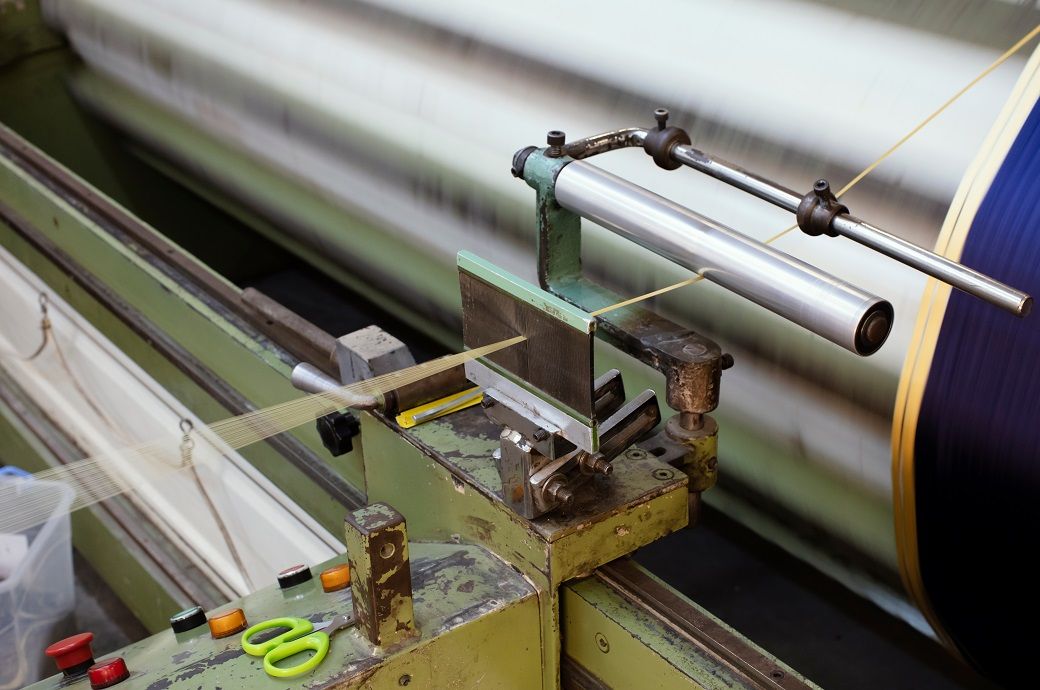
The Philippines’ manufacturing sector has ended the fourth quarter on a cautiously positive note, with the latest Purchasing Managers’ Index (PMI) data pointing to early signs of recovery. The Manufacturing PMI rose to 50.2 in December from 47.4 in November, moving back above the neutral 50 mark and signalling a slight improvement in overall operating conditions after a sharp deterioration in the previous month.
Philippines manufacturing has showed early recovery signs as PMI rose to 50.2 in December from 47.4 in November.
New orders grew for the first time since August, easing output and job declines.
Export demand weakened sharply, while purchasing activity and inventories stabilised.
Cost pressures softened, output prices rose modestly, and firms remained cautiously optimistic for 2026.
Improved demand conditions underpinned the uptick, as total new orders increased for the first time since August, ending a three-month period of contraction. While the pace of growth was modest, it was the strongest recorded since April.
In contrast, foreign demand remained a drag on performance, with new export orders falling sharply and the relevant index slipping further below 50, marking the steepest decline in around 15 months, S&P Global said in a release.
The rise in new business helped ease, but not reverse, the downturn in production. Output continued to fall moderately in December, extending the current contraction to four months—the longest such sequence since 2021.
Even so, manufacturers responded to higher order inflows by stepping up purchasing activity for the first time in three months, with input buying rising at its fastest pace since August. This helped stabilise inventories, with pre-production stocks unchanged after a sharp drawdown in November and finished goods inventories rebuilding slightly.
Labour market conditions also showed tentative signs of stabilisation. Employment declined for a second consecutive month, but the rate of job shedding slowed significantly and was marginal overall. Some firms continued to reduce headcount due to weak production requirements, while others increased staffing in anticipation of stronger demand in the months ahead.
“New order volumes rose for the first time in four months, which helped partly ease the ongoing downturn in production. Fuelled by this positive direction, companies increased their purchasing activity for the first time since September, while the labour market showed signs of stabilising,” Maryam Baluch, economist at S&P Global Market Intelligence, said commenting on the latest survey results.
At the same time, input delivery times lengthened, reversing November’s improvement, as port congestion and adverse weather disrupted supply chains, although supplier performance deteriorated only slightly.
On the cost front, operating expenses rose at the slowest pace in 19 months, reflecting subdued input price inflation despite higher material costs for some firms. Output prices increased at a slightly faster rate than in November as manufacturers passed on part of the cost burden, though price rises remained modest by historical standards.
Looking ahead, firms expect output to rise over the course of 2026, supported by new projects, product launches and expansion plans, although overall optimism eased slightly from November’s recent one-year high.
“That said, the improvement was tepid across the sector, and its sustainability will largely depend on whether demand can be maintained and further bolstered, bringing growth back to production. Additionally, the sector faces notable headwinds from sharply declining export market conditions, which are limiting the potential for broader expansion. Consequently, at present, the manufacturing sector’s growth is primarily being driven by domestic demand, with external markets offering little support,” Baluch added.
Fibre2Fashion News Desk (HU)









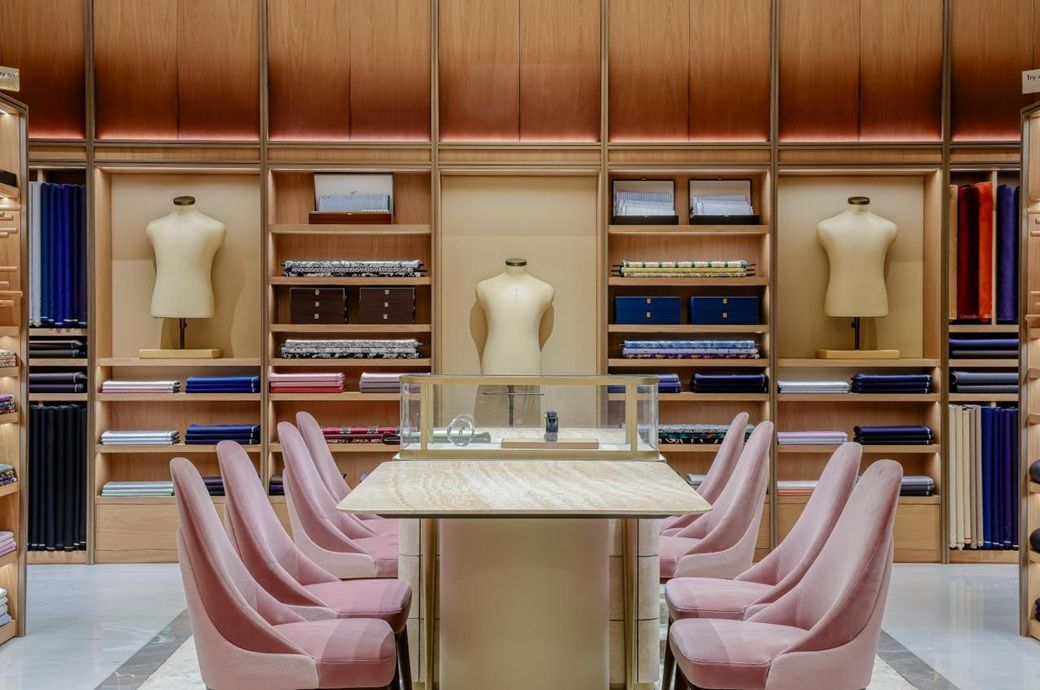
Chairman’s Collection reflects Raymond’s seamless transition from a heritage textile pioneer to a modern luxury menswear destination, now stepping into a more rarefied, couture-led space. One of the most ambitious expressions of luxury menswear retail, this new retail store is a sartorial experience for globally aware Indian consumers. Drawing from Renaissance and Baroque influences, layered with a contemporary European sensibility, the space is rooted in Indian craftsmanship while reflecting a distinctly global identity of the new-age India.
Raymond has unveiled its Chairman’s collection flagship in Bandra, marking its evolution into luxury menswear.
The 11,000 sq ft, two-level space offers couture fashion, fine jewellery, fragrances, and bespoke services.
Blending Indian craftsmanship with global design, it delivers an immersive, appointment-led experience with curated art, collectibles, and personalised styling.
THE COLLECTION: THREE DISTINCT WORLDS
Modern Opulence – Casual Couture
Elevated casualwear, reimagined through the grandeur of Renaissance motifs and the ornate richness of Baroque detailing on printed silk shirts, embroidered denim, and statement separates, offers a refreshing take on couture sensibility in the art of dressing.
Power Dressing – Contemporary Heirlooms
Power Dressing, elevated to an art form. Each suit is crafted in exquisite fabrics from across the world, offering impeccable fit and finished with the artisanal depth that is uniquely and unmistakably Indian.
Embellished jackets. Indo-Western silhouettes. Velvets, silks, and jewel tones that speak before you do. Every piece in the Chairman’s Collection reflects power dressing and is an act of self-expression, conceptualized for moments that demand presence, individuality, and the kind of authority that needs no introduction.
Art, Heritage & Experimentation – Indian Renaissance
A deeply artisanal expression combining Renaissance-inspired prints with traditional Indian techniques such as zardozi and hand embroidery, creating garments that transcend fashion to become collectible pieces.
BEYOND FASHION: A COMPLETE LUXURY EXPERIENCE
The Chairman’s Collection extends gracefully beyond apparel, embracing a far more holistic vision of modern luxury. Fine jewellery for men, lab-grown diamond pieces of exceptional provenance, and a curated edit of the world’s most coveted fragrance and watch brands – each chosen with the same discernment that defines every corner of this space.
A natural evolution of Raymond’s legacy, this launch marks a thoughtful foray into new luxury categories where style meets substance, and each coveted offering is a reflection of a life lived with intention. The store operates on an appointment-led model, ensuring a personalised experience from concept to execution. Be it bespoke tailoring or personalised styling, each element is designed to offer exclusivity.
A SPATIAL EXPERIENCE DESIGNED LIKE A JOURNEY
Spanning across two levels, the store unfolds through carefully designed environments:
- A lounge-inspired setting with leather armchairs and bespoke trunks, evoking exclusivity
- Gallery-style displays, where apparel and finest fabrics are presented as collectible pieces
- A refined tailoring zone, celebrating Raymond’s legacy in craftsmanship
- Curated display zones, where collectibles and design products add depth and narrative
Every detail of the space reflects a shift in luxury retail from transactional to experiential, immersive, and deeply personal.
WHERE FASHION MEETS ART & COLLECTIBLES
Woven seamlessly into the store are museum-worthy displays of rare collectibles, from Formula 1-inspired models to precision-crafted masterpieces that are a true reflection of the Chairman’s lifelong devotion to the art of the automobile, both vintage and contemporary. Impossible to overlook, the curated Art Deco-inspired pieces and handpicked artworks that grace the space have each been chosen with extraordinary intentionality, with every element in coherence with the store’s design language.
This layered, considered approach transforms the Chairman’s Collection into something far greater than a fashion destination, unraveling a world unto itself. Every corner, every curation, every carefully chosen object speaks to a man’s taste, his sensibility, and the life he has chosen to lead. The effect is singular and unmistakable – a space that does not merely dress a man, but defines him. Not just a philosophy of style, but a complete philosophy of living.
A NEW CHAPTER FOR RAYMOND
Speaking on the occasion, Satyaki Ghosh, CEO, Raymond Lifestyle Limited, said; “Chairman’s Collection reflects the pride of creating international-quality luxury, made in India, for the modern Indian man. Raymond being the pioneers in menswear, this is a logical brand evolution towards launching a first of its kind couture experience in India. Consumer centricity is at the core of Raymond and this latest endeavour is an affirmative step in the same direction.”
With Chairman’s Collection, moves forward not as a heritage brand resting on its century-old legacy, but as India’s homegrown brand paying homage to luxury that understands the new Indian identity, which is making its formidable presence being felt in the world.
Note: The headline, insights, and image of this press release may have been refined by the Fibre2Fashion staff; the rest of the content remains unchanged.
Fibre2Fashion News Desk (RM)
ASEAN+3 comprises the members of the Association of Southeast Asian Nations (ASEAN), China, South Korea and Japan.
Macroeconomic stabilisation in the ASEAN+3 nations has progressed while navigating the new energy shock triggered by the Middle East conflict.
Structural adjustments continue, according to the latest ASEAN+3 Regional Economic Outlook.
While vulnerabilities remain, the pace and direction of policy adjustment have improved significantly in the region.
In Singapore and Malaysia, strong institutional credibility, financial stability and well-developed investment frameworks support relatively stable economic management.
In Vietnam and Cambodia, manufacturing and services continue to underpin economic activity despite external headwinds.
Adjustment is also visible in economies that have faced more acute macroeconomic pressures, where policy measures to stabilise exchange rates, recalibrate fiscal policy and strengthen debt management have contributed to a marked improvement in macroeconomic conditions compared with earlier periods of stress, the report released by the ASEAN+3 Macroeconomic Research Office (AMRO) said.
While vulnerabilities remain, the pace and direction of policy adjustment have improved significantly, it noted.
Taken together, these experiences suggest that economic management in the region has evolved around a pragmatic combination of policy approaches rather than a single doctrinal model, the report remarked.
Regional economies are placing greater emphasis on strengthening flexibility and resilience in trade, foreign direct investment and financial flows.
At the same time, many economies across the region are investing in digitalisation, advanced manufacturing and emerging technologies.
Rather than narrow sectoral targeting, industrial strategies often emphasise foundational capabilities—human capital development, digital infrastructure and technological capacity. These efforts support adaptation to shifting global conditions while maintaining long-term competitiveness, it added.
Fibre2Fashion News Desk (DS)

Kornit Digital Ltd. (NASDAQ: KRNT “Kornit Digital”, “Kornit”, or the “Company”), a global pioneer in sustainable, on-demand digital fashion and textile production, today announced more than 500 leaders from across the apparel ecosystem are gathering in Hollywood, Florida for Konnections 2026 – Powered by Kornit. With more than 20 sessions across three days, the event takes place at a pivotal moment as the industry explores how technology is enabling new levels of agility.
Kornit’s Konnections 2026 gathers 500+ global leaders to advance on-demand apparel production.
With Atlas MATRIX and PrintFactory, the company is building a digital infrastructure linking demand, production, and fulfilment.
The event underscores a shift towards agile, real-time manufacturing with reduced inventory risk and scalable global consistency.
Now in its third year, Konnections has become a central global platform where the industry aligns around what comes next. The event brings together leading sports and fashion brands, digital platforms, creators, designers, software partners, fulfillment providers, investors, analysts, and media, all focused on one clear direction: accelerating the move from forecast-driven production toward agile, on-demand manufacturing.
Critical inflection point
The apparel industry is undergoing a structural shift. Demand is faster, more fragmented, and increasingly shaped by digital platforms and creators. Brands are seeking to reduce risk, improve margins, and operate more sustainably while delivering higher quality at greater speed. These dynamics are accelerating the transition toward demand-driven production, enabled by technologies allowing companies to respond in real time to market needs. Konnections highlights this shift not as a future vision, but as a transformation already underway across the global apparel industry.
From technology to infrastructure
At Konnections 2026, Kornit will unveil Atlas MATRIX, a breakthrough system enabling true on-demand manufacturing across all major fabric types, including cotton, polyester, and blends, within a single platform. By enabling consistent retail-quality production across multiple fabrics, Atlas MATRIX removes one of the largest barriers preventing digital production at scale.
In parallel, Kornit is highlighting the strategic acquisition of PrintFactory, a cloud-native color and production platform enabling consistent output across digital and analog environments. PrintFactory expands Kornit’s ability to support large global producers transitioning from analog to digital production while enabling distributed production at scale. This acquisition strengthens Kornit’s infrastructure connecting demand generation with consistent global fulfillment and expands Kornit’s reach into the large global screen-printing market.
Together, these innovations reflect a clear strategic direction: building a fully digital infrastructure linking demand generation with production and fulfillment, supporting scalable on-demand manufacturing globally. This integrated approach enables brands and demand generators to scale on-demand production globally with consistent quality, supporting faster response to market trends while reducing inventory risk.
“We are witnessing the gradual decline of traditional production models and the emergence of a new era in apparel manufacturing,” said Ronen Samuel, Chief Executive Officer of Kornit Digital. “Production is increasingly moving closer to demand, enabled by digital infrastructure connecting demand generation, production, and fulfillment. Konnections unifies the leaders shaping this transformation.”
A global ecosystem connected
Konnections brings together the full value chain enabling this shift, including global brands, sportswear leaders, digital-native platforms, designers, and fulfillment providers. Participants represent a truly global ecosystem with attendees from the Americas, Europe, and Asia. Keynote speakers include Nick Beighton, former CEO of ASOS; Alex Saltonstall, CEO of the combined Printful and Printify platform; Daymond John, entrepreneur and Shark Tank investor; and senior leaders from global brands including Legends, Custom Ink, Redbubble, Zumiez, Life is Good, Nine Line, Grand Style, and additional industry innovators.
Innovation in action
A central component of the event is the Konnections Solutions Showcase, where Kornit will highlight Atlas MATRIX, Apollo, and Presto MAX PLUS for roll-to-roll and technical applications, alongside innovations in materials, automation, and integrated production solutions. A broad ecosystem of partners will present complementary technologies spanning software, robotics, blank goods, and production automation, demonstrating how connected solutions enable faster, more efficient, and more responsive production environments.
Mr. Samuel concluded, “Konnections 2026 represents a defining moment for an industry increasingly shaped by agility, real-time production, and minimal waste. Konnections unifies the global ecosystem enabling this transformation and demonstrates how the future of apparel production is becoming a reality.”
Note: The headline, insights, and image of this press release may have been refined by the Fibre2Fashion staff; the rest of the content remains unchanged.
Fibre2Fashion News Desk (MS)


Is Claude down? Here’s why users are seeing errors

Can Jordan Chiles end her career with an NCAA team title?

Raymond unveils luxury Chairman’s Collection Store in Mumbai

-

 Fashion1 week ago
India’s exports face reset as EU links trade to carbon metrics: EY
-

 Entertainment1 week ago
Queen Elizabeth II emotional message for Archie, Lilibet sparks speculation
-

 Entertainment1 week ago
Lamar Odom shocking response to Khloé Kardashian account of his overdose
-

 Tech7 days ago
As the Strait of Hormuz Reopens, Global Shipping Will Take Months to Recover
-

 Tech1 week ago
Azure customers up in arms over ‘full’ UK South region | Computer Weekly
-

 Fashion1 week ago
CII submits 20-pt agenda to Indian govt to back firms hit by Iran war
-

 Tech6 days ago
This AI Button Wearable From Ex-Apple Engineers Looks Like an iPod Shuffle
-

 Politics5 days ago
Indian airlines hit hardest after Dubai limits foreign flights until May 31