

Entertainment
Pilot makes emergency landing on Huntington beach after engine failure


A pilot executed an emergency landing on the sands of Huntington Beach late Thursday evening, October 23, after a single-engine aircraft suffered a complete engine failure.
No injuries are reported following the incident. This marks the third aviation crisis in Southern California in the past three weeks.
The aircraft is identified as a 1973 Cessna 172 that had departed from Santa Barbara Airport en route to John Wayne Airport around 8:30 p.m.
After an hour into the flight, the pilot reported a loss of engine power and an inability to reach the intended destination.
Corbin Carson, Huntington Beach’s public affairs manager stated, “The pilot landed the aircraft on the shore after reporting engine trouble and being unable to return to John Wayne Airport.”
The situation was examined from the air by the Huntington Beach Police Department’s helicopter, HB-1, whose pilot overheard the distress calls.
The pilot of the Cessna used his visual contact with the helicopter crew and masterfully steered the plane towards a soft landing between the Lifeguard Towers 11 and 13 near the pier at around 9:30 p.m.
“The landing was incidental and both the pilot and passenger, along with other bystanders on the beach, were not hurt,” the authorities confirmed.
The plane had not been damaged during the landing, requiring heavy machinery to be taken off the beach.
The landing and emergency landing are the third and fourth recent aviation accidents in the region, after a helicopter crash in Huntington Beach, which hospitalized five people and a forced landing of a plane in Long Beach on October 21.
The Federal Aviation Authority (FAA) and the National Transportation Safety Board (NTSB) have also been informed and will also begin investigations on the cause of engine failure.
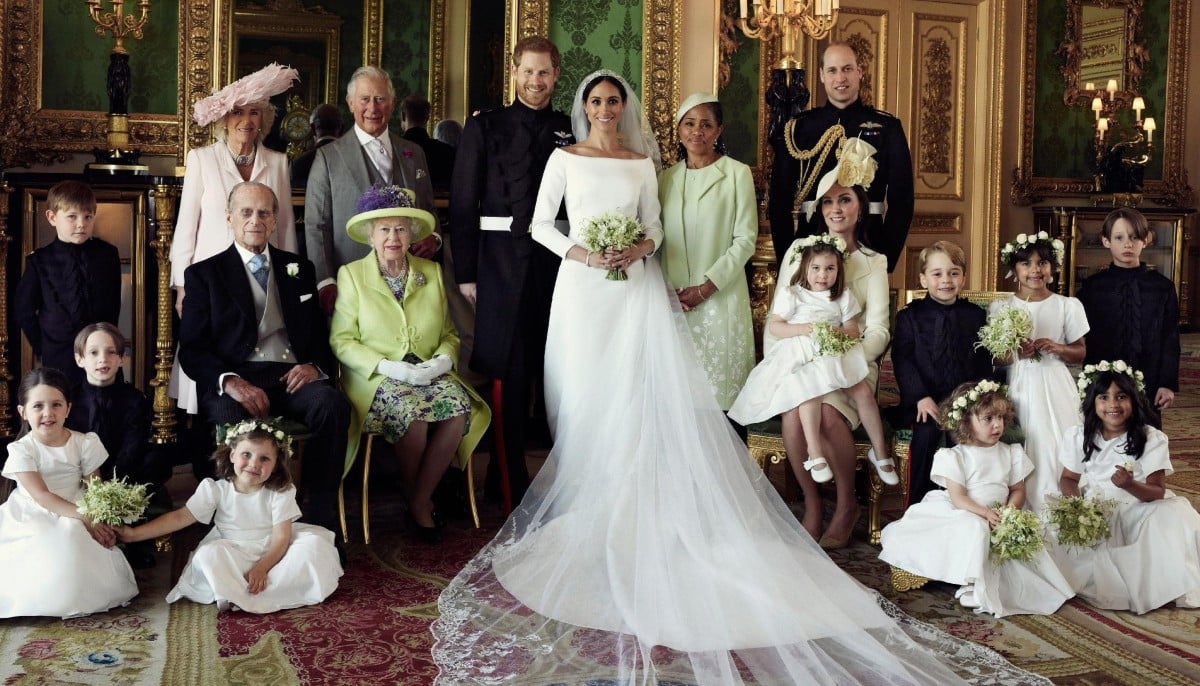
Royal family maintained silence over the cancer struggles of a senior member as new, surprising details emerged.
An author, Hugo Vickers, talked about the royal figure’s health scare that was not disclosed by the firm at the time of his death.
The royal commentator wrote that Queen Elizabeth II had been informed that Prince Philip had been diagnosed with pancreatic cancer eight years before his death.
At the age of 91, the Duke of Edinburgh’s medical team shared with the royals about his inoperable form of the disease in June 2013.
Following the diagnosis, “there was a view that [Philip] might not be seen in public again”, but “the duke outwitted the pessimists,” Hugo shared, as per The Times.
The royal expert opened up about Prince Philip’s last days of life, stating there were “moments of tranquillity.”
“On the last night of his life, he gave his nurses the slip, shuffled along the corridor on his Zimmer frame, helped himself to a beer and drank it in the Oak Room,” he penned.
Hugo added, “The following morning, he got up, had a bath, said he did not feel well and quietly slipped away. By this point, he had lived with pancreatic cancer for nearly eight years — far longer than the usual survival time from diagnosis.”
It is important to mention that the Queen was not with her husband when he passed away.
For the unversed, Prince Philip passed away in Windsor Castle in 2021 just before his 100th birthday.
As per the death certificate, his cause of death was mentioned as “old age,” hinting that the Palace wanted to keep it a secret.
The cancer shock returned in the royal family after King Charles and Princess Kate were diagnosed with the disease in 2024.
Catherine is in remission from cancer after completing her preventive chemotherapy. Whereas the monarch is still undergoing cancer treatment.
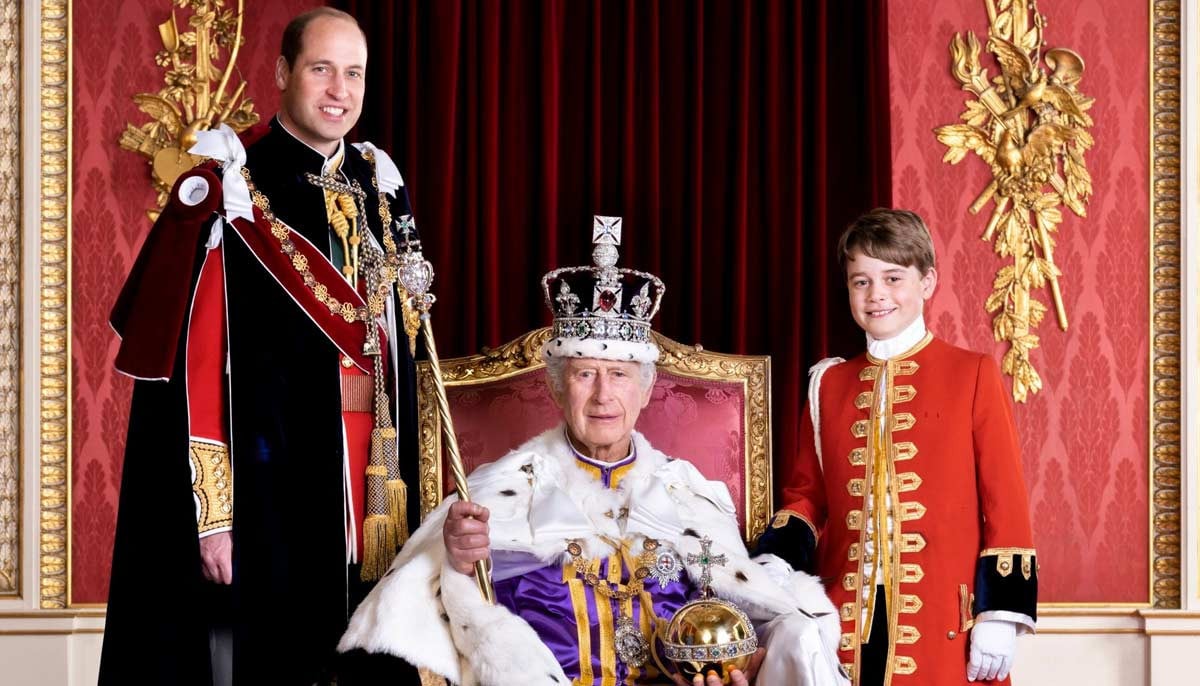
There’s no doubt that the monarchy has been facing unexpexted crisis since the passing of the late Queen in 2022, and King Charles is doing his best to steer the Firm out of the storm.
Amid the turbulence, there is speculation that Prince George’s father Prince William may be the last ruling British monarch.
A British writer and historian previously claimed that Prince George will never be the king.
According to Hilary Mantel, The British monarchy may be abolished before Princess Kate and William’s eldest son George has the chance to reign the Firm.
King Charles, was formally announced as the new monarch following the death of his mother Queen Elizabeth II in September 2022, and he was official croned with his wife Queen Camilla in May 2023.
The develovement made a major shift in royal roles also means William, who was given the Prince of Wales title, is now first in line to the throne, and his eldest son George, is second.
In an old interview to The Times, Hilary said: “I think it’s a fair prediction, but let’s say I wouldn’t put money on it. It’s very hard to understand the thinking behind the monarchy in the modern world when people are just seen as celebrities.”
There are also predictions that the monarch, 77, who’s still underging cancer treatment, would abdicate the throne for his son William due to his advanced age.
While, few fortune tellers previously claimed that William won’t take his his place due to some mysterious reason.
Meanwhile, Jemima Packington, who predicted the Queen’s death, says Charles will eventually hand over the reign to William.
In his first speech as monarch, Charles appeared quashing the rumours about the monarchy’s future, saying he would serve the nation for life.
On the other hand, the reign on William will look different from that of King Charles, who has faced many challenges since becoming king.
He has faced a turbulent period marked by his own cancer diagnosis, the Princess of Wales’s battle with cancer, Prince Harry and Meghan Markle’s never-ending drama and now Andrew’s controversy surrounding his past ties with convicted sex offender Jeffrey Epstein.
William is said to be determined to introduce meaningful but careful changes within the monarchy.
The Prince of Wales wants to modernise how the institution runs. There is a clear acknowledgment that the issues surrounding Andrew Mountbatten-Windsor have had an effect on public trust and there is united willingness to change that.

Lola Tung recalls some “really special” moments she spent with the new heartthrob in town, Hudson Williams.
Back in February The Summer I Turned Pretty and the Heated Rivalry stars attended the Gold House’s Lunar New Year Celebration in New York City.
They were spotted hitting the dance floor together at the event, sending their fans into a frenzy. Their admirers quickly ship both the actors after the interaction.
And now the 23-year-old model and actress is spilling the beans about how the two ended up on the dance floor.
“Well, there’s something really special I think, about… ‘Cause I met Hudson, and then I met Yerin Ha also at that party, and it feels like when you have a similar experience, where… I mean, they’re having crazy experiences right now,” she said.
“I mean, Hudson‘s experience is like, I can’t even imagine that… but it’s that thing of like, you almost instantly have this connection of like, ‘Hi, are you okay?’” she added of how their instant friendship began. “Like, ‘How are you feeling? Are you tired, do you need anything? Do you just wanna like dance and have a good time?’ ‘Cause it’s hard to do that sometimes.”
“And with Hudson too, I was like, ‘I wanna dance, do you wanna dance?’ And he was like, ‘Yeah, let’s dance!’” the actress, who played Isabel “Belly” Conklin in the hit Amazon Prime Video series, recounted. “But like I do appreciate that he was like, ‘Let’s just have a good time. Let’s have a moment.’”
“Even though it like, ya know, is online, and people take their phones out and stuff, it’s like we were having a good time, ya know? And we kind of were like, ‘Everybody dance with us, come on!’” she told Variety during a recent interview for her new movie Forbidden Fruits.
Interestingly, at the event, Lola reunited with her on-screen brother, Sean Kaufman, from The Summer I Turned Pretty.


Tamil Nadu tops India T&A exports; Haryana fastest-growing major state

Royal family ‘hides’ senior member cancer struggles: Shocking details out

US’ Ralph Lauren unveils ‘Timeless by Design 2030’ sustainability plan

-

 Politics6 days ago
Afghanistan announces release of detained US citizen
-

 Sports6 days ago
Broadcast industry CEO says consolidation is ‘essential’ to compete for NFL soaring media rights prices
-

 Tech6 days ago
Can a Home Appliance Fix the Problem of Soft-Plastic Waste?
-
 Business6 days ago
Property Play: Home flippers see smallest profits since the Great Recession, real estate data firm says
-

 Entertainment6 days ago
UN warns migratory freshwater fish numbers are spiralling
-

 Sports1 week ago
Men’s March Madness live tracker: Updates on Saturday’s games
-

 Sports1 week ago
Arne Slot: Liverpool’s defeat to Brighton ‘hurts a lot’
-
 Business6 days ago
Gold prices soar in Pakistan – SUCH TV