

Politics
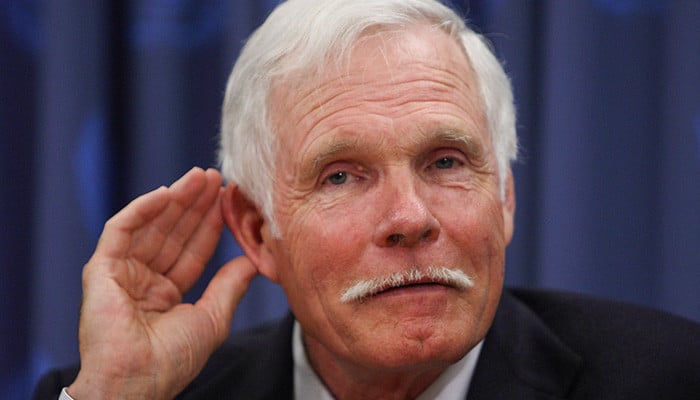
Pioneering CNN founder Ted Turner dead at 87

- CNN gains global prominence during Gulf War live coverage.
- CEO Mark Thompson calls Turner enduring spirit of CNN.
- Turner inspires rival 24-hour news channels including Fox News.
Ted Turner, the flamboyant US entrepreneur who transformed television news with the creation of CNN in 1980, has died at the age of 87, the network said on Wednesday.
The moustached southerner, yachting enthusiast and philanthropist, whose empire also included sports clubs, had been suffering from the degenerative disease Lewy Body Dementia.
Cable News Network upended established broadcasting with its dedication to around-the-clock breaking news and shot to global recognition with its coverage of the Gulf War in 1990-91.
The 24-hour network was the first in the United States to run non-stop news and quickly built a worldwide footprint.
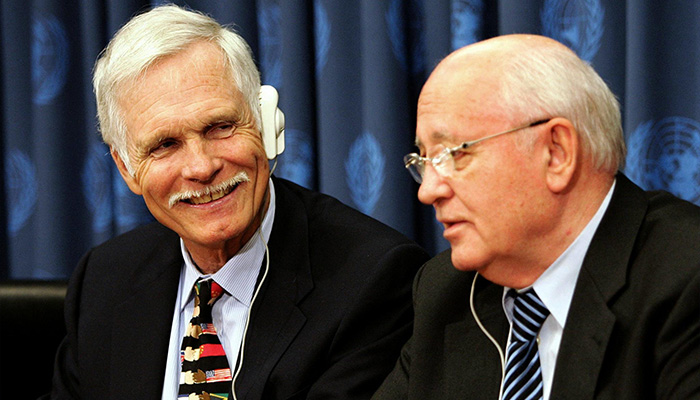
Correspondents brought live coverage from major events ranging from the collapse of the Soviet Union to the Chinese crackdown on the Tiananmen Square protests.
CNN’s decision to keep reporters in Baghdad amid US bombing on the Iraqi capital cemented the network’s reputation as an indispensable source of breaking news.
“Ted is the giant on whose shoulders we stand, and we will all take a moment today to recognise him and his impact on our lives and the world,” Mark Thompson, chairman and CEO of CNN Worldwide, said in a statement.
“He was and always will be the presiding spirit of CNN.”
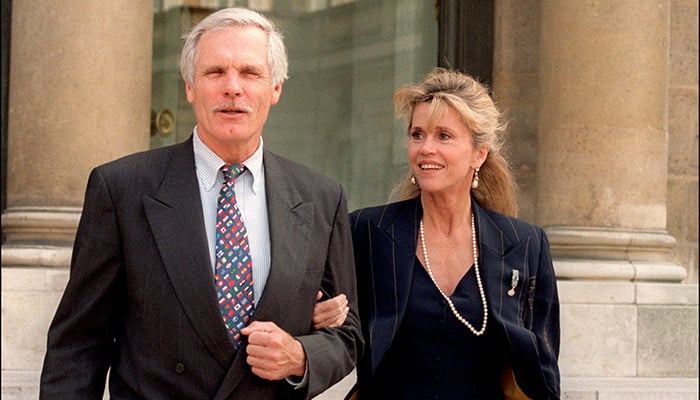
Born in Cincinnati, Ohio in November 1938, Robert Edward “Ted” Turner III went to a military boarding school in Tennessee, and then attended Brown University, but was expelled before graduating.
Turner took over a faltering family advertising business after his father, despondent over financial problems, committed suicide.
After buying a number of radio stations, Turner’s purchase of a struggling Atlanta station in 1970 was his first move into television.
Ten years later, that became the flagship of his nationwide Turner Broadcasting System, the profits from which he parlayed into the launch of CNN.
CNN’s success inspired the creation of other 24-hour news channels including Fox News by longtime Turner rival Rupert Murdoch, MSNBC and countless networks worldwide.
Turner’s television empire expanded beyond CNN and included TBS and TNT channels for sports and entertainment, Turner Classic Movies and Cartoon Network, among others.
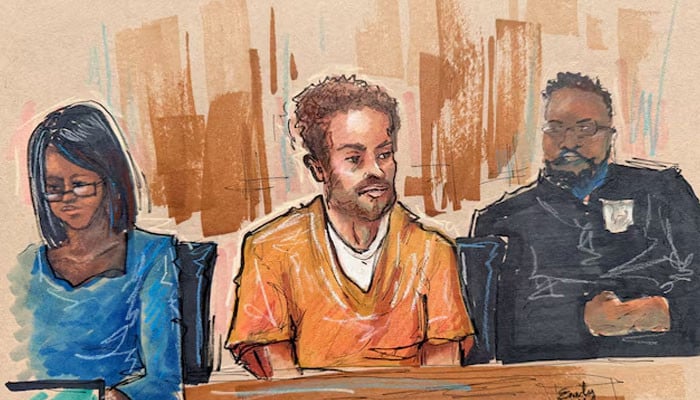
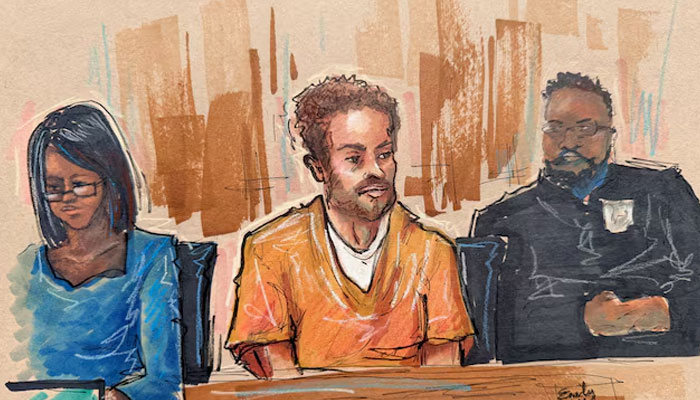
The US Department of Homeland Security identified the US-Israeli war with Iran as a potential motive for the man accused of attempting to assassinate President Donald Trump and senior members of his administration at a White House reporters’ gala last month, according to an intelligence report sent to state and local law enforcement nationwide and other federal agencies.
The report, a preliminary assessment by the Department of Homeland Security’s Office of Intelligence and Analysis dated April 27, assessed that the suspect Cole Allen had “multiple social and political grievances.” It concluded that the Iran conflict “may have contributed to his decision to conduct the attack,” citing social media posts from Allen that criticised US actions in the war.
The assessment sheds new light on the US government’s search for a motive in the foiled attack on the White House Correspondents’ Dinner on April 25.
Its conclusions, while preliminary, offer the most definitive evidence to date that the Iran conflict, which has killed thousands in the Middle East and rattled the global economy, could have been a trigger.
The report, marked as a “Critical Incident Note,” was obtained through open records requests by the transparency nonprofit Property of the People and shared with Reuters.
A DHS spokesperson declined to comment on the contents of the intelligence assessment.
“These reports notify our partners of the latest available information following significant incidents that have impacts to homeland security,” the spokesperson said.
The FBI declined to comment and the US Justice Department did not respond to requests for comment.
On Tuesday, the US Justice Department added a charge of assault on a federal officer, accusing Allen of firing at a US Secret Service agent at a security checkpoint, in addition to attempted assassination, discharge of a firearm during a crime of violence, and illegal transportation of a firearm and ammunition across state lines. He has not yet entered a plea.
FBI examines social media
US officials have so far said little about Allen’s alleged motivation, pointing only to an email Allen sent to relatives on the night of the attack. The message, which officials have called a manifesto, expressed anger at the administration and referred to his desire to target the “traitor” giving a speech, without mentioning Trump by name.
In court documents, prosecutors have alleged that Allen “disagreed” with Trump politically and “wanted to ‘fight back’ against government policies and decisions that he found morally objectionable.”
The FBI has been carrying out a detailed examination of Allen’s social media activity and digital footprint in searching for a motive for the attack, a senior law enforcement official told Reuters, speaking on the condition of anonymity.
“It’s being closely looked at,” the official told Reuters.
The examination includes a review of posts on a Bluesky social media account linked to Allen that posted and shared a range of anti-Trump messages in the weeks leading up to the attack.
The posts include criticism of the US actions in Iran but also broadsides against the Trump administration on immigration enforcement, Elon Musk, and Russia’s war in Ukraine.
The account shared a post calling for Trump to be impeached over his April 7 threat to destroy Iranian civilisation, which came hours before Trump agreed to a ceasefire. It also shared criticism of reporters who planned to attend the press dinner.
The FBI has also reviewed a 2024 post in which an account connected to Allen, while quoting a Bible verse, appears to call Trump “the devil” in response to a message from Trump’s daughter Tiffany.
The focus on Allen’s online activity is in part to stave off conspiracy theories about the motive and online activity of the suspected shooter, the official said, adding that speculation about the online activity of the man who fired at Trump during a 2024 campaign rally in Butler, Pennsylvania, had sparked widely spread conspiracy theories.
- FM Wang says China will work harder to ease Middle East tensions.
- Chinese FM says restart of hostilities in Middle East “unacceptable”.
- Beijing quietly engaging in efforts to resolve Middle East crisis.
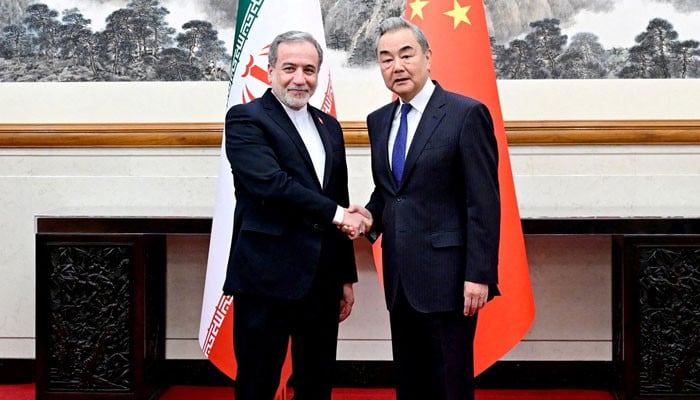
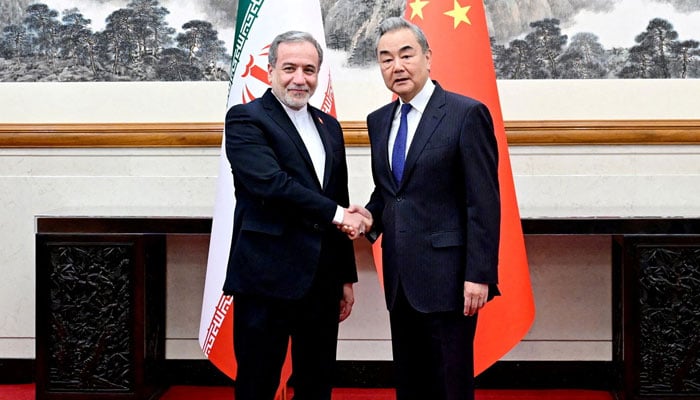
BEIJING: China’s Foreign Minister Wang Yi said Beijing would play a “greater role” in ending hostilities in the Middle East during talks with his Iranian counterpart on Wednesday, a week before US President Donald Trump is due to meet Xi Jinping.
China is a key customer for Iranian oil, defying sanctions imposed by the US, and is directly affected by the blockage of the Strait of Hormuz bordered by Iran.
Beijing has quietly engaged in efforts to resolve the weekslong crisis and its diplomacy is credited with playing an important role in the fragile ceasefire agreed between Washington and Tehran.
China “will work harder to ease tensions and end the fighting, continue to support the launch of peace talks, and play a greater role in restoring peace and tranquility to the Middle East”, Wang told Iran’s Abbas Araghchi in Beijing.
“China considers that a complete cessation of fighting must be achieved without delay, that it is even more unacceptable to restart hostilities, and that continuing to negotiate remains essential,” Wang said, according to a statement from his ministry after the talks.
Manufacturing giant China has been comparatively sheltered from fuel shortages thanks to oil reserves and renewable energy, but costs of oil-derived materials like plastic and fabric have risen significantly.
More than half of the crude imported by sea to China comes from the Middle East and mainly transits through the Hormuz strait, according to maritime analytics firm Kpler.
Analysts have warned the war’s impact on China will be felt for months.
During Wednesday’s talks Wang said China hopes “the parties concerned will respond as quickly as possible to the urgent call of the international community” for a resumption of normal and safe maritime traffic through the Strait of Hormuz.
Trump trip looms
The Wang-Araghchi talks came as Trump said the US would pause escorting commercial ships through the Hormuz Strait – which drew Iranian attacks – barely a day after it began doing so.
Trump cited a desire to reach a peace deal with Iran.
Washington demands tight controls on Tehran’s nuclear programme, which Iran has refused to agree to and has led to talks crumbling.
“On the nuclear issue, China welcomes Iran’s commitment not to develop nuclear weapons, while considering that Iran has the legitimate right to the peaceful use of nuclear energy,” Wang said.
The US leader is expected to meet Chinese President Xi in Beijing on a visit the White House said will take place May 14-15.
Beijing has not confirmed those dates.
A foreign ministry spokesperson again refused to share details when asked about Trump’s visit at a regular news conference on Wednesday.
Trump would join rulers from the Gulf, Europe and Southeast Asia that have recently landed face time with Xi, who has sought to position China as a stable partner in the face of the US- and Israeli-led conflict.
Trump’s visit would also come more than a year after his sweeping global tariffs wreaked havoc on the supply chain, causing chaos in China’s manufacturing sector.
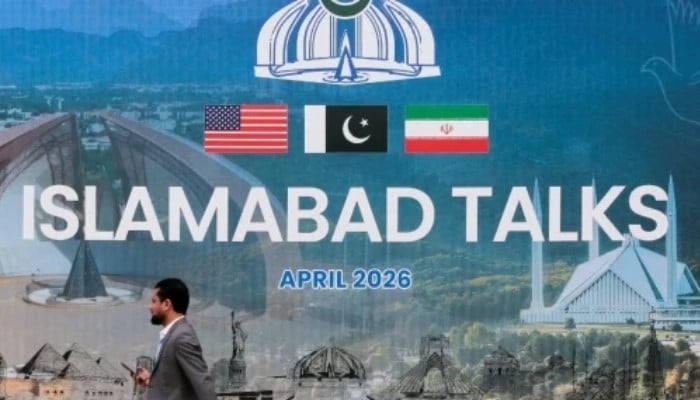
Iran and the United States are close to reaching an agreement to end the war in the Middle East and reopen the Strait of Hormuz, according to reports by Reuters and Axios.
Axios first reported, citing US officials, that the White House believed it was closing in on a one-page memorandum to end the war, which began on February 28 following joint US-Israel strikes against Iran.
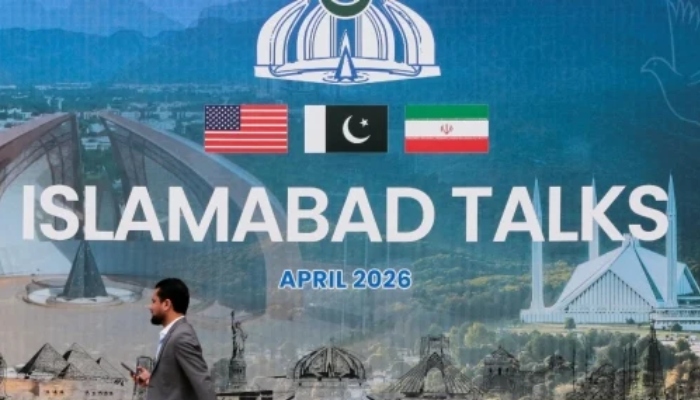
While Pakistan brokered a two-week ceasefire on April 8, following six weeks of war, Tehran and Washington failed to reach an agreement for a permanent end to hostilities in direct talks held in Islamabad between April 10 and 11.
Iran and the US are now closing in on an agreement on a 14-point memorandum of understanding (MoU) to end the war, Reuters reported, citing a source.
Axios shared insights into the MoU being negotiated between high-ranking officials from the US and Iran.
Here are the key highlights of the MoU;
- In its current form, the memorandum would declare an end to the war in the region.
- Start a 30-day period of negotiations on a detailed agreement to open Hormuz, limit Iran’s nuclear programme, and lift US sanctions.
- Iran’s restrictions on shipping through the strait and the US naval blockade would be gradually lifted during the 30-day period.
- If the negotiations collapsed, US forces would be able to restore the blockade or resume military action against Iran, a US official said.
- US is actively negotiating the duration of the moratorium on Iran’s uranium enrichment, with three sources saying it would be at least 12 years and one putting 15 as a likely landing spot.
- Iran proposed a 5-year moratorium on enrichment, while the US demanded a 20-year moratorium.
- Washington wants to insert a provision whereby any Iranian violation of enrichment would prolong the moratorium, the source said.
- Iran, however, would be able to enrich to the low level of 3.67% after the provision expires.
- Washington also seeks Tehran to commit to never seeking a nuclear weapon or conducting weaponisation-related activities.
- Further, a US official said that the two sides are also discussing a clause whereby Iran would commit not to operate underground nuclear facilities.
- Iran would also commit to an enhanced inspections regime, including snap inspections by UN inspectors, according to the US official.
- On Washington’s part, it would commit to a gradual lifting of the sanctions on Iran and the gradual release of billions of dollars in Iranian funds, frozen around the world.
- Two sources also claimed Tehran would agree to remove its highly enriched uranium from the country, with one source saying an option was being discussed to move the material to the US.


Trump’s Team Wants Him to Accept an Iran Deal He’s Already Rejected

Kyle Loftis, founder of 1320Video, defining voice in street car culture, dies

Airlines spent 56.4% more on jet fuel in month after Iran war started, U.S. government says

-

 Sports1 week ago
Pro wrestling star Steph De Lander reveals how colleague’s advice helped lead her to title triumph at ACW
-
 Business1 week ago
‘I had £20,000 stolen and had to fight a 13-month fraud reporting rule to get it back’
-
 Business7 days ago
PSX plunges over 4,800 points | The Express Tribune
-
 Tech1 week ago
This Ambitious Laptop Doesn’t Leave Much Room for Your Hands
-

 Tech6 days ago
Almost half of UK businesses hit by cyber attacks | Computer Weekly
-
 Business1 week ago
BP profits more than double as oil trading booms amid Iran war
-

 Sports1 week ago
Match officials announced for HBL PSL 11 qualifier – SUCH TV
-

 Tech5 days ago
This Indigenous Language Survived Russian Occupation. Can It Survive YouTube?