

Business
Piyush Goyal Dismisses Rahul Gandhi’s Farmer Meet Video, Rebuts ‘Fake Narrative’ On India-US Trade Deal


Last Updated:
The minister offered a detailed reality check to counter what he termed ‘Rahul ji’s fakery’




Goyal reiterated that Prime Minister Narendra Modi’s policies are intrinsically linked to farmer welfare. (File Photo: PTI)
Union Commerce Minister Piyush Goyal has accused Congress leader Rahul Gandhi of orchestrating a “fake narrative” aimed at provoking India’s farming community. Responding to a video released on social media by the Leader of the Opposition on Friday, Goyal dismissed the interaction as a stage-managed performance featuring Congress activists masquerading as genuine farmer leaders. He asserted that the dialogue followed a predetermined script designed to mislead the public regarding the safeguards in the recent India-US trade deal.
Rahul Gandhi has alleged that “any trade deal that takes away the livelihood of farmers or weakens the food security of the country is anti-farmer”. He was pointing to the recently concluded India-US framework agreement for bilateral trade, which is expected to be signed after tweaks by the end of March.
Piyush Goyal offered a detailed reality check to counter what he termed “Rahul ji’s fakery”, placing on record that the Narendra Modi government has fully protected the interests of annadatas, fishermen, MSMEs, and artisans. The minister categorically clarified that sensitive crops like soyameal and maize have been granted no concessions whatsoever in the agreement, ensuring that domestic farmers remain shielded from competitive pressure. He criticised the opposition for repeating “baseless allegations” in an attempt to instill unnecessary fear among the rural population.
Addressing specific claims regarding apple and walnut imports, the minister provided a technical breakdown of the protectionist measures in place. He noted that while India already imports approximately 550,000 tonnes of apples annually due to high domestic demand, the new US deal does not allow unlimited entry. Instead, a strict quota has been established, far below current import levels, and subject to a Minimum Import Price (MIP) of Rs 80 per kg. With an additional duty of Rs 25, the landed cost of US apples will be roughly Rs 105 per kg—significantly higher than the current average landed cost of Rs 75 per kg from other nations—thereby ensuring Indian growers are not undercut. Similarly, for walnuts, the US has been offered a modest quota of 13,000 metric tonnes against India’s total annual import requirement of 60,000 metric tonnes, making it impossible for the deal to harm local producers.
Goyal also took a swipe at the historical record of the Congress party, pointing out the irony of its current stance. He reminded the public that during the Congress-led UPA era, India imported nearly $20 billion worth of agricultural products, including dairy items, which the current administration has strictly excluded from the US pact. He challenged Rahul Gandhi to explain his “betrayal of farmers” and questioned how much longer the opposition intended to peddle fabricated stories.
Concluding with the slogan “Kisan Surakshit Desh Viksit”, Goyal reiterated that Prime Minister Narendra Modi’s policies are intrinsically linked to farmer welfare. He maintained that the India-US agreement is a balanced framework that opens new markets for Indian exports like basmati rice and spices while keeping the nation’s agricultural backbone secure.
February 14, 2026, 05:29 IST
Read More



Indians sharply cut back on overseas travel spending in March, with remittances for foreign trips dropping by more than $212 million from the previous month, according to Reserve Bank of India data. The fall in outbound travel expenditure came amid rising oil prices linked to the Middle East conflict and persistent pressure on rupee, even as travel remained the single largest component of outward remittances under the Liberalised Remittance Scheme (LRS).In March, travel-related remittances fell to $1.09 billion from $1.3 billion in February and $1.65 billion in January. The decline came at a time when the West Asia conflict pushed oil prices higher and weakened rupee to record lows. Amid the situation, Prime Minister Narendra Modi urged citizens to cut down on foreign travel and adopt measures such as carpooling. Lower overseas travel spending could reduce foreign exchange outflows and help ease pressure on rupee.According to the RBI’s data on outward remittances by resident individuals, travel continued to account for the largest share of money sent abroad under the LRS in March. Total remittances during the month stood at $2.59 billion.The RBI tracks overseas spending across categories including travel, studies abroad, maintenance of close relatives, overseas investments, and property purchases. Under the LRS framework, resident individuals, including minors, can remit up to $250,000 in a financial year for permitted current or capital account transactions.Within the travel segment, the biggest component remained the ‘other travel’ category, which covers holiday spending and international credit card settlements. Indians spent $623.05 million under this category in March, accounting for nearly 57 per cent of total travel-related remittances during the month.Expenditure linked to education travel, including hostel and fee payments, stood at $450.16 million. Business travel, pilgrimage, and overseas medical treatment together accounted for $21.39 million.The data also showed a rise in remittances meant for the maintenance of close relatives abroad. Such transfers increased to $389.78 million in March from $266.18 million in February.At the same time, spending under the ‘studies abroad’ category declined. This category includes payments made for educational services accessed remotely without travelling overseas, such as correspondence courses. Remittances under this head stood at $151.71 million in March, compared to $175.68 million in February and $267.42 million in January.For the financial year 2024-25, Indians remitted a total of $29.56 billion under the LRS. Travel made up the largest portion of this amount at $16.96 billion.The RBI figures further showed that investments by Indians in overseas equity and debt instruments rose significantly to $440.22 million in March from $265.99 million in February.Meanwhile, outward remittances for the purchase of immovable property overseas declined to $38.68 million in March, down from $51.36 million a month earlier.
Business
Stock market this week: Middle East tensions, oil prices, FII flows & more — what will guide Dalal Street

Dalal Street is heading into the new trading week with global uncertainty firmly in focus, as investors keep a close watch on the evolving situation in the Middle East, fluctuations in crude oil prices and the behaviour of foreign investors. Analysts said that sentiment is likely to remain fragile and heavily influenced by developments in negotiations between the United States and Iran, while movements in the rupee, global equities and the US dollar are also expected to shape market direction in the days ahead.Trading activity during the week is also expected to be shaped by the rupee’s movement against the US dollar, while investors continue to assess the impact of global uncertainty on risk appetite. Markets will remain closed on Thursday for Bakri Id.A key trigger for sentiment emerged over the weekend after US Secretary of State Marco Rubio said negotiations between Washington and Tehran had shown some progress, raising expectations that the ongoing conflict in West Asia could move closer to resolution.Ajit Mishra, SVP, Research at Religare Broking Ltd, said investors would closely track developments tied to crude oil, global currencies and bond markets. “This week is expected to remain highly sensitive to global macroeconomic developments and currency movements. Investors will also monitor crude oil prices, developments in US-Iran negotiations, and the trajectory of the US dollar and bond yields, all of which are expected to influence foreign flows and overall risk appetite,” he said.Apart from geopolitical developments, the Reserve Bank’s decision to transfer a record Rs 2.87 lakh crore dividend to the government for the year ended March 2026 is also expected to remain in focus. The announcement comes at a time when rising import costs and supply chain pressures linked to the West Asia conflict continue to weigh on the economy.According to Mishra, market participants are expected to evaluate how the RBI payout could affect liquidity conditions, fiscal flexibility and government spending in the months ahead.Ponmudi R, CEO of Enrich Money, said market behaviour in the coming sessions is expected to remain sensitive to fresh headlines surrounding diplomatic negotiations and oil prices. “Markets are expected to remain volatile and heavily headline-driven in the coming week, with investor attention firmly focused on developments surrounding the US–Iran situation, broader diplomatic negotiations and movements in crude oil prices,” he said.“While hopes of a diplomatic breakthrough and easing geopolitical tensions have improved sentiment modestly, investors continue to remain cautious as uncertainty surrounding the final outcome of the negotiations remains elevated,” Ponmudi added.He further said investors are expected to watch institutional flows, global equity trends, macroeconomic indicators and the rupee for further market cues. “With global uncertainty still elevated, market participants are likely to remain selective and cautious despite the recent improvement in sentiment,” he said.Vinod Nair, Head of Research at Geojit Investments Limited, said markets would require stronger support factors to build a more constructive setup. According to him, a meaningful decline in crude oil prices, steady foreign institutional investor flows and stable Q1FY27 earnings expectations without major downgrades would be important for sustained momentum.In the previous week, the BSE benchmark index rose 177.36 points, or 0.23%, while the NSE Nifty advanced 75.8 points, or 0.32%.
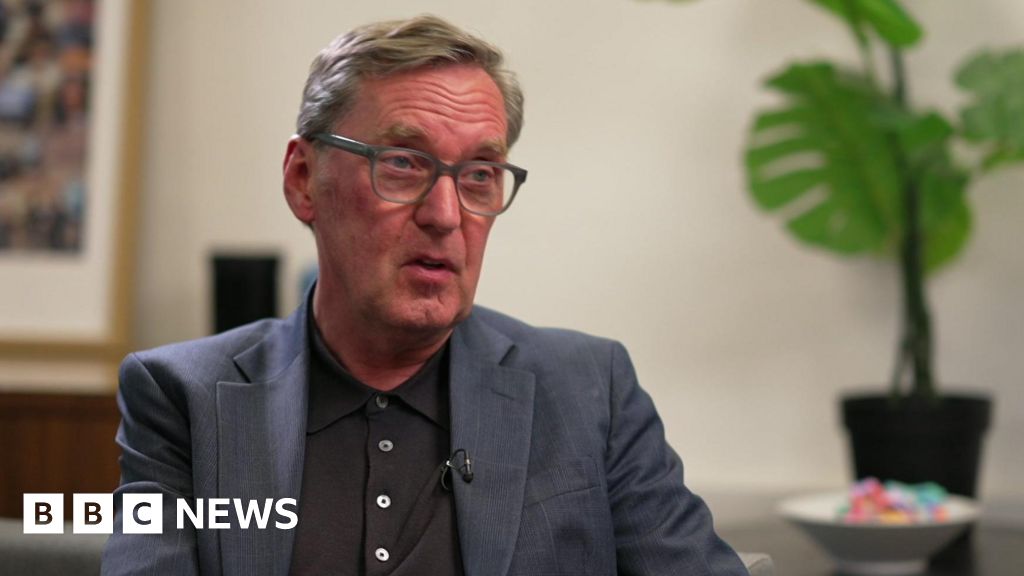
Reforms are needed of the welfare system to tackle the high numbers of young people not in work or education, says Alan Milburn.
Source link


Christopher Nolan’s ‘The Odyssey’ trailer sparks major backlash online

2026 NASCAR Odds: Denny Hamlin Favored At Coca-Cola 600, Tyler Reddick Second

5/24: Sunday Morning

-

 Entertainment1 week ago
Where Pete Davidson, Elsie Hewitt stand after breakup: Details revealed
-

 Politics1 week ago
Rising diesel costs from Iran war strain US school budgets
-

 Tech1 week ago
Why Is Your Grill So Dumb? The Best Grills Set Temp Like an Oven
-
 Fashion1 week ago
RMG trade bodies seek policy support from Bangladesh PM
-

 Tech1 week ago
This Solar-Powered Smart Sprinkler Keeps My Lawn Watered Without Any Power Cables
-

 Fashion6 days ago
Nigeria Kwara Garment Factory, KWS Garment Production Village ink pact
-
 Fashion1 week ago
India calls for aligning standards, customs procedures with Africa
-

 Fashion7 days ago
India’s Pearl Global’s FY26 revenue crosses $521 mn milestone