

Business
Planning To Use Your EPF Money To Pay Off Debts? Here’s What It Could Cost You

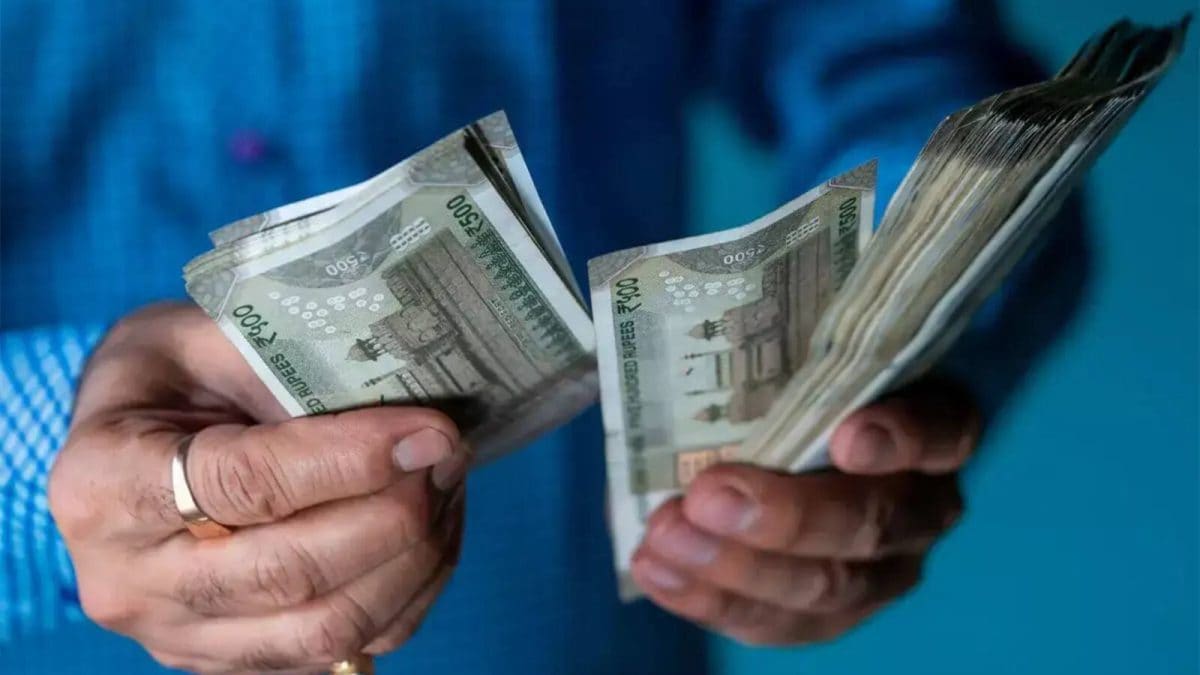
For thousands of salaried individuals, a familiar dilemma emerges a few years after buying a home. On one hand lies the home loan statement, with its stubborn outstanding balance and monthly EMI. On the other sits the Employee Provident Fund (EPF) passbook, steadily growing with every contribution and annual interest credit. The question that naturally follows is simple but consequential: should you dip into your EPF savings to repay the home loan and become debt-free? (News18 Hindi)

At first glance, the idea appears appealing. Closing a home loan using EPF funds promises immediate relief from EMIs, emotional comfort and the satisfaction of owning a house outright. However, financial experts caution that what feels like a smart short-term move could quietly weaken long-term financial security. (News18 Hindi)
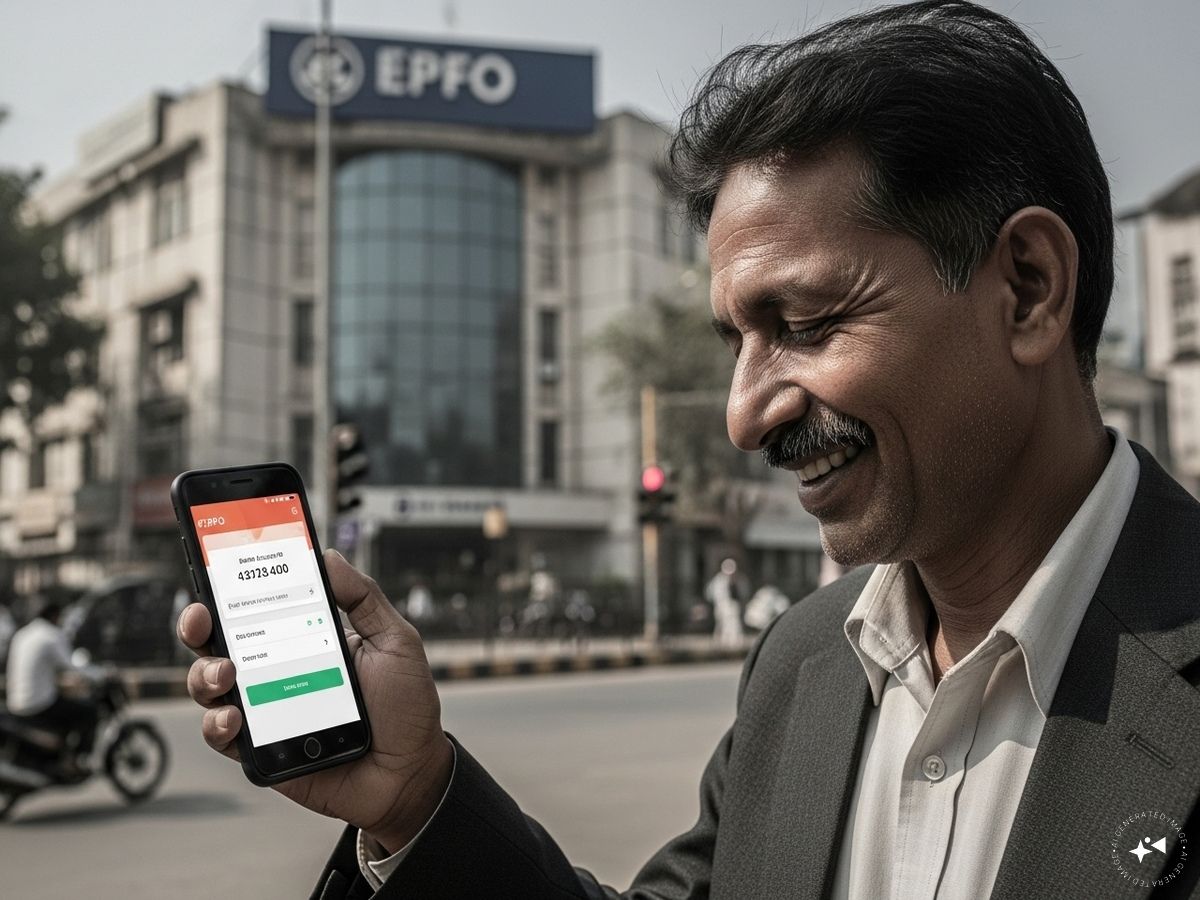
EPF is not just another savings account. It is a structured, compulsory retirement instrument designed to build wealth steadily over decades. Contributions made by employees and employers earn an annual interest of around 8.25%, compounded over time. Crucially, these returns are entirely tax-free, making EPF one of the most efficient long-term investment tools available to salaried individuals. (AI-Generated Image)

Home loans, in contrast, are structured liabilities that become easier to manage with time. As EMIs progress, the interest component gradually reduces while the principal repayment increases. Simultaneously, salaries typically rise with experience and inflation, reducing the relative burden of EMIs over the years. Under the old tax regime, borrowers also benefit from deductions on both principal and interest, though these benefits are absent under the new tax regime. (News18 Hindi)

The interest rate comparison often drives confusion. Home loan rates currently hover around 7-7.5%, slightly lower than EPF’s 8.25%. On the surface, the difference appears marginal. But the real distinction lies in taxation. For someone in the highest tax slab, an 8.25% tax-free EPF return is equivalent to earning nearly 11% from a taxable investment. Few instruments offer that level of safety and assured, post-tax returns. (News18 Hindi)
Consider a commonly cited scenario. A borrower has a home loan outstanding of Rs 20 lakh with ten years remaining, and an EPF balance of Rs 20 lakh earning 8.25% interest. If the entire EPF amount is withdrawn to close the loan, the borrower saves roughly Rs 9 lakh in interest payments over the remaining tenure. However, this comes at the cost of completely exhausting the retirement corpus. Rebuilding such a fund later, especially as expenses rise with age, can be challenging. (News18 Hindi)

If the EPF is left untouched instead, the same Rs 20 lakh can grow to more than Rs 44 lakh over 10 years, entirely tax-free. Even after accounting for the interest paid on the home loan, the individual ends up with a significantly stronger financial cushion for retirement. In essence, the compounding power of EPF outweighs the interest saved on early loan closure in most situations. (News18 Hindi)

There are, however, limited circumstances where using EPF for loan repayment may make sense. Individuals who are nearing retirement, have surplus EPF savings well beyond their projected needs, or face severe cash flow stress may consider partial or full withdrawal. Even then, experts recommend caution and detailed financial planning before taking such a step. (News18 Hindi)
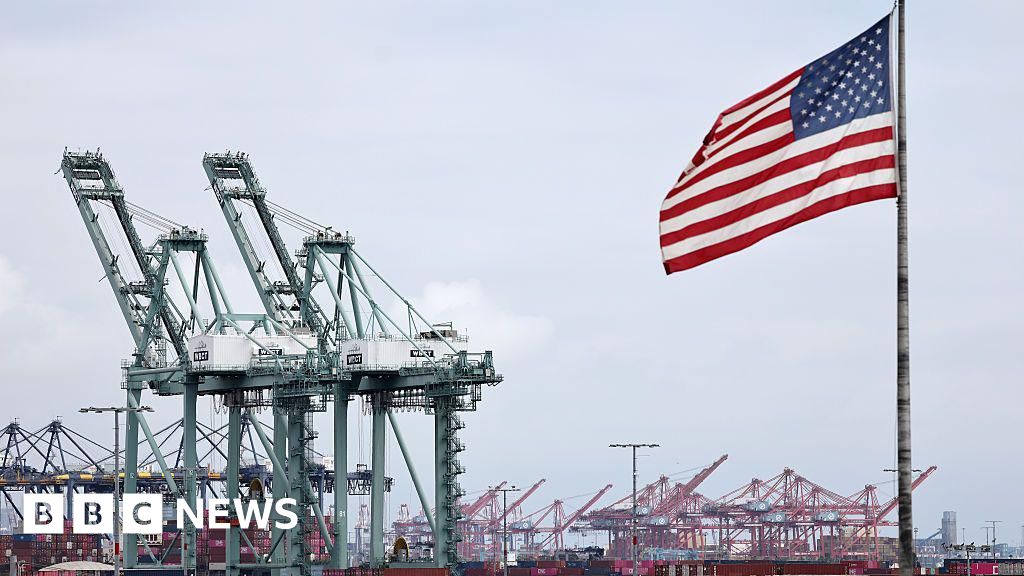
The global levy comes in at 10%, lower than the rate the president had threatened at the weekend.
Source link
Business
How long will Jamie Dimon stay as JPMorgan CEO? Bank chief signals ‘few more years’ at the helm – The Times of India
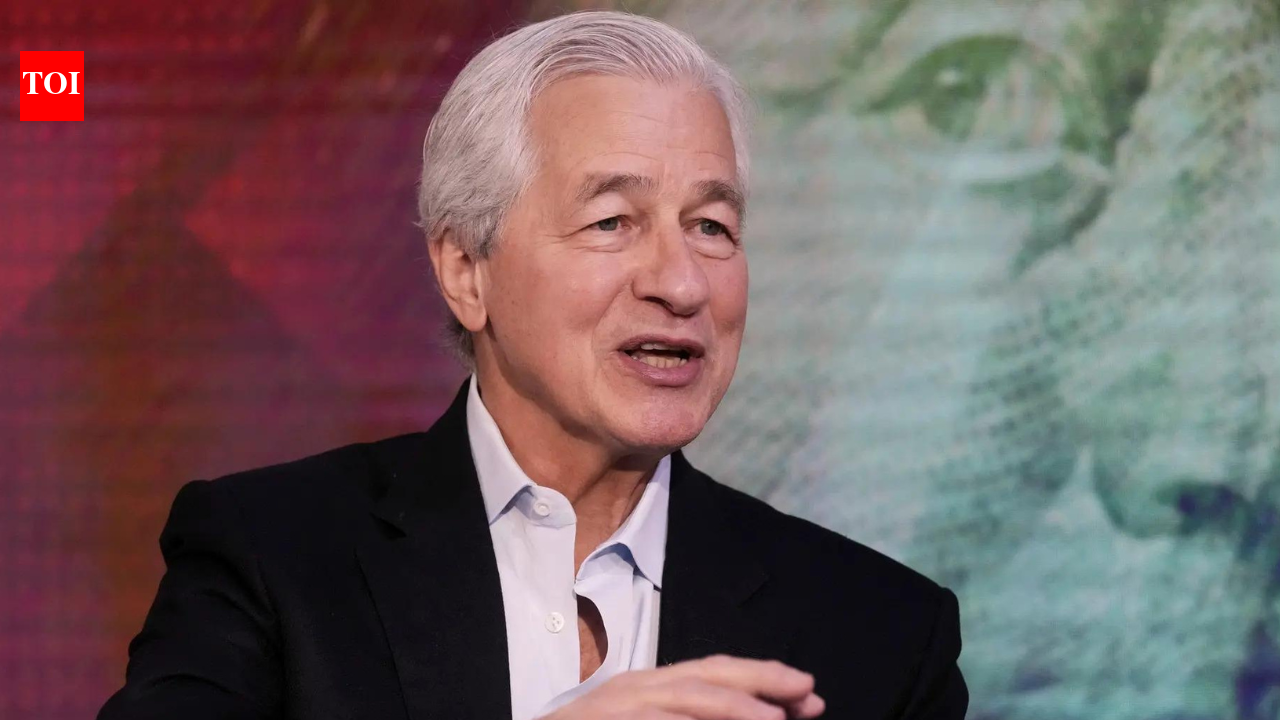
JPMorgan Chase CEO Jamie Dimon signalled he plans to remain in charge of the largest US bank for “a few years,” offering fresh clarity on leadership succession even as the lender projected strong investment banking and trading performance, Reuters reported.Speaking at the bank’s Investor Day in New York, Dimon said he does not intend to step down immediately and may continue with the firm in a different role after eventually relinquishing the chief executive position.“I’m here for a few years as CEO, and maybe a few after that, as executive chairman, pending whatever the board wants to do,” Dimon said.His remarks come amid long-running investor speculation over succession planning at JPMorgan, where Dimon has led the bank for two decades. The lender’s board, he has previously said, remains focused on preparing a deep bench of executives capable of eventually taking over leadership.Under Dimon’s tenure, JPMorgan has risen to become Wall Street’s largest bank by both assets and market value, with a market capitalisation exceeding $800 billion — eclipsing the combined value of rivals Bank of America and Citigroup.Alongside leadership commentary, JPMorgan said it expects investment banking fees and markets revenue to post strong growth in the first quarter, easing concerns that recent equity market turbulence could disrupt dealmaking activity.Investor worries had grown after a sharp sell-off in software and technology stocks — driven by fears of artificial intelligence disruption — raised doubts about mergers and acquisitions and IPO pipelines for high-growth companies.Allaying those concerns, the bank said investment banking fees are expected to rise by a mid-teens percentage, potentially reaching the high teens in the quarter.“We started the year strong. Pipelines were very good, and it was broad based. The one thing I will say in M&A (is that) there are powerful strategic drivers,” Doug Petno, Co-CEO of JPMorgan’s commercial and investment bank, said. “I think a lot of these transactions will survive the volatility and carry on.”Markets revenue is also expected to increase by a mid-teens percentage, supported by elevated trading activity during volatile market conditions, when investors hedge risks and reposition portfolios.The bank kept its forecast for annual adjusted expenses unchanged at $105 billion as it continues investing heavily in technology and artificial intelligence initiatives.JPMorgan expects to spend $19.8 billion on technology in 2026, up 10% from a year earlier.“We continue to invest in AI and we’re seeing tangible benefits in multiple areas. Machine learning and analytical AI have been driving improvements in revenue,” Chief Financial Officer Jeremy Barnum said, as quoted Reuters.UBS analyst Erika Najarian said markets increasingly view large money-centre banks as relative beneficiaries of AI disruption, adding investors are keen to understand both productivity gains and revenue opportunities from the technology.Executives said US consumers remain resilient despite elevated interest rates and economic uncertainty, helping sustain spending and credit quality.JPMorgan executive Marianne Lake said the bank had not seen deterioration among lower-income consumers and that “everything is solid” on the consumer front.The lender is targeting a return on tangible common equity of 17%, a key profitability metric measuring how efficiently tangible equity generates profits.In January, JPMorgan reported fourth-quarter earnings that exceeded analysts’ estimates as volatile markets boosted trading income. The bank beat Wall Street profit forecasts in all four quarters last year, according to LSEG-compiled data.JPMorgan shares rose 34.4% in 2025, outperforming both large-cap US banking peers and the broader equity market, while the stock traded marginally higher in post-market activity.
Business
Spirit Airlines plans to slash flights, fleet in bid to emerge from bankruptcy as early as spring

A Spirit Airlines Airbus A320 taxis at Los Angeles International Airport after arriving from Boston on September 1, 2024 in Los Angeles, California.
Kevin Carter | Getty Images News | Getty Images
Spirit Airlines is gearing up to shrink to a tiny version of its former self in an attempt to survive, according to a new plan it unveiled in U.S. Bankruptcy Court on Tuesday.
The budget-travel icon said it will get rid of even more of its Airbus fleet as it plans to exit its second bankruptcy in less than a year. It expects to emerge in late spring or early summer, Spirit’s lawyer, Marshall Huebner of Davis Polk, said at a hearing.
The airline has reached an agreement in principle with its creditors for the plan, Huebner said, adding that secured lenders will make “material incremental liquidity available to Spirit via the release of cash collateral.”
In its second bankruptcy, Spirit had held deal talks with Frontier Airlines, and with investment firm Castlelake. Nothing materialized, but Huebner hinted a combination could be back on the table.
“This emergence will allow Spirit to do many things from a position of strength and stability, including to consider potential future industry transactions,” Huebner said.
Spirit’s new fleet would be made up of mostly older Airbus planes, “with the potential rejection of additional high cost NEO aircraft,” Huebner said, referring to the more modern Airbus A320 family of planes, adding that the exact size of Spirit’s fleet will depend on talks with counterparts like aircraft lessors.
He said Spirit’s annualized fleet cost would be cut another $550 million, down 65% from before its bankruptcy filing last year. The debtors have also eyed another $300 million in cost savings from non-fleet cuts, he said.
Spirit has already reduced some of its Airbus fleet and furloughed pilots and flight attendants to cut costs as it reduced its network, though some cabin crew members were called back to work ahead of spring break.
“Because every single day counts, and every single dollar counts, the airline industry is just as competitive today with this deal in hand as it was last Friday, and we must — and will — lock down what we need from other stakeholders and then begin a high speed march to get this storied company out of Chapter 11 at the earliest possible date so that it can write its next chapters from a position of strength,” Huebner said.
Spirit’s new plan will be challenging. It would pit a smaller version of Spirit against ever-larger competitors that dominate the U.S. market. Some U.S. budget carriers have struggled due to a surge in labor and other costs post-Covid, a growing consumer shift in favor of more upscale travel and increased competition from larger airlines that offer stripped down fares.
Spirit was uniquely challenged by a massive engine recall from Pratt & Whitney and a failed plan to get acquired by JetBlue Airways, a deal knocked down by a federal judge in early 2024.
Spirit forecast it would generate a net profit of $252 million last year, according to a court filing in December 2024. But it said in an August report that it lost nearly $257 million in a matter of months stretching from March 13, after it exited its first Chapter 11 bankruptcy, through the end of June. It filed for Chapter 11 bankruptcy protection again less than a month later.


Dybantsa fuels No. 23 BYU’s upset win over No. 6 Iowa State
Trump’s new global tariff comes into effect at 10%

Sweet treats being stolen in UK to order for illicit markets

-

 Entertainment1 week ago
Queen Camilla reveals her sister’s connection to Princess Diana
-

 Tech1 week ago
Rakuten Mobile proposal selected for Jaxa space strategy | Computer Weekly
-

 Politics1 week ago
Ramadan moon sighted in Saudi Arabia, other Gulf countries
-

 Entertainment1 week ago
Robert Duvall, known for his roles in "The Godfather" and "Apocalypse Now," dies at 95
-

 Politics1 week ago
Tarique Rahman Takes Oath as Bangladesh’s Prime Minister Following Decisive BNP Triumph
-
 Business1 week ago
Tax Saving FD: This Simple Investment Can Help You Earn And Save More
-

 Tech1 week ago
Businesses may be caught by government proposals to restrict VPN use | Computer Weekly
-

 Sports1 week ago
Usman Tariq backs Babar and Shaheen ahead of do-or-die Namibia clash