

Business
‘Political Stability Has Powered India’s Growth’: PM Modi At Vibrant Gujarat Conference

Last Updated:
PM Modi further emphasised that over the past 11 years, India has emerged as the largest data consumer and built the country’s largest real-time digital platform.



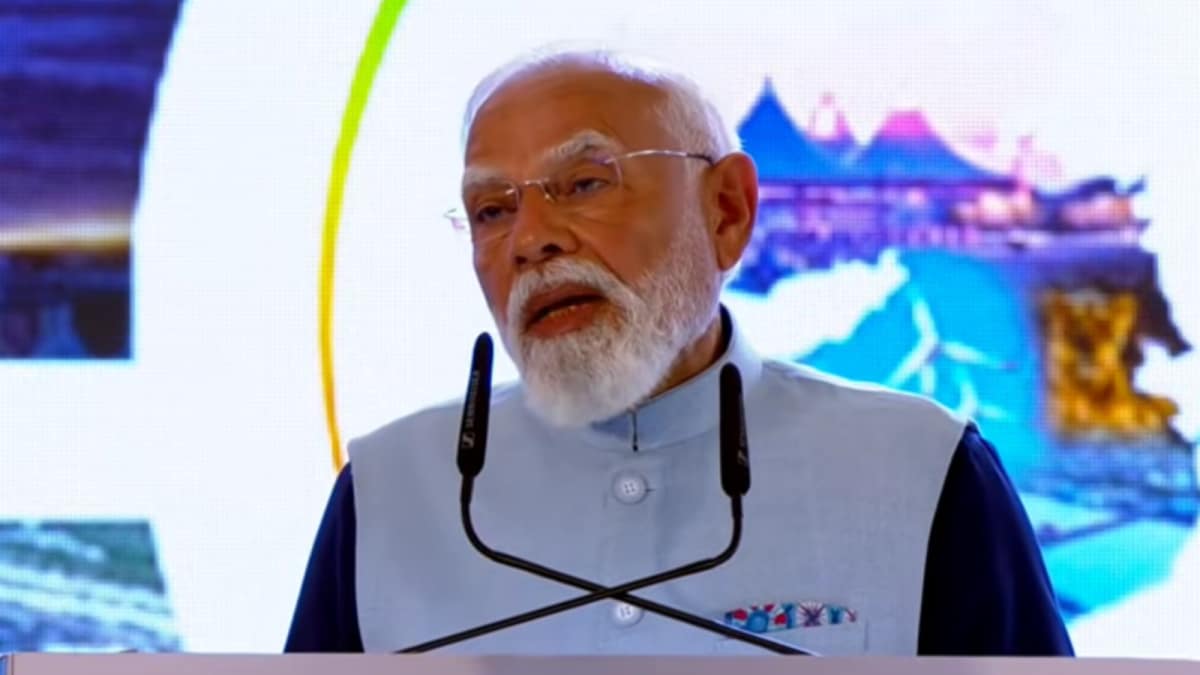
PM Modi speaking at the inauguration of Vibrant Gujarat Regional Conference. (PTI)
Prime Minister Narendra Modi on Sunday said that India’s political stability and strong macroeconomic fundamentals are driving global investor confidence, with Gujarat emerging as a key anchor of the country’s growth story.
While addressing the Vibrant Gujarat Regional Conference in Gujarat, the Prime Minister highlighted India’s economic trajectory, saying that the country is the world’s fastest-growing major economy, with inflation under control and a strong foundation for long-term growth. He said that reform express is driving India’s journey to developed nation status.
He highlighted that India is the largest producer of milk and a leading manufacturer of generic medicines, reflecting the country’s growing strength in both agriculture and pharmaceuticals.
VIDEO | Rajkot: PM Modi (@narendramodi) says, “India is the world’s fastest-growing large economy and inflation is under control. Agricultural production in India is setting new records, and the country ranks number one in milk production. India is also the world’s largest… pic.twitter.com/R6f7tDhoZD— Press Trust of India (@PTI_News) January 11, 2026
He noted that global institutions are increasingly bullish on India, with the International Monetary Fund (IMF) describing the country as the engine of global growth.
“India is the world’s 3rd largest startup ecosystem, 3rd largest aviation market, we are in the top 3 metro networks of the world,” he said, asserting that the country is heading to become the world’s 3rd largest economy.
PM Modi further emphasised that over the past 11 years, India has emerged as the largest data consumer and built the country’s largest real-time digital platform. He highlighted that India is now the second-largest mobile manufacturer, whereas earlier the country imported nine out of ten phones.
The Prime Minister also underlined Gujarat’s contribution to India becoming the world’s third-largest economy, noting that the state has grown across sectors. He said regions like Saurashtra and Kutch, once seen as remote, have now become major drivers of Atmanirbhar Bharat and investment-led growth.
Highlighting Saurashtra’s manufacturing strength, with over 2.5 lakh MSMEs producing goods ranging from basic tools to high-precision aircraft components, PM Modi pointed to the region hosting the world’s largest ship-breaking yard and being a major hub for tile manufacturing.
He further said that India’s first semiconductor fabrication plant is coming up in Dholera, with the land ready and a predictable policy environment supporting long-term growth.
Vibrant Gujarat Regional Conference
PM Modi on Sunday inaugurated the Vibrant Gujarat Regional Conference for the Kutch and Saurashtra regions.
The event saw the presence of Gujarat Chief Minister Bhupendra Patel and Deputy Chief Minister Harsh Sanghavi, among other dignitaries.
He also inaugurated 13 New Smart Industrial Estates in 7 Districts (Amreli, Bhavnagar, Jamnagar, Kutch, Morbi, Rajkot and Surendranagar) spanning an area of over 3540 Acres by Gujarat Industrial Development Corporation before his address on Sunday.
The two-day conference summit will highlight Gujarat’s leadership in the clean energy sector and its alignment with India’s ‘Panchamrit’ commitments announced by the Prime Minister. These include achieving 500 GW of non-fossil energy capacity by 2030, meeting 50 per cent of energy requirements from renewable sources, reducing projected carbon emissions by 1 billion tonnes, lowering carbon intensity by 45 per cent by 2030, and attaining net-zero emissions by 2070.
Rajkot, India, India
January 11, 2026, 16:22 IST
Read More


Soft drinks company Twig’s Beverage has a loyal following for its old-fashioned approach.
Source link

The Chancellor is trying to use this moment as a launching pad for a wider attempt to gee up consumer and business confidence.
Source link
Business
Oil market price battle: Russia and Iran offer deeper discounts to China as crude piles up at sea – The Times of India
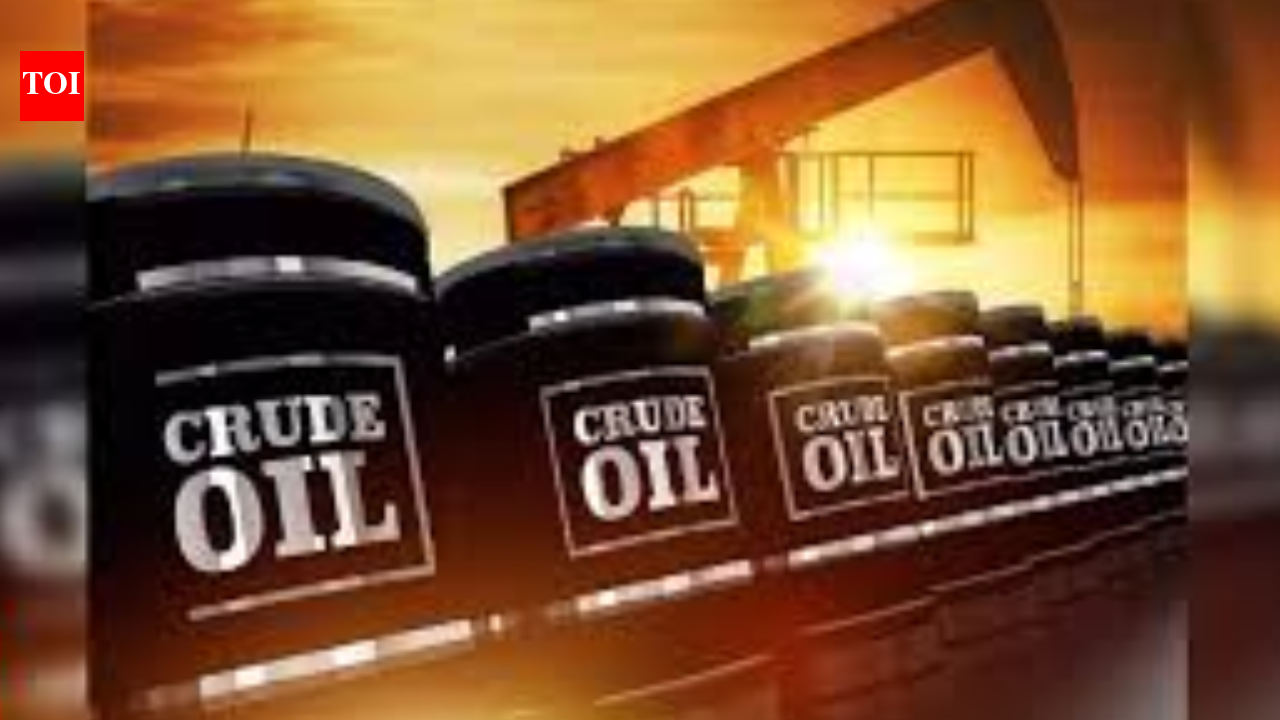
Russian and Iranian oil producers are reportedly offering deeper discounts to compete for the same limited pool of Chinese buyers after India pulled back from purchases. Analysts say India’s imports from Russia could fall by 40 per cent from January levels, to around 600,000 barrels a day, according to a scenario from Rystad Energy, as reported by Bloomberg.Much of the displaced crude is heading east, sparking a price war with Iranian suppliers, long favoured by China’s independent refiners, known as teapots. Russian Urals crude is reportedly selling at about $12 a barrel below ICE Brent, up from a $10 discount last month. Iranian Light crude is going for as much as $11 below the global benchmark, widening from $8–$9 in December, according to traders.
“The Chinese private refiners cannot take in much more as their capacity is likely maxed out,” said Jianan Sun, an analyst at Energy Aspects, noting that sanctioned barrels are building up in both onshore and offshore storage.China’s teapots historically act as a pressure valve, absorbing barrels shunned by others, but their capacity is limited; they account for roughly a quarter of the country’s refining capacity and are also subject to government import quotas. Major state-owned refiners, meanwhile, have traditionally avoided Iranian crude and have recently largely stayed away from Russian barrels as well.With China unable to fully absorb the displaced supply, unsold oil is piling up in Asian waters, leaving Russia and Iran scrambling. The Kremlin has already cut output, depriving it of funds for its war in Ukraine, while Iran is trying to ship as much oil as possible amid fears of a potential US strike.Data shows Russian oil deliveries to Chinese ports rose to 2.09 million barrels a day in the first 18 days of February, a roughly 20 per cent increase from January and nearly 50 per cent higher than December. By contrast, Iranian exports to China have fallen about 12 per cent from a year earlier, to roughly 1.2 million barrels a day, according to Kpler. The firm estimates nearly 48 million barrels of Iranian crude are now at sea, up from about 33 million in early February. Russian cargoes sitting in Asian waters total around 9.5 million barrels.A potential US strike on Iran could disrupt exports if oil facilities are targeted or shipments through the Strait of Hormuz are blocked. Russian barrels carry a “relatively lower level of risk” for Chinese buyers compared with Iranian crude, said Lin Ye, vice president of oil markets at consultancy Rystad Energy, citing optimism over a potential ceasefire in Ukraine.

The family-owned soda firm that stuck to returnable glass bottles

College track athlete allegedly stabbed to death by girlfriend over suspected affair

Who is Rafael Olarra? Know all about Pedro Pascal’s boyfriend

-

 Entertainment1 week ago
Queen Camilla reveals her sister’s connection to Princess Diana
-

 Tech1 week ago
Rakuten Mobile proposal selected for Jaxa space strategy | Computer Weekly
-
 Politics1 week ago
Ramadan moon sighted in Saudi Arabia, other Gulf countries
-

 Entertainment1 week ago
Robert Duvall, known for his roles in "The Godfather" and "Apocalypse Now," dies at 95
-
 Business1 week ago
Tax Saving FD: This Simple Investment Can Help You Earn And Save More
-
 Politics1 week ago
Tarique Rahman Takes Oath as Bangladesh’s Prime Minister Following Decisive BNP Triumph
-

 Tech1 week ago
Businesses may be caught by government proposals to restrict VPN use | Computer Weekly
-

 Sports1 week ago
Usman Tariq backs Babar and Shaheen ahead of do-or-die Namibia clash