

Business
Poverty 14.6% above official estimates: SPDC | The Express Tribune

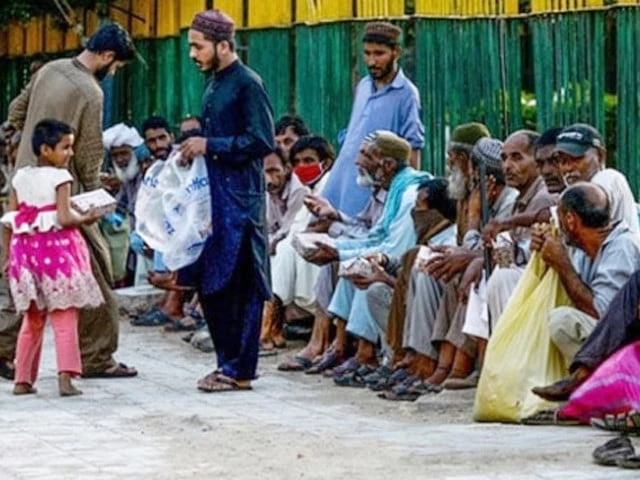
Report flags faster rise in urban poverty, methodological gaps behind lower official figures
KARACHI:
Poverty in Pakistan has surged to 43.5%, according to the Social Policy and Development Centre (SPDC), indicating a far graver situation than official estimates by the Pakistan Bureau of Statistics (PBS) and the Planning Commission, which place poverty at 28.9%.
In its report, the SPDC, a policy research institute, underscores that urban households have borne the brunt of the increase, with poverty rising faster in cities than in rural areas.
The report attributes the 14.6% disparity between SPDC and official figures to differences in methodology. The PBS relies on a Cost of Basic Needs approach, updating historical poverty lines using the Consumer Price Index (CPI), which largely reflects the consumption patterns of better-off households. This approach often underestimates the real cost of living for low-income families and overlooks essential expenses such as healthcare and access to clean water.
In contrast, the SPDC adopts a calorific, or Food Energy Intake, approach, linking household spending to minimum calorie requirements for basic subsistence. This method uses adult-equivalent units, adjusting for household composition, and estimates separate thresholds for urban (2,230 calories) and rural (2,550 calories) populations. The resulting monthly poverty line for 2024-25 is Rs13,476 in urban areas and Rs10,283 in rural areas, significantly higher than the official Rs8,484.
The SPDC analysis, based on the Household Integrated Economic Survey (HIES) 2024-25, shows that national poverty has risen from 36.6% in 2018-19 to 43.5% in 2024-25. Urban poverty increased by 10 percentage points, from 32.1% to 42.1%, while rural poverty rose by five percentage points, from 39.3% to 44.3%. In total, approximately 27 million people have been pushed below the poverty line over six years.
Measures of income inequality, including the Gini coefficient and Palma ratio, indicate that wealth is increasingly concentrated among the richest segments, with urban areas witnessing sharper disparities between rich and poor households. These trends reflect a combination of political instability, high inflation, fiscal and external imbalances, and the lingering economic effects of the Covid-19 pandemic.
“SPDC uses the caloric approach for measuring poverty. This is often regarded as more suitable than the Cost of Basic Needs (CBN) approach, used by the government, especially in developing countries, because it concentrates directly on food requirements,” SPDC Managing Director Muhammad Asif Iqbal told The Express Tribune.
He said the approach offers a more precise reflection of the consumption patterns of low-income populations, noting that poor households in Pakistan spend a disproportionately high share, more than half, of their total income on food. Therefore, the caloric approach better reflects their realities, he added.
He further said that, under the official method, poverty estimates are completely disconnected from the economy’s performance, which runs counter to both economic theory and real-world experience. For instance, official data indicate that poverty fell consistently from 50.4% in 2005-06 to 21.3% in 2018-19, Iqbal emphasised.
The SPDC emphasises that official measures have structural shortcomings. Historical PBS data, at times, indicate declining poverty even during periods of weak economic growth, a trend inconsistent with economic theory and everyday realities. CPI-based adjustments mask local price differences and exclude costs that disproportionately affect low-income households, such as healthcare, clean water and other essential services.
The report concludes that Pakistan is facing a broad-based deterioration in living standards, particularly in urban areas, and underscores the urgent need for more accurate and credible measurement of poverty and inequality.
The SPDC recommends that policymakers use these updated figures to design targeted interventions to address urban poverty, improve access to basic services and reduce income disparities, ensuring that economic growth translates into tangible improvements for all citizens.
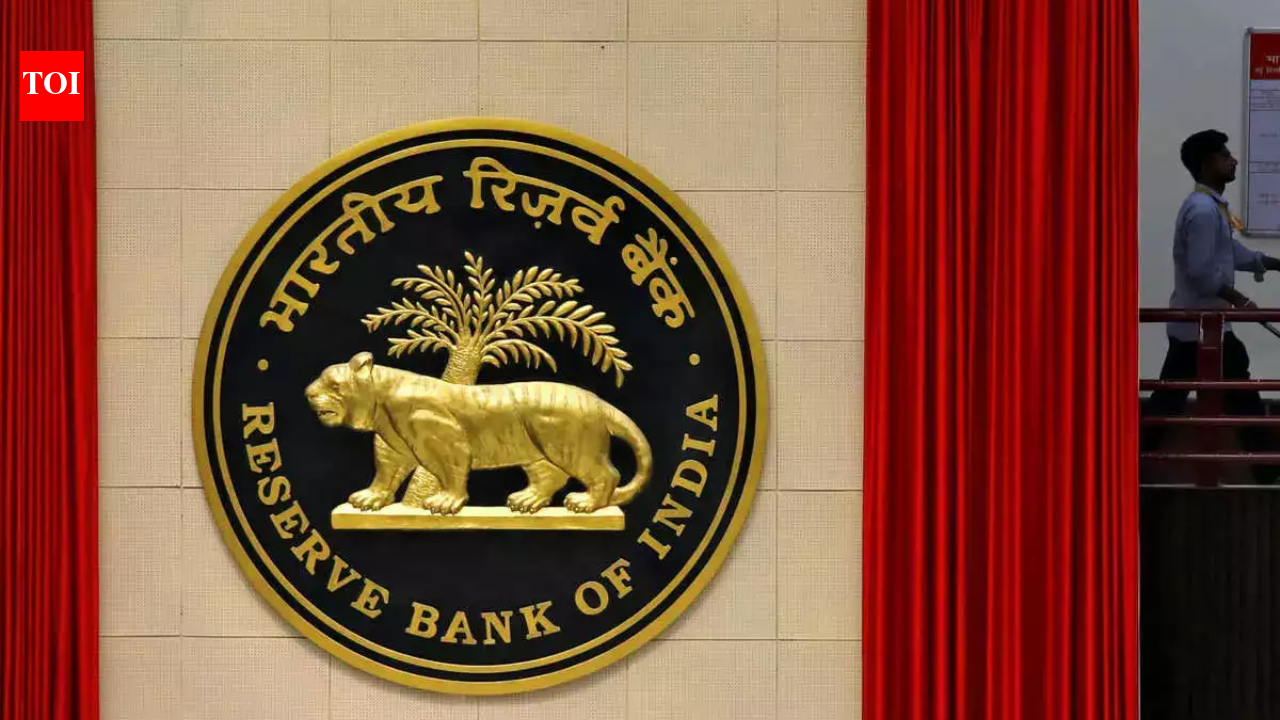
The Reserve Bank of India (RBI) on Monday decided against activating the countercyclical capital buffer (CCyB), indicating that current financial and credit conditions do not warrant an additional capital requirement for banks, PTI reported.The central bank said the decision followed a review and empirical assessment of indicators used under the CCyB framework.“Based on review and empirical analysis of CCyB indicators, it has been decided that it is not necessary to activate CCyB at this point in time,” RBI said in a statement.Under the RBI (Commercial Banks – Prudential Norms on Capital Adequacy) Directions, 2025, the CCyB framework is activated when financial conditions indicate rising systemic risks linked to excessive credit growth.The framework primarily relies on the credit-to-GDP gap as a key indicator, along with supplementary metrics.According to the RBI, the CCyB mechanism is intended to serve two broad objectives.Firstly, it requires a bank to build up a buffer of capital in good times, which may be used to maintain the flow of credit to the real sector in difficult times.Secondly, it achieves the broader macro-prudential goal of restricting the banking sector from indiscriminate lending in the periods of excess credit growth that have often been associated with the building up of system-wide risk.The framework was introduced globally after the 2008 financial crisis as part of measures proposed by the Group of Central Bank Governors and Heads of Supervision (GHOS) under the Basel framework to strengthen financial system resilience.

The company has announced plans to build seven new models in Europe including a small electric hatchback.
Source link
“Today’s policymaking is constrained by a more volatile external environment with more frequent and overlapping shocks, a rising public interest bill, in part reflecting market concerns with countries’ elevated debt, and the long-standing challenge of weak productivity growth,” he said.


Turkiye’s current account deficit expected to widen in 2026: Minister

UK’s clothing imports fall 3% in Q1, sharply lower than Q4 2025
RBI sees no signs of excess credit risk, keeps countercyclical capital buffer inactive

-

 Entertainment6 days ago
Conan O’Brien hat tricks as Oscar host
-

 Tech1 week ago
Could Contact-Tracing Apps Help With the Hantavirus? Not Really
-

 Fashion5 days ago
Italy’s Zegna Group’s Q1 growth boosted by strong organic performance
-

 Sports1 week ago
Bobby Cox, legendary Atlanta Braves manager who led 1995 World Series champions, dead at 84
-

 Entertainment1 week ago
Martin Short: Facing tragedy with joy
-

 Entertainment1 week ago
Tom Brady gets back at Kevin Hart during Netflix roast
-

 Sports1 week ago
Jacob Fatu unleashes vicious assault on Roman Reigns after World Heavyweight Championship loss at WWE Backlash
-

 Entertainment1 week ago
Martha Stewart: How to make an omelet