

Sports
Predicting the USMNT’s starting lineup at the World Cup: What previous tournaments tell us

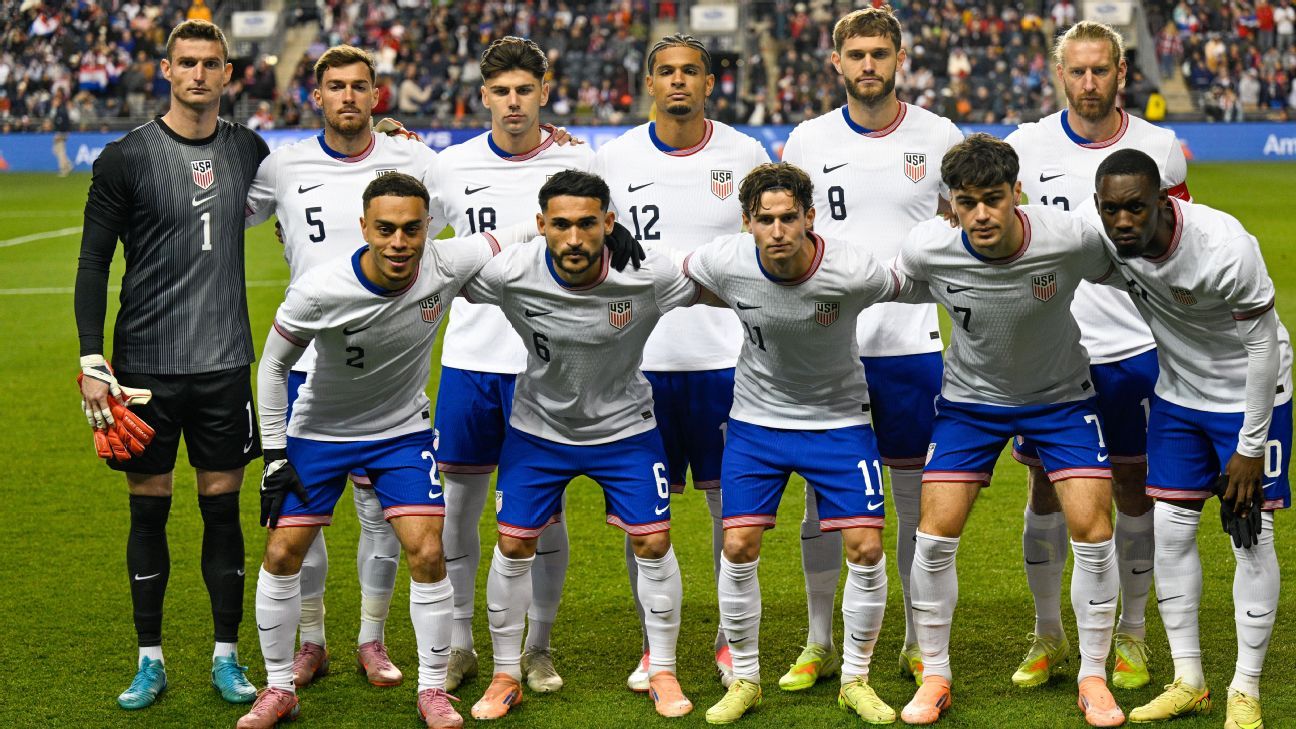
I’m old. In fact, I’m old enough to remember when the U.S. men’s national team crashed out against Mexico in the Gold Cup final without much of a fight.
I’m old enough to remember when, earlier in that same tournament, a succession of wins from a mostly MLS-based roster had some commentators wondering whether these players just wanted it more than their fancy teammates over in the Champions League. I’m old enough to remember when those same players got annihilated by Turkey and Switzerland just a few weeks earlier.
I’m old enough to remember when every former U.S. member with a podcast melted down because a handful of Europe-based players declined a call-up for the Gold Cup. I’m old enough to remember when, a couple months before that, the fan base melted down after the U.S. was eliminated by Panama in the Nations League after winning three straight Nations Leagues under the previous managerial regime.
And I’m old enough to remember when the majority of those U.S. fans rejoiced when the program replaced Gregg Berhalter with a proven world-class coach like Mauricio Pochettino.
All of that happened … within the past year and a half. As did this week’s 5-1 win over Uruguay, which was powered by absolutely ridiculous finishing, fortuitous bounces and some poor goalkeeping:
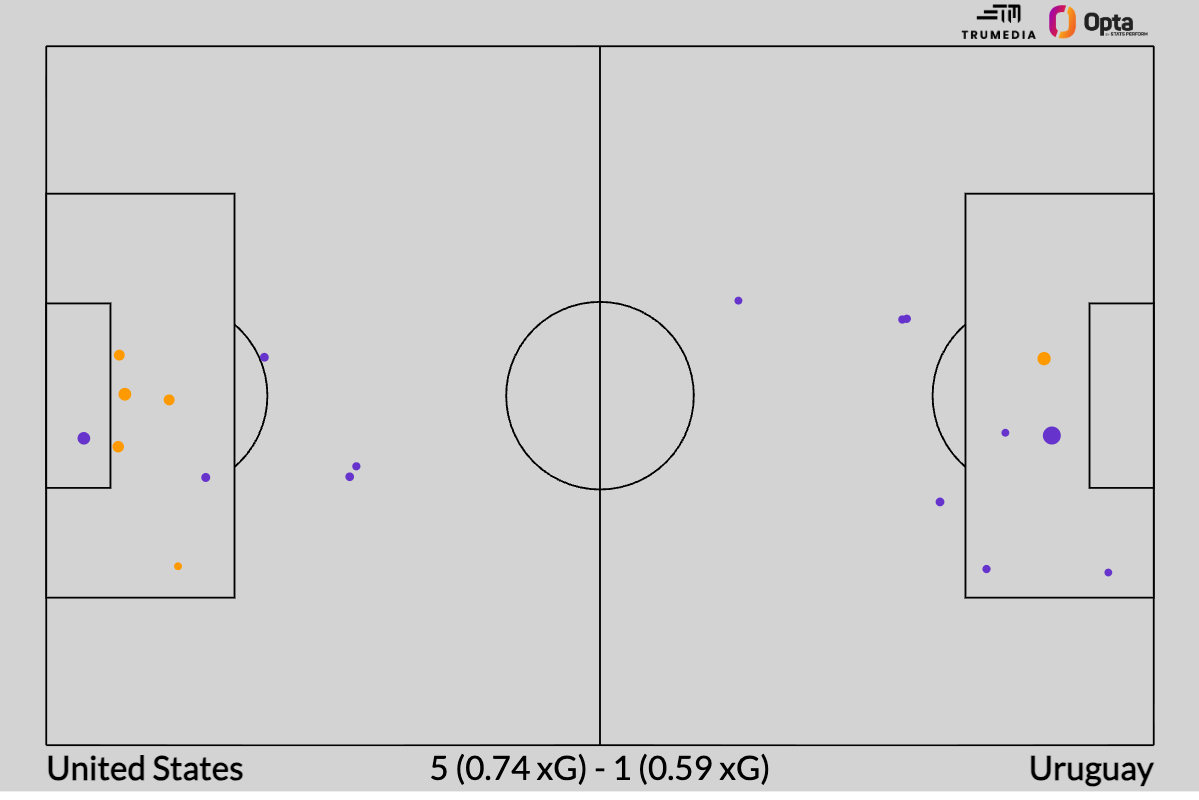
With seven months until the World Cup, it might not seem like there’s much time left. But the U.S. fan base has lived multiple lifetimes over the past 18 months.
From now until the summer, someone is going to get injured, someone is going to emerge out of nowhere, someone is going to stop playing for his club team, and the U.S. will either win or lose games that don’t reflect the true quality of the team. A lot is still going to happen.
In order to look forward — and stay safe from the results-based whiplash — we can actually look backward. What can the previous three World Cup cycles tell us about who might be on the field when the U.S. kicks things off at SoFi Stadium on June 12, 2026?
– Statement win over Uruguay shows USMNT has come a long way
– USMNT’s Pochettino pushes back on talk of ‘regular’ players
– How the USMNT combats jet lag: Fly kits, supplements, sleep masks
Who starts World Cups for the USMNT?
Let’s start in 2010.
In the Americans’ opening match against England, they had Tim Howard in goal. At the back: Steve Cherundolo at right back, Jay Demerit and Oguchi Onyewu in the center and Carlos Bocanegra bumped out to the left. At the base of midfield was the pair of Michael Bradley and Ricardo Clark, and then ahead of them, as a pair of attacking midfielders, were the two stars: Landon Donovan and Clint Dempsey. And up top, it was Jozy Altidore and Robbie Findley.
Seven of those names were unsurprising: Howard, Onyewu, Bocanegra, Bradley, Donovan, Dempsey and Altidore all played over 1,000 minutes for the U.S. the previous year. Cherundolo wasn’t much of a surprise, either. He’d only played 500-ish minutes the prior year thanks to a number of lower body injuries and the emergence of West Ham’s Jonathan Spector, but he was the captain at Bundesliga club Hannover and he was fully healthy come South Africa.
Both Clark and Demerit played around 500 minutes, too, and they fit into what we’ll call the “potential starter” tier. There weren’t obviously better options than either of them. And then there was the one shocker: Robbie Findley, who played zero minutes for the U.S. in 2009 but emerged after a car accident that seriously injured Charlie Davies opened up a spot for him to play alongside Altidore.
In 2009, Davies played 750 minutes for the U.S., but he was never the same after the accident. Among nonstarters in South Africa, only Jonathan Bornstein played more minutes (900-plus), but he lost his spot once Bob Bradley moved Bocanegra to fullback. And after Davies, the two most-used players in 2009 were Spector and midfielder Benny Feilhaber, who played heavy minutes off the bench in 2010.
So that’s seven obvious starters, one more obvious returnee from injury, two maybes, and one out-of-nowhere.
1:28
What to make of USMNT’s 5-1 win over Uruguay
Herculez Gomez reacts to the United States’ impressive 5-1 win over Uruguay.
Let’s move on to 2014.
Howard was in goal again. At the back, it was Fabian Johnson at right back and Damarcus Beasley on the left, with Geoff Cameron and Matt Besler in between. Manager Jurgen Klinsmann opted for a diamond midfield with Kyle Beckerman at the base and three shuttlers (Jermaine Jones, Bradley and Alejandro Bedoya). Up top, Dempsey played behind Altidore.
In 2013, Howard, Beasley and Altidore all played 1,000-plus minutes, while Dempsey, Bradley, Jones, Cameron and Besler all played at least 900. Bedoya clocked in around 820, while Beckerman played 680 and Johnson 580.
That feels similar to the breakdown four years earlier. Howard, Beasley, Altidore, Dempsey, Bradley and Jones were all shoe-ins, while two of Besler, Cameron and Omar González (who played over 1,000 minutes in 2013) were expected to play in the center of the defense. If we say it was all but guaranteed that one of Besler and Cameron would start, then that lands us at seven clear starters once again.
Johnson fills the “Cherundolo role” — he was arguably the most talented player in the pool and he’d just recently filed his one-time switch from Germany to the U.S. And then Bedoya and Beckerman fill the “maybe” quota.
There was no Findley type on the field against Ghana in 2014, but there was, shockingly, no Landon Donovan, who played 800-plus minutes the year before. There was also no Eddie Johnson, who played 900-plus minutes in 2013 and seemed like a potential starter, and no Clarence Goodson, who featured in 880 minutes. The Jurgen Klinsmann era was, um, interesting.
From 2010 to 2014, the U.S. carried over four starters: Howard, Bradley, Dempsey and Altidore. Unfortunately, we can’t trace the lineage to 2018 because the U.S. didn’t qualify. We must fast-forward to 2022.
1:33
How important will Gio Reyna be for the USMNT at the World Cup?
Gab Marcotti talks about Gio Reyna’s contribution to Mauricio Pochettino’s USMNT.
So, let’s look at 2022 and the lineup for the opening match with Wales.
In goal: Matt Turner. At the back: Sergiño Dest on the right, Antonee Robinson on the left, with Walker Zimmerman and Tim Ream in the center. There was a three-man midfield for the first time: Tyler Adams, Weston McKennie and Yunus Musah. And same goes for the front three: Christian Pulisic on the left, Timothy Weah out right and Josh Sargent in the center.
The year prior, Turner was the only starter to feature in at least 1,000 minutes, which says less about the surprising nature of the lineup and more about the changing state of the player pool. In other words: a lot more guys in Europe, who wouldn’t be on any of the MLS-based rosters. Two other guys broke 700 minutes (Robinson and Adams), while three more went beyond 600 (McKennie, Zimmerman and Dest). Pulisic and Musah both played more than 500 minutes, while Weah, Sargent and Ream were all below it.
I think we can say that Turner, Adams, Robinson, McKennie, Zimmerman and Dest were penciled-in starters at this time in 2021. Pulisic, then, fills the Cherundolo/Johnson role of the guy who starts if he’s healthy. And then I’d say Musah and Weah were “maybe starters,” while Ream and Sargent were both surprises.
In 2021, Miles Robinson, Kellyn Acosta and Sebastian Lletget all played over 1,000 minutes. Robinson would’ve started in Qatar had he not torn an Achilles, while Acosta was sunset into a backup role with the emergence of Musah after the latter’s one-time switch from England.
Lletget was a Berhalter favorite who just couldn’t stack up with the development of the team’s younger talent. Brenden Aaronson also played 800-plus minutes in 2021 but wasn’t starting come the World Cup.
Who will start for the USMNT at the 2026 World Cup?
To bring it all together: There have usually been around seven expected starters at the end of the year before the World Cup, one guy who will start if healthy, and then some combination of maybe-starters and outright surprises.
Across the 33 starters at the previous three World Cups for the U.S., there was one guy who played zero minutes the year before, three who played fewer than 500 minutes, 17 between 500 and 900 minutes, and 11 who played 1,000 minutes or more. On average, keepers played 1,135 minutes the year before the World Cup, and outfielders played 799.
Incredibly, very few of the most talented Americans have even hit 500 minutes this past year. These are the 11 players who broke that threshold:
Matt Freese: 1,170 minutes
Tim Ream: 1,108
Max Arfsten: 1,086
Chris Richards: 1,004
Alex Freeman: 976
Diego Luna: 953
Patrick Agyemang: 806
Malik Tillman: 765
Sebastian Berhalter: 704
Tyler Adams: 697
Luca de la Torre: 545
Some players below 500 minutes: Pulisic, Dest, McKennie, Musah, Weah, Turner, Sargent, Aaronson, Antonee Robinson, Folarin Balogun, Johnny Cardoso, Gio Reyna, Joe Scally, Tanner Tessman and Ricardo Pepi.
Working from the 1,000-plus-minutes list, I think we can pencil in Freese, Ream and Richards all as starters. And I think we need to put Arfsten on the list, too. Pochettino clearly loves him, the switch to a back three helps cover up his matador tendencies out of possession, and the other option, Robinson, still hasn’t started a Premier League game for Fulham this season. He has played only 64 total minutes.
That’s four likely starters, and we need to get to six or seven. It’s really hard to see anyone other than Adams starting in central midfield if he’s healthy.
It’s also clear that Pochettino wants one of the three center backs to be more of a half-fullback-half-center-back — this is what he did at Chelsea — and Alex Freeman played that role and scored two goals (!?) against Uruguay. It’s also worth pointing out, not that I think this data is driving decision-making in any real way, but Freeman already looks like an all-time great MLS fullback, based on the goals-added metric from American Soccer Analysis. He won’t turn 22 until after the World Cup.
Obviously, we can add in Pulisic as our “if he’s healthy, he starts” star. He’s the best player in the pool, he’s the best American player ever and this is the one World Cup they get with him in his prime.
That leaves four more spots: right wing back, the other central midfield slot, the other attacking midfielder next to Pulisic and the striker.
As Matthew Doyle noted for the MLS website, Pochettino has succeeded in expanding the American player pool — or at least expanding our perception of the player pool. That’s interesting, especially in light of recent comments by Canada manager Jesse Marsch, who suggested that managers might be able to rely on a smaller core of players than usual because the expanded World Cup means teams will have more days off between matches. I’m not sure whether Pochettino’s approach is the right or wrong one, but it certainly makes this specific exercise a little trickier.
If he’s healthy, though, Balogun is clearly the best American striker — he gets good shots unlike anyone else in the pool — and he has played more minutes than any attacker since the Gold Cup. So he’s our starting striker.
At right wing back, especially if Freeman is playing as a centerback-ish type, there’s no real option other than Dest. He was injured for a good chunk of this year, so he didn’t play much, but a wingback role also covers up his defensive inadequacies, and like Arfsten, he started the final two games of the year.
Next to Pulisic, there are plenty of options: Luna, Tillman, McKennie, Weah, Reyna, maybe even Aaronson or Alejandro Zendejas. You’ve been asleep for half a decade if you’re willing to confidently predict anything about Reyna’s future, so he’s out.
Although he’s currently injured, Tillman would be my pick. Not, like, my pick if I were the coach, but my pick for who the coach will pick. I’m not confident in this projection, but I think he gets a slight edge simply because he has played way more for Pochettino over the past year.
That leaves us with the last spot: the one next to Adams. Although they’ve played a lot, Sebastian Berhalter and de la Torre really don’t make sense as starters. So it’s between McKennie, Tessman, Musah and Cristian Roldan. Musah hasn’t been called up since before the Gold Cup, so I’m not planting my flag there. McKennie wasn’t called up this window, so he probably should be lower down my list, too.
Reading the tea leaves suggests Roldan because of that one tea leaf that literally quotes Mauricio Pochettino as saying, “Cristian Roldan is maybe an example of if you want to build your perfect player.” But it seems like there is one guy who comes out of nowhere to break into the starting XI every cycle. And given that he has appeared in only four games for the U.S. and didn’t even get called up for the final two games in 2025, McKennie fits that bill.
Now, my predicted lineup is almost definitely going to be incorrect. But with around seven guys who were key pieces this year, one injured star, and three players who have been in and out of the picture, it looks a lot like all of the other USMNT lineups that have started World Cups in recent years.
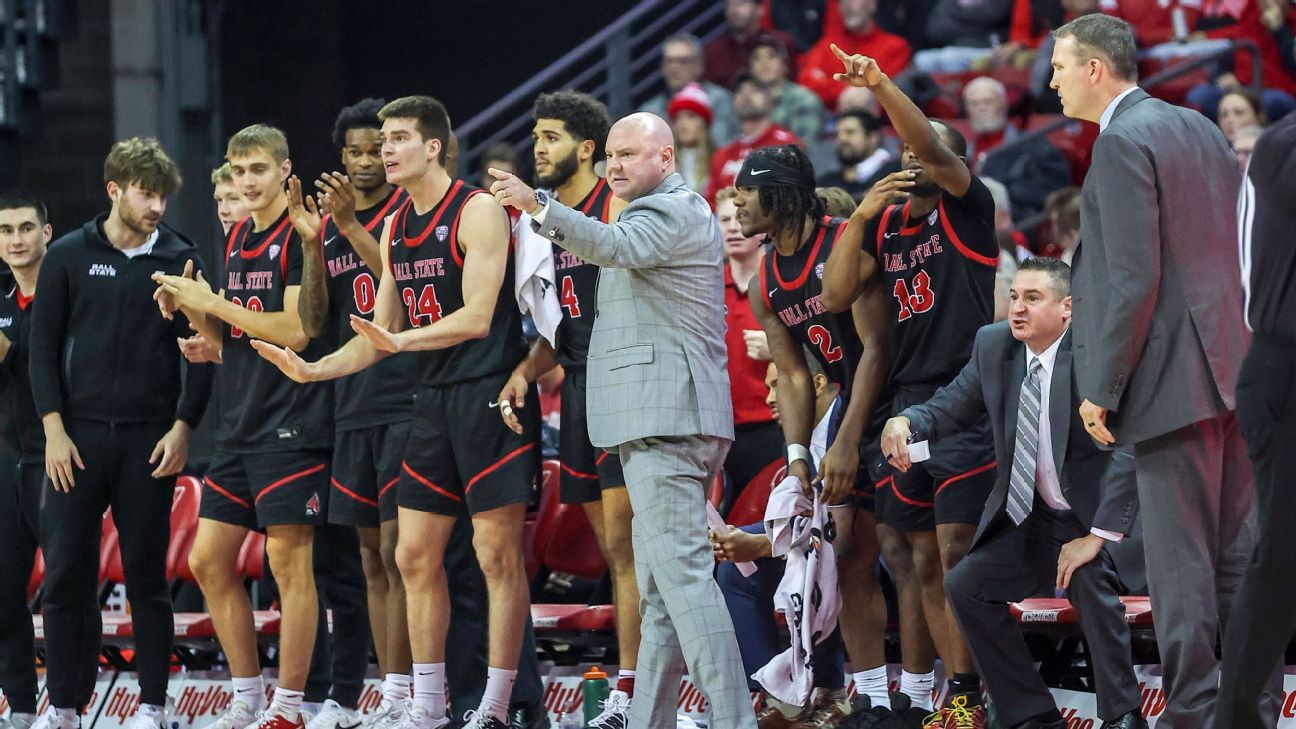
Ball State has fired men’s basketball coach Michael Lewis after four seasons, the school announced Saturday.
The Cardinals ended their season with an 85-69 win over Central Michigan in the regular-season finale Friday to finish on a four-game winning streak but still missed the Mid-American Conference tournament after posting a 12-19 (7-11 MAC) record.
“We are grateful to Coach Lewis for the passion and commitment he brought to our program the past four years,” athletic director Jeff Mitchell said in a statement. “We appreciate the time and effort he invested in our student-athletes.”
Lewis went 61-64 in his four seasons at the helm of the Cardinals. He won 20 games in Year 1, finishing fourth in the MAC, but was unable to replicate his early success. Ball State has finished 7-11 in conference play in each of the past three seasons, going 41-52 during that time.
Lewis was a longtime power conference assistant before being tapped to take over at Ball State in 2022. He spent time on staffs at UCLA, Nebraska and Butler, working under three different coaches during his time with the Bulldogs. He was an assistant coach at Eastern Illinois and Stephen F. Austin prior to Brad Stevens hiring him at Butler.
His coaching career began as a graduate assistant at Texas Tech under Bob Knight, whom he played for in college at Indiana. Lewis was the Hoosiers’ team captain and an all-conference performer as a senior in 1999-00.
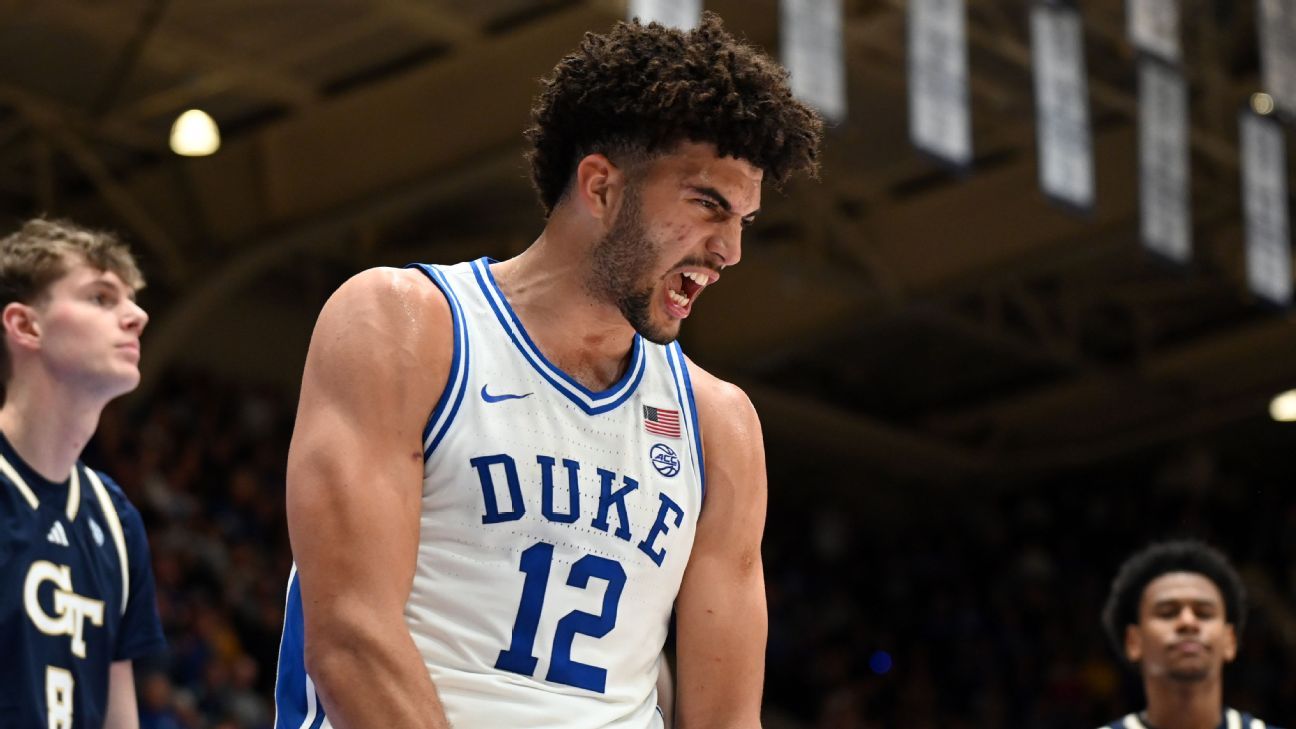
Had Michigan star Yaxel Lendeborg just seen a ghost?
His Wolverines — then the No. 1 team in the country — were used to overwhelming opponents on the glass and in the paint. Instead, they had just been outrebounded and outscored by Cameron Boozer and the No. 3 Duke Blue Devils, and Lendeborg couldn’t find the words to describe the superstar freshman.
“Um … man … um,” Lendeborg hedged when asked about Boozer’s play after the Feb. 21 game, shaking his head and trailing off.
Boozer has had that mystifying effect on every opponent he has faced when the stakes are high.
Clutch performances throughout the 2025-26 campaign have made him the clear favorite for national player of the year honors in a season that features arguably the most talented freshman class of the one-and-done era, not to mention multiple returning All-Americans. The gap between the 18-year-old and the country’s other elite players was widened in the win over Michigan, thanks to his game-altering 3-pointer and the draw of a key goaltending call in the final minutes.
Lendeborg was not the first star Boozer humbled this season. He had 24 points and 23 rebounds against Tennessee’s Nate Ament in a preseason win. Projected NBA draft lottery picks Darius Acuff Jr. and Thomas Haugh could only watch in awe as Boozer scored 64 points combined in wins over Arkansas and Florida, respectively. Boozer also bulldozed Jeremy Fears Jr. and Michigan State to the tune of 18 points and 15 rebounds. Meanwhile, the ACC is still trying to catch its breath from Boozer’s spectacular efforts throughout conference play, with rival North Carolina up next in Saturday’s regular-season finale (6:30 p.m. on ESPN) — a game that could seal Duke’s bid for the No. 1 overall seed in the NCAA tournament.
“We’ve been in a lot of big-time games, a lot of close games, against a lot of highly ranked teams or talked-about teams,” Boozer said about himself and his brother Cayden, also a five-star freshman for the Blue Devils. “So I feel like just being in a lot of those moments prepares you for this.”
Those who have watched the rise of Boozer — son of Carlos Boozer, a former NBA All-Star who won a title with Duke in 2001 — would agree. There is a common thread that ties his basketball career together, from middle school to present day: He’s a defensive dilemma not only because of his size, relentless motor, intellect and a skill set that has made a him a projected top-three pick in the 2026 NBA draft, but also because of the way the game seems to slow down for him in the highest-pressure moments.
Boozer won four state titles with Columbus High School at Florida’s highest level of prep basketball. He led the Explorers to a national title in 2025. His AAU team, the Nightrydas, won three consecutive Nike EYBL crowns. He was co-MVP of last year’s McDonald’s All American game. He won Gatorade Player of the Year twice, plus two gold medals with USA Basketball. That level of dominance means the same question opponents have always asked about Boozer will take center stage in March: How do you stop him?
Kansas’ Darryn Peterson might have the highest NBA ceiling in this freshman class. And BYU’s AJ Dybantsa is its most entertaining and explosive talent. But Boozer is, well, the winningest.
Every time championships have been on the line in his career, Boozer has won. And in the clutch moments of crucial games, he has delivered.
“It’s his greatest tool. It’s his greatest asset,” Miami head coach Jai Lucas, a former Duke assistant who recruited Boozer, said. “It’s like he’s been there before, and he’s been that way since he was in seventh, eighth grade. He’s always played with an older vibe, a veteran vibe about him.
“No moment, no situation is too big for him.”
Andrew Moran’s phone buzzed the night before a regional matchup in the 2022 Florida state playoffs.
As the Columbus High School coach was preparing his squad to face its next opponent, Boozer — a team captain as just a 14-year-old freshman — had watched the film and written a scouting report. He noted the hand signals the opposing coach had used for each set.
“It had descriptions of their plays and it had the time stamps in which it happened during the game. And at first I was confused,” said Moran, who is now an assistant at Miami. “I looked at it and I was like, ‘What the hell is he sending me?’ And then I realized, ‘Oh man, this guy is sending me detailed stuff.’ So for me, I was like, ‘This is another level of preparation at this age.'”
Boozer fell in love with the game early.
There is video of a seventh-grade Boozer blocking shots into the parents section of former NBA All-Star Chris Paul’s middle school combine in 2019, dribbling behind his back and throwing full-court passes. He already had a bag of skills players his age clearly couldn’t match.
“That’s a throwback. I think I had yellow hair back then,” Boozer said, referencing the gold hairstyle he sported at the time.
When the pandemic closed schools and gyms around the country, Boozer and his buddies played pickup games every day, sometimes in the rain, often on the full court at his house. That’s when his friends noticed a shift.
Dante Allen was Boozer’s AAU teammate then. He asked his father, Malik Allen, an assistant coach for the Miami Heat, to put their pickup crew through drills before playing 5-on-5. It was already evident Boozer had the tools to be a great player, but the drills showcased how his intensity was growing.
“I think that’s definitely when he started to get a lot better as a basketball player,” Dante Allen said. “I’d say every drill, he was very intentional with it. There was no point where he was going anything less than a 100% speed with it, just trying to be the best that he can. And then once we started playing pickup, it was just carrying over everything that we’d been doing, all the lessons he’d learned.”
During his freshman year at Columbus High School, Boozer’s combination of brains and brawn thrust his team into the state championship game against Dr. Phillips High School’s roster of now-Division I players Denzel Aberdeen (Kentucky), Ernest Udeh Jr. (Miami) and Riley Kugel (UCF). Boozer scored a team-high 17 points to help Columbus High capture its first state title.
“It was the biggest matchup that we had at that point, and he was just really poised and got us to the win,” Cayden Boozer said.
The victories piled up from there as Cameron’s game evolved.
Coach Mark Griseck figured his Windermere High School team would have its hands full against Boozer and a Columbus team seeking its fourth consecutive state title last year. Early in the game, he said, Boozer set the tone.
“The first time my point guard got hit with a ball screen from Boozer, he goes, ‘Man, it took me about three or four trips back down the court to get my senses back,'” said Griseck, whose team lost 68-36. “Because Boozer set a screen on him and it almost knocked him out. And it wasn’t illegal. It was just a screen by a tree.”
The opposing players in that lopsided affair noticed not only Boozer’s skills and dominance, but also the way he orchestrated the action on the court.
“He was anchoring his offense and not only anchoring it but calling out the plays,” said TJ Drain, a Windermere alum who now plays at Liberty. “He was very vocal with his teammates in encouragement, and that really stood out to me. Whether it was a good pass or a great cut or he’d say, ‘I know you’re going to finish the next one.'”
Boozer’s family background gave him a head start in basketball. His determination did the rest. To those who have witnessed his development, his success at Duke isn’t surprising. They saw the seeds of what he blossomed into a long time ago.
“He’s getting wherever he wants to,” Allen said. “It doesn’t matter if it’s a 7-foot, 300-pound player in front of him or if it’s a pesky guard in front of him, Cam is going to get wherever he wants, regardless. And I think the really hard part about that is that he can get wherever he wants to and then the fact that he’s going to make the right play.”
Exactly 32 hours before Notre Dame was set to tip off against Duke, Fighting Irish head coach Micah Shrewsberry was concerned about how his team would handle Boozer.
Those worries were justified. Notre Dame scored only 22 points in the first half. Boozer had 20 on his own. The Blue Devils went on to win 100-56.
“I’m pretty sure he and his brother were probably dominating when they were 8-year-olds, all the way through,” said Shrewsberry, who left the game in a walking boot after suffering an Achilles injury while he coached his team. “He plays as hard as anybody out there. There is no arrogance to him. It looks like winning’s really important to him, and he’s going to do whatever it takes to win.”
1:05
Cameron Boozer tallies a double-double in Duke’s win
Cameron Boozer scores 24 points and grabs 13 rebounds in Duke’s rout over Notre Dame.
Howard head coach Kenny Blakeney knows what it takes to win, too. He was on the Duke team that won its second straight national title in 1992. Having played with Christian Laettner, Grant Hill and Bobby Hurley, Blakeney also knows talent. And he realized Boozer is a lot more than that when his Bison played the Blue Devils in November, saying the “ginormous” Boozer plays like a “baby Jokic” — comparing him to three-time NBA MVP Nikola Jokic.
“If you watch the Duke game against us, Duke was closing out the game, running ball screens for a 6-foot-9, 250-pound dude to get downhill and make decisions,” Blakeney said. “He shoots it well. He’s an incredible passer. He can do whatever he wants to do on the low block.
“It’s like the criticism from what I hear is that he’s not bouncy enough. Well, you can’t stop the stuff that he can do, so he doesn’t need to be.”
It was only this time last year that Cooper Flagg was authoring one of the greatest freshman campaigns in the one-and-done era. And Boozer is arguably outplaying him.
Boozer is averaging more points (22.6 vs. 19.2) and rebounds (10.0 vs. 7.5) than Flagg, and nearly as many assists (4.0 vs. 4.2). Boozer is also a better 3-point shooter and is playing more minutes. His current 135.3 offensive rating would set a record in the KenPom era (since 2003-04) if it holds. And he has led Duke to its best start (28-2) since 1998-99, when that squad started 29-1 (and won 32 games in a row).
Boozer has an opportunity to end his career as one of the greatest freshmen of all time — not just at Duke. According to data scientist Evan Miya, Boozer is having the best season in college basketball since at least 2009-10, surpassing Zach Edey’s second consecutive Wooden Award season in 2023-24 (25.2 PPG, 12.2 RPG, 2.0 BPG).
“I just think he’s wired for it. He lives it,” Duke head coach Jon Scheyer said. “He’s incredibly prepared going into the games of understanding the different coverages he can see. I mean, we’ve seen so many different defenses, whether it’s doubles or single coverage or heavy plugs, whatever it is. I credit his preparation. I credit the fact that he just lives it every single day.”
At the next level, Boozer will compete against players who might have traits he lacks. He’s not an above-the-rim threat or walking “SportsCenter” highlight like Dybantsa and Peterson, who are projected to go ahead of him in the NBA draft. But Boozer is a complete player with a knack for navigating adversity to win games.
“One of his biggest intangibles is a winning pedigree. Championships, MVPs, gold medals, he’s won at every stop, at a high level, and is a primary contributor on a team that is in position to win it all in April,” one NBA executive told ESPN. “He seems to be about all the right things.
“His actions indicate that he cares about winning, playing the game the right way, handling his business with maturity and professionalism.”
On Saturday, Boozer will lead Duke into its regular-season finale against North Carolina, the ACC outright title already in hand. After that, the Blue Devils will ask him to do what he has done throughout his career: lead them to a championship — their first since 2015.
Accepting that responsibility is all Boozer knows. He always has done his best work when the stakes are highest.
“There is a lot that comes with being at Duke, but you wouldn’t come to Duke if you were afraid of that or didn’t want to be a part of that,” Boozer said. “It’s the biggest brand in college basketball. There is always a spotlight, always a target on your back, so you come to Duke to play in these moments — to be in these moments.”

ISLAMABAD: Eight Pakistani officials have been appointed to key committees of the International Tennis Federation and the Asian Tennis Federation for the 2026–2027 term, marking a significant achievement for Pakistan’s tennis community.
The appointments are being viewed as a recognition of Pakistan’s growing role in the development and governance of tennis at both regional and international levels.
Representation in ITF Committees
Pakistan’s top tennis player and President of the Pakistan Tennis Federation, Aisam-ul-Haq Qureshi, has been selected as a member of the ITF Athlete Commission.
Other Pakistani officials appointed to ITF committees include:
Sara Mansoor – ITF Coaches Commission
Syed Muhammad Ali Murtaza – ITF Juniors Committee
Pakistani Officials in ATF Committees
Several Pakistani representatives have also been appointed to committees of the Asian Tennis Federation:
Salim Saifullah Khan – Finance Committee, Development Advisory Group, Legal, Constitution & Ethics Committee
Ziauddin Tufail – Junior and Coaches Development Committee
Rashid Malik – Marketing and Sponsorship Committee
Shehzad Akhtar Alvi – Tournament Officiating Committee
Sara Mansoor – ATF Advantage All Committee
Muhammad Khalid Rehmani – Senior, Wheelchair and Beach Tennis Committee
Recognition for Pakistan Tennis
Speaking on the occasion, Salim Saifullah Khan said the appointments demonstrate the trust of international tennis bodies in Pakistani officials to contribute to the global development of the sport.
PTF President Aisam-ul-Haq Qureshi also described the development as a proud moment for Pakistan, saying it will strengthen the country’s role in international tennis and open new opportunities for the sport’s growth in the region.
PTF Secretary General Ziauddin Tufail congratulated the appointed officials and expressed confidence that they would represent Pakistan effectively at the international level.


Ball State fires Michael Lewis after 3 straight losing seasons

Iran Assures Neighbours of Non-Aggression Amid Regional Tensions

Paul McCartney's overlooked work

India Us Trade Deal: Fresh look at India-US trade deal? May be ‘rebalanced’ if circumstances change, says Piyush Goyal – The Times of India

LPGA legend shares her feelings about US women’s Olympic wins: ‘Gets me really emotional’

Bobby J. Brown, “The Wire” and “Law & Order: SUV” actor, dies of smoke inhalation after reported fire

-
Business1 week ago
India Us Trade Deal: Fresh look at India-US trade deal? May be ‘rebalanced’ if circumstances change, says Piyush Goyal – The Times of India
-
 Sports1 week ago
LPGA legend shares her feelings about US women’s Olympic wins: ‘Gets me really emotional’
-
 Entertainment1 week ago
Bobby J. Brown, “The Wire” and “Law & Order: SUV” actor, dies of smoke inhalation after reported fire
-

 Fashion1 week ago
South Korea’s Misto Holdings completes planned leadership transition
-
 Entertainment1 week ago
Pakistan’s semi-final qualification scenario after England defeat New Zealand
-

 Fashion1 week ago
Texwin Spinning showcasing premium cotton yarn range at VIATT 2026
-
 Business1 week ago
Data tool to spot Cambridgeshire families due financial support
-
 Entertainment1 week ago
What’s new in Pokémon? Every game, update, surprise from 30th anniversary event