

Sports
Predicting the USMNT’s starting lineup at the World Cup: What previous tournaments tell us

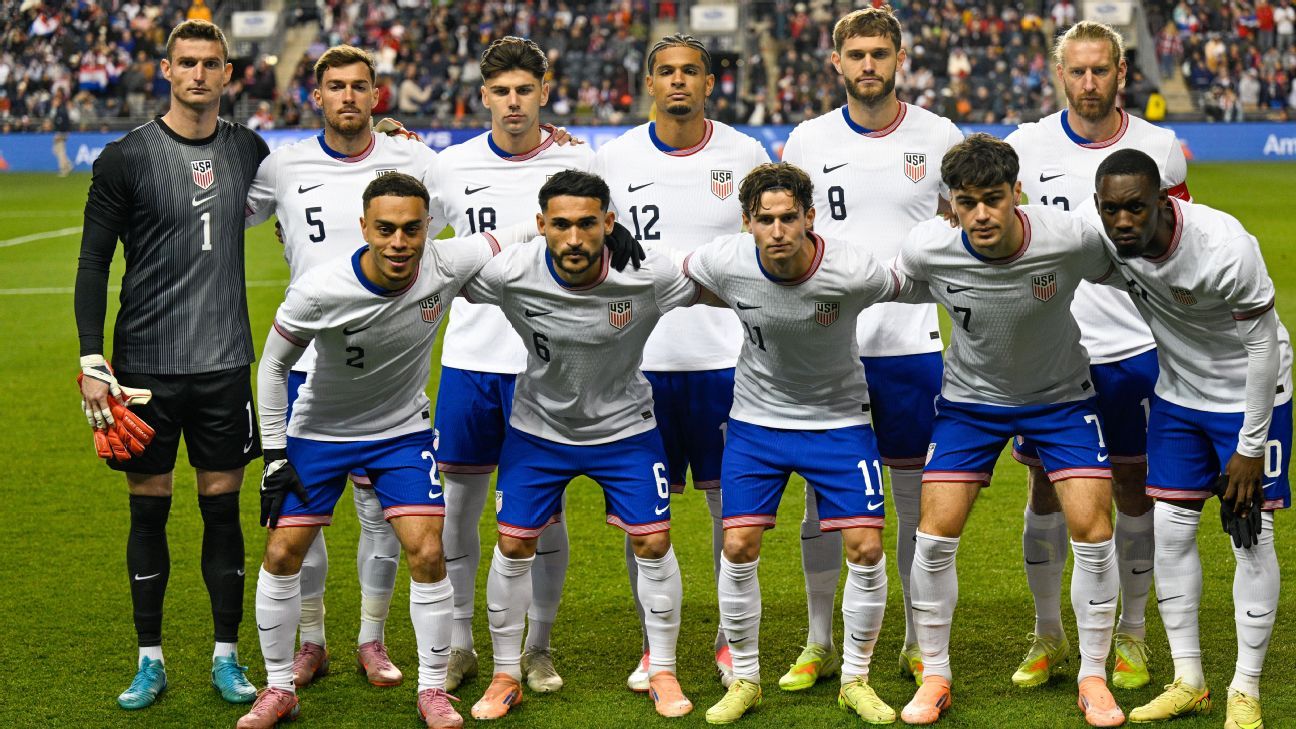
I’m old. In fact, I’m old enough to remember when the U.S. men’s national team crashed out against Mexico in the Gold Cup final without much of a fight.
I’m old enough to remember when, earlier in that same tournament, a succession of wins from a mostly MLS-based roster had some commentators wondering whether these players just wanted it more than their fancy teammates over in the Champions League. I’m old enough to remember when those same players got annihilated by Turkey and Switzerland just a few weeks earlier.
I’m old enough to remember when every former U.S. member with a podcast melted down because a handful of Europe-based players declined a call-up for the Gold Cup. I’m old enough to remember when, a couple months before that, the fan base melted down after the U.S. was eliminated by Panama in the Nations League after winning three straight Nations Leagues under the previous managerial regime.
And I’m old enough to remember when the majority of those U.S. fans rejoiced when the program replaced Gregg Berhalter with a proven world-class coach like Mauricio Pochettino.
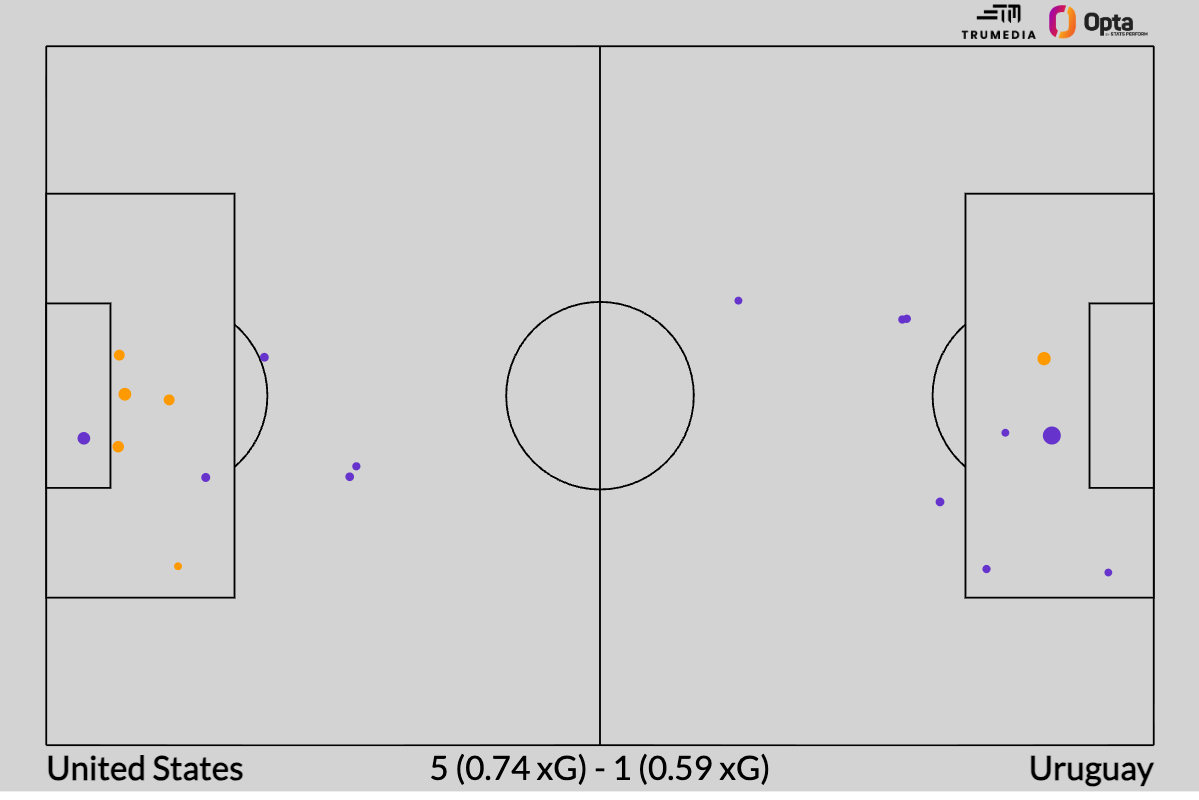
All of that happened … within the past year and a half. As did this week’s 5-1 win over Uruguay, which was powered by absolutely ridiculous finishing, fortuitous bounces and some poor goalkeeping:
With seven months until the World Cup, it might not seem like there’s much time left. But the U.S. fan base has lived multiple lifetimes over the past 18 months.
From now until the summer, someone is going to get injured, someone is going to emerge out of nowhere, someone is going to stop playing for his club team, and the U.S. will either win or lose games that don’t reflect the true quality of the team. A lot is still going to happen.
In order to look forward — and stay safe from the results-based whiplash — we can actually look backward. What can the previous three World Cup cycles tell us about who might be on the field when the U.S. kicks things off at SoFi Stadium on June 12, 2026?
– Statement win over Uruguay shows USMNT has come a long way
– USMNT’s Pochettino pushes back on talk of ‘regular’ players
– How the USMNT combats jet lag: Fly kits, supplements, sleep masks
Who starts World Cups for the USMNT?
Let’s start in 2010.
In the Americans’ opening match against England, they had Tim Howard in goal. At the back: Steve Cherundolo at right back, Jay Demerit and Oguchi Onyewu in the center and Carlos Bocanegra bumped out to the left. At the base of midfield was the pair of Michael Bradley and Ricardo Clark, and then ahead of them, as a pair of attacking midfielders, were the two stars: Landon Donovan and Clint Dempsey. And up top, it was Jozy Altidore and Robbie Findley.
Seven of those names were unsurprising: Howard, Onyewu, Bocanegra, Bradley, Donovan, Dempsey and Altidore all played over 1,000 minutes for the U.S. the previous year. Cherundolo wasn’t much of a surprise, either. He’d only played 500-ish minutes the prior year thanks to a number of lower body injuries and the emergence of West Ham’s Jonathan Spector, but he was the captain at Bundesliga club Hannover and he was fully healthy come South Africa.
Both Clark and Demerit played around 500 minutes, too, and they fit into what we’ll call the “potential starter” tier. There weren’t obviously better options than either of them. And then there was the one shocker: Robbie Findley, who played zero minutes for the U.S. in 2009 but emerged after a car accident that seriously injured Charlie Davies opened up a spot for him to play alongside Altidore.
In 2009, Davies played 750 minutes for the U.S., but he was never the same after the accident. Among nonstarters in South Africa, only Jonathan Bornstein played more minutes (900-plus), but he lost his spot once Bob Bradley moved Bocanegra to fullback. And after Davies, the two most-used players in 2009 were Spector and midfielder Benny Feilhaber, who played heavy minutes off the bench in 2010.
So that’s seven obvious starters, one more obvious returnee from injury, two maybes, and one out-of-nowhere.
1:28
What to make of USMNT’s 5-1 win over Uruguay
Herculez Gomez reacts to the United States’ impressive 5-1 win over Uruguay.
Let’s move on to 2014.
Howard was in goal again. At the back, it was Fabian Johnson at right back and Damarcus Beasley on the left, with Geoff Cameron and Matt Besler in between. Manager Jurgen Klinsmann opted for a diamond midfield with Kyle Beckerman at the base and three shuttlers (Jermaine Jones, Bradley and Alejandro Bedoya). Up top, Dempsey played behind Altidore.
In 2013, Howard, Beasley and Altidore all played 1,000-plus minutes, while Dempsey, Bradley, Jones, Cameron and Besler all played at least 900. Bedoya clocked in around 820, while Beckerman played 680 and Johnson 580.
That feels similar to the breakdown four years earlier. Howard, Beasley, Altidore, Dempsey, Bradley and Jones were all shoe-ins, while two of Besler, Cameron and Omar González (who played over 1,000 minutes in 2013) were expected to play in the center of the defense. If we say it was all but guaranteed that one of Besler and Cameron would start, then that lands us at seven clear starters once again.
Johnson fills the “Cherundolo role” — he was arguably the most talented player in the pool and he’d just recently filed his one-time switch from Germany to the U.S. And then Bedoya and Beckerman fill the “maybe” quota.
There was no Findley type on the field against Ghana in 2014, but there was, shockingly, no Landon Donovan, who played 800-plus minutes the year before. There was also no Eddie Johnson, who played 900-plus minutes in 2013 and seemed like a potential starter, and no Clarence Goodson, who featured in 880 minutes. The Jurgen Klinsmann era was, um, interesting.
From 2010 to 2014, the U.S. carried over four starters: Howard, Bradley, Dempsey and Altidore. Unfortunately, we can’t trace the lineage to 2018 because the U.S. didn’t qualify. We must fast-forward to 2022.
1:33
How important will Gio Reyna be for the USMNT at the World Cup?
Gab Marcotti talks about Gio Reyna’s contribution to Mauricio Pochettino’s USMNT.
So, let’s look at 2022 and the lineup for the opening match with Wales.
In goal: Matt Turner. At the back: Sergiño Dest on the right, Antonee Robinson on the left, with Walker Zimmerman and Tim Ream in the center. There was a three-man midfield for the first time: Tyler Adams, Weston McKennie and Yunus Musah. And same goes for the front three: Christian Pulisic on the left, Timothy Weah out right and Josh Sargent in the center.
The year prior, Turner was the only starter to feature in at least 1,000 minutes, which says less about the surprising nature of the lineup and more about the changing state of the player pool. In other words: a lot more guys in Europe, who wouldn’t be on any of the MLS-based rosters. Two other guys broke 700 minutes (Robinson and Adams), while three more went beyond 600 (McKennie, Zimmerman and Dest). Pulisic and Musah both played more than 500 minutes, while Weah, Sargent and Ream were all below it.
I think we can say that Turner, Adams, Robinson, McKennie, Zimmerman and Dest were penciled-in starters at this time in 2021. Pulisic, then, fills the Cherundolo/Johnson role of the guy who starts if he’s healthy. And then I’d say Musah and Weah were “maybe starters,” while Ream and Sargent were both surprises.
In 2021, Miles Robinson, Kellyn Acosta and Sebastian Lletget all played over 1,000 minutes. Robinson would’ve started in Qatar had he not torn an Achilles, while Acosta was sunset into a backup role with the emergence of Musah after the latter’s one-time switch from England.
Lletget was a Berhalter favorite who just couldn’t stack up with the development of the team’s younger talent. Brenden Aaronson also played 800-plus minutes in 2021 but wasn’t starting come the World Cup.
Who will start for the USMNT at the 2026 World Cup?
To bring it all together: There have usually been around seven expected starters at the end of the year before the World Cup, one guy who will start if healthy, and then some combination of maybe-starters and outright surprises.
Across the 33 starters at the previous three World Cups for the U.S., there was one guy who played zero minutes the year before, three who played fewer than 500 minutes, 17 between 500 and 900 minutes, and 11 who played 1,000 minutes or more. On average, keepers played 1,135 minutes the year before the World Cup, and outfielders played 799.
Incredibly, very few of the most talented Americans have even hit 500 minutes this past year. These are the 11 players who broke that threshold:
Matt Freese: 1,170 minutes
Tim Ream: 1,108
Max Arfsten: 1,086
Chris Richards: 1,004
Alex Freeman: 976
Diego Luna: 953
Patrick Agyemang: 806
Malik Tillman: 765
Sebastian Berhalter: 704
Tyler Adams: 697
Luca de la Torre: 545
Some players below 500 minutes: Pulisic, Dest, McKennie, Musah, Weah, Turner, Sargent, Aaronson, Antonee Robinson, Folarin Balogun, Johnny Cardoso, Gio Reyna, Joe Scally, Tanner Tessman and Ricardo Pepi.
Working from the 1,000-plus-minutes list, I think we can pencil in Freese, Ream and Richards all as starters. And I think we need to put Arfsten on the list, too. Pochettino clearly loves him, the switch to a back three helps cover up his matador tendencies out of possession, and the other option, Robinson, still hasn’t started a Premier League game for Fulham this season. He has played only 64 total minutes.
That’s four likely starters, and we need to get to six or seven. It’s really hard to see anyone other than Adams starting in central midfield if he’s healthy.
It’s also clear that Pochettino wants one of the three center backs to be more of a half-fullback-half-center-back — this is what he did at Chelsea — and Alex Freeman played that role and scored two goals (!?) against Uruguay. It’s also worth pointing out, not that I think this data is driving decision-making in any real way, but Freeman already looks like an all-time great MLS fullback, based on the goals-added metric from American Soccer Analysis. He won’t turn 22 until after the World Cup.
Obviously, we can add in Pulisic as our “if he’s healthy, he starts” star. He’s the best player in the pool, he’s the best American player ever and this is the one World Cup they get with him in his prime.
That leaves four more spots: right wing back, the other central midfield slot, the other attacking midfielder next to Pulisic and the striker.
As Matthew Doyle noted for the MLS website, Pochettino has succeeded in expanding the American player pool — or at least expanding our perception of the player pool. That’s interesting, especially in light of recent comments by Canada manager Jesse Marsch, who suggested that managers might be able to rely on a smaller core of players than usual because the expanded World Cup means teams will have more days off between matches. I’m not sure whether Pochettino’s approach is the right or wrong one, but it certainly makes this specific exercise a little trickier.
If he’s healthy, though, Balogun is clearly the best American striker — he gets good shots unlike anyone else in the pool — and he has played more minutes than any attacker since the Gold Cup. So he’s our starting striker.
At right wing back, especially if Freeman is playing as a centerback-ish type, there’s no real option other than Dest. He was injured for a good chunk of this year, so he didn’t play much, but a wingback role also covers up his defensive inadequacies, and like Arfsten, he started the final two games of the year.
Next to Pulisic, there are plenty of options: Luna, Tillman, McKennie, Weah, Reyna, maybe even Aaronson or Alejandro Zendejas. You’ve been asleep for half a decade if you’re willing to confidently predict anything about Reyna’s future, so he’s out.
Although he’s currently injured, Tillman would be my pick. Not, like, my pick if I were the coach, but my pick for who the coach will pick. I’m not confident in this projection, but I think he gets a slight edge simply because he has played way more for Pochettino over the past year.
That leaves us with the last spot: the one next to Adams. Although they’ve played a lot, Sebastian Berhalter and de la Torre really don’t make sense as starters. So it’s between McKennie, Tessman, Musah and Cristian Roldan. Musah hasn’t been called up since before the Gold Cup, so I’m not planting my flag there. McKennie wasn’t called up this window, so he probably should be lower down my list, too.
Reading the tea leaves suggests Roldan because of that one tea leaf that literally quotes Mauricio Pochettino as saying, “Cristian Roldan is maybe an example of if you want to build your perfect player.” But it seems like there is one guy who comes out of nowhere to break into the starting XI every cycle. And given that he has appeared in only four games for the U.S. and didn’t even get called up for the final two games in 2025, McKennie fits that bill.
Now, my predicted lineup is almost definitely going to be incorrect. But with around seven guys who were key pieces this year, one injured star, and three players who have been in and out of the picture, it looks a lot like all of the other USMNT lineups that have started World Cups in recent years.
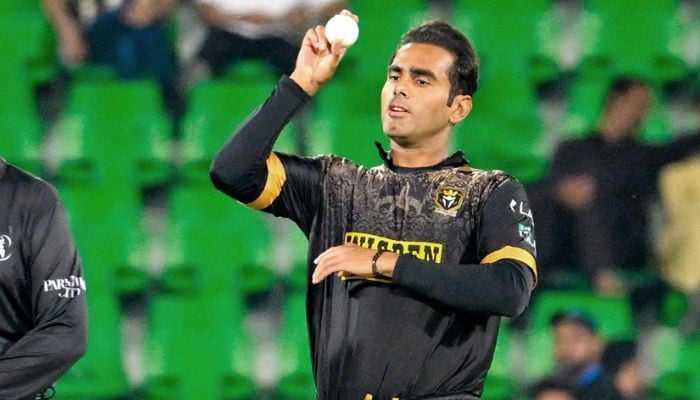
Hyderabad Kingsmen fast bowler Mohammad Ali has been fined 10% of his match fee after pleading guilty to a Level 1 breach of the HBL Pakistan Super League (PSL) Code of Conduct during Friday night’s Eliminator 2 against Islamabad United at Gaddafi Stadium in Lahore.
Ali was found to have violated Article 2.21 of the HBL PSL Code of Conduct for Players and Player Support Personnel, which relates to “conduct that brings the game into disrepute”.
According to officials, the incident took place in the 16th over of Islamabad United’s innings when Faheem Ashraf walked in to bat after the dismissal of Haider Ali.
The charge was levelled by on-field umpires Ahsan Raza and Shahid Saikat, while match referee Roshan Mahanama imposed the sanction.
The Kingsmen went on to beat Islamabad United by two runs to book their place in the PSL 11 final against table-toppers Peshawar Zalmi at the same venue on Sunday, ending United’s campaign in the tournament.
Chasing 187, Islamabad lost Sameer Minhas for six and Mohsin Riaz for five inside the first three overs with 15 runs on the board. Devon Conway and Shadab Khan then added 42 before Saim Ayub dismissed Conway for 30 off 25 balls in the eighth over.
Shadab made 22 off 24 deliveries before falling to Hassan Khan at the start of the 11th over, while Mark Chapman kept Islamabad in the hunt with 43 off 26 balls. Chapman added 64 runs with Haider Ali, who scored 31 off 16 before falling to Mohammad Ali in the 16th over.
Faheem Ashraf and Chris Green then smashed 22 runs off Ali in the penultimate over to leave Islamabad needing six from the last over, but Hunain Shah conceded only three to seal a two-run win. Ali and Hunain took two wickets each, while Akif Javed, Hassan Khan and Saim Ayub picked up one apiece.
Earlier, Hyderabad Kingsmen posted 186/5 after being put in to bat, driven by a 101-run fifth-wicket stand between Usman Khan and Kusal Perera.
Usman remained unbeaten on 61 off 30 balls, while Perera made 37 from 21 deliveries. Saim Ayub scored 38 and captain Marnus Labuschagne added 40, while Imad Wasim was Islamabad’s standout bowler with 2 for 16 in two overs.
NEWYou can now listen to Fox News articles!
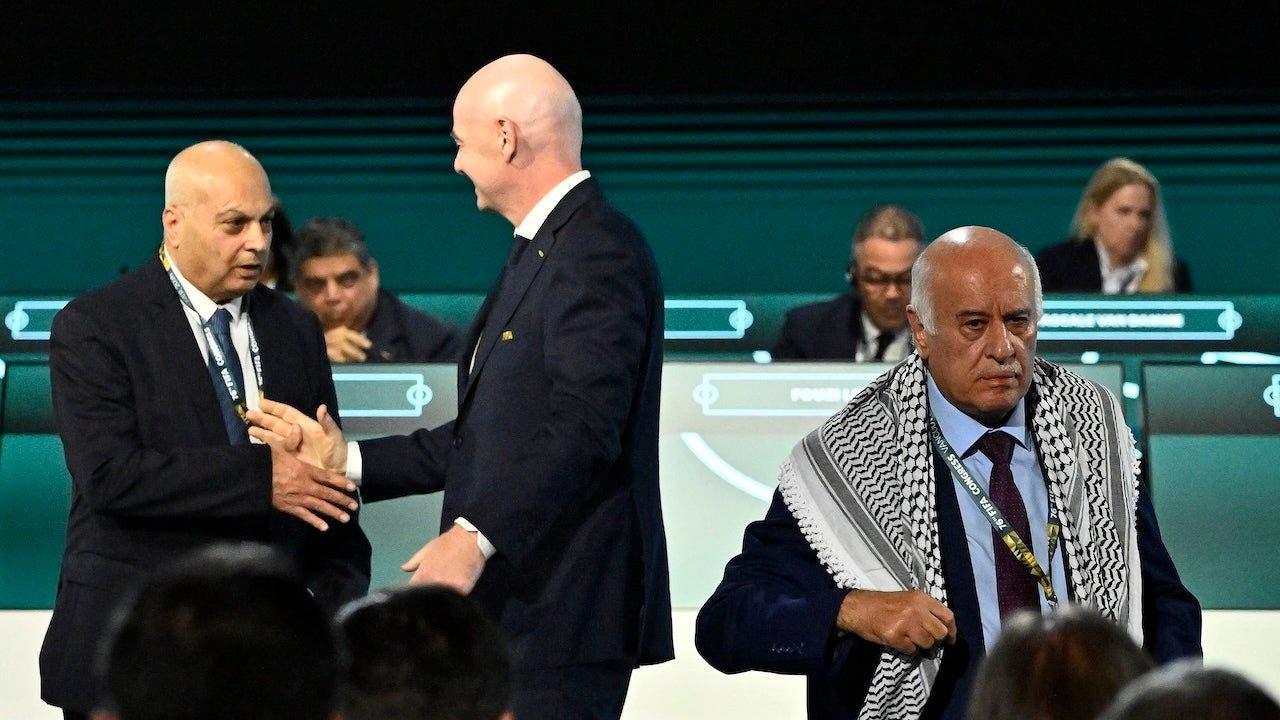
Palestinian Football Association President Jibril Rajoub refused to shake hands or even stand beside Israel Football Association Vice President Basim Sheikh Suliman during a tense exchange at the FIFA Congress Thursday.
Both officials were invited to the stage by FIFA President Gianni Infantino, but the Palestinian representative resisted efforts to bring him closer to his Israeli counterpart.
FIFA President Gianni Infantino shakes hands with Basim Sheikh Suliman (left), vice president of the Israeli Football Association, as Jibril Rajoub (right), president of the Palestine Football Association, leaves the stage at the 76th FIFA Congress in Vancouver, Canada, April 30, 2026. (Reuters/Jennifer Gauthier)
Infantino briefly placed a hand on Rajoub’s arm and gestured for him to step forward, but Rajoub did not comply.
CLICK HERE FOR MORE SPORTS COVERAGE ON FOXNEWS.COM
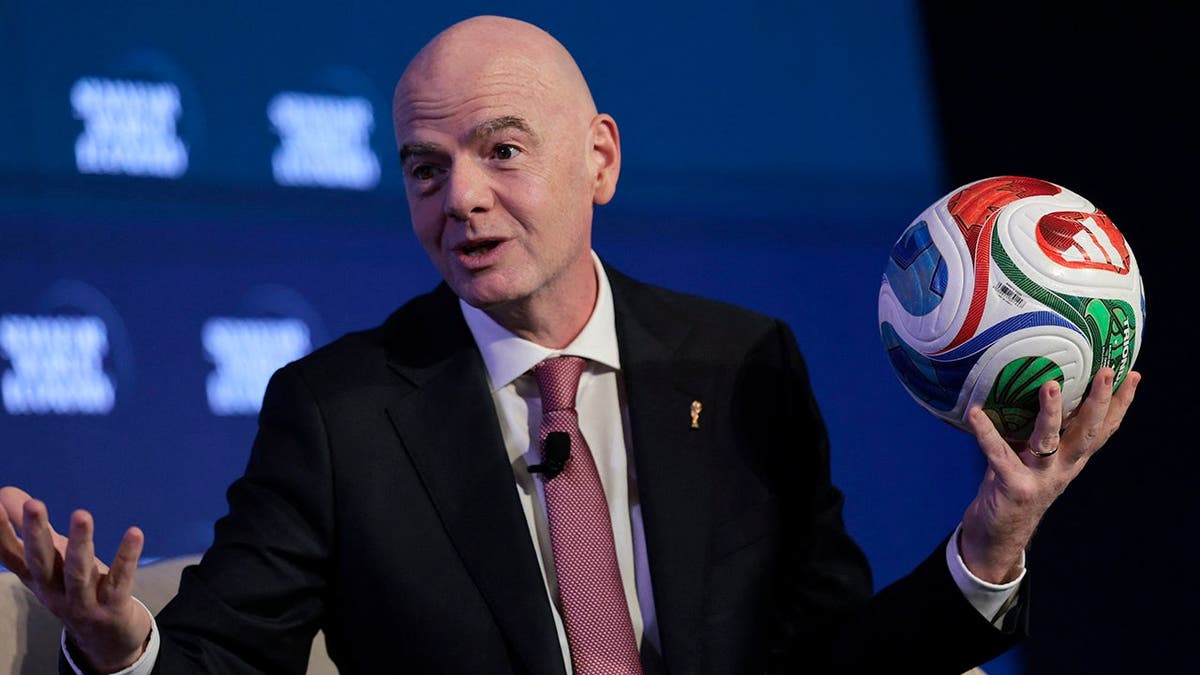
FIFA President Gianni Infantino speaks during the 2026 Semafor World Economy conference in Washington, D.C., on April 15, 2026. (Kent Nishimura/AFP)
The Palestinian FA, led by Rajoub, has long pushed for Israel to be suspended from international soccer competition.
Rajoub defended his decision, saying he remains committed to formal processes but believes stronger action is needed.
“I still respect and follow the legal procedure, but I think it’s time to understand that Israel should be sanctioned. The double-standard policy should stop,” Rajoub said, according to The Times of Israel.
“I refused to shake hands. Sport is sport. … For me, that should be respected, but if the other side is representing a criminal like Bibi [Prime Minister Benjamin Netanyahu] and speaking on behalf of Bibi as if Bibi is Mother Teresa, how can I shake hands or have a photo with such a man?
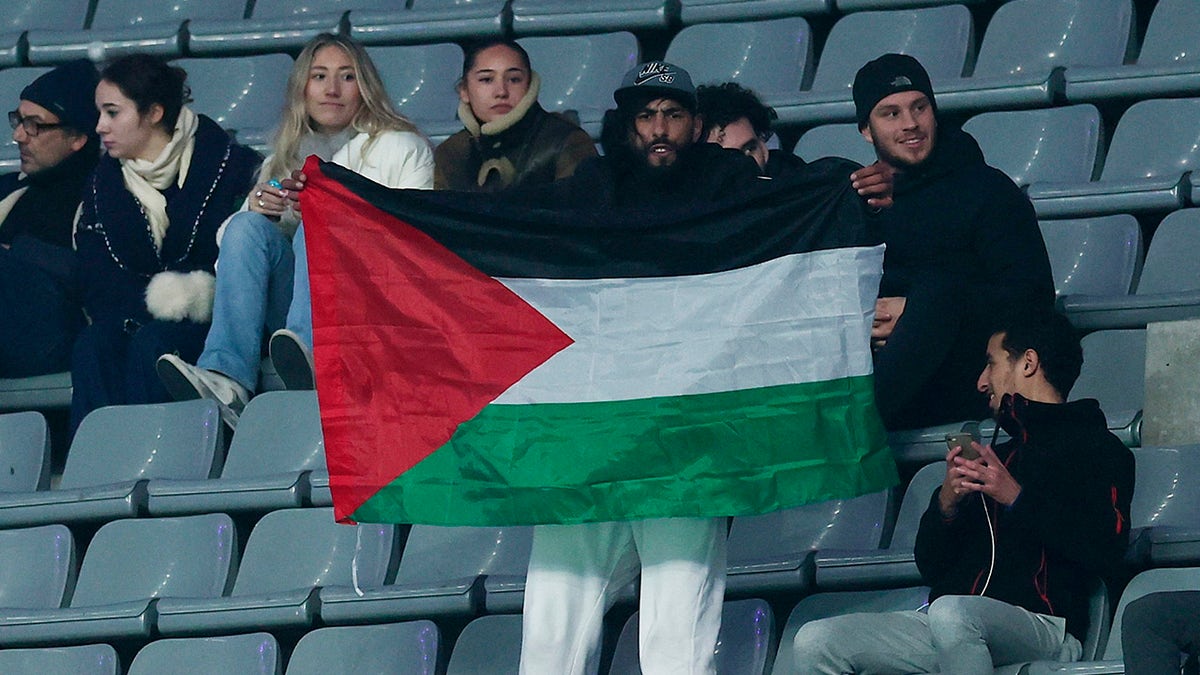
A fan displays a Palestinian flag during a Nations League group stage match between France and Israel Nov. 14, 2024. (Gonzalo Fuentes/Reuters)
“I think Gianni has the right to try to bridge gaps and bring people together, but I think maybe he does not understand or does not know the deep suffering of the Palestinian people.”
After the exchange, Infantino addressed the room, urging cooperation.
“We will work together, President Rajoub, Vice President Suliman. Let’s work together to give hope to the children. These are complex matters,” Infantino said.
Speaking just before the incident, Suliman emphasized the unifying role of the sport.
“In football, there is no place for politics,” Suliman said. “Everyone has the right to play and compete. We are teaching children values like respect, equality and love for others, and we hope that by the next time we meet, the situation will be better. We extend a hand to the Palestinian FA in the spirit of those shared values.”
CLICK HERE TO DOWNLOAD THE FOX NEWS APP
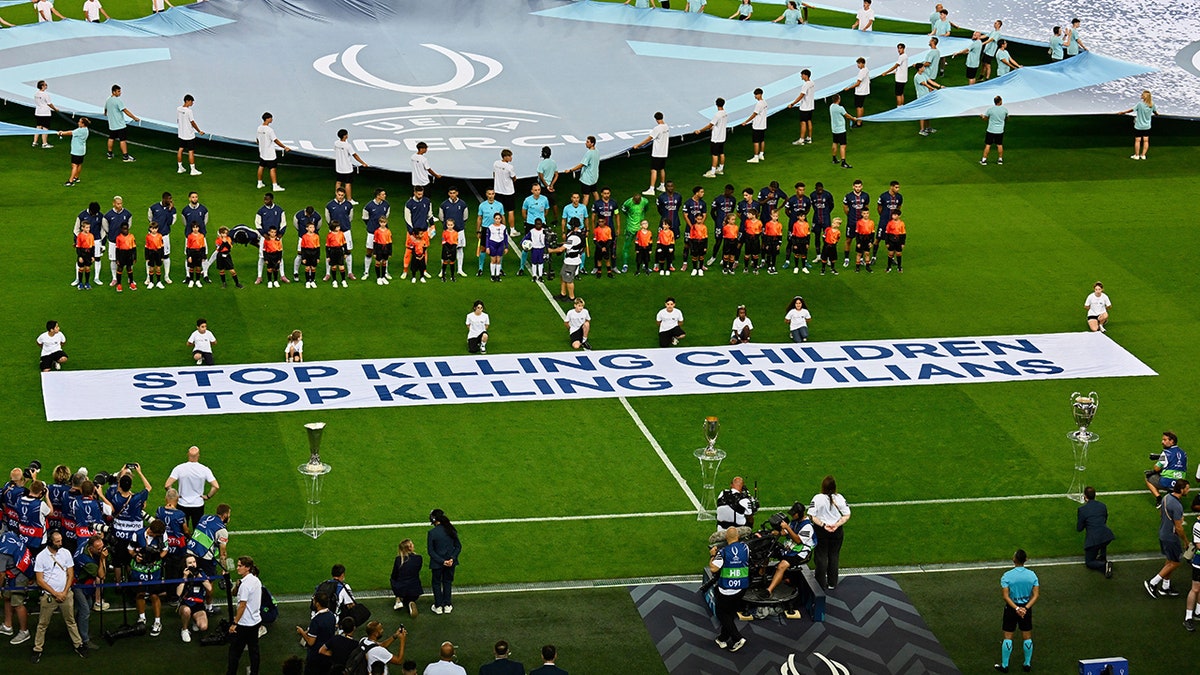
Players from Paris Saint-Germain and Tottenham Hotspur line up before the UEFA Super Cup soccer match in Udine, Italy, on Aug. 13, 2025. (Denes Erdos/AP)
UEFA was reportedly moving toward a vote to suspend Israel over the war in Gaza in September, but the motion was put on pause.
Infantino announced no action would be taken against the team on Oct. 3 after a historic peace proposal by President Donald Trump and Netanyahu.
However, even after the peace proposal, Israeli sports teams have faced opposition and exclusion.
Follow Fox News Digital’s sports coverage on X, and subscribe to the Fox News Sports Huddle newsletter.
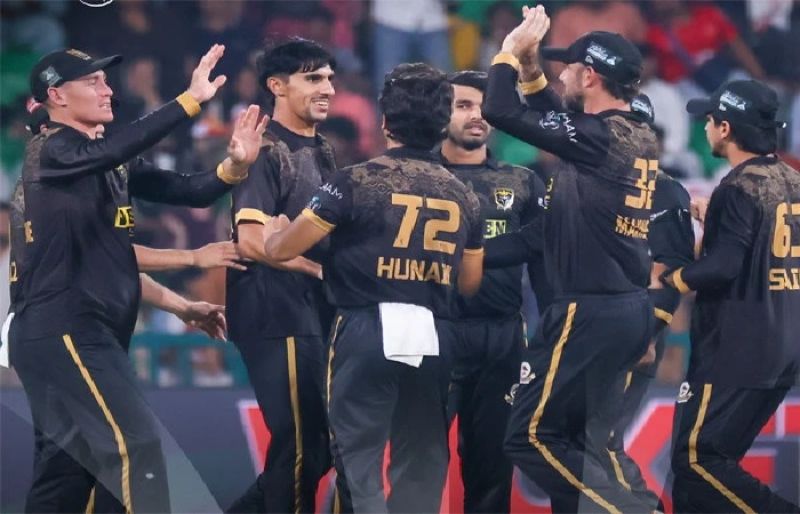
Hyderabad Kingsmen advanced to the Pakistan Super League (PSL) 11 final after defeating Islamabad United by two runs in the thrilling second eliminator at Lahore’s Gaddafi Stadium on Friday.
The victory propelled the debutants into the final, where they will lock horns with table-toppers Peshawar Zalmi at the same venue on Sunday, while it drew curtains on the United’s campaign at the eight-team tournament.
The United got off to an unwanted start to the pursuit as they lost Sameer Minhas (six) and Mohsin Riaz (five) inside three overs with just 15 runs on the board.
Skipper Shadab Khan then joined Devon Conway in the middle, and the duo batted cautiously to put together 42 runs for the second wicket until Saim Ayub dismissed the left-handed opener in the eighth over, who made a 25-ball 30 with the help of three fours and a six.
Shadab was then involved in a brief 11-run partnership for the fourth wicket until eventually falling victim to Hassan Khan on the first delivery of the 11th over and walked back after a cautious 22 off 24 deliveries.
Following his dismissal, Chapman took the reins of United’s pursuit and raised a crucial 64-run partnership for the fourth wicket with Haider Ali, who contributed with a 16-ball 31 until falling victim to Mohammad Ali in the 16th over.
Chapman, on the other hand, followed suit 10 deliveries later, falling victim to Hunain Shah in the 18th over. He remained the top-scorer for the United with a quickfire 43 off 26 deliveries, studded with five fours and two sixes.
But his dismissal did not bother the three-time champions as the all-rounder duo of Faheem Ashraf and Chris Green put them into the commanding position by smashing Ali for 22 runs in the penultimate over, and brought the required equation down to six runs off the last over.
Bowling the final over, with just six runs to defend, Hunain delivered impeccable death bowling as he gave just three runs to secure a thrilling two-run victory for the Kingsmen.
For the Kingsmen, Ali and Hunain bagged two wickets each, while Akif Javed, Hassan Khan and Saim Ayub chipped in with one scalp apiece.
Hunain claimed the Player of the Match award for a brilliant six-run defence in the tense final over.
Put into bat first, the Kingsmen piled up 186/5 in their 20 overs, courtesy of a sensational fifth-wicket partnership between Usman and Kusal Perera.
The Kingsmen got off to a dismal start to their innings as Richard Gleeson dismissed left-handed opener Maaz Sadaqat for a four-ball duck in the first over, with just one run on the board.
Following the early stutter, Saim Ayub joined captain Marnus Labuschagne in the middle, and the duo batted cautiously to put together 70 runs for the second wicket.
Chris Green eventually broke the budding partnership in the 10th over by getting rid of Saim, who walked back after scoring 38 off 27 deliveries with the help of seven fours.
Labuschagne was then involved in a brief 13-run partnership for the third wicket with Glenn Maxwell (three) until both Australians fell victim to Imad Wasim in the pulsating 12th over, resulting in Kingsmen slipping to 85/4.
The Kingsmen captain remained a notable run-getter for the tournament debutants, scoring 40 off 32 deliveries, featuring four fours and a six.
Following the back-to-back blows, in-form wicketkeeper batter Usman and Perera forced an astounding turnaround as they bolstered the Kingsmen’s total past the 180-run mark with a 101-run partnership for the fifth wicket.
Usman, who dominated the crucial stand, remained their top-scorer with an unbeaten 61 off 30 deliveries, studded with 10 boundaries, while Perera chipped in with a 21-ball 37, comprising four fours and two sixes.
Imad was the standout bowler for the United, taking two wickets for just 16 runs in his two overs, while Faheem Ashraf, Gleeson and Green made one scalp apiece.


what happens to stranded passengers now?

US awards $488m F-16 radar support contract for Pakistan, other countries

US bypasses congressional review for military sales of $8.6bn to Middle East allies

-

 Tech5 days ago
A Brain Implant for Depression Is About to Be Tested in Humans
-

 Tech1 week ago
They Wanted to Join Raya. They’ve Been on the Waiting List for Years
-

 Tech5 days ago
Almost 90% of women leave tech industry within 10 years | Computer Weekly
-

 Tech1 week ago
Why Do I Like Dyson’s PencilVac So Much?
-

 Entertainment1 week ago
Anne Hathaway makes shocking confession about Taylor Swift’s music
-

 Fashion1 week ago
North India cotton yarn steady despite continued push by spinners
-
 Sports1 week ago
US says Iran can play in Fifa World Cup but IRGC-linked individuals won’t be allowed
-
 Sports5 days ago
Toulouse fall to first home defeat for a year | The Express Tribune