

Sports
Premier League’s most intriguing summer moves, from Cherki to Guessand

We’ve reached a point in European football where the Premier League has by far the biggest spending power among the big five leagues. It had been a gradual push in the 21st century, before the COVID-19 pandemic truly solidified things. Ultimately, Premier League clubs were able to power through despite the loss of income from having no fans in the stands due to their massive TV deal, which wasn’t the same case elsewhere in Europe. Even with a stagnation in domestic TV money from the latest contract, they are still set up better than the other major European leagues (especially when also accounting for international rights).
The behavior of recently promoted clubs is an example of how much things have changed. Sunderland have forked over around £100 million in the hopes of avoiding relegation, which follows what happened with Ipswich Town last summer. Beyond that, promoted and lower-tier clubs can also acquire heralded young prospects from historic clubs outside of England, as seen with Southampton acquiring Mateus Fernandes last summer from Sporting CP. This distortion has led to claims that the Premier League is actually a Super League in all but name, though that’s a discussion for another time.
Given how much Premier League clubs can spend these days, there are bound to be some transfers to pique people’s curiosity, and that is the genesis of this piece. We’re going to be looking at the five most intriguing transfers, in this writer’s humble opinion, heading into the 2025-26 season. Five of them will be discussed, in ascending order from last year’s standings, starting with one of the promoted clubs in their return to the English top flight after a two-year absence.
The past two seasons have seen promoted clubs from the Championship get relegated immediately after a season in the Premier League. Luton Town (18th) finished six points behind Nottingham Forest (17th) in 2023-24, and that was after a four-point deduction for breaching financial regulations. In the past season, the gap between 17th (Tottenham) and 18th (Leicester City) was 13 points. The average points accumulated by promoted sides has sunk to levels not seen in the Premier League era and with the financial gap continuing to grow, this trend may well continue.
As a result, promoted clubs need to sign defenders and midfielders who can handle defending a ton in their own third against established Premier League teams that will have a talent advantage. In that case, it’s not hard to see why Leeds United have acquired Anton Stach from Hoffenheim. He’s been a defensive stalwart for quite some time in the Bundesliga with Mainz. He actually played higher up the pitch during his younger years, before settling into a sitting role where he can do more of the dirty work defensively.
At 6-foot-4, Stach’s size certainly helps amplify his defensive capabilities. In combination with his positional sense, his ground coverage was impressive in the Bundesliga. He showed consistent ball-winning technique, with FBRef having him in the 95th percentile among Bundesliga central midfielders in percentage of dribblers tackled. Being really tall also helps with winning aerial duels in his own third. Despite the prodigious defensive output (90th percentile for tackles plus interceptions per 90), he is more conservative with his positioning than others who play his position. Rather than gamble on trying to box the opponent deep in their own third in certain situations, he retreats back to try and cover space for potential counter attacks.
His defensive action map shows a busy midfielder, although it’s partly influenced by him playing a ton of the first half of the 2024-25 season at center back.
Stach’s strengths lie more on the defensive side rather than going forward, but he’s not a lost cause. He shows awareness of knowing where to be in trying to tie together buildup sequences, although his play with his back to goal isn’t always smooth. He possesses long strides as a progressive carrier, which is a useful trait to have. While active at looking to switch the play, there are occasional attempts where he puts too much loft on the ball and gives opponents more time to reorganize. I also think that despite being in the 70th percentile or higher for passes into the final third and penalty box, you’ll find instances of him recycling possession rather than attempting a high value pass to open up a set defense.
There are questions about how scalable Stach’s skill set is for a club that hopes to dominate possession and has big aspirations in the short-term. However, his profile works for Leeds and arguably gives them a chance at survival. In addition to acquiring him, the signing of goalkeeper Lucas Perri from Olympique Lyonnais allows them a better opportunity to win those battles more often in their own third and penalty box.
If Leeds’ stay in the Premier League is longer than this season, Stach will likely have a major say in that.
For many years, it’s been an Everton tradition to employ a physical striker who causes headaches for opposing center backs, a practice dating back to the days of Duncan Ferguson in the 1990s and 2000s. In more recent seasons, Dominic Calvert-Lewin was a mobile target man with an interesting skill-set, but couldn’t quite put it all together consistently during his time with the club. Beto was signed from Udinese in the summer of 2023 as another attempt of finding a physical striker, but the jury is still out on him.
The hope is that Thierno Barry can eventually grow into being the kind of No.9 who regularly creates mismatches in different scenarios and opens up space for others. It’s especially true given he’ll be playing under David Moyes, whose teams have tended to have less possession in the final third. Such a player would be useful given how anemic Everton’s goal output has been in open play over the years.
The stat below shows where the club has ranked in the PL for open-play goals scored over the past five seasons, as the last time Everton finished 10th or above for goals scored in open play was the 2018-19 season:
2019-20: 11th
– 2020-21: T-11th
– 2021-22: T-15th
– 2022-23: 18th
– 2023-24: T-19th
– 2024-25: T-18th
The appeal of Barry is rather clear, as another in an increasingly growing line of big, physical strikers plying their trade in the Premier League. At a listed 6-foot-5 with a strong frame, he is more than willing to initiate contact with opposing CBs and can be a handful to deal with. However, so far his link-up play is a mixed bag, though headed flick-ons are a strength, shown by him being in the 83rd percentile for aerial wins per 90 and 98th in percentage of aerials won according to FBref.
It is a different story when it comes to receiving ground passes. Barry’s touch was inconsistent last season with Villarreal; there was too much weight on them while playing with his back to goal as teammates were trying to make off-ball runs around him. He did prove to be a more capable carrier of the ball than his stature would suggest, ranking in the 76th percentile among LaLiga strikers for both carries into the final third and carries into the box, per FBref.
Barry’s movement is the swing skill for how good he can be. The league he’s coming from provides at least a bit of promise for it translating to English football. LaLiga has long been a good platform where young strikers could get valuable experience and learn the trade. In part due to how tight defenses tend to be in Spanish football, this helps mold forwards to become more prolific off the ball since space is at a premium. His physicality certainly helps, but he’s also shown flashes of cerebral off-ball cuts in the box. In addition to hunting for channel runs in behind, he’ll show the willingness to try and work the blindside of defenders so he can crash either posts. The end result is a very healthy shot chart, with a ton of high quality chances:
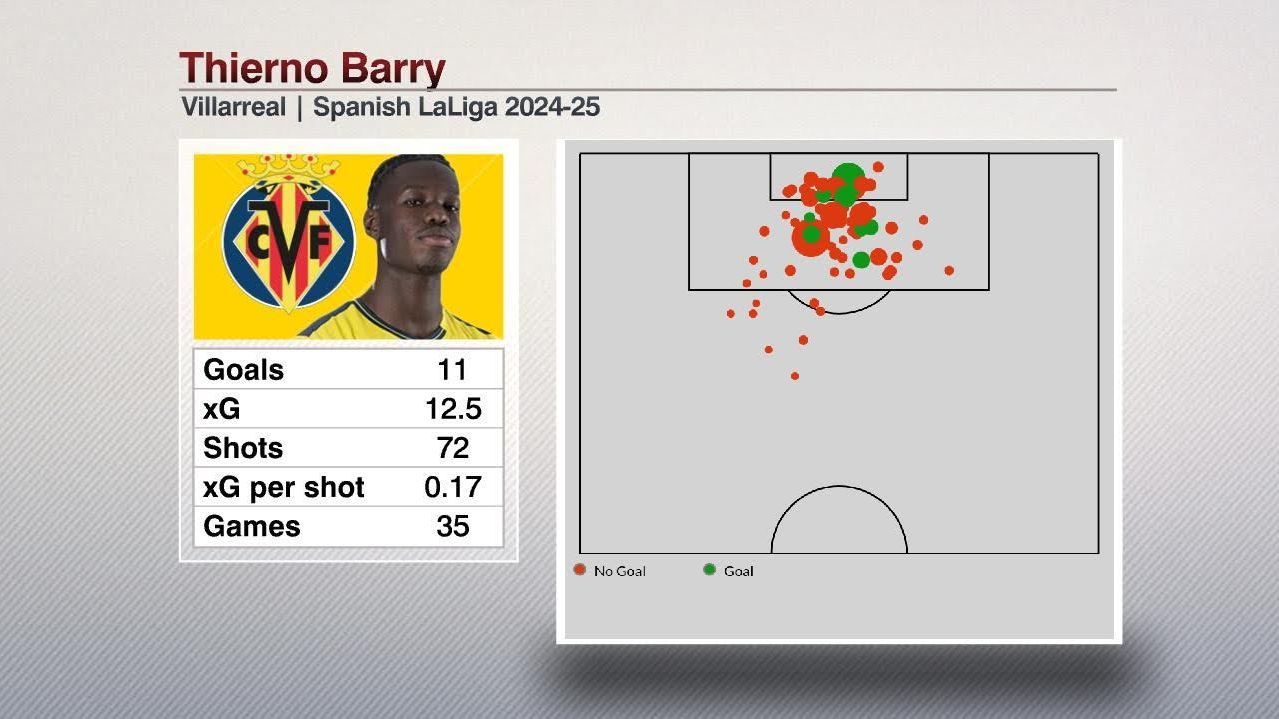
Barry’s career has seen almost linear growth so far. He moved from the second division of Belgian football (SK Beveren) to FC Basel in the Swiss Super League. Villarreal acquired him last summer for €14 million, and he produced 15 goals and assists in his lone season in La Liga. If he continues at the pace he’s shown so far, the transfer fee Everton paid (€35m + add-ons) will look like a bargain.
Brighton’s reputation as a shrewd operator in the transfer market has long been established. During their initial rise, it was largely due to low-risk, calculated bets on young players who had intriguing data profiles in smaller leagues across different continents. The past couple of years saw the Seagulls be more aggressive with their recruitment, routinely spending €30 million or more on transfer fees for prospects in the hope of finding talents who can make an impact in the not-too-distant future and eventually net a massive financial fee.
De Cuyper differs a bit in that at 24, he’s already entering his prime years and his acquisition leans more towards immediate production than future return.
The creative numbers jump out. He led the Belgian Pro League in total key passes among defenders last season with 68 — 28 more than the two next highest (Bryan Reynolds, Gary Magnée). Among all players, De Cuyper was third behind Adem Zorgane (78) and Jarne Steuckers (91). Some of this was due to him being the regular set-piece taker for Club Brugge: Only Dogucan Haspolat generated more shot creating actions (the two offensive actions directly leading to a shot, such as passes, take-ons and drawing fouls) from dead-ball passes than De Cuyper via FBref.
A theme with the majority of the players on this list is the importance of off-ball movement, and De Cuyper is no different as he has a vast repertoire of runs to work with. He’ll try underlapping runs during buildup, third-man runs along the flank to get into the final third, or he’ll occupy the left flank and attempt diagonal cuts in behind against the grain of his opponent. His performance vs. Atalanta in the first leg of the Champions League knockout phase play-offs was a good example of the positives he can bring going forward. He was constantly finding himself in advantageous positions, helping Club Brugge bypass Atalanta’s noted man-to-man defensive structure.
Defensively, De Cuyper is inconsistent. He’s pretty good at knowing when to juggle different responsibilities in his own box when defending an opponent’s cross, including covering for a teammate. Higher up the pitch, however, the awareness is less present: he can be guilty of ball-watching and losing track of his marker, leading to opponents advancing down his flank. When defending in 1v1s, he can sometimes be guilty of overextending himself and giving an opening to his marker. His slight frame can also be taken advantage of during duels, where he tries to be physical with the opponent only to end up bouncing off of them and losing possession.
Acquiring De Cuyper gives Brighton another option at fullback to help juice their attack. Despite the talent on hand, they ended up middle of the pack in expected and non-penalty goals, but the variety in his movement could make the left-hand side truly stand out in the club’s second year under manager Fabian Hürzeler. If the defensive deficiencies can be kept to a manageable amount, De Cuyper could be another in a growing recent list of stealth signings.
It’s undeniable that clubs are shifting more of their financial resources towards younger players. The average age of players signed by Premier League clubs (weighted by transfer fees) has declined from around 25 in 2009-10 to 23 in 2025-26. You can understand why: if the younger player is a success, you either get a high-end young talent on the left end of the age curve who can be a mainstay for the club over several years, or someone who becomes valuable when it comes to raising funds through the transfer window.
However, the method has become so commonplace that it has led to price inflation, since it’s no longer the clever strategy it once was. As a result, there’s a possibility that guys in the age 24-26 cohort have become slightly undervalued.
At the extreme high case, you get an example like Liverpool, where their decade of excellence is due to hitting the jackpot on multiple early-peak players (Roberto Firmino, Sadio Mané, Mohamed Salah to name just three). While it’s unrealistic for other clubs to expect the same result, there is value to be had and Aston Villa are hoping Guessand, their newest summer signing, over-performs expectations considering the age profile of their squad and related issues with their standing according to the Premier League’s profitability and sustainability (PSR) rules.
The word that comes to mind when describing Guessand is “versatility.” During his time with OGC Nice, especially last season, it was common to see him operate across the front line in part due to how comfortable he was being a receiver between the lines. At times, it feels like the ball is stuck to his feet like Velcro, even against pressure. He compliments this with consistent scanning of his surroundings, and using his arms to gain leverage and space in which to operate. He’s good at knowing when to release a pass, even if it’s just simple passes out towards the flank. There’s a variety of passes he’ll use when facing forward, and he’s good at disguising his intentions to fake the defense.
Playing without the ball is also a strength. Guessand has multiple types of run in his repertoire, and he chooses them smartly. Even in the penalty box, he can fake his opponent one way before going the other like a seasoned striker.
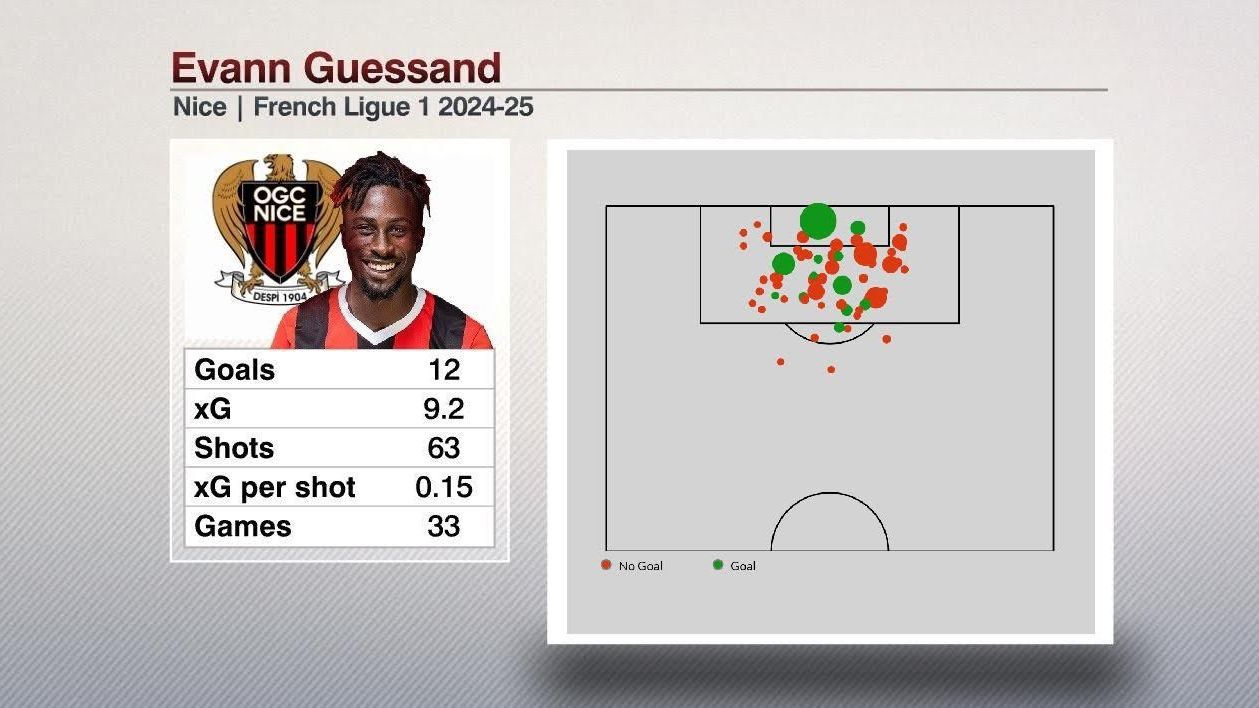
Like with Barry, Guessand’s shot chart has a healthy distribution and he gets a ton of attempts down the middle. It is important to note, though, that he did over-perform his expected goal tally by a notable margin last season, which is hard to expect on a year-to-year basis.
There is a lot to like about Guessand from Aston Villa’s point of view. They acquired a really good attacking talent who can help improve their attack immediately, and he gives them flexibility with future squad planning (including being a sneaky choice as a potential Ollie Watkins replacement down the line). Tracking data paints him in a very positive light with his combination of off-ball running and penetrative passing. For a club who desperately needs Champions League qualification to balance their aggressive wage to turnover ratio, hitting on these types of moves is essential.
For someone in his early 20s, Cherki’s name had long been on the lips of fans and analysts alike. At age 16, he made his senior debut with Olympique Lyonnais in the 2019-20 season, an accomplishment that helped fuel the opinion of him being the best talent to come from Lyon’s academy since Karim Benzema. It’s high praise when you consider the academy graduates (Alexandre Lacazette, Nabil Fekir, Bradley Barcola, Malo Gusto, Pierre Kalulu) to have graduated since Benzema did in 2009.
There were flashes of stardom from Cherki in the years that followed, with the 2022-23 campaign being his true breakout (four goals, six assists in under 2,000 Ligue 1 minutes). After a downturn in 2023-24, last season was Cherki’s best yet, with eight goals and 11 assists — he was also second in Ligue 1 in total key passes, and first in expected assists. Over the past three seasons, he ranked 5th, 11th, and 12th in sequence involvements ending in a shot among Ligue 1 players with a minimum of 1,000 minutes played.
Put another way, few players matched Cherki across Europe when it came to getting his team into the opposition’s penalty box.
Who were the best BOX PENETRATORS in the Top 5 Leagues?
-Doku is an anomaly when it comes to box penetration.
-Cherki, best at passing it into the box, Haaland must be happy.
-Olise and Yamal also pass dominant.
-Barcola, bring him to LFC.
-Minteh, future Salah successor? pic.twitter.com/2IchJMkQEY— Pranav (@pranav_m28) June 13, 2025
What makes Cherki such a fascinating player is that he plays at his own pace. You wouldn’t confuse him for being an elite straight-line athlete, but his ability to dictate tempo is already near masterful levels despite his young age. He can stop and start almost at will to get opponents on their heels, which makes him a tough player to cover in combination with being able to make almost every pass possible and being close to two-footed. To make a cross-sport comparison, he’s football’s answer to Luka Dončić in the NBA. Neither are elite athletes in the conventional sense, but their unique style of play has helped them be successful.
This past season showed improvements in Cherki’s efficiency, becoming a greater threat in terms of providing goals and assists — it’s notable that the 24-25 campaign was the first season in which his xG/shot was 10% or higher. He was also more aggressive getting into high-value zones off the ball in the final third through third-man runs (when a player moves off the ball into space after a teammate receives possession) and underlapping sprints toward the wide area of the box to juice his passing. There are still questions with his defensive work, though — it’s less to do with his intent, but more a reality of his slight frame.
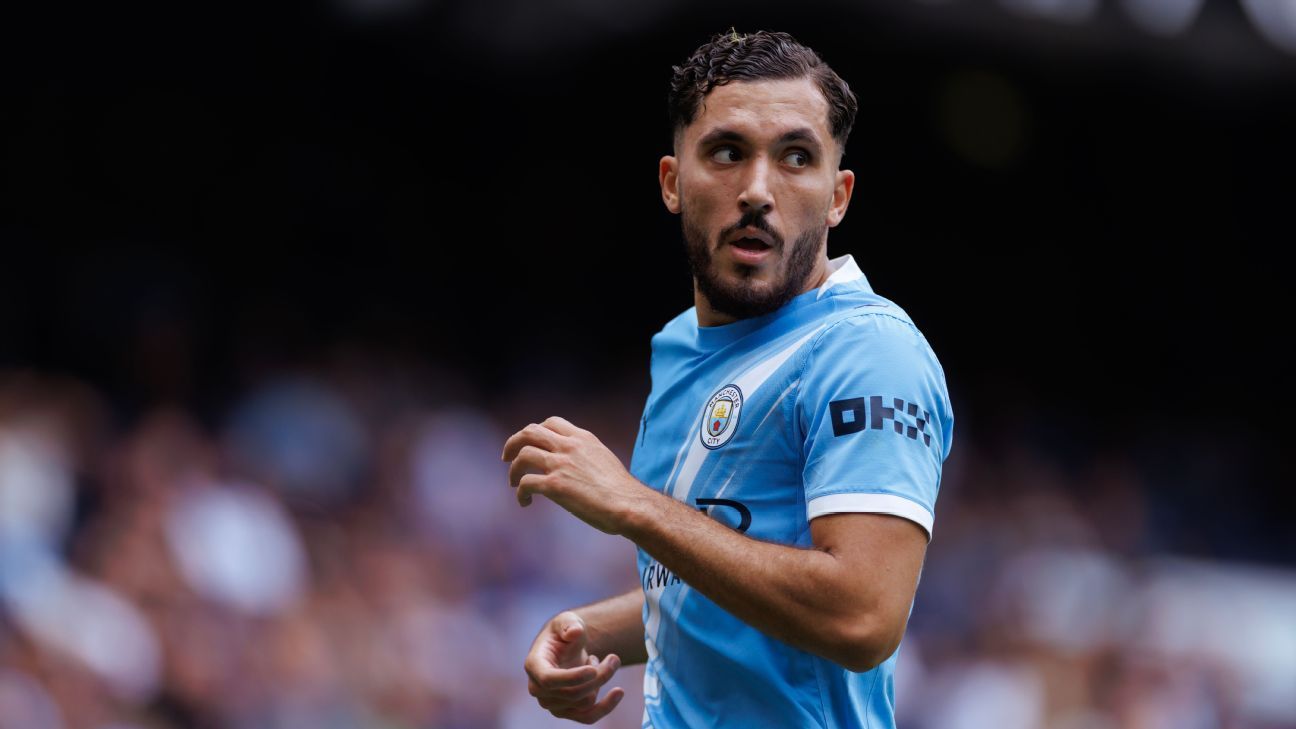
Cherki’s spellbinding creativity will certainly be an asset to Man City, especially with the departure of Kevin De Bruyne to Napoli during the offseason. On the other hand, fitting Cherki into a functional defensive unit (especially one that looks to press) will be a challenge and could well influence where, and when, Guardiola plays him. This is especially pertinent given City’s defensive woes since winning the Treble in 2023.
How Pep Guardiola brings Cherki into the fold at both ends of the pitch will be one of the most interesting subplots of the 2025-26 Premier League season.
Sports
Craig Morton, quarterback who led the Broncos to their first Super Bowl appearance, dead at 83
NEWYou can now listen to Fox News articles!
Former Denver Broncos quarterback Craig Morton, who was inducted into the team’s Ring of Fame, died on Saturday. He was 83.
Morton was critical in helping the Broncos reach their first-ever playoff appearance, ultimately getting them to Super Bowl XII during the 1977 campaign.
After going 12-2 during the season, and getting wins in the playoffs over the Pittsburgh Steelers and then-Oakland Raiders, Morton was named the AFC Offensive Player of the Year.
CLICK HERE FOR MORE SPORTS COVERAGE ON FOXNEWS.COM
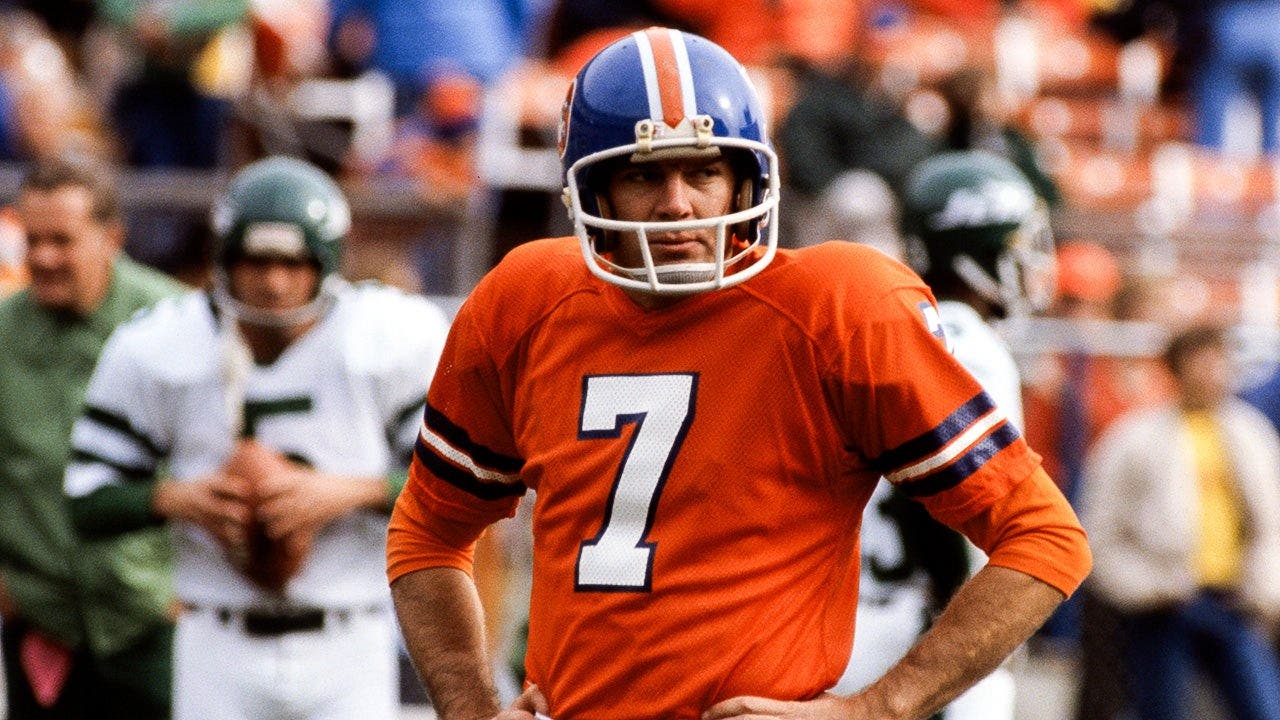
Denver Broncos quarterback Craig Morton stands on the sidelines with both hands on his hips. (GETTY)
“Craig Morton is unbelievable,” fellow Ring of Famer Haven Moses said after the Broncos won the AFC Championship in 1978, per the New York Times. “To me, he’s the most valuable player in the National Football League.”
Morton also won Sporting News Player of the Year, the PFWA Comeback Player of the Year and the NFL UPI MVP in 1977.
“We are saddened to learn of the passing of #BroncosROF quarterback Craig Morton, who died on Saturday at the age of 83,” the Broncos posted on social media.
Morton also led the Broncos to two different division titles and three playoff berths during his six seasons with the franchise. He finished his career in Denver with 11,895 passing yards, which marked the most in franchise history at the time.
CLICK HERE TO DOWNLOAD THE FOX NEWS APP
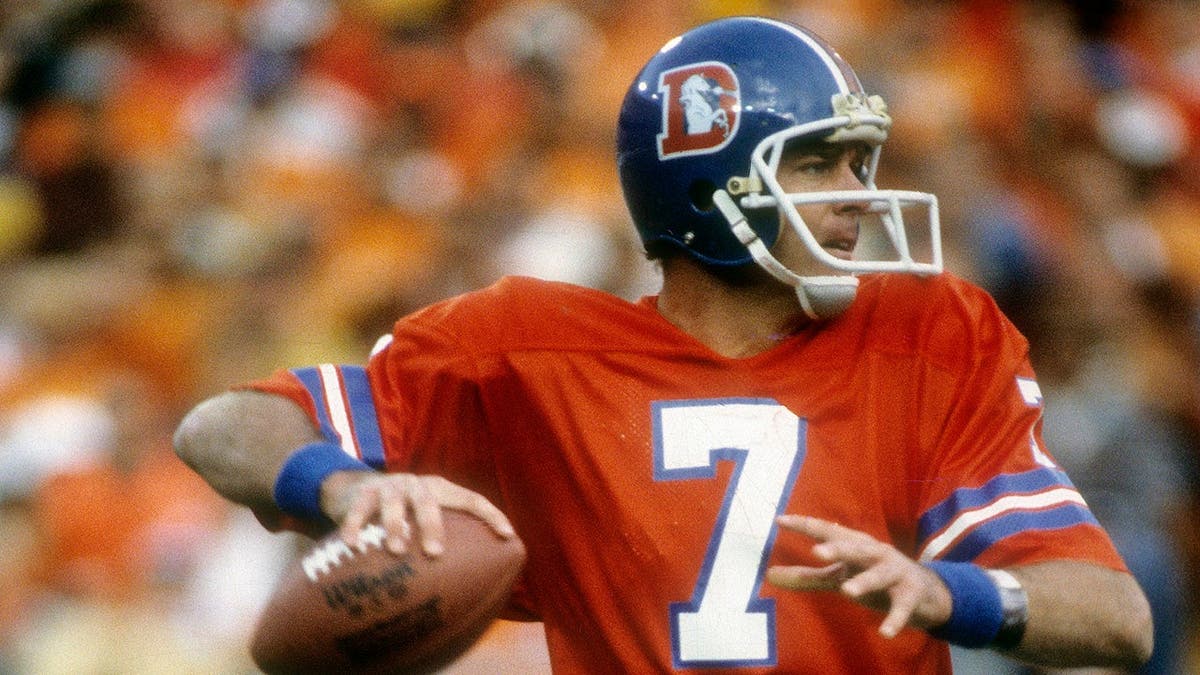
Quarterback Craig Morton #7 of the Denver Broncos drops back to pass during an NFL game at Mile High Stadium in Denver, Colo., circa 1978. Morton played for the Broncos from 1977 to 1982. (Focus On Sport/Getty Images)
Morton also led the Broncos with pass attempts (1,594) and completions (907). But Morton’s time with the Broncos was the latter half of his NFL career.
He was drafted by the Dallas Cowboys in 1965, the fifth overall pick out of Cal. Morton spent the first 10 seasons of his career with the Cowboys, where he threw for 10,279 yards with 80 touchdowns and 73 interceptions. He went 32-14-1 in his time with Dallas.
Then, during the 1974 season, Morton was moved to the New York Giants, a division rival of the Cowboys. He went 1-6 in his first seven starts that year and wouldn’t find much success in New York across three seasons.
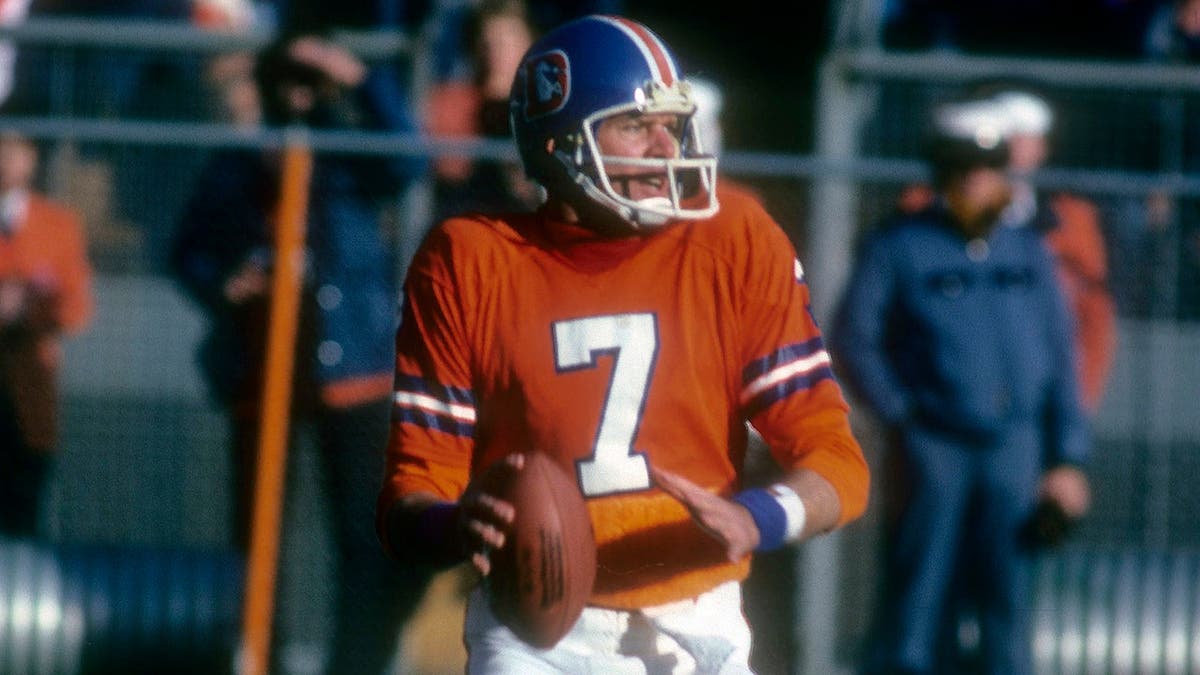
Quarterback Craig Morton #7 of the Denver Broncos drops back to pass during an NFL game at Mile High Stadium in Denver, Colo., circa 1978. Morton played for the Broncos from 1977 to 1982. (Focus On Sport/Getty Images)
CLICK HERE TO DOWNLOAD THE FOX NEWS APP
For his career, Morton threw for 27,908 yards with 183 touchdowns. He owned an 81-62-1 record across 207 games.
NEWYou can now listen to Fox News articles!
Indiana’s Fernando Mendoza’s year couldn’t have been more perfect.
He led his Hoosiers to an unblemished 16-0 season, captured the national championship in historic fashion and won the 2025 Heisman before being selected first in the 2026 NFL Draft by the Raiders.
Now that the path is clear for a new athlete to leave NYC in December holding the Heisman, who will it be?
Here are the way-too-early odds at DraftKings Sportsbook as of May 5.
This page may contain affiliate links to legal sports betting partners. If you sign up or place a wager, FOX Sports may be compensated. Read more about Sports Betting on FOX Sports.
2026 Heisman Trophy Winner
CJ Carr (Notre Dame): +750 (bet $10 to win $85 total)
Arch Manning (Texas): +750 (bet $10 to win $85 total)
Julian Sayin (Ohio State): +1000 (bet $10 to win $110 total)
Dante Moore (Oregon): +1000 (bet $10 to win $110 total)
Trinidad Chambliss (Ole Miss): +1100 (bet $10 to win $120 total)
Josh Hoover (TCU): +1200 (bet $10 to win $130 total)
Darian Mensah (Miami, FL): +1200 (bet $10 to win $130 total)
Jeremiah Smith (Ohio State): +1300 (bet $10 to win $140 total)
Gunner Stockton (Georgia): +1800 (bet $10 to win $190 total)
Sam Leavitt (Arizona State): +2000 (bet $10 to win $210 total)
Marcel Reed (Texas A&M): +2500 (bet $10 to win $260 total)
Jayden Maiava (USC): +2500 (bet $10 to win $260 total)
John Mateer (Oklahoma): +2800 (bet $10 to win $290 total)
Here’s more on a few of the names on the 2026 Heisman oddsboard:
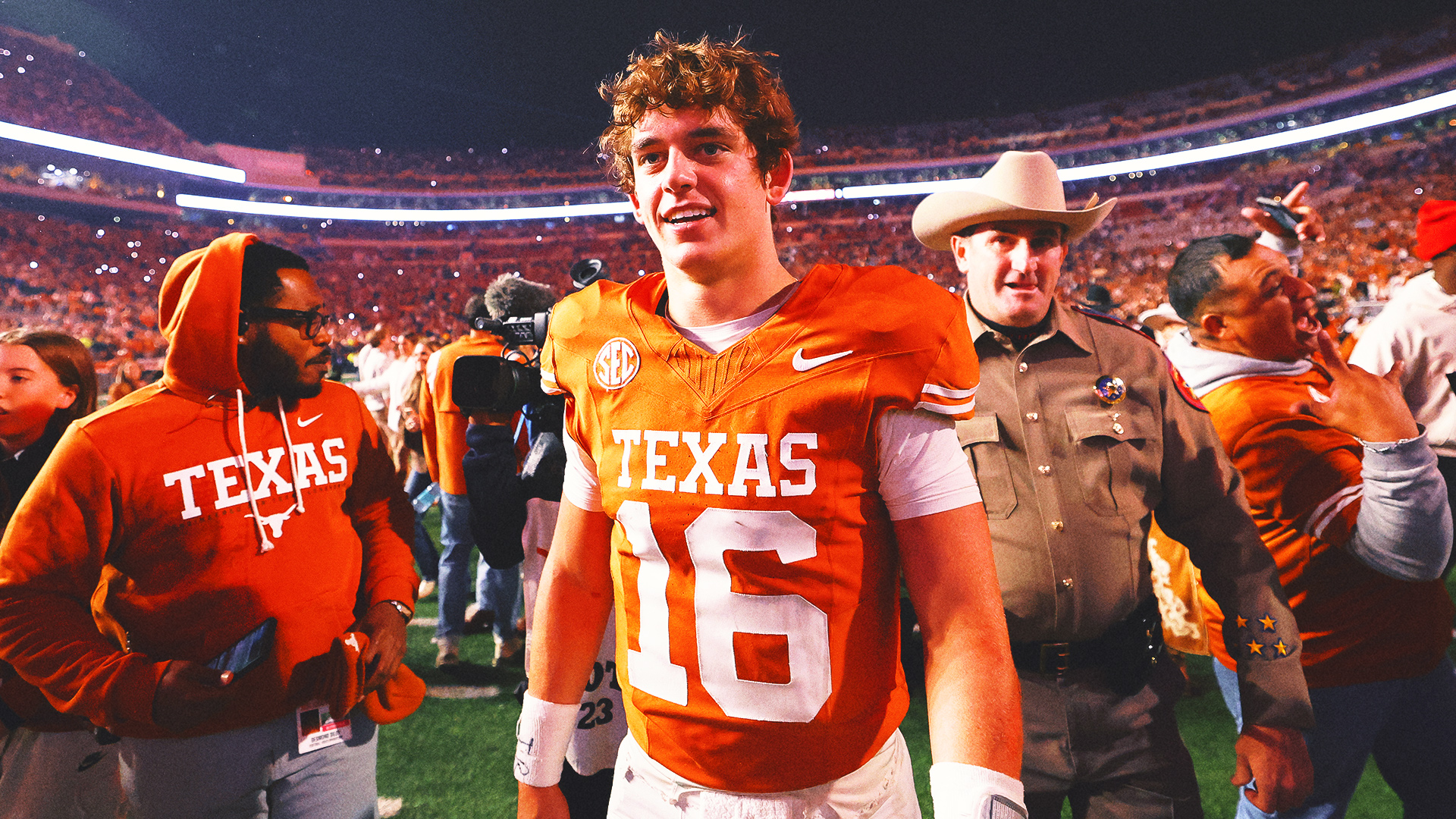
The Favorites: Carr and Manning are tied at +750 to win the Heisman Trophy at the end of the 2026 regular season. And the latter is no stranger to Heisman talk. He opened as the favorite for the 2025 Heisman at several books and right before the season kicked off, bettors were hammering Manning’s futures. The excitement over Manning was short-lived once his Longhorns went 4-2 to begin the season. If he is at least named a finalist, he would follow in the footsteps of his uncles and his grandfather, as both Peyton and Eli Manning, and their dad Archie, were Heisman finalists during their college careers.
Arch Manning is an early favorite to win the 2026 Heisman Trophy.
Ones to Watch: Ohio State teammates Jeremiah Smith and Julian Sayin are two players to watch for next season’s Heisman — especially because they were both in the conversation to win the award most of 2025. Sayin, in fact, was a Heisman finalist and finished fourth in the race with eight first-place votes. Smith didn’t make the trip to New York but finished sixth in the tally. FOX Sports college football writer RJ Young projects that both Smith and Sayin — as well as Manning — will be in the running in 2026.
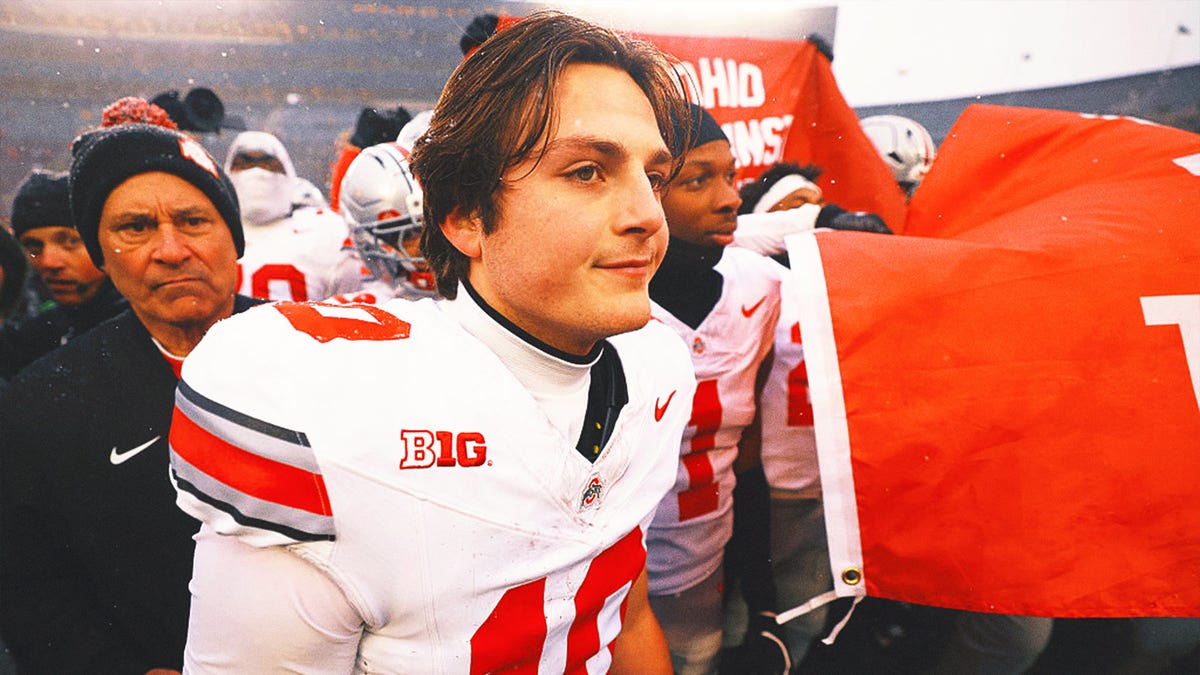
Ohio State’s Julian Sayin could make another trip to NYC — but this time as the winner.
Heisman in Troy?: Could Maiava bring the hardware back to SC from NYC? Based on the early odds, he could have at least a slight chance. If the Trojans’ QB wins the most coveted individual award in college football, he’d be the first USC player since Caleb Williams (2022) to do so. Maiava finished the 2025 season with 3,711 passing yards and 24 touchdowns, as his squad ended the year with a 9-4 record.
Sports
Aaron Rodgers never met with Steelers despite rumor-filled weekend as QB’s decision remains up in air
NEWYou can now listen to Fox News articles!
Aaron Rodgers didn’t make it back to Pittsburgh after all.
After reports surfaced this past Friday that Rodgers was expected to visit the Pittsburgh Steelers in preparation for a return to the team he played for last year, many were hopeful the months-long wait was over.
However, during his appearance on “The Pat McAfee Show” on ESPN this Monday, Adam Schefter said neither the Steelers nor his agent were aware of any such meeting being on the schedule.
CLICK HERE FOR MORE SPORTS COVERAGE ON FOXNEWS.COM
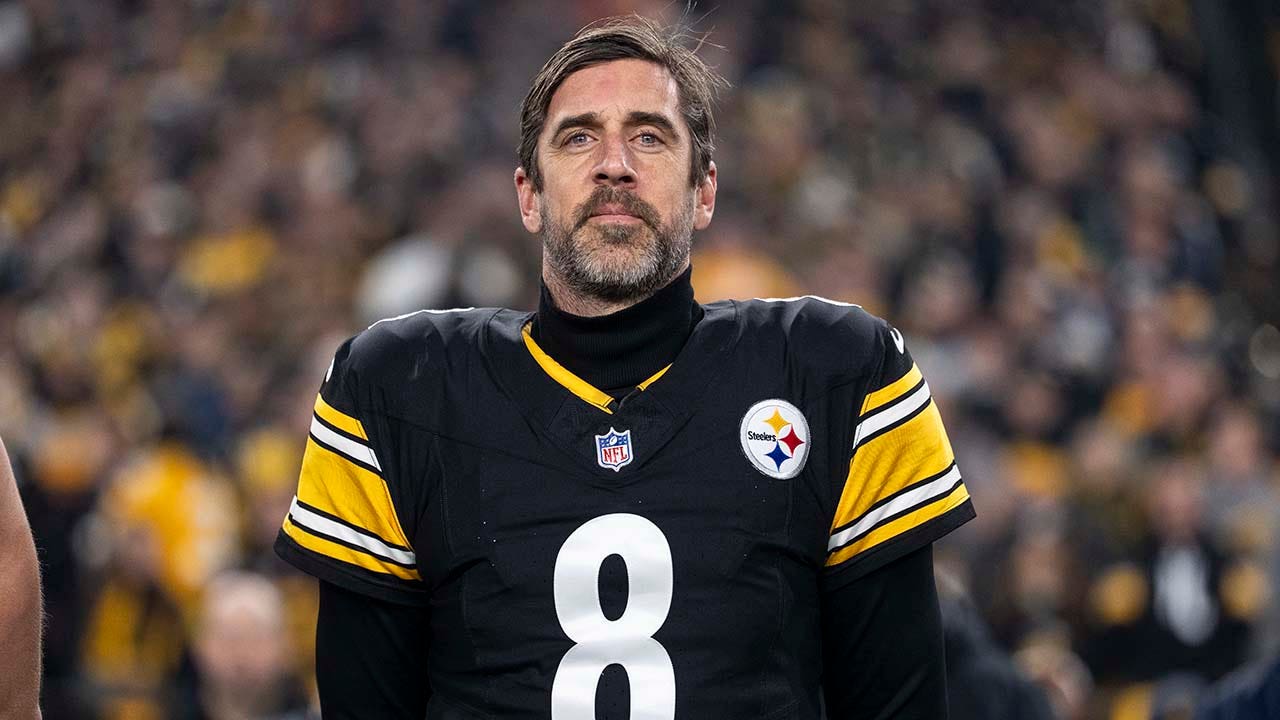
Aaron Rodgers of the Steelers stands during the national anthem before an NFL game against the Baltimore Ravens at Acrisure Stadium in Pittsburgh, Pa., on Jan. 4, 2026. (Michael Owens/Getty Images)
But then, there were the reports about where Rodgers is in the world, with the Pittsburgh Tribune-Review reporting that he was in the Steel City, though he wasn’t scheduled to visit with the team. A report from 93.7 The Fan added on, saying he was in town for golf.
Either way, the decision still lingers whether Rodgers will suit up for the Steelers, but the storied franchise gave themselves some insurance if the four-time MVP quarterback decides he wants to potentially play elsewhere.
STEELERS OWNERSHIP HOPES FOR CLARITY ON AARON RODGERS’ FUTURE ‘IN THE NEXT MONTH OR SO’
The Steelers used an unrestricted free-agent tender on Rodgers last month, which allows Pittsburgh the right to match any offer Rodgers may get from another team.
Despite doubt from some camps on Rodgers’ potential return, Schefter noted his belief he will be in the Steelers’ depth chart come training camp. The Steelers have their OTAs scheduled to begin next Monday.
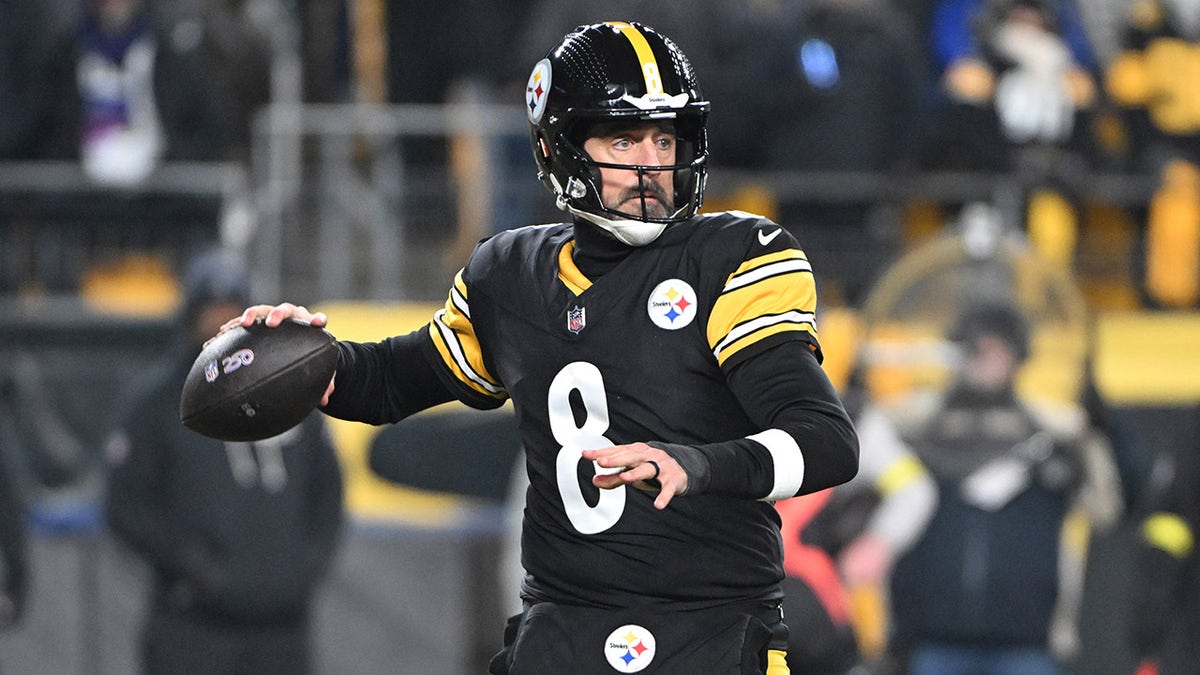
Steelers quarterback Aaron Rodgers drops back to pass against the Baltimore Ravens at Acrisure Stadium in Pittsburgh, Pa., on Jan. 4, 2026. (Getty Images)
With Rodgers at the helm this past season, the Steelers went 10-7, even earning a playoff berth after Baltimore Ravens rookie Tyler Loop’s now-infamous game-winning field goal did not get through the uprights. The Steelers ended up losing to the Houston Texans in the wild-card round, extending the team’s playoff winless streak to eight straight seasons, including three consecutive campaigns.
Rodgers, who’s slated for the Pro Football Hall of Fame once he decides to call it quits for his career, threw for 3,322 yards with 24 touchdowns to seven interceptions in 16 games for Pittsburgh in 2025.
CLICK HERE TO DOWNLOAD THE FOX NEWS APP
The Steelers also revamped their team for this season, as Mike McCarthy, Rodgers’ old head coach with the Green Bay Packers, takes over for Mike Tomlin, whose generational run in Pittsburgh ended after 19 seasons (2007-25). While D.K. Metcalf and Rodgers built chemistry this past season, the Steelers also added veteran receiver Michael Pittman Jr. in a deal with the Indianapolis Colts, while adding Alabama’s Germie Bernard in the 2026 NFL Draft.
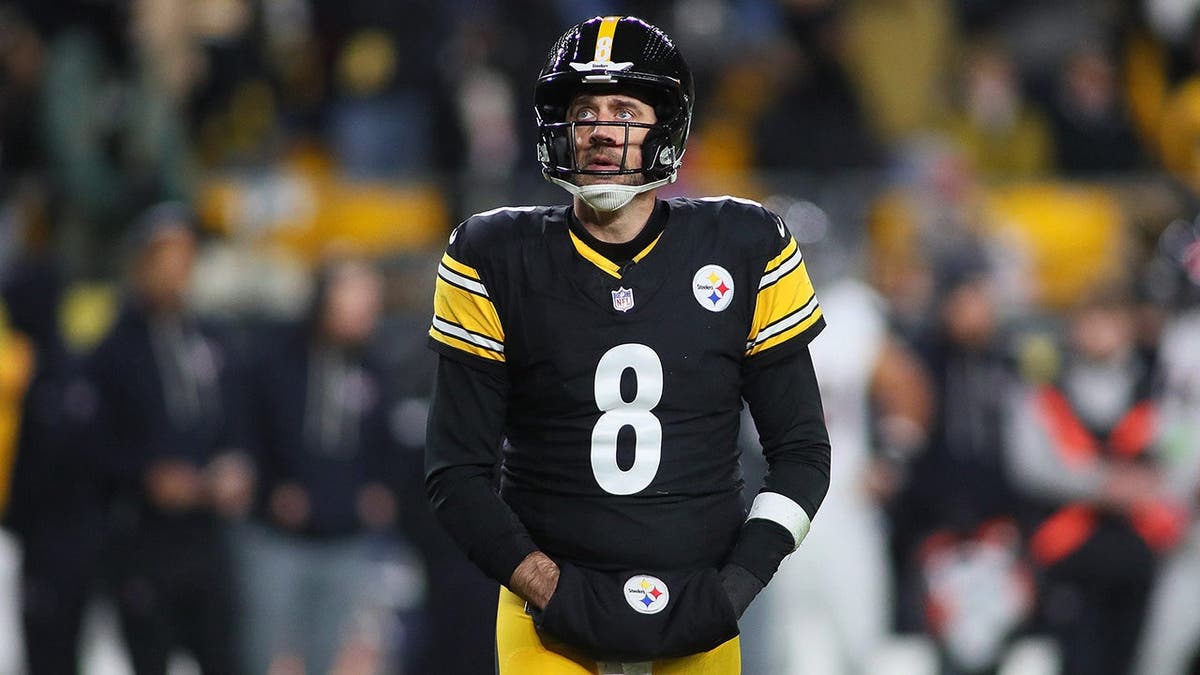
Steelers quarterback Aaron Rodgers after being sacked during the wild-card game against the Houston Texans at Acrisure Stadium in Pittsburgh, Pa., on Jan. 12, 2026. (Michael Longo/For USA Today Network-PA/USA Today Network via Imagn Images)
And while Kenneth Gainwell is gone after a solid performance with Pittsburgh, Rico Dowdle comes into the fold to work alongside Jaylen Warren at running back.
Yet, the biggest question in football still remains: will Rodgers be a part of these new-look Steelers in 2026?
Follow Fox News Digital’s sports coverage on X and subscribe to the Fox News Sports Huddle newsletter.


FESPA launches 2026 Print Census, unveils 2025 findings

King Charles Office issues message for doctors amid ongoing cancer treatment

PM MITRA Park inaugurated at Warangal in India’s Telangana state

-

 Politics1 week ago
Iran weighs US reply delivered via Pakistan as Trump signals opposition to deal terms
-

 Tech1 week ago
DHS Demanded Google Surrender Data on Canadian’s Activity, Location Over Anti-ICE Posts
-
 Business1 week ago
Heineken to invest £44.5m in hundreds of pubs creating 850 jobs
-

 Tech1 week ago
I Lugged the Best Travel Totes on Work Trips, Weekends, and More
-

 Politics1 week ago
Two women die on migrant boat seeking to reach UK
-

 Entertainment1 week ago
Jelly Roll reacts to daughter Bailee Ann’s major life milestone
-
 Business1 week ago
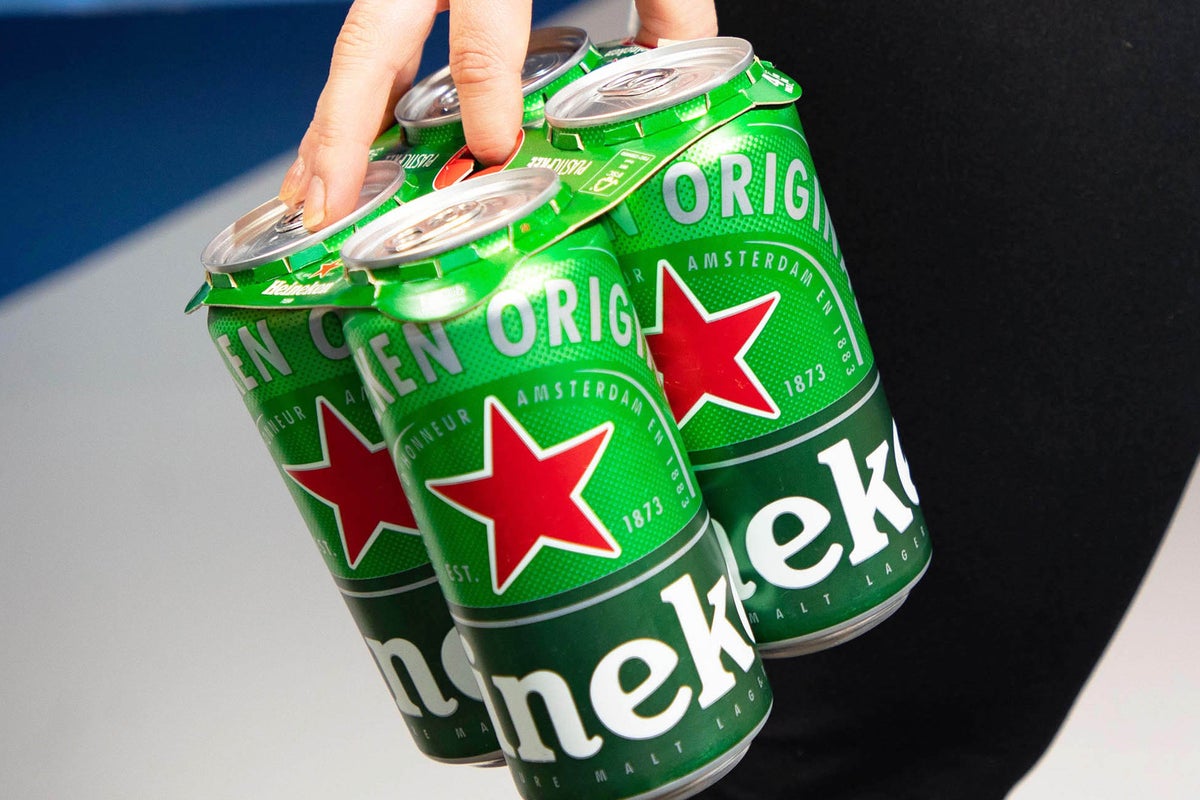
Heineken plans huge investment in hundreds of UK pubs ahead of World Cup
-

 Tech4 days ago
‘Orbs,’ ‘Saucers,’ and ‘Flashes’ on the Moon: Pentagon Drops New UFO Files