

Business
PSX sheds 1,382 points amid heightened global tensions | The Express Tribune

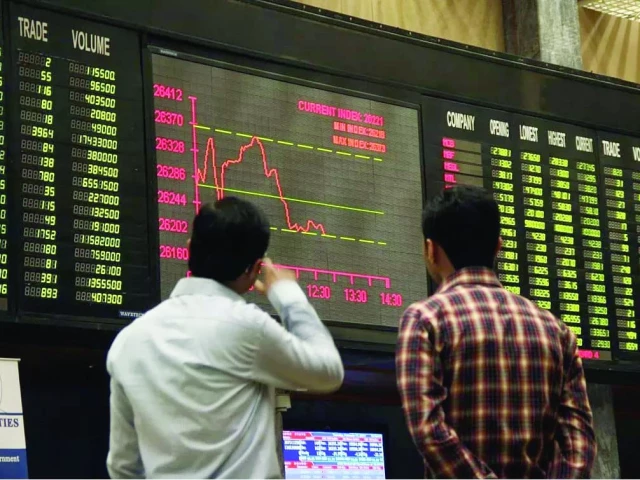
Trading at the Pakistan Stock Exchange (PSX) slumped sharply on Wednesday as caution gripped investors amid escalating geopolitical tensions, particularly between the United States and Iran, and fears of a potential US strike on Tehran that have rattled markets and lifted oil prices.
The benchmark KSE-100 index fell 1,381.69 points, or 0.75% to close at 182,569.82, after swinging between an intraday high of 184,726.60 and a low of 182,369.87. Profit booking after recent gains, coupled with persistent selling, kept market sentiment subdued throughout the session.
Analysts believe the cautious mood reflected investors locking in gains and shying away from fresh exposure as regional uncertainty deepened, keeping the local bourse under pressure for most of the day.
Market Snapshot – January 14th, 2026
Unlock today’s market moves and stay one step ahead.
Here’s what’s making waves:
• ETFs (Exchange Traded Funds): Most active in today’s market
Market Indices – At a Glance:
• KSE-100: Pullers & Draggers
• KMI-30: Pullers & Draggers pic.twitter.com/CCrZgffXPU— PSX (@pakstockexgltd) January 14, 2026
KTrade equities trader Ahmed Sheraz observed that PSX closed the session under pressure, with the benchmark KSE-100 index settling at 182,569 points, down 1,381 points or 0.75% on a day-on-day basis.
Market sentiment remained cautious throughout the session, primarily due to escalating geopolitical tensions between Iran and the US. Uncertainty surrounding a potential strike kept investors on the sidelines, while regional Asian markets also remained under pressure, with PSX following the broader trend.
Read: Exports dip 20% despite high inflows
Total volumes clocked in at 444 million shares. Sector-wise, selling was broad-based across banks, cements, fertilisers, technology, power, and pharma stocks. On a scrip-wise basis, notable pressure was observed in United Bank, MCB Bank, Fauji Fertiliser, Lucky Cement, Hub Power, Habib Bank, Pakistan Telecommunication, National Bank, and Systems Limited, he added.
Oil and gas stocks were the sole exception, supported by expectations of higher global oil prices, which helped Oil and Gas Development Company and Pakistan Petroleum to close in positive territory.
Looking ahead, the market is expected to remain range-bound and volatile in the near term until greater clarity emerges on the geopolitical front. From a longer-term perspective, Sheraz anticipated the overall market outlook to remain intact and advised investors to remain cautious while gradually accumulating quality blue-chip stocks on dips.
Overall trading volume remained nearly flat at 1.034 billion, compared with Tuesday’s 1.037 billion. The value of traded shares stood at Rs65.9 billion.
Shares of 483 companies were traded. Of these, 90 rose higher, 352 fell, and 41 remained unchanged. K-Electric was the volume leader with trading in 56.3 million shares, losing Rs0.02 to close at Rs6.33.



Business
Clock ticks on Spirit Airlines as bondholders weigh Trump bailout. Here’s what could happen next

Spirit Airlines‘ future is hanging in the balance over the next week as President Donald Trump said the government could bail out the airline, as the struggling discount carrier‘s lenders assess a potential deal.
“We’re thinking about doing it, helping them out, meaning bailing them out, or buying it,” Trump told reporters in the Oval Office on Thursday.
“I’d love to be able to save those jobs. I’d love to be able to save an airline. I like having a lot of airlines, so it’s competitive,” Trump said.
The White House and major bondholders either didn’t immediately comment or declined to comment on the matter.
Trump told reporters that “when the price of oil goes down,” the government could “sell [Spirit] for a profit.”
Spirit expected to emerge from bankruptcy midyear, but that was before the U.S.-Israel attacks on Iran led to a surge in jet fuel costs. Spirit had a nearly $28.3 million operating loss in February, according to a court filing, which was before the fuel price spike hit carriers — and travelers’ wallets.
Spirit, the iconic budget carrier known for its bright yellow planes and bare-bones service that became a punchline for late-night comedians, has struggled to survive. The industry’s costs ballooned after Covid, as customer tastes changed for more upmarket offerings and international destinations.
Spirit has aggressively axed its costs, selling aircraft and shrinking its network. Last May, Spirit operated 19,575 flights, according to aviation data-firm Cirium. This May, it’s operating 9,353.
A planned acquisition of Spirit by JetBlue Airways was successfully challenged by the Biden administration, which the Trump administration said hurt Spirit.
“Spirit Airlines would be on a much firmer financial footing had the Biden administration not recklessly blocked the airline’s merger with JetBlue,” a White House spokesman said by email. “The Trump administration continues to monitor the situation and overall health of the U.S. aviation industry that millions of Americans rely on every day for essential travel and their livelihoods.”
Will others follow suit?
Some industry members and analysts have suggested other airlines, especially low-cost carriers, could seek similar assistance from the government.
Low-cost airlines met with Transportation Secretary Sean Duffy earlier this week to discuss the current surge in fuel costs, people familiar with the matter told CNBC.
The Trump administration has taken stakes in companies it views as a national security interest, while companies from automakers to banks to the airline industry as a whole have received bailouts in the past, but it’s highly unusual that the government would rescue a single company.
Delta Air Lines and United Airlines account for most of the airline industry’s profit in the U.S., spending years and billions of dollars to successfully court a less price sensitive clientele that is willing to pay up for roomier seats and other perks, as well as broad international networks. Many other carriers, including Spirit, have tried to catch up in recent years.
“We wonder if a potential Spirit deal could become a facility of last resort that other challenged carriers could seek in the future,” Barclays analyst Brandon Brandon Oglenski said in a note Thursday.
Possible deal
The terms of a tentative deal are for a $500 million loan that could eventually give the government a 90% stake in the Florida-based carrier, people familiar with the matter told CNBC. The potential plan would also put the government ahead of other investors, the people said, requesting anonymity to talk about the terms.
A U.S. bankruptcy court hearing to discuss the possible deal could be set for as early as Monday, according to comments in court on Thursday.
Mike Stamer, an Akin attorney who represents bondholders in the bankruptcy case, confirmed in court Thursday that “we did, in fact, receive a copy of the term sheet” for the potential deal with a loan from the U.S. government, a sign of how advanced the talks are.
The deal would also allow the U.S. government to select a board member, a person familiar with the potential terms told CNBC.
Spirit’s labor unions are also pushing for a deal.
“Any assertion that Spirit should just liquidate is only going to harm workers, passengers, and further strain our economy,” the Association of Flight Attendants-CWA said Thursday. “It’s unnecessary and mean spirited — when just a little help can stave off massive harm.”
Spirit’s lawyer, Marshall Huebner of Davis Polk, said in bankruptcy court Thursday that the loan would help Spirit get to “standalone fighting shape” but could also set it up for a potential merger.
Acquisition talks have failed before, however, most recently, with Frontier Airlines, which originally planned to merge with Spirit until a surprise all-cash offer by JetBlue.
Spirit’s challenges might also not go away, said Conor Cunningham, Melius Research airline analyst.
“How deep does he want to go?” he said of Trump and the possible rescue deal. “$500 million is probably not enough.”
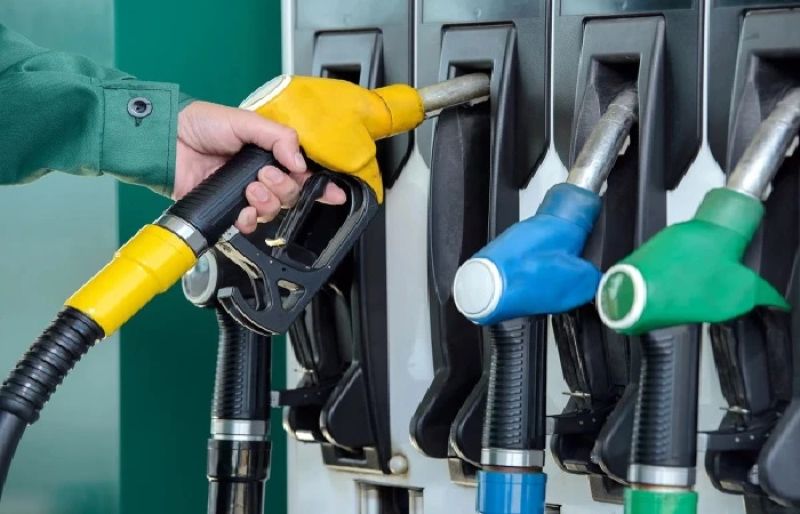
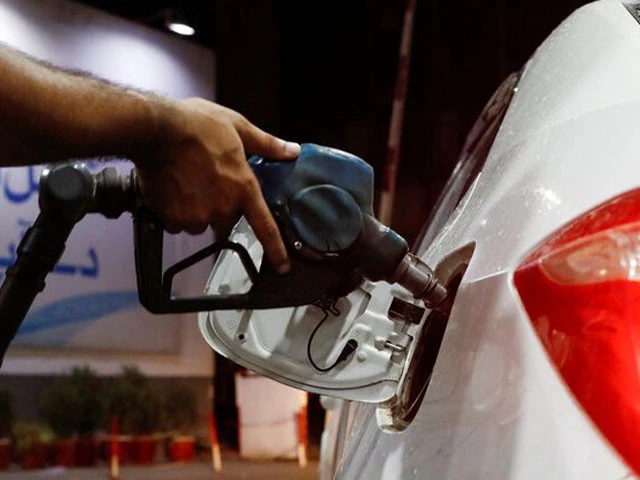
The federal government announced a Rs26.77 per litre hike in the price of petrol and high-speed diesel each on Friday, according to a notification issued by the Petroleum Division.
The new prices will be effective from April 25, 2026 for a week, the notification stated.
Following the increase, the price of HSD has jumped from Rs353.42 to Rs380.19, while the petrol price now stands at Rs393.35.
The government has been reviewing petroleum prices every Friday night following the now-paused US-Israel war on Iran, which began on February 28.
In the previous weekly review, the prime minister announced a reduction of Rs32.12 per litre in the price of high-speed diesel, while the petrol price remained unchanged.
The government jacked up petrol and diesel prices despite oil prices falling globally on Friday after it appeared a second round of Middle East talks was back on, bolstering prospects for an end to a war that has crippled energy shipments from the Gulf.
Oil prices had been climbing earlier as investors worried about a lack of progress in ending the Middle East crisis, with Tehran keeping the Strait of Hormuz closed and the US maintaining a blockade of Iranian ports.
But they dropped on reports that Iran’s Foreign Minister Abbas Araghchi was to arrive in Islamabad on Friday night.
Brent crude, the international benchmark contract, fell back below $100 a barrel.
facebook twitter
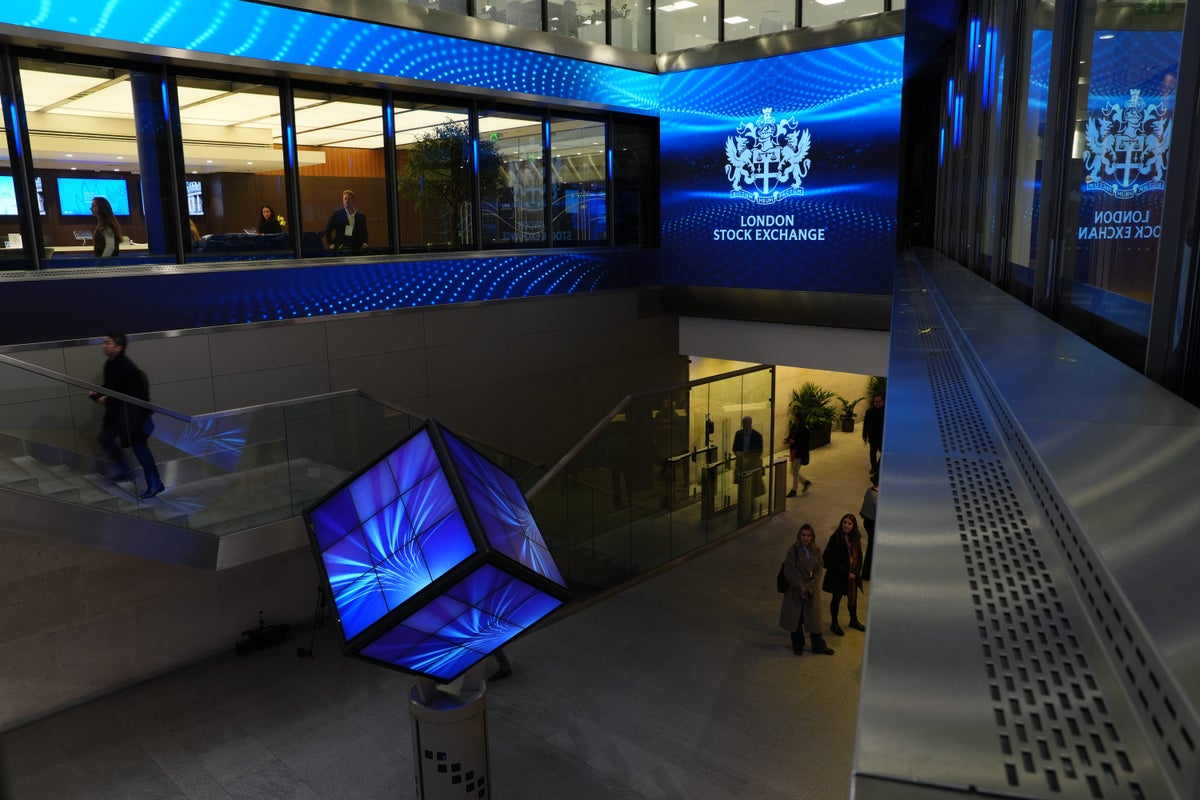
The FTSE 100 ended the week on the back foot as the crisis in the Middle East remained deadlocked.
The FTSE 100 closed down 77.93 points, 0.8%, at 10,379.08. The FTSE 250 ended down 181.71 points, 0.8%, at 22,582.81, while the AIM All-Share fell 5.73 points, 0.7%, to 796.40.
For the week, the FTSE 100 fell 2.7%, the FTSE 250 also declined 2.7% and the AIM All-Share dipped 1.7%.
The oil price continued to tick higher amid few signs of a breakthrough in the Middle East crisis.
AFP reported that Iranian foreign minister Abbas Araghchi is expected to arrive in Islamabad on Friday night, citing an official source in Pakistan, without providing details about who he was likely to meet.
The Pakistan capital has been gearing up for an anticipated second round of talks between the US and Iran, but it was not clear whether Mr Araghchi and the delegation accompanying him would meet any US officials to discuss the Middle East war.
The BBC reported that the suggestion coming from Iran is that these are bilateral talks with Pakistan, not meeting the US.
Writing on X, Mr Araghchi said his trip to Islamabad is to “closely co-ordinate with our partners on bilateral matters and consult on regional developments”.
US defence secretary Pete Hegseth said Iran has a chance to “make a good, wise deal”, adding that the US naval blockade of Iranian ports “is growing and going global”.
Mr Hegseth said the US is not “anxious” to make a deal, and “the ball is in [Iran’s] court”.
Brent oil traded at 105.78 dollars a barrel on Friday afternoon, compared with 103.25 dollars at the time of the equities close in London on Thursday.
In European equities on Friday, the CAC 40 in Paris ended down 0.8%, and the DAX 40 in Frankfurt ended 0.1% lower.
The mood was brighter in the US. In New York, the Dow Jones Industrial Average was down 0.4%, but the S&P 500 was 0.5% higher and the Nasdaq Composite 1.2% to the good.
David Morrison, senior market analyst at Trade Nation, explained the war in the Gulf is hitting Europe and the UK harder than the US.
“The former are reliant on imported energy in a way the US isn’t. While the US still must deal with higher crude oil prices, it has few worries over supplies drying up,” he pointed out.
On Wall Street, Intel was the star of the show soaring 23% after better-than-expected first quarter results and guidance, reporting “unprecedented” demand for its chips.
The yield on the US 10-year Treasury stretched to 4.32% on Friday from 4.29% on Thursday. The yield on the US 30-year Treasury widened to 4.92% from 4.89%.
The pound eased to 1.3497 dollars on Friday afternoon from 1.3500 dollars on Thursday. Against the euro, sterling fell to 1.1532 euros from 1.1551 euros.
In the UK, retail sales increased faster than expected in March as fuel sales soared 6.1% amid surging oil prices.
According to the Office for National Statistics, the volume of retail sales rose by 0.7% in March, against market consensus for no growth.
Total retail sales, excluding automotive fuel, rose by 0.2% on-month, in line with FXStreet-cited expectations.
Danni Hewson, AJ Bell head of financial analysis, explained the figures show rising petrol and diesel prices are “eating into household budgets”.
“People can only spend a pound once and if they’re choosing to shell out more than normal on fuel, they’ll have less to spend on other purchases,” she explained.
A separate report showed UK firms think food inflation could jump as high as 7% this year.
According to a Bank of England survey the Middle East conflict has “eroded” confidence that the UK economy will improve later this year.
The Decision Maker Panel survey showed that firms expected to increase their prices by 3.8% over the next 12 months, according to data for the three months to April.
This is 0.3 percentage points higher than predicted over the three months to March.
Meanwhile, the Bank of England’s deputy governor, Sarah Breeden, told the BBC on Friday the the UK central bank expects stock markets around the world to fall as share prices do not reflect the many risks facing the global economy.
Ms Breeden, who is also the Bank’s head of financial stability, said: “There’s a lot of risk out there and yet asset prices are at all-time highs. We expect there will be an adjustment at some point.”
The euro traded lower against the greenback, falling to 1.1703 dollars on Friday from 1.1708 dollars on Thursday. Against the yen, the dollar was trading at 159.55 yen, from 159.50 yen.
On the FTSE 100, packaging firm Mondi slumped 11% as it missed profit forecasts in the first quarter.
The Weybridge-based packaging firm on Friday said underlying earnings before interest, taxes, depreciation and amortisation, including forestry fair value, fell 27% to 212 million euros for the first quarter that ended March 31, from 290 million euros a year earlier.
JD Sports Fashion fell 1.9% as the Financial Times said a boardroom rift sparked the departure of chairman Andrew Higginson this week.
The FT reported that Mr Higginson quit as chairman of JD Sports after pushing for chief executive Regis Schultz to be ousted and failing to win unanimous backing for the move.
But JD Sports told Alliance News that Mr Schultz has the “continued support” of its board.
A JD Group spokesperson said: “It was mutually agreed between Andy and the board that this is the right time for a change of chair; there has been no disagreement about the board’s continued support for the CEO. The board is grateful for the valuable role that Andy has played during his tenure at the business.”
Airlines headed south amid the higher oil price and fears over jet fuel supplies.
Wizz Air fell 6.0%, easyJet 2.3% and British Airways owner IAG 1.4%.
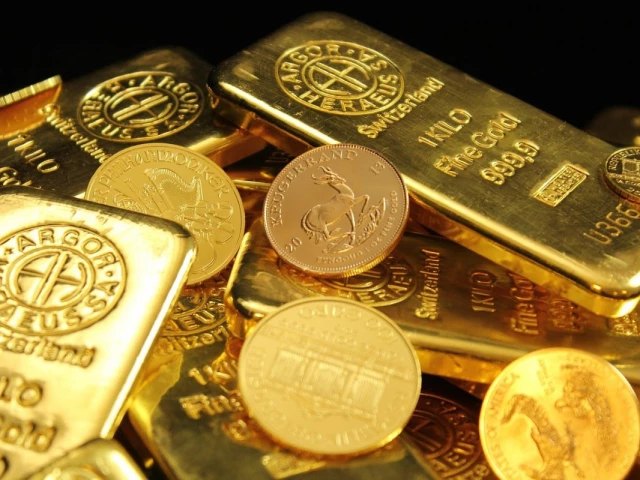
Gold traded at 4,718.34 dollars an ounce on Friday, down from 4,731.39 dollars at the same time on Thursday.
The biggest risers on the FTSE 100 were British American Tobacco, up 96.00p at 4,302.00p, Intercontinental Hotels Group, up 3.10p at 146.00p, London Stock Exchange Group, up 180.00p at 9,992.00p, Sage Group, up 14.60p at 902.80p and Marks & Spencer, up 5.35p at 347.00p.
The biggest fallers on the FTSE 100 were Mondi, down 93.60p at 748.20p, Babcock International, down 54.50p at 1,131.50p, Antofagasta, down 145.00p at 3,686.00p, AstraZeneca, down 536.00p at 13,956.00p and JD Sports Fashion, down 2.12p at 69.94p.
Monday’s global economic calendar has German consumer confidence data. Later in the week, interest rate decisions are due in the US, Europe, UK and Japan. Inflation prints will be released in Australia and for the euro area.
Next week’s local corporate calendar sees first quarter results from oil majors BP and Shell, pharmaceutical firms GSK and AstraZeneca and banks Barclays, NatWest and Lloyds.
Contributed by Alliance News


Eminem’s daughter Hailie Jade shares ‘the craziest thing’ of her life
Clock ticks on Spirit Airlines as bondholders weigh Trump bailout. Here’s what could happen next

NASCAR makes major change in front office, including new CEO in unprecedented move: report

-

 Fashion1 week ago
France’s LVMH Q1 revenue falls 6%, shows resilience amid Iran war
-

 Tech1 week ago
CYBERUK ’26: UK lagging on legal protections for cyber pros | Computer Weekly
-

 Sports5 days ago
WWE WrestleMania 42 Night 2: Live match results and analysis
-

 Sports1 week ago
Faheem Ashraf backs Islamabad United’s push, calls league a ‘career-changing platform’
-

 Sports5 days ago
NCAA men’s gymnastics championship: All-time winners list
-
 Business1 week ago
PepsiCo earnings beat estimates as North American food business improves
-

 Tech1 week ago
Anthropic Plots Major London Expansion
-

 Entertainment4 days ago
Lee Anderson, Zarah Sultana kicked out of UK Parliament for calling PM ‘liar’