

Business
PSX slides 4.5% as geopolitics rattle investors | The Express Tribune


Pakistan's stock market came under renewed pressure during the outgoing week, as escalating geopolitical tensions between the US and Iran and a sharp surge in global oil prices triggered broad-based selling, pushing the benchmark KSE-100 index down by 4.5% week-on-week (WoW) to 162,994 points.
On a day-on-day basis, the Pakistan Stock Exchange (PSX) commenced the week with a range-bound session. The KSE-100 declined by 1,175 points (-0.69%) to close at 169,497, below the psychological level of 170k. On Tuesday, the PSX extended the negative trend, shedding 1,085 points (-0.64%) at 168,412.
The selling pressure remained intact on Wednesday, when the index plunged 2,588 points (-1.54%) to end trading at 165,823. The market extended its losing streak in the last session as it settled at 162,994, down 2,830 points (-1.71%).
"The market remained volatile amid global uncertainty," noted Arif Habib Limited (AHL) in its weekly commentary. The KSE-100 index was influenced primarily by geopolitical uncertainty regarding talks between the US and Iran, and rising oil prices. As a result, the index settled at 162,994, marking a 4.5% WoW decline (-7,678 points).
The State Bank of Pakistan raised its policy rate by 100 basis points to 11.5% at the start of the week. Additionally, Pakistan re-entered the spot LNG market amid rising electricity demand, accepting a deal at $18.4/mmBtu, with the cargo expected to last 30 days at 100 mmcfd. The procurement was done to manage near-term load-shedding during peak demand.
Power-sector circular debt stood at Rs1.84 trillion as of Feb'26 vs Rs1.76 trillion in Jan'26 and Rs2.5 trillion in Feb'25. In the current fiscal year till Feb'26, the debt rose by Rs225 billion compared to an increase of Rs138 billion in the same period of last year, AHL said.
Gas production declined by 0.5% WoW to 2,947 mmcfd in the outgoing week, primarily due to lower output from Uch and Qadirpur. Oil production rose 5.2% WoW to 70,294 bpd, supported by higher output from Makori East and Baragzai.
During the week's PIB auction, the government rejected bids across all tenors, as market participants drove yields further up. Meanwhile, in the T-bill auction, yields went up by 40-80 basis points across all tenors, with majority acceptance concentrated in the one-month tenor.
The KSE-100 outlook remains dependent on geopolitical developments, with market sentiment closely tied to how long the conflict persists. Additionally, approval of the anticipated $1.2 billion tranche by the IMF executive board, scheduled for May 8, could further support market sentiment.
The KSE-100 is currently trading at a price-to-earnings ratio of 7.6x, offering a dividend yield of 6.7%. "Our top picks include OGDC, PPL, FFC, Lucky Cement, NBP, Hub Power, PSO and Attock Refinery," AHL added.
Syed Danyal Hussain of JS Global noted that the KSE-100 came under pressure again during the outgoing week, declining by 4.5% (7,678 points), as persistent geopolitical uncertainty weighed on investor confidence. International oil prices surged, with Brent crude touching a four-year high of $126/barrel (+20% WoW) amid continued disruption of the Strait of Hormuz.
In response, the Monetary Policy Committee raised the policy rate by 100 basis points to 11.50% to counter rising inflation driven by external supply shocks. The IMF executive board is scheduled to review Pakistan's third tranche under the Extended Fund Facility (EFF), alongside the second review under the Resilience and Sustainability Facility (RSF) on May 8, involving a disbursement of $1.2 billion, which the government expects to be approved as Pakistan has met most of the IMF conditions, he said.
Meanwhile, power-sector inefficiencies persisted, with circular debt swelling by Rs224 billion during 8MFY26 to Rs1.84 trillion. In the latest T-bill auction, the government raised Rs1.37 trillion, significantly exceeding the Rs650 billion target, where yields rose by 21-83 basis points across different tenors, Hussain added.
Source link
Business
New building standard makes fire safety advisory, raises height threshold to 24m – The Times of India

New Delhi: Residential buildings under 24 metres in height — a category that includes a large number multi-storey homes, such as the ill-fated one in Delhi’s Vivek Vihar — will fall outside the scope of “fire and life safety” provisions under the newly notified National Building Construction Standards (NBCS), which replaced the National Building Code (NBC) last week.NBCS fire and public safety norms, which are only “advisory” in nature, are applicable for buildings beyond 24 metres, against the earlier norm of 15 meters. Though the Deregulation Cell of Cabinet Secretariat had directed Bureau of Indian Standards (BIS) to keep fire and life safety out of NBCS, it was included due to pushback from technical experts.These provisions prescribe norms on how a building should be designed, equipped and managed to prevent fires and protect occupants if one occurs. This includes means of escape, and fire detection and alarm systems.The NBCS document said that “fire and life safety” is only for guidance and referral for state govt and local authority in respect of fire safety in buildings considering that “fire services is a state subject and a municipal function” as per the Constitution.“Provisions in NBCS have been updated considering the changes that have happened over the years. We have prescribed what states and municipalities can follow. It’s the responsibility of states and local authorities to ensure safety of structures and citizens,” said former Delhi Fire Service chief S K Dheri, who heads the fire safety committee at BIS.TOI has learnt that one of the key reasons for replacing NBC with NBCS was the confusion created by the term “Code.” Though NBC was voluntary, its title suggested legal enforceability, leading to disputes and litigation, and courts hauling up builders and govt entities for not following the code’s provisions.The document mentions that the nature of standards and codes has changed from a prescriptive regime, under which states and local authorities required hand holding, to a “more performance-oriented outlook, giving ample scope for innovation and decision-making”.However, experts involved in preparation of both NBC and current NBCS have raised concerns, pointing to inadequate institutional capacity of many municipal bodies to formulate detailed norms.Ajit Kumar SM, a committee member and president of Karnataka Professional Civil Engineers Act Steering Consortium, cautioned that increased state-level variation could result in inconsistent safety standards. He highlighted concerns about rising liability for professionals without adequate regulatory protection, potentially compromising public safety and professional integrity.
The BBC takes a look in charts at what the UAE’s departure could mean for the oil cartel and more widely.
Source link
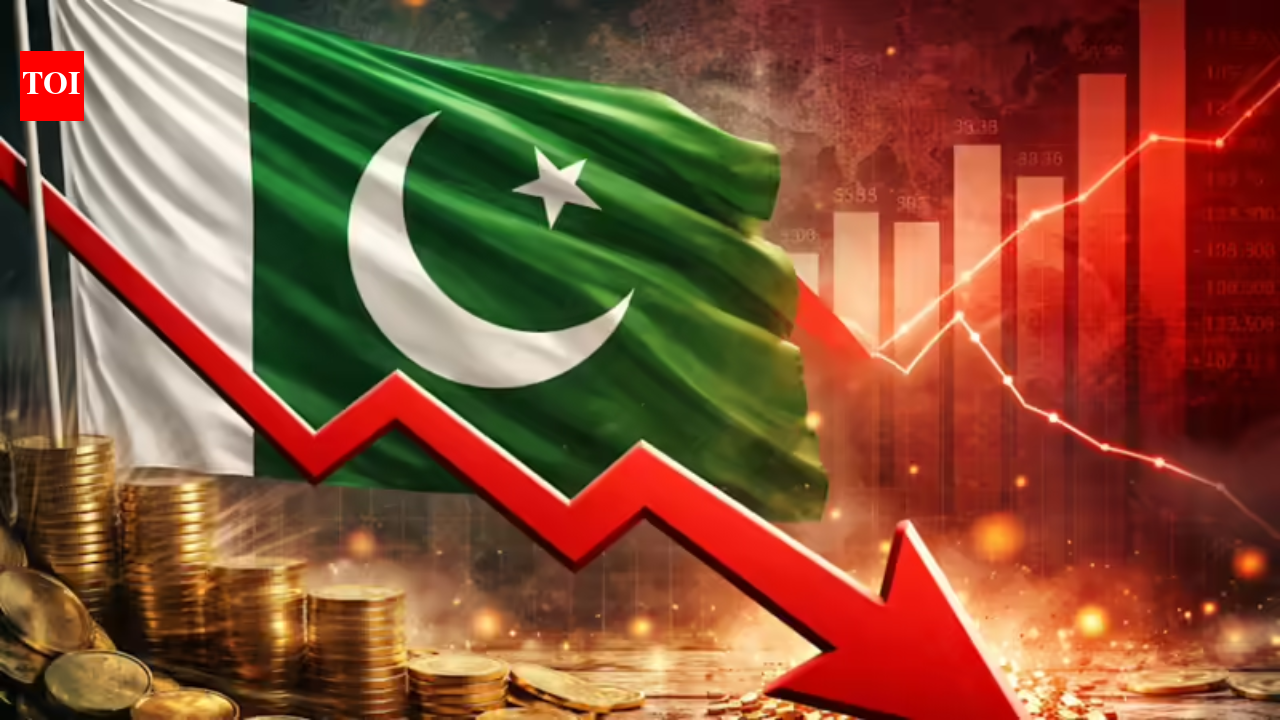
Pakistan’s struggling economy is likely to remain under sustained pressure, with double-digit inflation expected to persist if global oil prices continue to surge amid the ongoing Middle East crisis, according to a report by Dawn.Topline Securities Ltd, in its latest “Pakistan Strategy” report released Saturday, provided a grim assessment of the impact of rising energy costs and regional instability on the country’s economy and stock market. The brokerage described the situation as “prolonged and evolving,” warning that any improvement depends on an immediate and peaceful resolution to the conflict.The report, asx cited by ANI, said that under current conditions, inflation could average between 9 and 10 per cent over the next year, with fourth-quarter FY26 figures expected to exceed 11 per cent. These projections are based on oil prices at $100 per barrel, with every $10 increase adding around 50 basis points to inflation. If oil rises to $120 per barrel, annual inflation could reach 11 per cent, potentially forcing the State Bank of Pakistan into further aggressive interest rate hikes.The rising inflationary pressure is expected to slow economic growth. Topline Securities has cut its GDP forecast for FY27 to between 2.5 and 3.0 per cent from an earlier estimate of 4.0 per cent. Growth for FY26 is projected at 3.5 to 4.0 per cent, but the industrial sector remains vulnerable, with growth possibly dropping to just 1 per cent from nearly 4 per cent.According to Dawn, the current account deficit for FY27 could exceed $8 billion if the government fails to maintain strict import controls, worsening pressure on foreign exchange reserves. The fiscal deficit for FY26 is expected to range between 4.0 and 4.5 per cent of GDP, exceeding targets set by the International Monetary Fund.The Pakistan Stock Exchange has been among the worst-performing markets globally, reflecting the country’s heavy reliance on imported energy. Petroleum imports are projected to reach $15 billion in FY26, while Pakistan imports around 85 per cent of its energy needs. This dependence contributed to a 15 per cent decline in the market during the first quarter of the year.The economic outlook is further affected by a projected 3.5 per cent decline in remittances, with inflows from the Gulf Cooperation Council region expected to fall by 10 per cent. Exports are also forecast to decline by 4 per cent.On the currency front, the Pakistani rupee is expected to weaken to 298 against the US dollar by FY27. Persistent conflict could push depreciation beyond historical averages, increasing pressure on supply and demand.Dawn noted that while domestic exploration firms may eventually increase production to reduce reliance on liquefied natural gas imports, the near-term outlook remains marked by high interest rates, rising urea prices, and a growing dependence on emergency administrative measures to prevent a deeper economic crisis.


Peshawar Zalmi down Hyderabad Kingsmen to lift second PSL title – SUCH TV

5/3: Sunday Morning – CBS News

Two US troops missing during African Lion exercise in Morocco

-

 Tech6 days ago
A Brain Implant for Depression Is About to Be Tested in Humans
-

 Tech7 days ago
Almost 90% of women leave tech industry within 10 years | Computer Weekly
-
 Business6 days ago
‘I had £20,000 stolen and had to fight a 13-month fraud reporting rule to get it back’
-
 Business1 week ago
Pakistan’s oil market is fuelling the crisis | The Express Tribune
-

 Tech5 days ago
This Ambitious Laptop Doesn’t Leave Much Room for Your Hands
-

 Sports5 days ago
Pro wrestling star Steph De Lander reveals how colleague’s advice helped lead her to title triumph at ACW
-

 Entertainment6 days ago
Norway joins Type 26 Frigate Programme to boost NATO naval power
-

 Entertainment6 days ago
Melania Trump says ABC should ‘take a stand’ on late-night host Kimmel