

Business
PSX stages modest rally, gains 1,092 points | The Express Tribune

KARACHI:
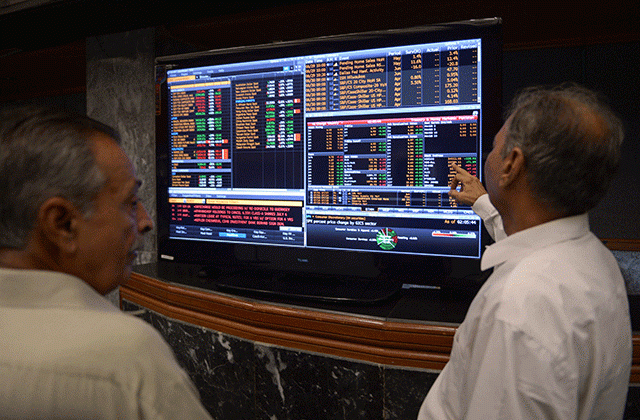
Pakistan Stock Exchange (PSX) on Tuesday staged a modest rally as investors remained calm and engaged in healthy buying activity following recent losses.
Positive sentiment prevailed after international oil prices fell nearly 2% in early Asian trade over US President Donald Trump’s statement that he had paused a planned attack on Iran to allow negotiations aimed at ending the Middle East conflict.
Robust buying was observed in index-heavy sectors including energy, cement, auto assemblers, commercial banks and oil marketing, which kept the benchmark index in positive territory throughout the session.
Although the market briefly retreated in midday trading due to profit-booking, the index recovered in the latter half on renewed buying interest. The index oscillated between the intra-day high of 164,309.65 and the low of 162,563.58. At close, the KSE-100 index posted a handsome rise of 1,091.66 points, or 0.67%, to settle at 162,896.68.
KTrade Securities, in its market wrap, wrote that the KSE-100 closed higher by 1,092 points as selective buying returned despite a subdued overall activity. Volumes stayed thin, with 170 million shares traded in the KSE-100 universe, reflecting cautious recovery rather than broad-based conviction. Gains were largely driven by commercial banks, oil & gas and fertiliser stocks, where UBL, Bank AL Habib, OGDC, Fauji Fertiliser, Pakistan Petroleum and Hub Power emerged as key index movers.
Despite the positive close, the broader backdrop remained delicate. Brent crude hovering around $109-111 per barrel kept inflation concerns alive for import-reliant economies including Pakistan, while geopolitical developments were the market’s primary overhang. The evolving US-Iran situation and uncertainty around the Strait of Hormuz posed risks to energy prices and investor sentiment.
KTrade believes the market may continue to witness volatile and headline-driven moves. “Until greater clarity emerges on geopolitics and oil direction, the index is likely to remain range bound with a cautious bias.”
Tuesday saw a “gap-up opening” for the KSE-100 index, with the day’s high recorded at 164.3k before gains were trimmed and it closed up 0.67%, Arif Habib Limited (AHL) commented. Market breadth remained positive as 62 stocks advanced while 33 declined. Key contributors included UBL (+2.52%), BAHL (+3.36%) and OGDC (+2.04%). On the downside, Engro Holdings (-1.22%), Meezan Bank (-0.28%) and Cherat Cement (-1.8%) emerged as major index drags.
Honda Atlas Cars (+10%) remained in focus after reporting MY26 earnings per share of Rs22.64, up 19% year-on-year, along with dividend of Rs9. Earnings and payout came in above expectations. Net revenue stood at Rs122,283 million versus Rs78,066 million in MY25, reflecting a 57% increase. The YoY growth was driven by a 42% rise in volumes to 8,058 units, with City and Civic sales at 7,274 units and HRV & BRV sales at 784 units, AHL said.
Meanwhile, Pakistan invited Expressions of Interest (EOIs) for the sale of majority stakes in Islamabad, Gujranwala and Faisalabad electricity companies. Additionally, Trump called off fresh attacks on Iran as Saudi Arabia and other Gulf allies wanted more time to pursue diplomacy. On KSE-100, “160k is the key level to watch for in the remainder of the week”, AHL added.
Overall market volumes declined to 391.9 million shares compared to Monday’s tally of 499.8 million. The value of traded shares stood at Rs23 billion.
In the ready market, shares of 480 companies were traded. Of these, 262 stocks rose, 171 fell and 47 remained unchanged.
Cnergyico PK was the volume leader with trading in 24 million shares, edging down Rs0.05 to close at Rs8.38. Foreign investors sold shares worth Rs431.5 million, the National Clearing Company reported.
The Government “must focus on how it will reduce the public policy costs which are pushing up food prices”, the British Retail Consortium (BRC) has said after reports the Treasury asked supermarkets to limit food prices in return for the lifting of some regulations.
The proposals would see shops voluntarily cap the prices of essential groceries such as eggs, bread and milk, according to the Financial Times.
The Treasury has said it would in return offer supermarkets “incentives” which may include easing packaging policies and delay potentially costly changes to healthy food rules, the newspaper said.
Helen Dickinson, the chief executive of the BRC, the leading trade association for retailers, said: “Rather than introduce 1970s style price controls and trying to force retailers to sell goods at a loss, the Government must focus on how it will reduce the public policy costs which are pushing up food prices in the first place.”
She added: “The challenge facing retailers is a combination of higher energy and commodity costs resulting from the Middle East conflict, and the soaring cost of the Government’s domestic policies.”
“The UK has the most affordable grocery prices in Western Europe thanks to the fierce competition between supermarkets,” she also said.
A spokesperson for the Treasury said: “The Chancellor has been clear we want to do more to help keep costs down for families, and will set out more detail in due course.”
The Treasury asked supermarkets for guarantees that British farmers would not lose income from price caps, according to the FT.
Some measures, including the packaging regulations, generate revenue for the Treasury, it reported.
The Government has also recommended supermarkets reinvest the savings from the regulation changes to freeze grocery prices, it added.
This comes after UK food inflation rose to 3.7% in April.
The Foreign Secretary on Tuesday told an aid summit of the risk of “sleepwalking into a global food crisis” as a result of Iran’s blockade of the Strait of Hormuz.
Chancellor Rachel Reeves is to set out measures to help households with the cost of living on Thursday.
Writing in The Times, she said she had made decisions which were “responsible in the national interest”.
“I will not tolerate anyone exploiting a crisis to make a quick buck off the back of hardworking people,” the Chancellor wrote.
“I am clamping down on price gouging, giving regulators new, focused investigatory powers. Where regulators identify concerning practices, they will be encouraged to name and shame.”
The waiver reflects increasing supply concerns over certain fuels due to the effective blockade of the Strait of Hormuz.
Source link
UK inflation is set to have eased last month as a drop in household energy bills offset a jump in fuel prices – but experts warned of turbulence ahead as the Iran energy price shock “catches up” with the cost of living.
Most economists think the rate of Consumer Price Index (CPI) inflation slowed to 3% in April, from 3.3% in March.
This would mean that prices were still rising year-on-year, but at a slower rate than they were the month before.
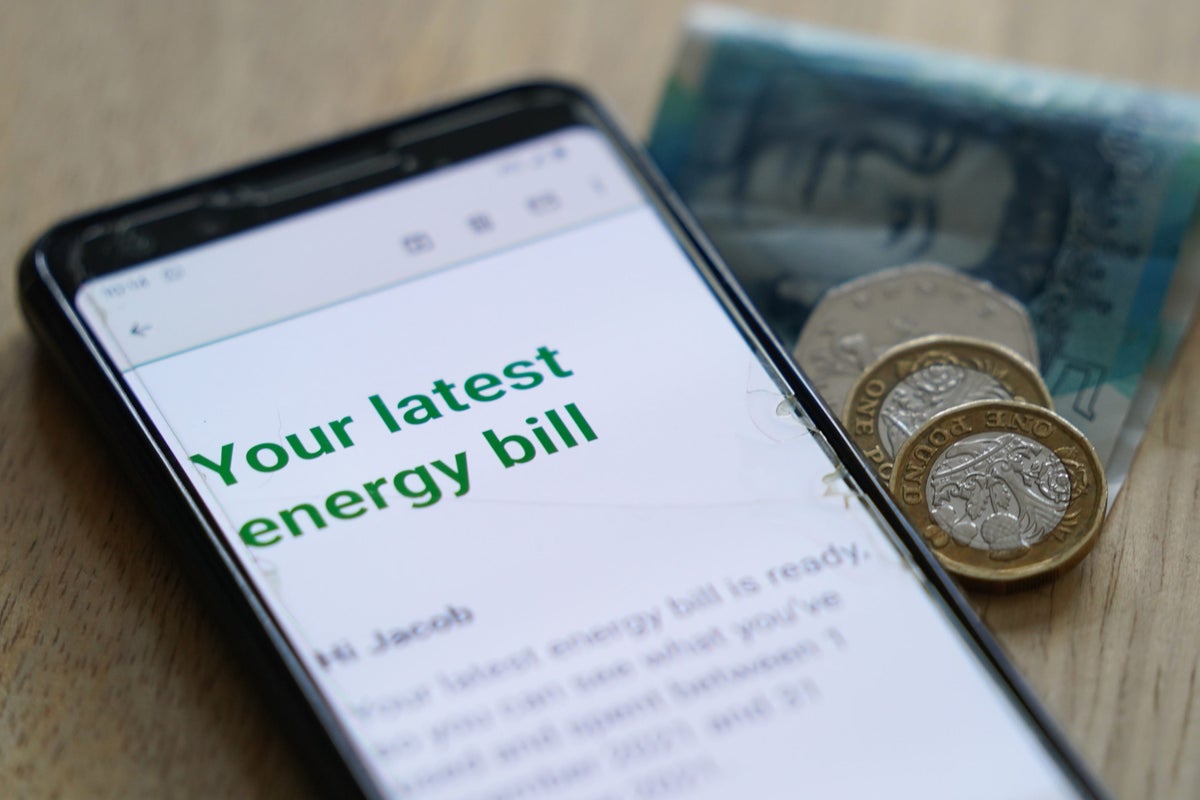
A big driver of the expected slowdown is set to come from Ofgem lowering its energy price cap from the start of April by 7%, or £10 a month, for the average household using both electricity and gas.
This was largely driven by Government measures to reduce bills including moving 75% of the cost of the UK’s renewables obligation from household bills on to general taxation, and scrapping the energy company obligation scheme.
However, experts point to a mixed picture for energy costs last month with motorists hit by a surge in fuel prices following the start of US-Israel’s war with Iran.
Sanjay Raja, chief UK economist for Deutsche Bank, said he was expecting pump prices to have risen by about 15% in April from March.
“Looking ahead, we expect price momentum to pick back up as the Iran shock catches up with the inflation data,” Mr Raja wrote in a research note.
“Indeed, dual fuel bills won’t rise until the summer.”
Household energy bills are forecast to jump from July when the regulator sets its next price cap, with the latest predictions from analysts Cornwall Insight suggesting this could be 12% or £196 a year higher.
Victoria Scholar, head of investment for Interactive Investor, said April’s lower energy price cap will “go some way towards helping offset higher petrol, airline and other prices impacted by the elevated global oil price backdrop” with Brent crude oil trading at an average of around 120 US dollars a barrel during the month.
“When the Ofgem energy price cap resets in July, UK households will be faced with a sharp increase in energy bills,” she cautioned.
“Were it not for the Iran war, it would be about this time that the UK inflation rate was finally expected to fall back to the Bank of England’s 2% target.
“Instead, interest rate and inflation expectations have drastically rerated higher.”
The Bank of England kept interest rates on hold last month and is expecting inflation to increase under several of its potential scenarios for the impact of the energy shock.
Experts have stressed that the economic outlook could change depending on how long the Middle East conflict goes on, and how high oil and gas prices go.


Rising costs push Sri Lankan apparel SMEs to the edge

Jake Shane reacts to backlash over viral Kacey Musgraves clip

Putin, Xi hail ‘unyielding’ ties in talks after Trump visit

-

 Entertainment1 week ago
Conan O’Brien hat tricks as Oscar host
-

 Fashion7 days ago
Italy’s Zegna Group’s Q1 growth boosted by strong organic performance
-
 Fashion1 week ago
EC clears €5-bn German state aid to back decarbonisation of industry
-

 Tech1 week ago
Papa Johns Is Getting Into Drone Delivery—but Not for Pizza
-

 Tech1 week ago
CUDA Proves Nvidia Is a Software Company
-
 Fashion1 week ago
India’s Raymond Lifestyle’s FY26 income tops $743 mn for 1st time
-
 Tech1 week ago
Chevron Wants a School District Tax Break for a Data Center Power Plant in Texas
-
 Business1 week ago
Pound wobbles and bonds suffer as Starmer battles on