

Business
Reeves: PM and I decided ‘as a team’ not to hike income tax

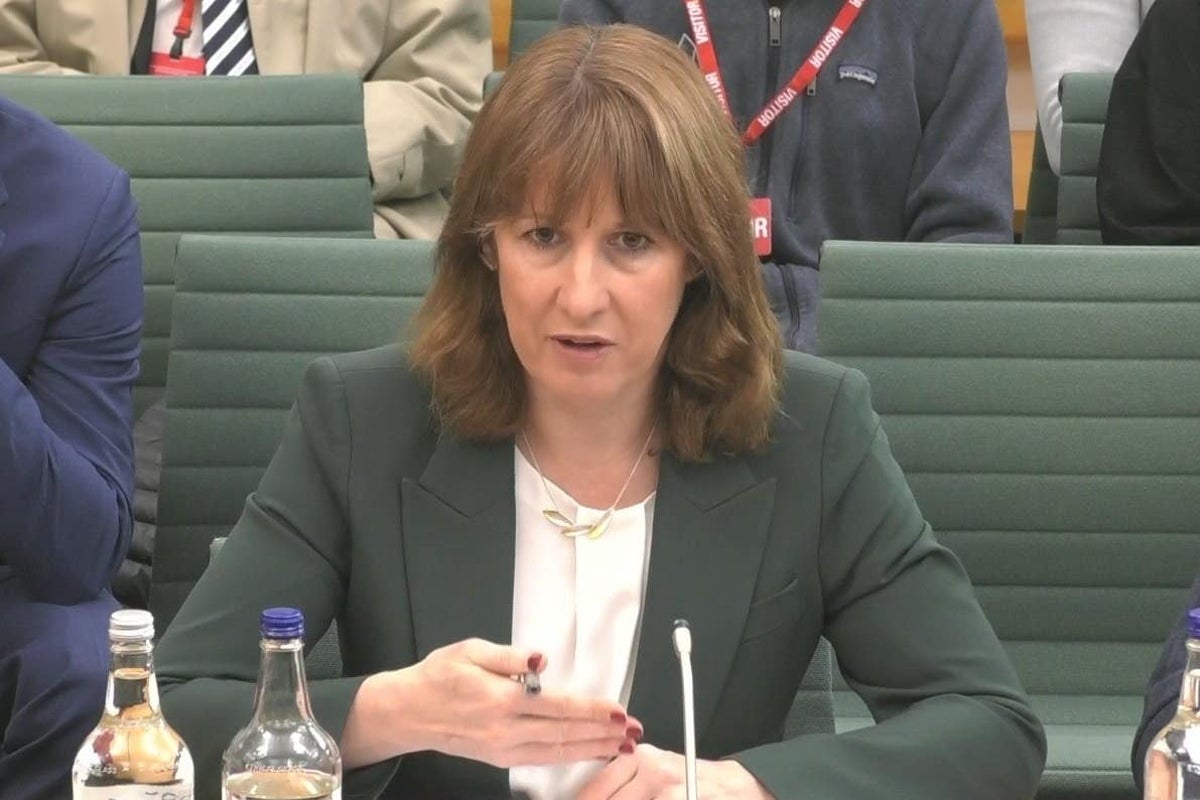
Rachel Reeves said she and Sir Keir Starmer had decided “as a team” not to raise income tax as she hit out at “too many leaks” in the run-up to Budget.
The Chancellor told MPs the “very close partnership” between herself and the Prime Minister meant the move to extend a freeze on tax thresholds instead had been made jointly.
It came as a senior Treasury official confirmed a leak inquiry into reports of economic policy that emerged before Ms Reeves’s statement to the Commons would cover ministers as well as civil servants and advisers.
Appearing before Parliament’s Treasury Select Committee, the Chancellor said a Financial Times story which revealed she had dropped plans for an income tax rise was “incredibly damaging”.
She said: “It was not an off-the-record briefing, it was a leak. I’m absolutely categorical that that was not an authorised briefing.”
She said the report was “frustrating” because it gave the impression she might have dropped her commitment to rebuilding the “headroom” she had against her rule of balancing day-to-day spending with tax receipts.
In the weeks before the Budget, the Chancellor herself fuelled speculation she was preparing to raise income tax in a speech that sought to roll the pitch for the autumn statement by warning of difficult decisions ahead.
She had suggested that sticking to Labour’s pre-election promises, which included a pledge not to hike income tax, would only be possible with “deep cuts” to public investment.
A leak to the Financial Times later revealed the proposal to increase income tax rates for the first time in 50 years had been dropped.
Speaking on Wednesday, Ms Reeves said: “The Budget had too much speculation. There were too many leaks, and much of that, those leaks and speculation, were inaccurate, very damaging, as well as the IT security issues… The OBR’s report also noted that the spring statement had been accessed early as well.
“I want to say on the record how frustrated I am and have been by these incidents and the volume of speculation and leaks, and that is why I am doing something about it, because we cannot allow this to happen again.
“A leak inquiry is under way with my full support, being led by the permanent secretary at the Treasury, and we are also conducting a review of the Treasury security processes to inform future fiscal events.”
Appearing alongside Ms Reeves, Treasury permanent secretary James Bowler confirmed the leak inquiry would cover ministers as well as officials and advisers.
Asked whether the Prime Minister made the decision not to raise income tax, Ms Reeves said she had met Sir Keir “two, three times a week during the Budget process”.
She said: “That is not always the case between chancellors and prime ministers. I recognise that. But there is a very close partnership between myself and the Prime Minister.
“And so we took him through all of the numbers and all of the options and we decided it together as a team, because that is what the Prime Minister and I am.”
Former OBR chairman Richard Hughes resigned after the watchdog’s assessment of the Chancellor’s plans was inadvertently made available online before she delivered her speech last month.
Meanwhile, Ms Reeves faces accusations of misleading the public about the state of the public finances after a letter from the OBR contested her narrative that she needed to raise taxes to fill a so-called “black hole”.
The OBR’s pre-Budget forecasting instead suggested Ms Reeves’s spending plans would run a surplus because of changing economic headwinds.
A Tory-led debate in the Commons on Wednesday afternoon will see the party use a parliamentary process known as a censure motion to call on Ms Reeves to apologise for how the Budget unfolded.
Addressing the Treasury Committee, Ms Reeves said there had been a lot of information shared between the OBR and the Treasury in the weeks leading up to the autumn statement.
“Pre-measures is not the final word from the Office for Budget Responsibility, because then you have post-measures forecasts,” she told MPs.
“They take into account the policy decisions that we take as a Government on tax and spend… so there was plenty of additional information being shared between the OBR and the Treasury between October 30 and major measures one and indeed major measures two.”
Ahead of the Conservative-led debate later, shadow chancellor Sir Mel Stride accused Ms Reeves of putting “party before country”.
He said: “Rachel Reeves has repeatedly misled the British public. She promised she wouldn’t raise taxes on working people – and then she did. She insisted there was a black hole in the public finances – and there wasn’t.”
Mumbai: Lower revenue as a share of GDP has been more than offset by cuts to subsidies and spending on current schemes, leading to the smallest fiscal consolidation in six years, likely positive for growth, a new report has said.
The fiscal consolidation for FY27 is the slowest in six years. And the budgeted disinvestment, which is a below-the-line funding item, is likely to see the highest rise in six years, the report from HSBC Global Investment Research said.
“The central government continues with fiscal consolidation, though signing up for a gentler path for FY27; the fiscal impulse will likely turn neutral after several years in the negative, and this should be good news for GDP growth,” the research firm added.
The report said that the services sector was the focus of the Budget, “with ambitious plans and increased outlays for medical institutions, universities, tourism, sports facilities, and the creative economy.”
Urban infrastructure saw a renewed push with each City Economic Region (CER) set to receive get Rs 50 billion over 5 years.
Seven new high-speed rail corridors will connect major cities, the report noted, adding large cities will also get an incentive of Rs 1 billion if they issue municipal bonds worth more than Rs 10 billion.
The report highlighted policy priorities, saying, “new manufacturing sectors were given incentives, namely biopharma, semiconductors, electronic components, rare earth corridors, chemical parks, container manufacturing, and high-tech tool rooms.”
Direct taxes are expected to grow faster than nominal GDP while indirect taxes will expand more slowly, with gross tax revenues budgeted to rise about 8 per cent year‑on‑year, the report said.
Central government set a fiscal deficit target of 4.3 per cent of GDP for FY27 after a 4.4 per cent estimate for FY26, and nominal GDP growth was pegged at 10 per cent.
Business
India’s $5 trillion economy push: How ‘C+1’ strategy could turn country into world’s factory
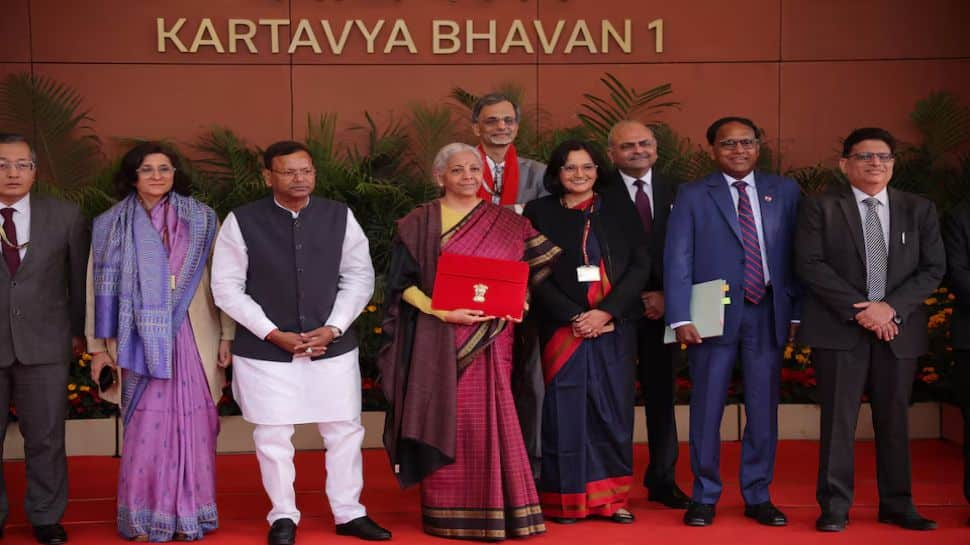
New Delhi: India is preparing for a major economic transformation. The Union Budget 2026-27 lays out measures that could make the country the top choice for global manufacturing using the popular ‘China +1’ (C+1) strategy. This comes as international companies rethink supply chains after COVID-19 disruptions, rising trade tariffs and geopolitical tensions.
India has positioned itself as the backup factory for the world that is ready to absorb international demand in case of any crisis in China or Taiwan.
The government has offered tax breaks for cell phone, laptop, and semiconductor makers, making India more attractive to foreign investors. Reducing bureaucratic hurdles for global firms, the budget also strengthens the National Single Window System to simplify business procedures. The message is clear: India is ready to step in as a global manufacturing hub, ensuring supply continuity for the world.
The expressway to a $5 trillion economy
China presently dominates about 40% of global manufacturing. Its factories supply critical products worldwide, but 2026 is expected to be a turning point. Expanding influence and economic opacity have made global companies seek alternatives.
India has leveraged this moment, offering a comprehensive incentive package for foreign manufacturers. Analysts call it more than policy; it is a blueprint to become a $5 trillion economy and reclaim India’s historic position as a global industrial leader.
Why the world needs India now
The COVID-19 pandemic exposed the dangers of over-reliance on a single supplier. When China halted medical exports, nations realised the need for diversified supply chains. Major companies such as Apple and Samsung now see India as a dependable alternative.
China’s aging workforce and rising labour costs further enhance India’s appeal. With 65% of its population under 35, India offers a vast, skilled and affordable workforce for decades. The geopolitical uncertainty surrounding Taiwan, which produces 90% of advanced chips, has also created demand for a secure manufacturing backup. India is stepping in to fill that gap.
How India stands to gain from China’s challenges
India’s budget, 2026-27, slashes import duties on cell phone and laptop components, turning the country into a hub for component manufacturing, not just assembly. Electronics exports are projected to cross $120 billion by 2025.
The government has also launched a Rs 1.5 lakh crore semiconductor mission, attracting companies like Tata and Micron to establish advanced chip plants in India. In the chemical sector, stricter environmental regulations in China have shut down several plants, benefiting Indian companies such as Privi Specialty and Aarti Industries, which are now filling gaps in global supply chains.
Incentives for companies
The Production Linked Incentive (PLI) scheme promises cash rewards for output, covering over 14 sectors. This is India’s answer to Chinese subsidies. From land acquisition to electricity connections, the National Single Window System now enables businesses to clear all approvals through a single portal.
Infrastructure investment has also received a massive boost, with Rs 11.11 lakh crore allocated under PM GatiShakti. New ports and dedicated freight corridors are being built to ensure that exports from India reach the world faster and cheaper than ever before.
India’s moves points to a strategic shift in global manufacturing. By rolling out the red carpet for foreign companies and investing heavily in infrastructure, technology and policy reforms, the country is poised to become the go-to destination for global supply chains. The C+1 formula is not only a concept; it is a roadmap to turn India into the next industrial superpower and a $5 trillion economy.
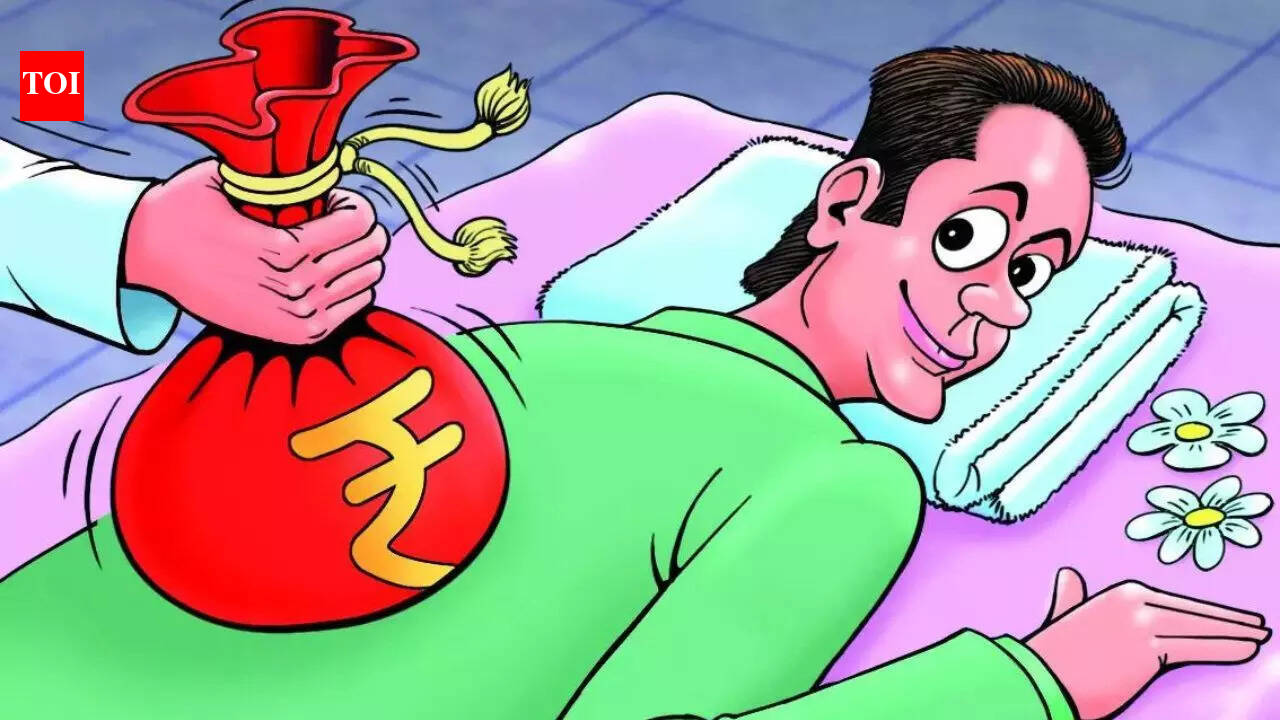
At a time when global markets are witnessing high volatility due to geopolitical uncertainties, the hike in securities transaction tax (STT) on derivatives trades hit investor sentiment on Dalal Street on the Budget day. This in turn led to a sharp sell-off that pulled the sensex down by nearly 1,500 points—its biggest points loss on a Budget day—to close at 80,773 points. The sell-off also left investors poorer by Rs 9.4 lakh crore, the biggest Budget day loss in BSE’s market capitalisation.The day’s trading was marked by high volatility. The sensex rallied over 400 points as FM started her speech, fell about 1,100 points after the STT hike proposal was announced, partially recovered by mid-session to trade 600 points down on the day and then sold-off to close below the 81K mark for the first time in four months.On the NSE, Nifty too treaded a similar path to close 495 points (2%) lower at 24,825 points. Fund managers and market players feel the day’s sell-off was overdone, compounded by the absence of most institutional players since it was a Sunday. “The market’s reaction (to the hike in STT rates) was a bit overdone, although the decision itself was unexpected,” said Taher Badshah, President & Chief Investment Officer, Invesco Mutual Fund. “I think markets should settle down in 2-3 days.” Badshah said the Budget was in line with govt’s set path of the past few years, showing a conservative approach to setting targets.“The revenue and expenditure targets for FY27 are achievable. And since the rate of inflation is lower now, the nominal GDP growth rate of 10% may turn out to be on the higher side as inflation normalises during the year,” the top fund manager said. In Sunday’s market, of the 30 sensex stocks, 26 closed in the red. Among index constituents, Reliance Industries, SBI and ICICI Bank contributed the most to the day’s loss. Buying in software services majors Infosys and TCS cushioned the slide. In all, 2,444 stocks closed in the red compared to 1,699 that closed in the green, BSE data showed.STT hike aimed at curbing F&O speculation The decision to raise securities transaction tax (STT) for trading in equity derivatives means trading futures & options (F&O) will be more expensive from April 1. STT on futures trading rises from 0.02% to 0.05% now, and on options premium and exercise of options to 0.15% from 0.1% and 0.125% respectively. This could more than double statutory costs of trading F&O contracts.While the move is to curb excessive speculation by retail traders who mostly suffer losses, investors sold stocks of those companies that derive a large portion of their turnover from this segment. Stock price of Angel One crashed nearly 9%, BSE crashed 8.1%, Billionbrains Garage Ventures that runs the Groww trading platform, lost 5.1% and Nuvama Wealth Management lost 7.3%. STT hike follows a Sebi survey that showed that 91% of the retail investors lost money in the F&O market with average loss per investor surpassing Rs 1 lakh per year. Institutional and some high net worth players took home most of the profits from the segment.18% GST on brokerage for FPIs removedThe Budget proposed to do away with 18% GST charged on the brokerage that foreign portfolio investors pay in India. Among the host of changes to the GST laws that the finance minister proposed, one was abolishing clause (b) of sub-section (8) of section 13 of the Integrated Goods and Services Tax Act, 2017. This is being “omitted so as to provide that the place of supply for ‘intermediary services’ will be determined as per the default provision under section 13(2) of the IGST Act,” the Budget proposal said.

Budget’s mild fiscal consolidation to be positive for GDP growth: Report

APAC freight market sees short-term surges, long-term overcapacity: Ti

Nvidia will make its ‘largest ever investment’ in OpenAI: Jensen Huang

-

 Sports6 days ago
PSL 11: Local players’ category renewals unveiled ahead of auction
-

 Entertainment5 days ago
Claire Danes reveals how she reacted to pregnancy at 44
-
 Business6 days ago
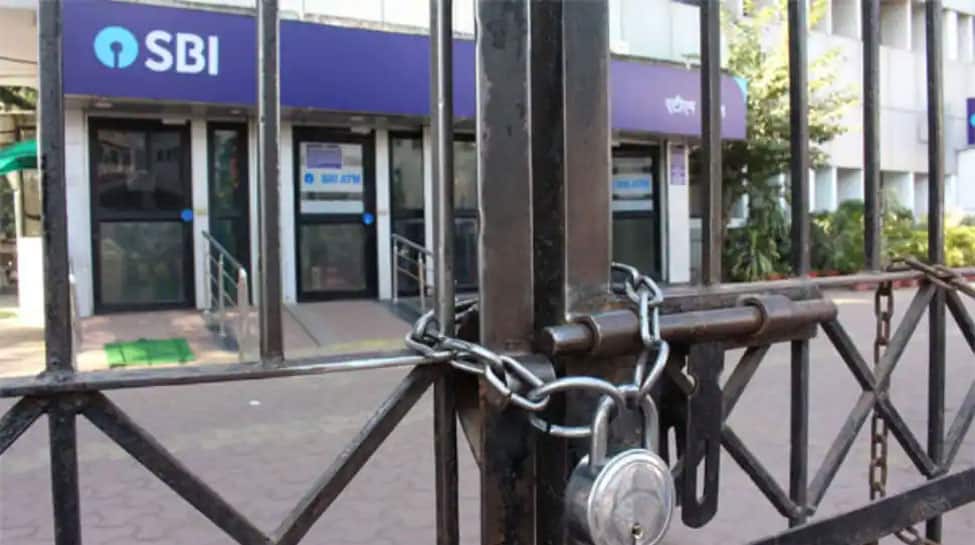
Banking services disrupted as bank employees go on nationwide strike demanding five-day work week
-

 Tech1 week ago
ICE Asks Companies About ‘Ad Tech and Big Data’ Tools It Could Use in Investigations
-

 Fashion1 week ago
Spain’s apparel imports up 7.10% in Jan-Oct as sourcing realigns
-

 Sports5 days ago
College football’s top 100 games of the 2025 season
-

 Politics1 week ago
Fresh protests after man shot dead in Minneapolis operation
-
 Business1 week ago
Should smartphones be locked away at gigs and in schools?