

Business
Reliance Industries: Profit Climbs 14% On Strong Growth In Refining, Retail, And Digital Units

Last Updated:
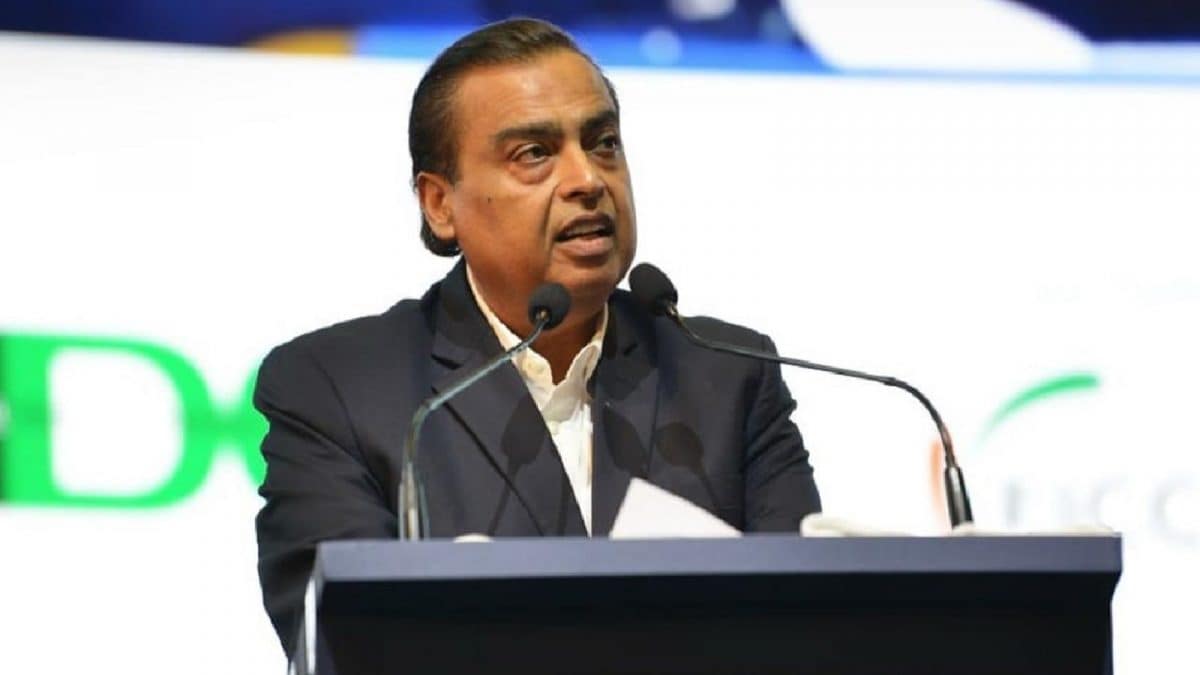
Mukesh Ambani-led Reliance Industries (RIL) on Friday reported a 10% year-on-year growth in its consolidated Q2 net profit at Rs 18,165 crore
Reliance Q2 Results
Reliance Industries Ltd posted a 14.3 percent rise in quarterly net profit to Rs 22,092 crore (pre-minority interest), helped by improved refining margins and steady expansion in its retail and digital services businesses. Consolidated revenue rose 10 percent from a year earlier to Rs 2.84 lakh crore, led by the consumer-facing segments.
Consolidated EBITDA stood at Rs 50,367 crore, up 14.6 percent from a year earlier, led by growth in the oil-to-chemicals (O2C), retail, and digital services businesses. Profit before tax rose 16.3 percent to Rs 29,124 crore. Capex for the quarter was higher at Rs 40,010 crore, which was fully covered by strong internal cash flows, with cash profit of Rs 40,778 crore.
Net debt remained largely stable at Rs 1.19 lakh crore as of September 30 compared with Rs 1.18 lakh crore as of June 30. Reliance said broad-based growth in consumer businesses, together with improved refining margins and continued thrust on domestic fuel retailing operations, helped deliver a robust consolidated performance during the quarter.
Commenting on the earnings, Mukesh D. Ambani, Chairman and Managing Director, Reliance Industries, said: “Reliance delivered a robust performance during 2QFY26 led by strong contribution from O2C, Jio and Retail businesses. Consolidated EBITDA registered 14.6% growth on a YoY basis, reflecting agile business operations, a domestic-focused portfolio and structural growth in the Indian economy. Digital services business continues to scale up with positive momentum in subscriber addition across homes and mobility services, driven by Jio’s network and technology leadership.”
Oil-to-chemicals (O2C)
O2C EBITDA grew 20.9 percent to Rs 15,008 crore, benefiting from a sharp rebound in transportation fuel cracks (up 22–37 percent) and improvement in polymer margins (up 5–8 percent), though partly constrained by weak polyester chain deltas. Segment performance was also supported by sustained higher volumes in domestic fuel retailing operations. Production meant for sale during the quarter rose 2.3 percent to 18.1 million tonnes.
The O2C business delivered its highest-ever quarterly throughput of 20.8 million tonnes, up 3 percent from a year earlier. Jio-bp continued to expand its presence in domestic fuel retail, with the network crossing the 2,000-outlet mark to reach 2,057 as of September 30, adding 236 outlets over the past year.
The Oil & Gas segment recorded EBITDA of Rs 5,002 crore, down 5.4 percent from a year earlier, with margins at 82.6 percent, lower by 240 basis points. The decline was due to lower revenues and higher operating costs arising from periodic maintenance activity. KGD6 sales volumes fell due to the natural decline in gas production, while lower CBM gas and crude price realisations also impacted earnings.
The effect was partially offset by improved gas price realisation for KG D6 and higher CBM volumes. Average KGD6 gas production was 26.1 MMSCMD, with oil and condensate output of about 18,746 barrels per day.
Digital Services
Digital Services revenue increased 15 percent from a year earlier to Rs 42,652 crore, led by continued expansion of the subscriber base and improvement in average revenue per user (ARPU). Segment EBITDA grew 17.7 percent to Rs 18,757 crore, with a 140-basis-point expansion in margin.
Jio’s 5G subscriber base rose to 234 million, while total home connections reached 22.7 million, with more than one million homes added each month during the quarter. JioAirFiber continued to demonstrate global leadership with about 9.5 million subscribers. ARPU improved 8.4 percent to Rs 211.4.
JioStar delivered a robust performance, reporting EBITDA of Rs 1,738 crore and PAT of Rs 1,322 crore, with an EBITDA margin of 28.1%.
Retail
Revenue for the retail business grew strongly by 18 percent year-on-year to Rs 90,018 crore, with significant contributions from all formats. Grocery and Fashion & Lifestyle delivered market-leading performance, growing 23 percent and 22 percent, respectively. Segment EBITDA rose 16.5 percent to Rs 6,816 crore, driven by higher revenues with a favourable mix and improvement in store operating metrics. The business continues to expand its footprint, with 19,821 stores spanning 77.8 million sq. ft. of operational area.
Disclaimer: Network18 and TV18 – the companies that operate news18.com – are controlled by Independent Media Trust, of which Reliance Industries is the sole beneficiary.

A team of writers and reporters decodes vast terms of personal finance and making money matters simpler for you. From latest initial public offerings (IPOs) in the market to best investment options, we cover al…Read More
A team of writers and reporters decodes vast terms of personal finance and making money matters simpler for you. From latest initial public offerings (IPOs) in the market to best investment options, we cover al… Read More
October 17, 2025, 19:51 IST
Read More








As the Iran war continues to escalate, all eyes are on the price of oil as fears mount over a global energy crisis.
Brent prices have spiked as high as about $120 per barrel and are currently around 40 per cent higher than when Israel and the United States attacked Iran on 28 February, starting the war.
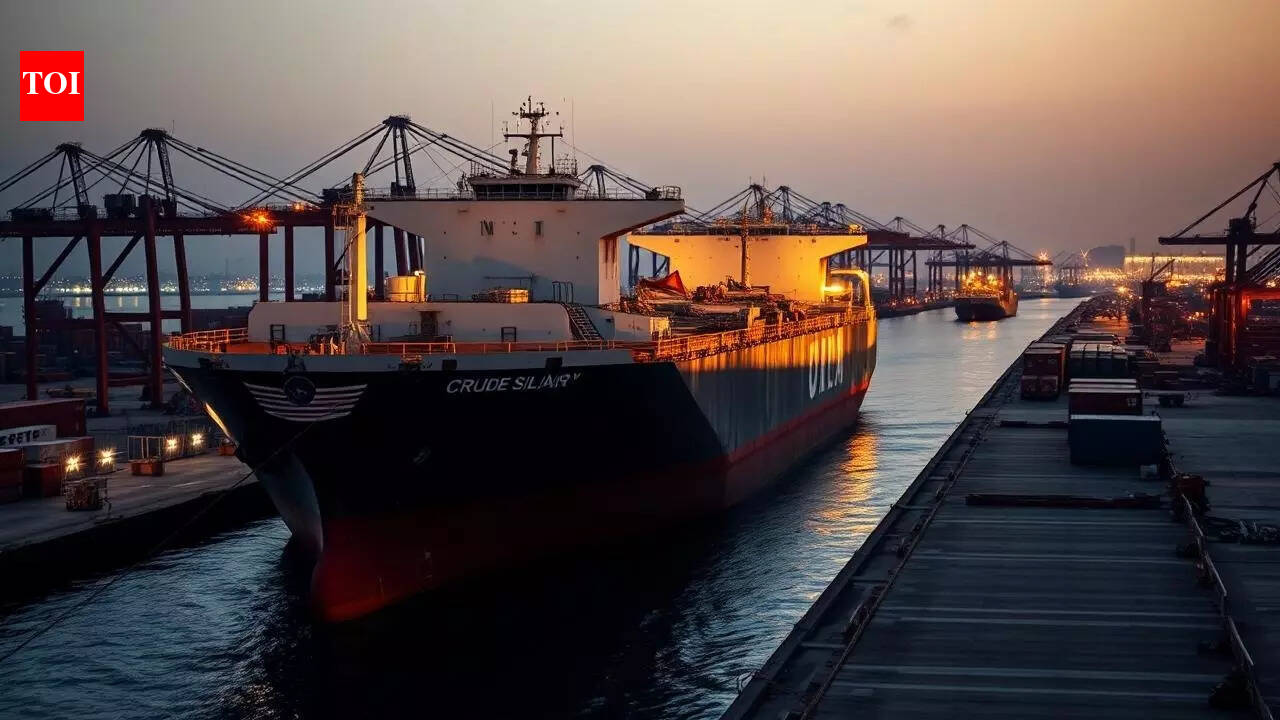
In retaliation, Iran kept its stranglehold on shipping through the Strait of Hormuz, the strategic waterway through which a fifth of the world’s oil transits on its way from the Persian Gulf to the open seas, crippling oil prices.
So how does this affect you? Oil prices, benchmarked globally by Brent crude from the North Sea, fluctuate based on supply and demand.
The longer that the price of oil is high, the more difficult it is to absorb those spikes, making it more likely people will feel the cost at home.
Beyond higher heating bills, rising oil costs increase manufacturing and transport expenses, inflating the prices of food and most other goods and services.
“You never know exactly the timeframe of this, but, in the worst case, this is a weeks, not a months thing,” US energy secretary Chris Wright said earlier this week. But the longer it goes on, the more likely it is that prices remain higher afterwards.
Here is what will be affected by the ongoing conflict:
Petrol
Iran has cut its oil output drastically, now only producing a quarter of what it was before the first US strikes fell.
“This is roughly 3 per cent of global oil supply lost in a single event. Shockingly, this is worse than the oil supply situation after Russia attacked Ukraine,” noted XTB research director Kathleen Brooks.
Petrol prices in the UK have been rising since the conflict in the Middle East started, up between 4p and 8p to hit their highest in nearly 20 months.
The RAC said diesel prices had risen by nearly 9 per cent since 28 February. Petrol prices were on average 6 per cent more across the same period.
The government has said drivers can compare prices at different petrol stations across the UK through its fuel finder scheme, which has also been welcomed by the AA.
The cost of heating oil has already doubled, which affects customers using home heating oil, as it is not covered by Ofgem’s energy price cap.
Inflation and interest rates
While we don’t know the figures just yet, we do know that if costs of energy, raw materials and labour go up, prices go up in response- this is inflation.
If prices start to surge again, one of the key measures the Bank of England has to control inflation is to raise interest rates.
“Markets are already pricing in the unwelcome return of uncomfortable levels of inflation, with bond yields rising significantly and investors eyeing the UK as particularly sensitive to an energy shock,” Danni Hewson, head of financial analysis at AJ Bell, said.
“Preventing inflation from spiralling once again will be at the forefront of rate setters’ minds when they sit down to rewrite the Bank’s playbook next week.
“The key consideration will be the duration of the conflict, and whether it ends decisively or if attacks on shipping and energy infrastructure continue beyond any declaration of victory by the US president.”
Mortgages
The interest rate going up means you pay more on the amount you’ve borrowed, if you don’t have a fixed deal.
Some lenders have now raised their rates on new fixed-term mortgages. NatWest, TSB, HSBC, Nationwide, Santander, the Co-operative Bank and Skipton Building Society are among those to have done so in the past week or so.
Typically, mortgage deals on the market don’t change in direct line with the Bank of England base rate, they move up and down in anticipation of what might happen in future – with the swap rates, as they are termed.
Up until recently, mortgage prices had been headed downwards, but with this new threat to a possible rise in interest rates, swap rates have edged up.
Stock market and pensions
If inflation and interest rates are potentially heading up, the opposite is currently true for the stock market.
The FTSE 100 fell more than 5 per cent across last week after the chaos in the Middle East began.

Last Updated:
Growth will increasingly follow connectivity lines rather than only city size.




Future growth is being built around stronger rail networks and the rise of mid-sized cities, not just big metros.
Written By Parveen Jain:
India’s development has long been centred on a few large metros. These cities attracted capital, talent and infrastructure, but they also accumulated congestion, rising costs and uneven regional progress. A different pattern is now taking shape. The Union Budget 2026-27 and recent infrastructure spending show a clear shift in approach. Future growth is being built around stronger rail networks and the rise of mid-sized cities, not just big metros.
This course correction was needed. For urban development, industry and real estate, the implications are significant.
A Budget Framework Focused on Regional Capacity
The Union Budget 2026–27 sets out three clear priorities: accelerating growth and competitiveness, strengthening people’s capacity to participate in prosperity, and ensuring access to opportunity across regions and sectors. These goals are backed by targeted allocations and structural measures.
A Rs 5,000 crore allocation for City Economic Regions over five years introduces a challenge-based, reform-linked funding model for urban clusters. Instead of treating cities as isolated units, the framework recognises that economic activity spreads across connected districts and satellite towns. Planning and financing are being aligned to this reality.
Support for municipal bond issuances above Rs 1,000 crore, alongside financial sector reviews and reforms in investment rules, is intended to widen funding channels for urban infrastructure. Mid-sized cities that build credible governance systems and project pipelines can now access larger pools of capital.
Rail Corridors as Economic Infrastructure
Transport policy is often discussed as mobility reform. In practice, it is economic policy.
The seven announced high-speed rail corridors — including Mumbai–Pune, Pune–Hyderabad, Hyderabad–Bengaluru, Hyderabad–Chennai, Chennai–Bengaluru, Delhi–Varanasi and Varanasi–Siliguri — are designed to connect production centres, service hubs and population clusters.
Reduced travel time changes business behaviour. Companies can operate across multiple cities without duplicating full headquarters functions. Professionals can travel for same-day meetings across regions. Education, healthcare and specialised services become accessible beyond one metro catchment.
Freight rail investments and multimodal logistics planning under the national infrastructure platform are lowering transit uncertainty and costs. The East–West Dedicated Freight Corridor and related rail upgrades will influence where manufacturing, storage and distribution facilities are located. Many of these will prefer mid-sized cities where land parcels are available and approvals are faster.
Railways’ capital expenditure allocation of ₹2.93 lakh crore underscores the scale of this commitment. This is core infrastructure, not a side programme.
The Changing Role of Mid-Sized Cities
Tier-2 and Tier-3 cities are no longer peripheral markets. Their economic weight is rising. Current estimates place their contribution at roughly 40–45% of national GDP.
Startup and MSME activity is widely distributed across these locations, supported by lower operating costs and local talent pools.
Employment trends show faster growth in job openings in mid-sized cities than in Tier-1 metros. Companies are expanding delivery centres, back offices, manufacturing units and digital operations in these locations. Remote and hybrid work models have reinforced this movement.
Urban consumption patterns also support expansion. Rising household incomes, formalisation of retail and digital access are deepening demand in non-metro markets. This is visible in housing absorption, organised retail growth and office leasing outside the largest cities.
Stations, Corridors and Urban Land Use
Rail investments are reshaping city form, not just intercity travel.
Station redevelopment programmes covering more than 1,300 stations are turning transit points into commercial and civic nodes. Mixed-use development around stations increases land value and creates new business districts.
Cities with improved rail links and faster train services have already recorded steady property value growth in the range of 10–20% annually in several micro-markets. The effect is strongest where last-mile connectivity and urban planning support higher density near transit.
For urban authorities, this calls for tighter land-use planning, transit-oriented zoning and integrated infrastructure provision. For developers, station influence zones and rail corridors are becoming priority investment locations.
Financing and Institutional Support
Infrastructure and urban expansion require long-term capital.
Budget proposals to review the banking sector structure for the next growth phase, restructure key public sector finance institutions and simplify foreign investment rules are meant to strengthen credit delivery and investor confidence.
Municipal bond incentives reward cities that achieve scale in market borrowing. This encourages better financial reporting, project structuring and governance standards at the city level. Over time, this can reduce funding gaps in water, transport, housing and social infrastructure in mid-sized cities.
For real estate and urban projects, diversified financing sources reduce dependence on short-term funding and improve project completion timelines.
Balanced Growth and Environmental Gains
Concentrating growth in a few megacities has environmental and social costs. Distributed urbanisation spreads demand for land and infrastructure across regions, reducing pressure on overstretched metros.
Mid-sized cities can plan expansion with better layouts, infrastructure sequencing and environmental safeguards if growth is anticipated early.
Rail-based passenger and freight movement consumes less energy per unit than road transport. A higher rail share in mobility supports emission reduction goals while improving logistics efficiency.
What This Means for the Next Decade
Rail connectivity and mid-sized cities are moving to the centre of India’s growth strategy. The policy direction is visible in corridor planning, regional urban funding, municipal finance incentives and logistics investments.
Private capital and industry response is already underway.
For planners, developers and investors, the opportunity map is widening. Growth will increasingly follow connectivity lines rather than only city size. Regions that combine rail access, urban governance reform and infrastructure readiness will attract the next wave of investment.
India’s expansion story is entering a networked phase. The tracks are being laid now.
(The author is the president of NAREDCO. Views are personal.)
March 13, 2026, 16:43 IST
Read More
Business
Middle East war risk: Iran threat to target US tech infrastructure in Gulf raises fears of global digital disruption – The Times of India

Escalating tensions in West Asia are casting a shadow over global technology networks, with experts warning that threats by Iranian forces to target US-linked digital infrastructure in the Gulf could expose billions of dollars of investments to conflict-related risks.On Wednesday, Iranian forces warned they could strike facilities linked to major technology companies including Google, Microsoft, Palantir, IBM, Nvidia and Oracle across the Middle East and Israel. The region hosts more than 70 operational data centres with an estimated 557-738 megawatts of live IT capacity, alongside 10 cloud regions run by Amazon Web Services, Microsoft Azure, Google Cloud, Oracle and Alibaba. Projects worth an additional $30 billion are also under development.
Recent incidents have already highlighted the vulnerability of such infrastructure. Reports of a March 3 drone attack on two AWS facilities disrupted operations for businesses including Emirates NBD, Snowflake and Policybazaar UAE, while also affecting banking applications and stock market activity in the UAE. “Incidents of this scale typically generate tens of millions of dollars in combined operational losses when infrastructure repair, service downtime, and mitigation costs are included,” said Matvii Diadkov, technology investor and advisor to Gulf businesses. “Cloud operators must repair damaged equipment and restore systems, while customers absorb the cost of interrupted digital services.”Amid growing uncertainty, hyperscale cloud operators such as Microsoft Azure and AWS are exploring the possibility of shifting workloads from data centres in Dubai, Abu Dhabi and Oman to relatively safer hubs like India and Singapore, according to earlier reports. Industry executives say such disruptions could also have indirect effects on Indian firms that depend on globally hosted digital systems. “Consumer and FMCG firms such as HUL or Nestlé rely heavily on globally hosted ERP (enterprise resource planning), supply-chain, finance and analytics platforms,” said an executive at a global advisory firm. “Disruption to cloud availability or regional data-centre operations can interrupt forecasting, procurement, billing and distribution systems, with downstream effects in India.”The Gulf also serves as a critical conduit for global internet traffic, with about 90 per cent of Europe-Asia data flows passing through submarine cable routes supported by around 20 undersea cable systems and 13 active internet exchange points. “Undersea cables and regional network hubs represent latent risk, not because of constant attack, but because temporary outages or rerouting can degrade performance, increase latency and destabilise time-sensitive digital services across continents,” the same executive said.Experts caution that workforce and cyber-security challenges may add to operational vulnerabilities. Siddharth Vishwanath, partner and risk consulting leader at PwC India, said even traditional companies face exposure in a highly interconnected digital ecosystem. “What is at stake is service availability, data integrity and trust in shared digital platforms that underpin global commerce,” he said.Analysts also see the threats as a reminder of the growing geopolitical dimension of technology infrastructure. “US tech vendors should treat these threats as a signal that digital infrastructure is now part of geopolitical conflicts,” said Ashish Banerjee, senior principal analyst at Gartner. “They should ensure critical workloads can fail over to other cloud regions if disruptions occur.”Supply chain dependencies may further complicate the outlook. Diadkov noted that around one-third of global helium production is concentrated in Qatar, a key input for semiconductor manufacturing. “If supply from the region is disrupted, it could affect chip production, equipment repair, and the ability to build new semiconductor devices,” he said.


Toss Your Not-Quite-Clean Clothes on Simone Giertz’s Laundry Chair

India & Chile agree to strengthen co-operation in trade, investment
How latest rise in oil prices will affect cost of petrol and inflation

-

 Politics6 days ago
India let Iran warship dock the day US sank another off Sri Lanka, say officials
-

 Sports6 days ago
Pakistan set for FIH Pro League debut | The Express Tribune
-
 Business6 days ago
Restaurant group changes name after bid to buys pubs across the UK
-

 Entertainment6 days ago
Harry Styles kicks off new era with ‘One Night Only’ comeback show
-

 Sports6 days ago
Winners and losers of the 2026 NHL trade deadline
-
 Business7 days ago
Home heating oil: ‘Most of my pension has gone on home heating oil’
-

 Tech1 week ago
Google’s Pixel 10a May Not Be Exciting, but It’s Still an Unbeatable Value
-

 Entertainment6 days ago
Kanye ‘Ye’ West trips during trial: ‘Is he asleep?’