

Business
Reliance Industries: Profit Climbs 14% On Strong Growth In Refining, Retail, And Digital Units

Last Updated:
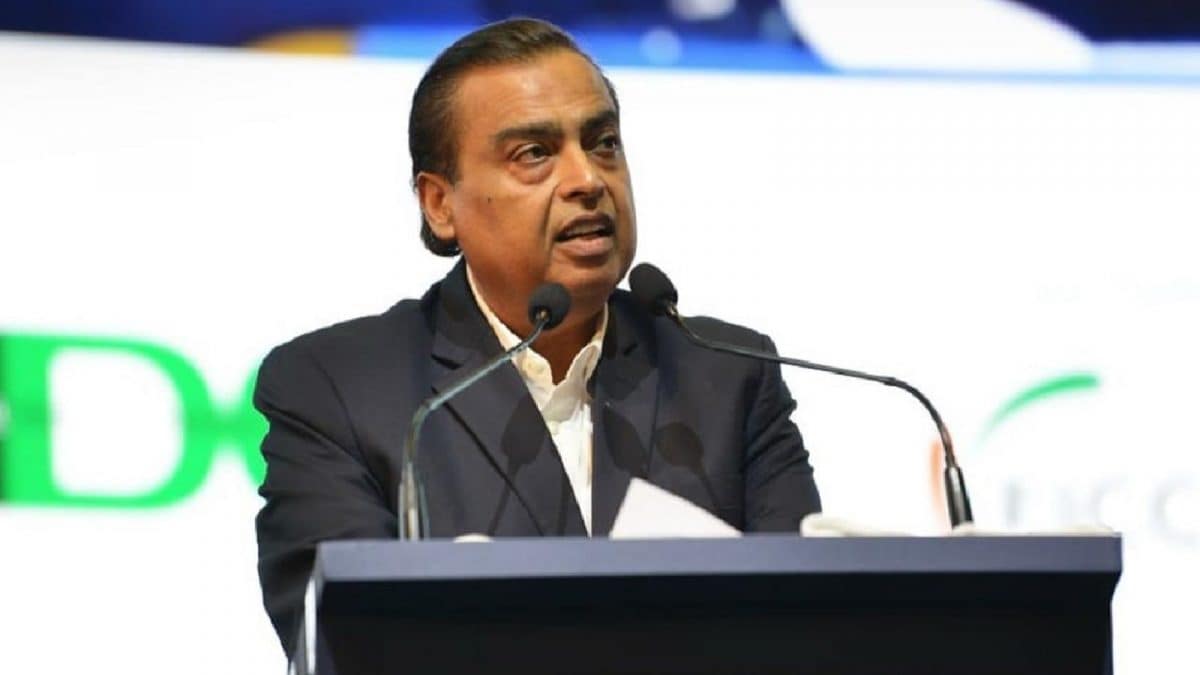
Mukesh Ambani-led Reliance Industries (RIL) on Friday reported a 10% year-on-year growth in its consolidated Q2 net profit at Rs 18,165 crore
Reliance Q2 Results
Reliance Industries Ltd posted a 14.3 percent rise in quarterly net profit to Rs 22,092 crore (pre-minority interest), helped by improved refining margins and steady expansion in its retail and digital services businesses. Consolidated revenue rose 10 percent from a year earlier to Rs 2.84 lakh crore, led by the consumer-facing segments.
Consolidated EBITDA stood at Rs 50,367 crore, up 14.6 percent from a year earlier, led by growth in the oil-to-chemicals (O2C), retail, and digital services businesses. Profit before tax rose 16.3 percent to Rs 29,124 crore. Capex for the quarter was higher at Rs 40,010 crore, which was fully covered by strong internal cash flows, with cash profit of Rs 40,778 crore.
Net debt remained largely stable at Rs 1.19 lakh crore as of September 30 compared with Rs 1.18 lakh crore as of June 30. Reliance said broad-based growth in consumer businesses, together with improved refining margins and continued thrust on domestic fuel retailing operations, helped deliver a robust consolidated performance during the quarter.
Commenting on the earnings, Mukesh D. Ambani, Chairman and Managing Director, Reliance Industries, said: “Reliance delivered a robust performance during 2QFY26 led by strong contribution from O2C, Jio and Retail businesses. Consolidated EBITDA registered 14.6% growth on a YoY basis, reflecting agile business operations, a domestic-focused portfolio and structural growth in the Indian economy. Digital services business continues to scale up with positive momentum in subscriber addition across homes and mobility services, driven by Jio’s network and technology leadership.”
Oil-to-chemicals (O2C)
O2C EBITDA grew 20.9 percent to Rs 15,008 crore, benefiting from a sharp rebound in transportation fuel cracks (up 22–37 percent) and improvement in polymer margins (up 5–8 percent), though partly constrained by weak polyester chain deltas. Segment performance was also supported by sustained higher volumes in domestic fuel retailing operations. Production meant for sale during the quarter rose 2.3 percent to 18.1 million tonnes.
The O2C business delivered its highest-ever quarterly throughput of 20.8 million tonnes, up 3 percent from a year earlier. Jio-bp continued to expand its presence in domestic fuel retail, with the network crossing the 2,000-outlet mark to reach 2,057 as of September 30, adding 236 outlets over the past year.
The Oil & Gas segment recorded EBITDA of Rs 5,002 crore, down 5.4 percent from a year earlier, with margins at 82.6 percent, lower by 240 basis points. The decline was due to lower revenues and higher operating costs arising from periodic maintenance activity. KGD6 sales volumes fell due to the natural decline in gas production, while lower CBM gas and crude price realisations also impacted earnings.
The effect was partially offset by improved gas price realisation for KG D6 and higher CBM volumes. Average KGD6 gas production was 26.1 MMSCMD, with oil and condensate output of about 18,746 barrels per day.
Digital Services
Digital Services revenue increased 15 percent from a year earlier to Rs 42,652 crore, led by continued expansion of the subscriber base and improvement in average revenue per user (ARPU). Segment EBITDA grew 17.7 percent to Rs 18,757 crore, with a 140-basis-point expansion in margin.
Jio’s 5G subscriber base rose to 234 million, while total home connections reached 22.7 million, with more than one million homes added each month during the quarter. JioAirFiber continued to demonstrate global leadership with about 9.5 million subscribers. ARPU improved 8.4 percent to Rs 211.4.
JioStar delivered a robust performance, reporting EBITDA of Rs 1,738 crore and PAT of Rs 1,322 crore, with an EBITDA margin of 28.1%.
Retail
Revenue for the retail business grew strongly by 18 percent year-on-year to Rs 90,018 crore, with significant contributions from all formats. Grocery and Fashion & Lifestyle delivered market-leading performance, growing 23 percent and 22 percent, respectively. Segment EBITDA rose 16.5 percent to Rs 6,816 crore, driven by higher revenues with a favourable mix and improvement in store operating metrics. The business continues to expand its footprint, with 19,821 stores spanning 77.8 million sq. ft. of operational area.
Disclaimer: Network18 and TV18 – the companies that operate news18.com – are controlled by Independent Media Trust, of which Reliance Industries is the sole beneficiary.

A team of writers and reporters decodes vast terms of personal finance and making money matters simpler for you. From latest initial public offerings (IPOs) in the market to best investment options, we cover al…Read More
A team of writers and reporters decodes vast terms of personal finance and making money matters simpler for you. From latest initial public offerings (IPOs) in the market to best investment options, we cover al… Read More
October 17, 2025, 19:51 IST
Read More







Ben Johns comes over to the right side to hit a dink shot against Anna Bright and Hayden Patriquine in the 2026 PPA Carvana Mesa Cup finals match of the Pro Mixed Doubles Division at Arizona Athletic Grounds on February 22, 2026 in Mesa, Arizona.
Bruce Yeung | Getty Images
Pickleball Inc., the new parent company of Major League Pickleball and the PPA Tour, said Friday it has raised a record $225 million in new investment, as the paddle sport continues its rapid growth trajectory.
The latest investment comes from Apollo Global Management’s newly created sports fund, Apollo Sports Capital, and Dundon Capital Partners, owned by billionaire Tom Dundon. Dundon is an owner of the Portland Trail Blazers NBA team and the Carolina Hurricanes NHL team and was an early investor in pickleball.
The fresh funds bring the total investment in Pickleball Inc. to $315 million, as investors continue to look at emerging sports as a place to park their money. The raise values Pickleball Inc. at $750 million, according to a person familiar with the matter, who asked to remain unnamed because they were not authorized to speak publicly about the company’s valuation.
The deal also includes rolling up several pickleball assets under the Pickleball Inc. umbrella, creating what the company called the largest pickleball ecosystem to date.
Pickleball Inc. will take on a portfolio of pickleball assets previously owned by Dundon, including Pickleball Central, a leading site for pickleball equipment founded in 2006. The portfolio also includes PickleballTournaments.com, software that powers thousands of tournaments across all levels of play, as well as Just Courts, a pickleball court installer.
Pickleball Inc.’s newly merged business verticals combined generated over $140 million in 2025 revenue, the company said.
In a release, MLP and PPA Tour CEO Connor Pardoe called the new investment a “seismic day” for pickleball’s rapidly growing business at all levels.
“This investment allows us to fully integrate the sport into one cohesive ecosystem – uniting professional pickleball, consumer goods, technology, and media under a single, unified platform,” Pardoe said.
Dundon and the Pardoe family will remain majority shareholders in the business after the investment.
Pickleball has exploded in popularity in recent years, with more than 24 million U.S. players participating in 2025, making it the fastest growing sport in the country over the last three years, according to the Sports & Fitness Industry Association’s Annual Report.
At the professional level, the MLP and PPA Tour have seen major growth with a combined $30 million in sponsorship revenue in 2025 and $60 million in combined top line revenue for 2025, according to the United Pickleball Association, which operates both leagues. The MLP and PPA Tour are projecting $74 million in combined revenue in 2026.
The new capital for Pickleball Inc. will be used to further integrate the pickleball business at all levels of play and create a streamlined pickleball ecosystem, the company said.
“This capital raise will allow us to expand our focus into new and scalable opportunities like content, media, and the development of infrastructure to support our fast growing events,” MLP Commissioner Samin Odhwani said in a statement. “The continued and dynamic year-over-year growth data has proven without doubt that pickleball is no longer an emerging sport, and is instead quickly becoming the next tier one sport in America.”
Business
Gross GST collections hit record high of Rs 2.43 lakh crore in April 2026 despite US-Iran war concerns – The Times of India

GST collections: The gross Goods and Services Tax (GST) collections touched a new high in April, reflecting continued strength in economic activity even in the midst of the ongoing Middle East conflict.According to government data released on Friday, gross GST revenue for the month reached a record Rs 2.43 lakh crore, registering an 8.7% increase over Rs 2.23 lakh crore collected in April last year.After accounting for refunds, net GST collections stood at Rs 2.11 lakh crore, up 7.3% from the corresponding period a year earlier.Refund disbursements during the month rose sharply, climbing 19.3% year-on-year to Rs 31,793 crore.As a result, net GST revenue for April 2026 came in at Rs 2,10,909 crore.Robust revenues from imports played a major role in driving GST collections during the month. Gross receipts from imports climbed sharply by 25.8% to Rs 57,580 crore, while gross domestic GST collections recorded a comparatively moderate increase of 4.3%, reaching Rs 1.85 lakh crore.The net GST revenue from imports surged 42.9%, significantly outpacing the marginal 0.3% rise in net domestic collections.The April performance follows a strong showing in March, when net GST collections stood at Rs 1.78 lakh crore, up 8.2% from a year earlier. Gross collections in that month had also crossed the Rs 2 lakh crore mark.For the full financial year 2025-26, gross GST revenue increased 8.3% year-on-year to Rs 22.27 lakh crore. Net GST collections for the year rose 7.1% to Rs 19.34 lakh crore.Major contributors such as Maharashtra, Karnataka and Gujarat continued to account for a substantial share of total collections.

NEW DELHI: Government on Friday increased the price Aviation Turbine Fuel for international airlines by 5 per cent.This is the second straight monthly rise amid the global energy crisis.However, there is no change in the ATF price for domestic airlines.ATF prices have been increased by USD 76.55 per kilolitre, or 5.33 per cent, to USD 1511.86 per kl in Delhi, home, according to state-owned oil firms.Under this mechanism, foreign airlines and other carriers will pay market-linked rates, while prices for domestic airlines have been moderated, new agency PTI reported, citing sources.Earlier on April 1, rates for domestic airlines were hiked by 25 per cent to Rs 104,927.18 per kl.Jet fuel prices were deregulated more than two decades ago and have since been linked to international benchmark rates under a written understanding with airlines.However, a surge in global energy prices triggered by the West Asia crisis led to what sources described as the steepest-ever hike in ATF rates, prompting the government and state-run oil companies to take a calibrated approach.Jet fuel prices were deregulated more than two decades ago and have since been linked to international benchmark rates under a written understanding with airlines.


US’ Gap partners with Victoria Beckham on timeless wardrobe essentials

Graduation Gifts That Aren’t Totally Cringe

Canada’s Lululemon appoints Esi Eggleston Bracey to board of directors

-

 Sports1 week ago
PSL 11: Hyderabad Kingsmen opt to field after winning toss against Multan Sultans
-
 Business1 week ago
Trump administration in advanced talks for a rescue package for Spirit Airlines, source says
-

 Entertainment1 week ago
Anne Hathaway shares major news about ‘Princess Diaries 3’
-
 Business1 week ago
Gold prices in Pakistan Today – April 23, 2026 | The Express Tribune
-

 Fashion1 week ago
Canada forms new advisory committee to strengthen US trade relations
-

 Entertainment1 week ago
Mike Vrabel to miss Patriots’ final NFL draft day —here’s why
-

 Fashion1 week ago
US CBP to soon launch electronic system for importers to claim refunds
-
 Business1 week ago
Iran war: Trump sanctions waiver or not – why India continues to buy Russian oil – The Times of India