

Business
Republicans push Obamacare tax credit alternatives as enrollment deadline looms


An Obamacare sign is displayed outside an insurance agency on Nov. 12, 2025 in Miami, Florida.
Joe Raedle | Getty Images
With enhanced Obamacare tax credits set to expire at the end of the year, Republicans are proposing new alternatives aimed at lowering the cost of health care.
Their window for doing so is rapidly closing — and leaving middle-class Americans uncertain in the balance.
The White House is expected to make an announcement this week addressing efforts to either renew or replace the Affordable Care Act enhanced premium tax credits, according to Treasury Secretary Scott Bessent. However, MS Now late reported an announcement has been delayed in part due to congressional backlash, according to two White House officials.
The news could not come soon enough for Shana Verstegen and her husband. The couple buys insurance through the ACA exchange and is facing a 50% premium increase for their family plan in 2026 if the enhanced tax credits are not renewed by Congress.
“We have been looking at our expenses, and it’s tough now because everything’s really expensive already,” with little room to cut costs,” said Verstegen, a fitness instructor from Madison, Wisconsin. “We’re looking at a few activities our kids do and things like that.”
Verstegen traveled to Washington during the government shutdown to advocate for extending financial support for middle-class ACA enrollees like her family. Since the government reopened, she’s been watching the discussions on Capitol Hill around so-called Obamacare tax credits warily.
“I’m thrilled that lawmakers are finally at the table and talking about ways to make health care more affordable. What I’m frustrated about is there is less than a month to do something,” she said.
Senate Majority Leader John Thune, R-S.D., promised Democrats the chamber would vote on extending the enhanced tax credits in mid-December as part of a deal to end a record-long government shutdown.
Dec. 15 is the deadline for the majority of Americans to sign up for 2026 ACA coverage, and as Congress headed home for the Thanksgiving recess, there was no consensus on Obamacare credit funding or what those subsidies would look like.
GOP proposes cash payments
Some Republicans in the House signed a bipartisan letter urging Senate leadership to have negotiations that include members from both chambers to find a way to extend the enhanced tax credits for a year.
The subsidies, enacted during the Covid pandemic, provide aid for middle-class enrollees by capping their portion of premium payments at 8.5% of income.
The cost of extending the tax credits is more than $30 billion per year, according to the nonpartisan Government Accountability Office.
President Donald Trump has opposed an extension of the Obamacare tax credits that he says fund the “money sucking” insurance industry, stating in a post on his Truth Social platform, “The only healthcare I will support or approve is sending the money directly back to the people.”
Sen. Rick Scott, R-Fla., has introduced a bill that would give ACA enrollees cash through a Health Savings Account called a Trump Health Freedom Account, which they could use to pay for both premiums and health expenses. According to the bill, the payments would be effective starting Jan. 1.
The current ACA subsidies are based on mid-tier Silver plans as the benchmark coverage option. Those plans have an average deductible of just over $5,000, according to health policy organization KFF.
Sen. Bill Cassidy, R-La., has proposed making the lower-tier Bronze plan the benchmark for enhanced subsidies, while providing cash to offset the higher Bronze plan deductible. According to KFF, Bronze plan deductibles average more than $7,000.
Cassidy told CNBC’s “Squawk Box” on Monday his proposal would provide subsidies for the lower-tier plan, limiting out-of-pocket premium costs at levels similar to those under a Biden-era proposal.
“But we’re using a cheaper policy so it’s easier to do,” he explained. “That gives us savings to put into a Health Savings Account.”
Trading down from a benchmark Silver plan to a Bronze plan without the enhanced tax credits would not save enrollees much money.
A 60-year-old couple in Florida earning $86,000, for example, would qualify for a $0 premium on a 2026 Bronze plan with an enhanced tax credit, according to a premium calculator from KFF. Without the credit, the same plan would cost $2,169 per month, or more than $26,000 per year.
Racing the clock
With Congress out for the Thanksgiving recess, there is less than a month left of the legislative calendar.
Getting an HSA funding measure not only passed but implemented for the start of coverage next year may not be possible, according to Sabrina Corlette, co-director of the Center on Health Insurance Reforms at Georgetown University.
“Conceptually, what they’re talking about is a radical restructuring of how the ACA marketplaces and tax credits work, and we literally are days away from when people have to pay their January premiums in order to effectuate their coverage,” Corlette said.
Oscar Health CEO Mark Bertolini said a national plan in which the government or employers give consumers cash to buy their own coverage in the marketplace is something he supports in the long run, but extending the enhanced tax credits makes the most sense now.
“I think that’s how they’re going to solve this problem, so they get past the midterms, and they have time to put together a fulsome plan,” Bertolini said.
Enrollees face Dec. 15 deadline
Regardless of whether the tax credits are extended, the deadline to sign up for 2026 coverage remains firm for now. For those enrolling on the healthcare.gov exchange, it is just three weeks away. On some state-run exchanges such as those for California and Massachusetts, the deadline is Jan. 31.
Obamacare premiums for 2026 have spiked as insurers expect some enrollees to drop of out of the market, in part because of the uncertainty over the extension of the enhanced premium tax credits.
Oscar Health has been working with insurance brokers to reach out to its members about more affordable plans.
“We believed, out of the people affected by enhanced subsidies, that we could sell to 85% of them. And right now, what we’re seeing says maybe more,” said Bertolini.
KFF’s executive vice president for health policy, Larry Levitt, said enrollees should consider signing up by the Dec. 15 deadline even if Congress does not manage to pass a premium relief measure before the end of the year, because the Trump administration has tightened rules for signing up outside of open enrollment.
“The premiums are still month-to-month, so you’re committing to one month’s premium. If it’s unaffordable, you can always drop out, but you can’t come back in if you don’t sign up,” Levitt said.







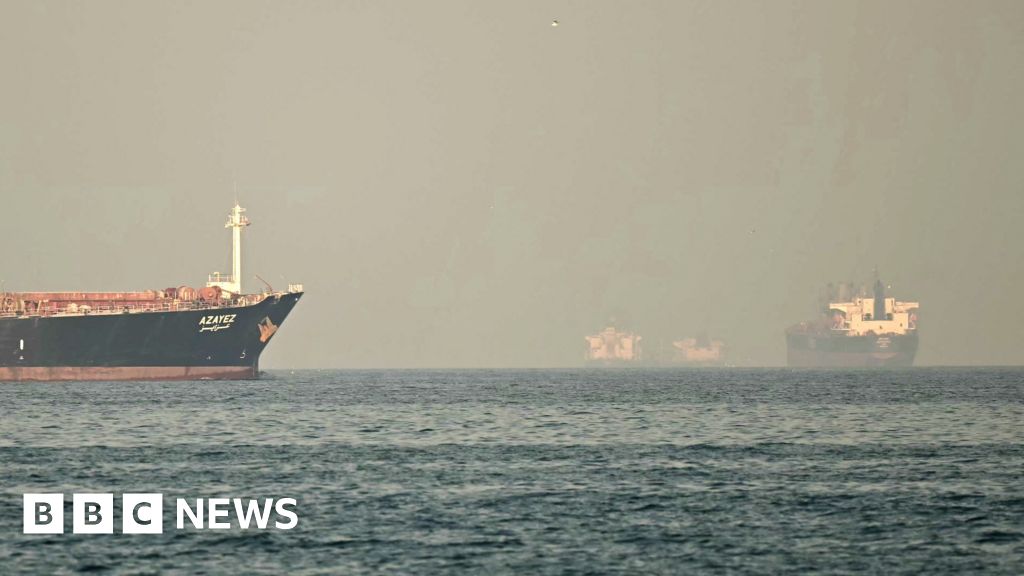
International shipping is said to have come to a standstill at the strait’s entrance, with fears of disruption already pushing up global oil prices.
Source link
Business
Khamenei dead, Middle East on edge: What will be the implications of Trump’s ‘Epic fury’ on stock markets, gold & oil? – The Times of India

The global markets are in for a phase of enhanced turmoil and uncertainty! The ongoing tensions in the Middle East after US and Israel’s strikes on Iran and Ali Khamenei’s death may have investors running for cover – looking for an asset class that is safer.During the night of February 27–28, the United States and Israel carried out joint aerial strikes on Iran as part of “Operation Epic Fury.” Statements by President Trump openly referring to regime change suggest that the confrontation could evolve into a prolonged campaign rather than remain a limited exchange, say market analysts at Franklin Templeton Institute.What does the situation mean for stock markets, energy markets (oil), gold and other asset classes? Here’s what Franklin Templeton Institute analysts have to say:From a market perspective, the key uncertainty is whether the conflict remains confined to direct military engagement or expands into disruptions affecting energy supplies and logistics networks, which would sustain a higher and more persistent risk premium.At the centre of the ongoing uncertainty from a global market and trade perspective is the Strait of Hormuz. While a complete blockade would carry severe consequences for Iran itself, the country has the capability to disrupt maritime traffic through tactics such as vessel harassment, seizures, drone activity, cyber operations, or the use of proxy forces.
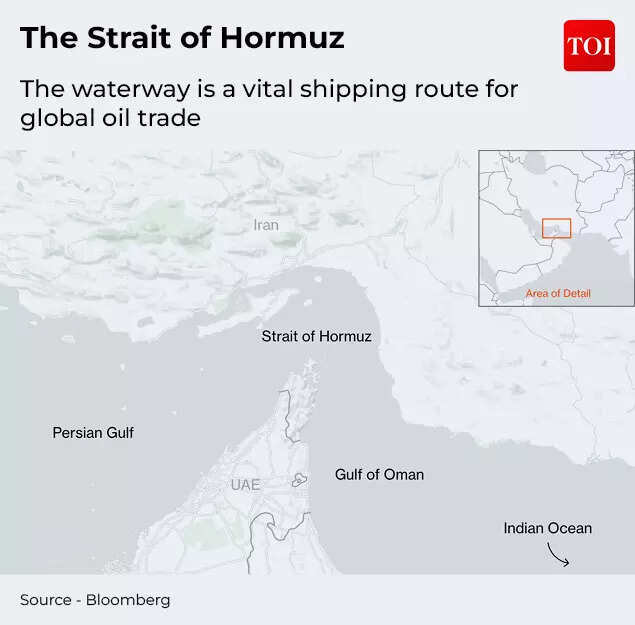
Strait of Hormuz
The most immediate economic impact is expected in energy markets, where crude oil and natural gas prices are likely to move higher, they say. Such actions, feel analysts, will keep geopolitical risk premiums at high levels. In 2024, approximately 20 million barrels per day moved through the Strait of Hormuz, which is around one-fifth of global petroleum liquids consumption. Even a limited interference – which can be caused by delays, rerouting, or isolated seizure – can push prices higher through increased risk perception well before any actual shortages emerge.Liquefied natural gas should not be overlooked in this context. Qatar has the world’s third-largest LNG export capacity, and roughly one-fifth of global LNG shipments pass through the Strait of Hormuz, largely consisting of Qatari exports. As a result, shipping risks in the region affect gas markets as significantly as oil markets.Also Read | US-Israel strikes on Iran: How will India be hit by Strait of Hormuz closure? ExplainedShipping expenses have already begun to rise, with insurance costs acting as a major driver. Insurers have started issuing cancellation notices and revising war-risk premiums for voyages in the Gulf region. Some routes have reportedly seen premium increases of up to about 50%, while earlier periods of tension recorded rises exceeding 60% on important trade corridors. These developments effectively tighten supply conditions even when production levels remain unchanged.The possibility of the conflict spreading across the region is increasing. Franklin Templeton Institute analysts are of the view that across global financial markets, the immediate response to such shocks is usually driven by adjustments in risk perception rather than by underlying economic changes. “The initial market reaction for this type of event would typically see Treasury yields move lower and equities lower—mostly a risk-premium repricing. Impacts on activity/earnings may be delayed and uneven. The US dollar reaction is not guaranteed; gold tends to benefit while bitcoin has been trading like a risk asset (i.e., down with equities), reinforcing that it’s not typically a reliable hedge/diversifier in geopolitical drawdowns,” say Franklin Templeton Institute analysts.However, they note that experience shows markets often come to view geopolitical disruptions as temporary. Initial spikes in risk premiums are frequently followed by the realization that the overall effect on corporate profitability is limited. The duration of the conflict, developments in shipping and insurance costs, and the eventual resolution will be more important than the initial headlines.“We would not yet label this a clean buy-the-dip setup—duration, shipping/insurance mechanics, and the endgame matter more than the first headline,” they say.From an investment perspective, the near-term outlook favours sectors linked to energy markets, as well as companies benefiting from higher shipping and insurance costs, along with defence-related industries, the analysts say. At the same time, caution is warranted toward emerging markets that depend heavily on energy imports and toward cyclical sectors sensitive to fuel and logistics costs, including airlines and certain industrial segments.“For protection, we prefer oil upside/volatility structures and selective gold exposure over broad equity shorts—the path will be driven more by shipping/insurance reality than by the new cycle,” they conclude.
Business
Crude oil prices in focus: OPEC+ increases output by 206,000 bpd amid Middle East tensions – The Times of India
OPEC+ on Sunday announced a higher-than-expected increase in oil production quotas, days after US and Israeli strikes on Tehran triggered Iranian retaliation across the Middle East, according to AFP.The oil producers’ group, which includes Saudi Arabia, Russia and several Gulf states affected by the escalation, said it had “agreed on a production adjustment of 206 thousand barrels per day”.“This adjustment will be implemented in April,” OPEC+ said in a statement.While the cartel did not directly refer to the Iran conflict, it cited “a steady global economic outlook and current healthy market fundamentals” as the rationale behind the output increase.The move comes amid heightened geopolitical tensions in the Middle East, a region critical to global crude oil supply.
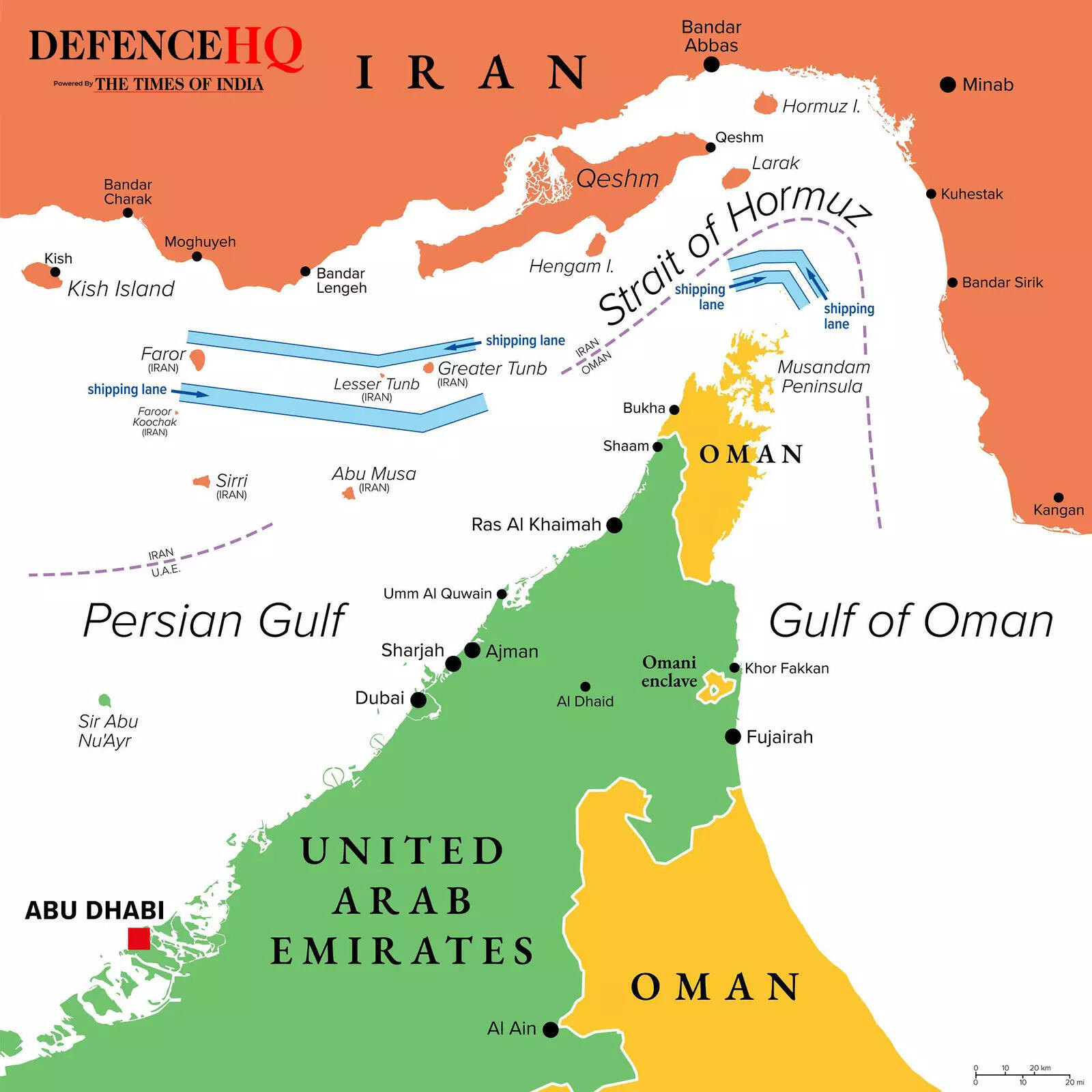
The announcement did not directly reference the outbreak of the Iran conflict, instead attributing the decision to “a steady global economic outlook and current healthy market fundamentals”.Before the meeting, analysts had projected a more modest increase of 137,000 barrels per day.However, Jorge Leon, an analyst at Rystad Energy, cautioned that the agreed hike may not be sufficient to offset the potential impact of escalating tensions on crude oil markets.Leon highlighted the risk of disruption in the Strait of Hormuz, a critical waterway through which nearly a quarter of the world’s seaborne oil supplies transit.Iran’s Revolutionary Guards have reportedly contacted vessels to declare the strait closed. Iranian state television on Sunday said an oil tanker attempting to “illegally” pass through the strait was struck and was sinking, broadcasting footage of a burning tanker at sea.“If oil cannot move through Hormuz, an extra 206,000 barrels per day does very little to ease the market,” Leon said, adding that “logistics and transit risk matter more than production targets right now”.He said the OPEC+ move “is unlikely to calm markets”, noting that “prices will respond to developments in the Gulf and the status of shipping flows, not to a relatively small increase in output.”Apart from Russia and Saudi Arabia, the V8 group includes Kuwait, Oman, Iraq and the United Arab Emirates — all of which were targeted by Iranian attacks for a second consecutive day on Sunday. Algeria and Kazakhstan are also part of the group.


NAACP Image Award host Deon Cole issues Tourette warning after BAFTAs

Late to set-piece party, Liverpool are making up for lost time

World reacts to martyrdom of Iran’s Supreme Leader Khamenei

Pakistan carries out precision strikes on seven militant hideouts in Afghanistan

Eye-popping rise in one year: Betting on just gold and silver for long-term wealth creation? Think again! – The Times of India

Kansas’ Darryn Peterson misses most of 2nd half with cramping

-
 Politics1 week ago
Pakistan carries out precision strikes on seven militant hideouts in Afghanistan
-
Business1 week ago
Eye-popping rise in one year: Betting on just gold and silver for long-term wealth creation? Think again! – The Times of India
-
 Sports1 week ago
Kansas’ Darryn Peterson misses most of 2nd half with cramping
-

 Tech1 week ago
These Cheap Noise-Cancelling Sony Headphones Are Even Cheaper Right Now
-

 Entertainment1 week ago
Saturday Sessions: Say She She performs "Under the Sun"
-

 Tech1 week ago
The Supreme Court’s Tariff Ruling Won’t Bring Car Prices Back to Earth
-

 Entertainment1 week ago
Viral monkey Punch makes IKEA toy global sensation: Here’s what it costs
-

 Sports1 week ago
Floyd Mayweather to come out of retirement again