

Tech
Researchers launch smoke-sensing drones that one day could fight wildfires

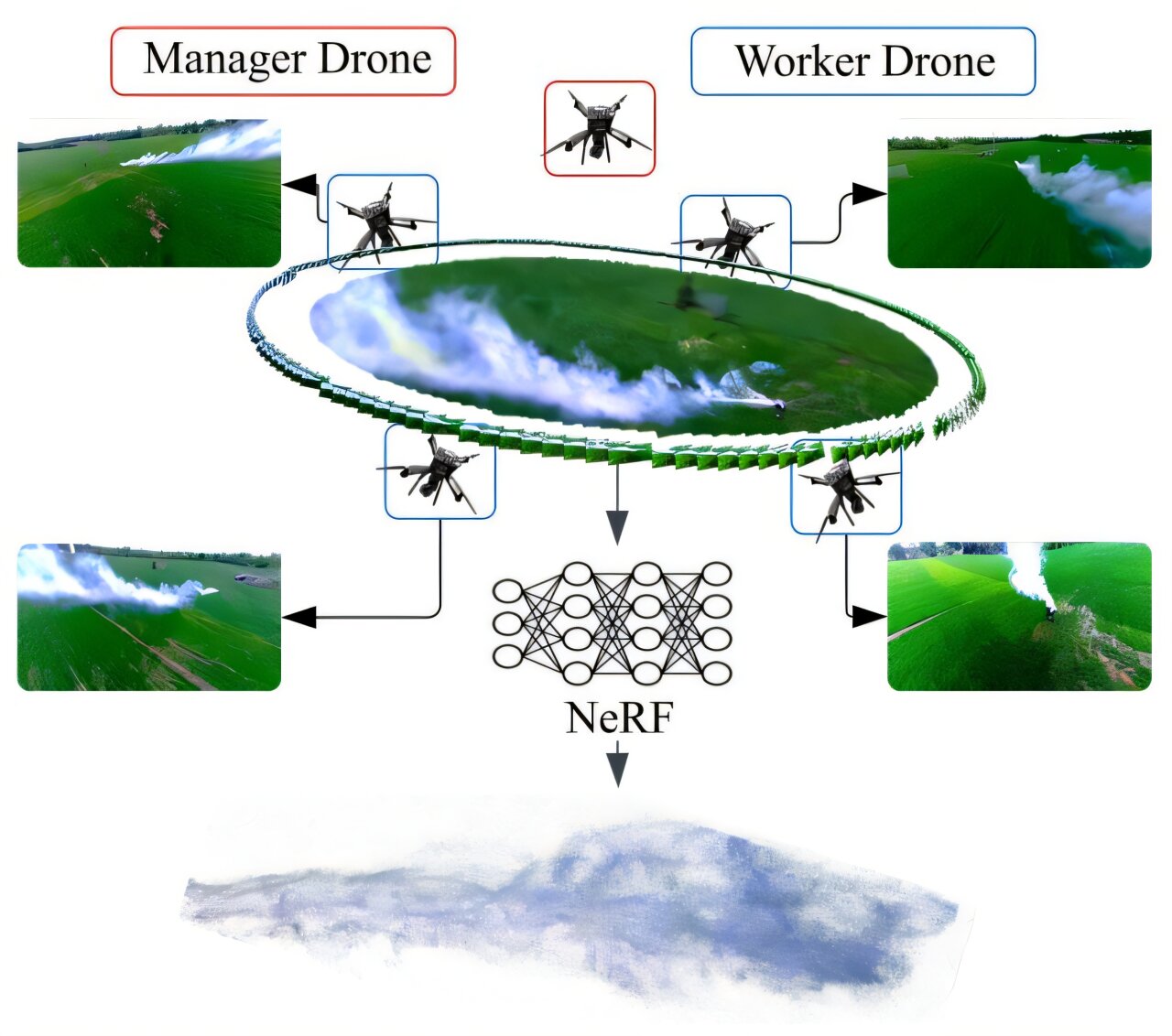
Plumes of smoke drifted up from a fire steadily taking over a 30-acre prairie at Cedar Creek Ecosystem Science Reserve, north of the Twin Cities. Amid the haze, five black drones zipped around.
More than 150 feet below the flying robots, research student Nikil Krishnakumar raised the controller in the air. The work has been published on the arXiv preprint server.
“It’s all autonomous now,” he said. “I’m not doing anything.”
The aerial robotic team’s mission: examine the smoke from the prescribed burn and send the data to a computer on the ground. The computer then analyzes the smoke data to understand the fire’s flow patterns, Krishnakumar said.
The University of Minnesota project is the latest research into using artificial intelligence to detect and track wildfires. The work has become more urgent as climate change is expected to make wildfires, like those that devastated Manitoba this summer, larger and more frequent.
NOAA’s Next-Generation Fire System consists of two satellites 22,000 miles above the equator that detect new sources of heat and report them to local National Weather Service stations and its online dashboard. Earlier this year, the satellites were credited with spotting 19 fires in Oklahoma and preventing $850 million in structure and property damage, according to the agency.
In Minnesota, Xcel has installed tower-mounted, AI-equipped high-definition cameras near power lines in Mankato and Clear Lake. Thirty-six more are planned. When a fire is detected, local fire departments are notified.
Krishnakumar and other members of the U’s research team performed their 11th trial at the U’s field station in East Bethel on Friday, with notable improvements from their previous attempts.
The first-generation drones crashed several times during previous field tests, Krishnakumar said. The team upgraded sensors for better data collecting and autonomous steering, and improved the drones’ propulsion by making them bigger and fitting them with better propellers.
“The big picture is one day these drones can be used to understand where the wildfires go, how they behave and to perform large-scale surveillance of wildfires,” Krishnakumar said. “The major challenge we’re trying to understand is how far these smoke particles can be transported and the altitude at which they can go.”
Understanding the behavior of particles like embers can help firefighters prevent wildfires from spreading, said Yue Weng, another researcher on the team.
Though the project has a way to go before it can be used for large-scale wildfires, the research represents a significant step toward using fully autonomous drone systems for emergency response and scientific research missions, said Jiarong Hong, professor at the University of Minnesota’s Department of Mechanical Engineering.
This year, 1,200 wildfires have been recorded in Minnesota so far, according to the state Department of Natural Resources. On a smaller scale, the technology could also be used to better manage prescribed burns, Hong said. Between 2012 and 2021, prescribed burns that went out of control caused 43 wildfires nationwide, according to the Associated Press.
“To characterize and measure particle transport in the real field is very challenging. Traditionally, people do small-scale lab experiments and study this at a fundamental level,” Hong said. “Such an experiment doesn’t capture the complexity involved in the real field environment.”
Smoke changes direction with the wind. Deploying multiple drones—with one at the center managing the four around it—enables them to navigate in the air without human intervention, Hong said.
The 11-pound drones were custom-built by the students to autonomously collect particle data. Future improvements to the project include collecting more data and extending the battery life of the drones. The drones are currently able to operate in the air for about 25 minutes, less in colder temperatures, Hong said.
“We have drones flying out at different heights, so we can actually measure the particle composition at different elevations at the same time,” Hong said.
“Particles are in a very irregular shape and some of them are porous and have varying levels of density. But we have been able to characterize their morphology and shape for the very first time.”
More information:
Nikil Krishnakumar et al, 3D Characterization of Smoke Plume Dispersion Using Multi-View Drone Swarm, arXiv (2025). DOI: 10.48550/arxiv.2505.06638
2025 The Minnesota Star Tribune. Distributed by Tribune Content Agency, LLC
Citation:
Researchers launch smoke-sensing drones that one day could fight wildfires (2025, November 3)
retrieved 3 November 2025
from https://techxplore.com/news/2025-11-drones-day-wildfires.html
This document is subject to copyright. Apart from any fair dealing for the purpose of private study or research, no
part may be reproduced without the written permission. The content is provided for information purposes only.











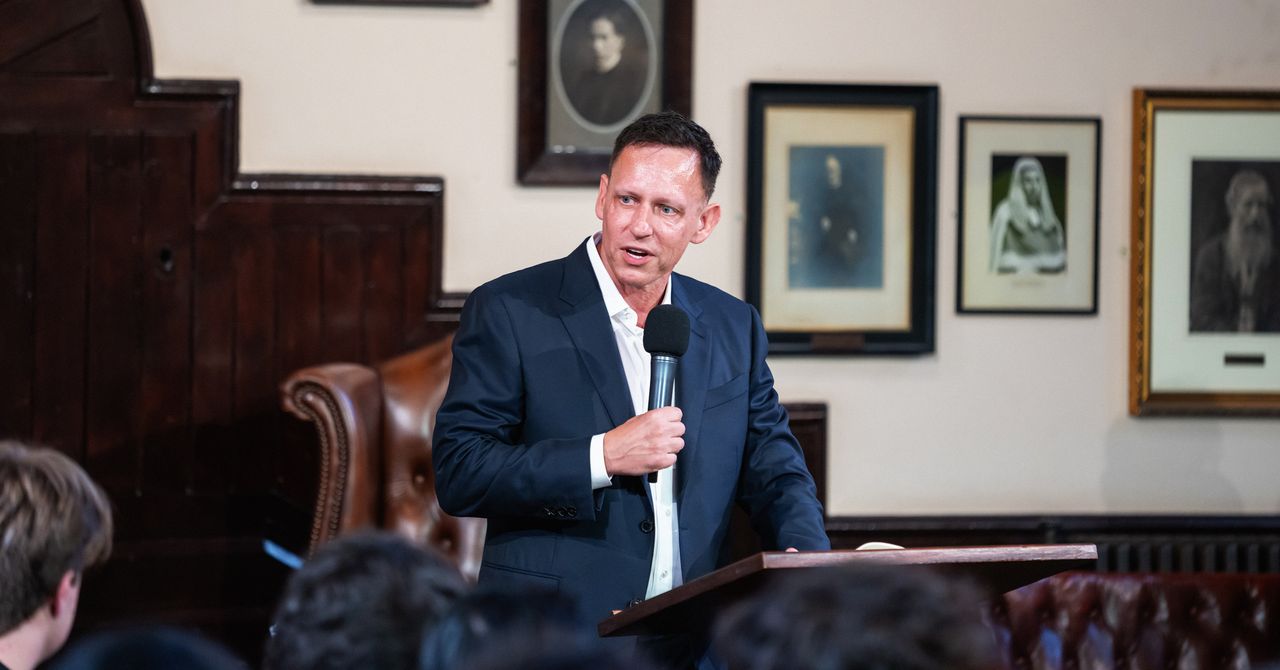
Peter Thiel—the billionaire venture capitalist, PayPal and Palantir cofounder, and outspoken commentator on all matters relating to the “Antichrist”—appears at least 2,200 times in the latest batch of files released by the Department of Justice related to convicted sex offender and disgraced financier Jeffrey Epstein.
The tranche of records demonstrate how Epstein managed to cultivate an extensive network of wealthy and influential figures in Silicon Valley. A number of them, including Thiel, continued to interact with Epstein even after his 2008 guilty plea for solicitation of prostitution and of procurement of minors to engage in prostitution.
The new files show that Thiel arranged to meet with Epstein several times between 2014 and 2017. “What are you up to on Friday?” Thiel wrote to Epstein on April 5, 2016. “Should we try for lunch?” The bulk of the communications between the two men in the data dump concern scheduling meals, calls, and meetings with one another. Thiel did not immediately return a request for comment from WIRED.
One piece of correspondence stands out for being particularly bizarre. On February 3, 2016, Thiel’s former chief of staff and senior executive assistant, Alisa Bekins, sent an email with the subject line “Meeting – Feb 4 – 9:30 AM – Peter Thiel dietary restrictions – CONFIDENTIAL.” The initial recipient of the email is redacted, but it was later forwarded directly to Epstein.
The contents of the message are also redacted in at least one version of the email chain uploaded by the Justice Department on Friday. However, two other files from what appears to be the same set of messages have less information redacted.
In one email, Bekins listed some two dozen approved kinds of sushi and animal protein, 14 approved vegetables, and 0 approved fruits for Thiel to eat. “Fresh herbs” and “olive oil” were permitted, however, ketchup, mayonnaise, and soy sauce should be avoided. Only one actual meal was explicitly outlined: “egg whites or greens/salad with some form of protein,” such as steak, which Bekins included “in the event they eat breakfast.” It’s unclear if the February 4 meeting ultimately occurred; other emails indicate Thiel got stuck in traffic on his way to meet Epstein that day.
According to a recording of an undated conversation between Epstein and former Israeli Prime Minister Ehud Barak that was also part of the files the DOJ released on Friday, Epstein told Barak that he was hoping to meet Thiel the following week. He added that he was familiar with Thiel’s company Palantir, but proceeded to spell it out loud for Barak as “Pallentier.” Epstein speculated that Thiel may put Barak on the board of Palantir, though there’s no evidence that ever occurred.
“I’ve never met Peter Thiel, and everybody says he sort of jumps around and acts really strange, like he’s on drugs,” Epstein said at one point in the audio recording, referring to Thiel. The former prime minister expressed agreement with Epstein’s assessment.
In 2015 and 2016, Epstein put $40 million in two funds managed by one of Thiel’s investment firms, Valar Ventures, according to The New York Times. Epstein and Thiel continued to communicate and were discussing meeting with one another as recently as January 2019, according to the files released by the DOJ. Epstein committed suicide in his prison cell in August of that year.
Below are Thiel’s dietary restrictions as outlined in the February 2016 email. (The following list has been reformatted slightly for clarity.)
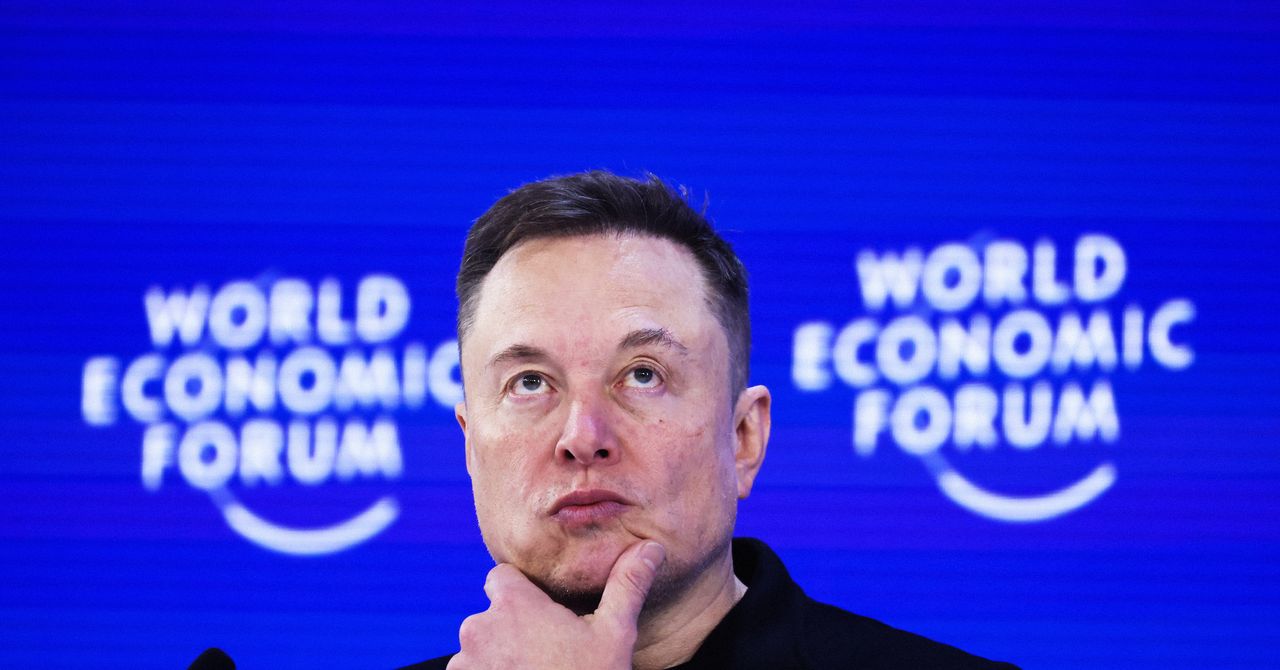
Elon Musk’s rocket and satellite company SpaceX is acquiring his AI startup xAI, the centibillionaire announced on Monday. In a blog post, Musk said the acquisition was warranted because global electricity demand for AI cannot be met with “terrestrial solutions,” and Silicon Valley will soon need to build data centers in space to power its AI ambitions.
“In the long term, space-based AI is obviously the only way to scale,” Musk wrote. “The only logical solution therefore is to transport these resource-intensive efforts to a location with vast power and space. I mean, space is called ‘space’ for a reason.”
The deal, which pulls together two of Musk’s largest private ventures, values the combined entity at $1.25 trillion, making it the most valuable private company in the world, according to a report from Bloomberg.
SpaceX was in the process of preparing to go public later this year before the xAI acquisition was announced. The space firm’s plans for an initial public offering are still on, according to Bloomberg.
In December, SpaceX told employees that it would buy insider shares in a deal that would value the rocket company at $800 billion, according to The New York Times. Last month, xAI announced that it had raised $20 billion from investors, bringing the company’s valuation to roughly $230 billion.
This isn’t the first time Musk has sought to consolidate parts of his vast business empire, which is largely privately owned and includes xAI, SpaceX, the brain interface company Neuralink, and the tunnel transportation firm the Boring Company.
Last year, xAI acquired Musk’s social media platform, X, formerly known as Twitter, in a deal that valued the combined entity at more than $110 billion. Since then, xAI’s core product, Grok, has become further integrated into the social media platform. Grok is featured prominently in various X features, and Musk has claimed the app’s content-recommendation algorithm is powered by xAI’s technology.
A decade ago, Musk also used shares of his electric car company Tesla to purchase SolarCity, a renewable energy firm that was run at the time by cousin Lyndon Rive.
The xAI acquisition demonstrates how Musk can use his expansive network of companies to help power his own often grandiose visions of the future. Elon Musk said in the blog post that SpaceX will immediately focus on launching satellites into space to power AI development on Earth, but eventually, the space-based data centers he envisions building could power civilizations on other planets, such as Mars.
“This marks not just the next chapter, but the next book in SpaceX and xAI’s mission: scaling to make a sentient sun to understand the Universe and extend the light of consciousness to the stars,” Musk said in the blog post.

Since last March, the Department of Health and Human Services has been using AI tools from Palantir to screen and audit grants, grant applications, and job descriptions for noncompliance with President Donald Trump’s executive orders targeting “gender ideology” and anything related to diversity, equity, and inclusion (DEI), according to a recently published inventory of all use cases HHS had for AI in 2025.
Neither Palantir nor HHS has publicly announced that the company’s software was being used for these purposes. During the first year of Trump’s second term, Palantir earned more than $35 million in payments and obligations from HHS alone. None of the descriptions for these transactions mention this work targeting DEI or “gender ideology.”
The audits have been taking place within HHS’s Administration for Children and Families (ACF), which funds family and child welfare and oversees the foster and adoption systems. Palantir is the sole contractor charged with making a list of “position descriptions that may need to be adjusted for alignment with recent executive orders.”
In addition to Palantir, the startup Credal AI—which was founded by two Palantir alumni—helped ACF audit “existing grants and new grant applications.” The “AI-based” grant review process, the inventory says, “reviews application submission files and generates initial flags and priorities for discussion.” All relevant information is then routed to the ACF Program Office for final review.
ACF staffers ultimately review any job descriptions, grants, and grant applications that are flagged by AI during a “final review” stage, according to the inventory. It also says that these particular AI use cases are currently “deployed” within ACF, meaning that they are actively being used at the agency.
Last year, ACF paid Credal AI about $750,000 to provide the company’s “Tech Enterprise Generative Artificial Intelligence (GenAI) Platform,” but the payment descriptions in the Federal Register do not mention DEI or “gender ideology.”
HHS, ACF, Palantir, and Credal AI did not return WIRED’s requests for comment.
The executive orders—Executive Order 14151, “Ending Radical and Wasteful Government DEI Programs and Preferencing,” and Executive Order 14168, “Defending Women From Gender Ideology Extremism and Restoring Biological Truth to the Federal Government”—were both issued on Trump’s first day in office last year.
The first of these orders demands an end to any policies, programs, contracts, grants that mention or concern DEIA, DEI, “equity,” or “environmental justice,” and charges the Office of Management and Budget, the Office of Personnel Management, and the attorney general with leading these efforts.
The second order demands that all “interpretation of and application” of federal laws and policies define “sex” as an “immutable biological classification” and define the only genders as “male” and “female.” It deems “gender ideology” and “gender identity” to be “false” and “disconnected from biological reality.” It also says that no federal funds can be used “to promote gender ideology.”
“Each agency shall assess grant conditions and grantee preferences and ensure grant funds do not promote gender ideology,” it reads.
The consequences of Executive Order 14151, targeting DEI, and Executive Order 14168, targeting “gender ideology,” have been felt deeply throughout the country over the past year.
Early last year, the National Science Foundation started to flag any research that contained terms associated with DEI—including relatively general terms, like “female,” “inclusion,” “systemic,” or “underrepresented”—and place it under official review. The Centers for Disease Control and Prevention began retracting or pausing research that mentioned terms like “LGBT,” “transsexual,” or “nonbinary,” and stopped processing any data related to transgender people. Last July, the Substance Abuse and Mental Health Services Administration removed an LGBTQ youth service line offered by the 988 Suicide & Crisis Lifeline.

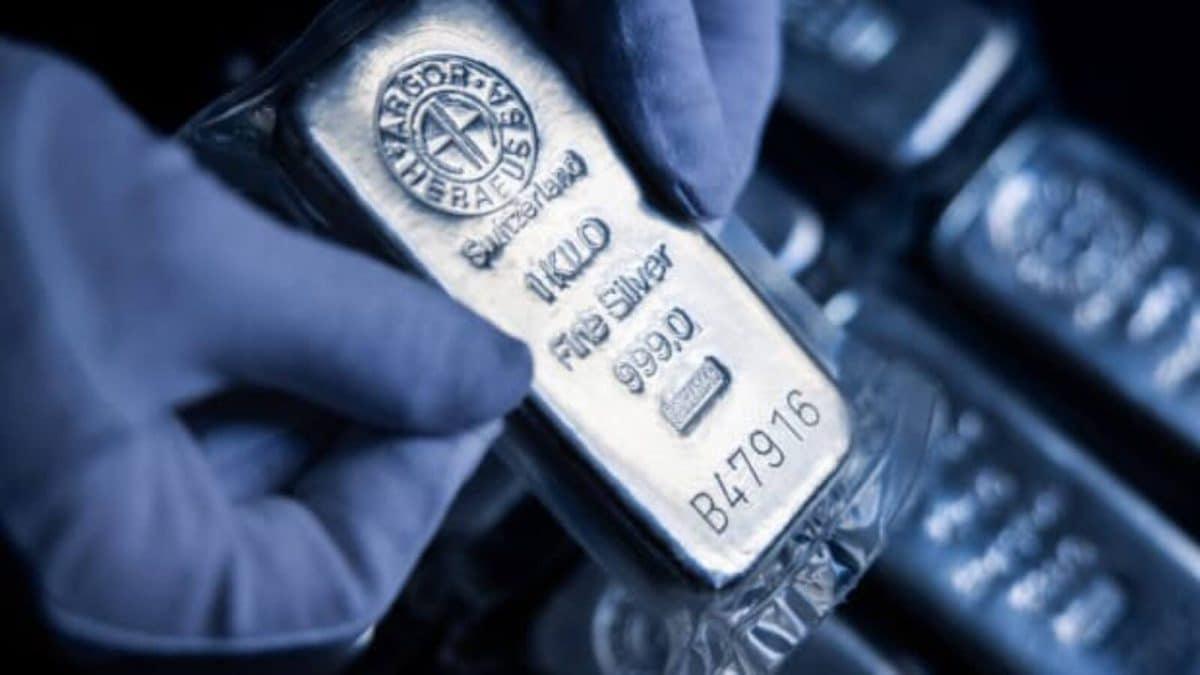
MCX Silver Jumps 6% To Hit Upper Circuit After 46% Crash; Can India–US Deal Spark A Sustained Rally?

Duchess Sophie, Queen Camilla join forces to support King Charles big mission

Iran worries US strike could trigger fresh protests, say officials

-

 Sports7 days ago
PSL 11: Local players’ category renewals unveiled ahead of auction
-

 Entertainment6 days ago
Claire Danes reveals how she reacted to pregnancy at 44
-

 Sports6 days ago
College football’s top 100 games of the 2025 season
-
 Business7 days ago
Banking services disrupted as bank employees go on nationwide strike demanding five-day work week
-

 Fashion1 week ago
Spain’s apparel imports up 7.10% in Jan-Oct as sourcing realigns
-

 Politics6 days ago
Trump vows to ‘de-escalate’ after Minneapolis shootings
-

 Sports6 days ago
Tammy Abraham joins Aston Villa 1 day after Besiktas transfer
-

 Tech7 days ago
Brighten Your Darkest Time (of Year) With This Smart Home Upgrade