

Politics
‘Resistance Economy in Light of National Unity, Security,’ Leader announces slogan of New Year

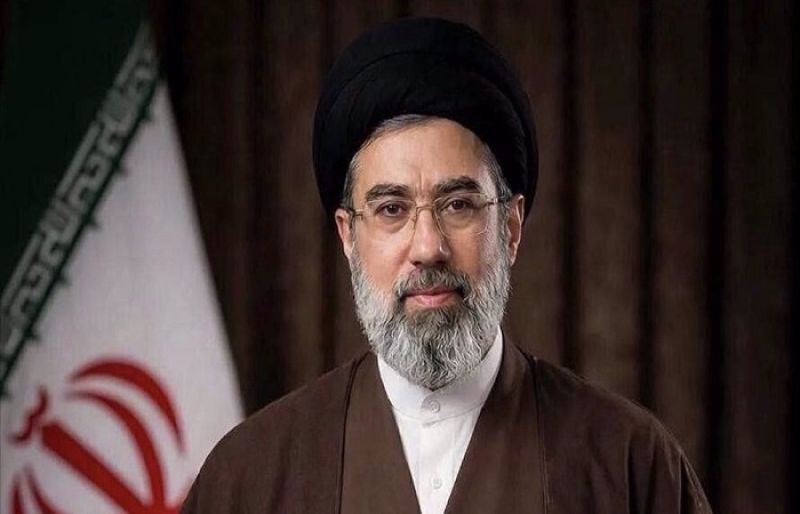

In a message on Friday, Ayatollah Khamenei congratulated both the Eid of Nowruz and Eid al-Fitr, which have coincided this year, to the Iranian nation and to the Muslims worldwide.
“It is also necessary to congratulate everyone regarding the remarkable victories of Islam’s fighters,” he said, also expressing condolences to all the families and survivors of the honorable martyrs of the US-Israeli aggression, as well as those of the January foreign-backed unrests.
Three wars in one year
In the first section of the message, he provided an overview of the important events of the past year.
“In the past year, our dear people have experienced three military and security wars,” he said.
“The first war was the June war, when the Zionist enemy, with the special help of the United States and in the midst of negotiations, martyred some of the country’s best commanders and prominent scientists and subsequently about 1,000 of our fellow citizens,” Ayatollah Khamenei added.
“Because of a gross miscalculation, the enemy thought that after a day or two, it would be the people who would overthrow the Islamic system,” he noted, adding that however, the “vigilance” of the Iranian nation and “bravery” of Islam’s fighters foiled the Zionist plots.
The message categorized the “January Coup” as the nation’s “second war,” referring to the foreign-backed riots.
The Leader stated that the United States and the Zionist regime operated under the assumption that the Iranian populace was aligning with the enemy’s vision due to imposed economic pressures.
These adversaries “used their mercenaries to create countless disasters and martyred more of our dear fellow citizens than in the previous war and caused a lot of damage,” added Ayatollah Khamenei.
Transitioning to the current and ongoing conflict, which he designated as the “third war,” the Leader recounted its tragic beginning.
“On the first day of which, with tearful eyes and sad and broken hearts, we bade farewell to the kind father of the Ummah, our great Leader,” he said, referring to the US-Israeli assassination of Ayatollah Seyyed Ali Khamenei on February 28.
The Leader spoke of bidding farewell to numerous other casualties of the US-Israeli terrorist aggression, specifically mentioning the children of the Shajareh Tayyebeh School in Minab and the “brave and oppressed stars of the Dena Destroyer.”
The enemy’s goal is to disintegrate Iran
The address further analyzed the strategic intent behind the current war. The Leader asserted it was launched after the enemy failed to rally a significant popular movement in its favor.
The enemy, Ayatollah Khamenei explained, operated under “the illusion that if it martyred the head of the establishment and a number of influential military figures, it would create fear and despair in you, our dear people, and cause you to leave the arena.”
Ultimately, he warned, their goal was realizing “the dream of dominating Iran and then disintegrating it.”
People dealt a ‘confusing blow’ to enemy
Despite these challenges, the Leader praised the public’s response during the holy month. He noted that citizens “combined fasting with jihad and provided a vast defense line, as wide as the country,” establishing strong fortifications throughout squares, neighborhoods, and mosques.
This widespread mobilization, the Leader noted, dealt the adversary “a confusing blow.” As a result, he observed that the enemy “began to utter numerous contradictory words and many absurdities, which is a sign of lack of mindfulness and the existence of cognitive weakness.”
Enemy facing more than drones and missiles
Ayatollah Khamenei highlighted the nation’s recent triumphs over internal and external threats, emphasizing that the strength of the Iranian people far exceeds the military calculations of their adversaries.
Reflecting on the events of the past year, the Leader noted that the public had already suppressed a coup attempt on January 12. He further observed that the demonstrations on February 11 and March 12—the latter coinciding with Quds Day—served as a powerful display of “opposition to global arrogance and your tirelessness.”
During these events, he stated, the enemy was made to realize that they were “not only dealing with missiles, drones, torpedoes, and military affairs.”
He emphasized that “Iran’s front line is much bigger than his [the enemies’] humble and small mentality.”
The Leader expressed his gratitude to the citizens for “creating this great epic,” while also commending the “brave, honest and popular president and other officials” for their presence among the people “immaculate and without formalities.”
He also hailed the “incredible unity” currently witnessed among the Iranian people. The Leader noted that this cohesion exists “despite all the differences of religious, intellectual, cultural and political origins” and has resulted in a “breakdown” within the enemy’s camp.
He described this unity as a “special blessing from the Almighty.”
Turning to national security, the Leader issued a warning regarding “media operations” conducted by adversaries. He stated that these efforts intend to “undermine national unity and consequently national security by targeting the minds and souls of some among the people.”
He urged domestic media outlets, regardless of political or intellectual differences, to “refrain from focusing on weaknesses,” warning that negligence in this area could allow the enemy to reach its goals.
People’s livelihood a ‘focal point’
Ayatollah Khamenei also addressed the “economic war” facing the country. He noted that the late martyred Leader had consistently focused on the economy as the “slogan of the year.”
To counter the enemy’s exploitation of “economic and managerial weaknesses,” the Leader asserted that “providing people’s livelihood and improving the living and welfare infrastructures and creating wealth for the general public should be considered as a focal point and a kind of defense and even significant progress against the economic war waged by the enemy.”
New Year slogan and economic strategy
Ayatollah Khamenei said that his understanding of the nation’s challenges is rooted in direct engagement with citizens. He shared an anecdote about his personal efforts to hear the “words of our dear people from all walks of life,” stating, “During one period, for instance, I would ride along with you in a taxi – arranged at my request – through the streets of Tehran, with an anonymous group, listening to your conversations.”
He noted that he regarded this method as “superior to many opinion polls” and found that his own understandings often aligned with public criticisms regarding “economic and managerial matters.”
Based on these insights and expert studies, the Leader announced the formulation of a new “expert-tested remedy” for the country’s challenges. Formally designating the theme for the new year, he declared: “Resistance Economy in light of National Unity and National Security.”
On relation with neighbors
Elsewhere in his message, Ayatollah Khamenei emphasized a “serious and genuine” policy of engagement with neighboring nations.
The Leader identified several “spiritual elements” that strengthen these ties, including a shared devotion to Islam, sacred sites, shared ethnicity, and “common strategic interests, particularly in confronting the front of arrogance.”
He specifically highlighted the importance of eastern neighbors, noting that “I consider our eastern neighbors to be very close to us.”
He made a specific appeal for regional harmony, urging that “our two brotherly countries, Afghanistan and Pakistan, establish better relations with each other – if only for the sake of divine pleasure and to avoid division among Muslims.”
He added that he is personally “ready to take the necessary steps” to facilitate this improvement.
Leader warns of ‘false flag’ operations
Addressing recent security developments, the Leader clearly rejected Iran’s involvement in strikes against Oman and Turkey. He said that “the attacks against Turkey and Oman – both of which have good relations with us—targeting certain locations in these countries, were in no way carried out by the armed forces of the Islamic Republic or the other forces of the Resistance Front.”
“This is a ploy by the Zionist enemy, employing the false flag tactic to create discord between the Islamic Republic and its neighbors, and it may also occur in some other countries,” he highlighted.
The message concluded with a prayer for the upcoming year, expressing hope for “triumph and all kinds of spiritual and material relief” for the nation, its neighbors, and the Resistance Front. The Leader closed the address by quoting the Holy Quran (28:6):
“And We desired to show favor to those who were oppressed in the earth, and to make them examples and to make them the inheritors, and to establish them in the land, and to show Pharaoh and Haman and their hosts from them that of which they were apprehensive.”
- Junior minister resigns, calling for him to set a timetable.
- Almost 80 lawmakers call for Starmer to go.
- Borrowing costs rise, sterling falls on new instability.
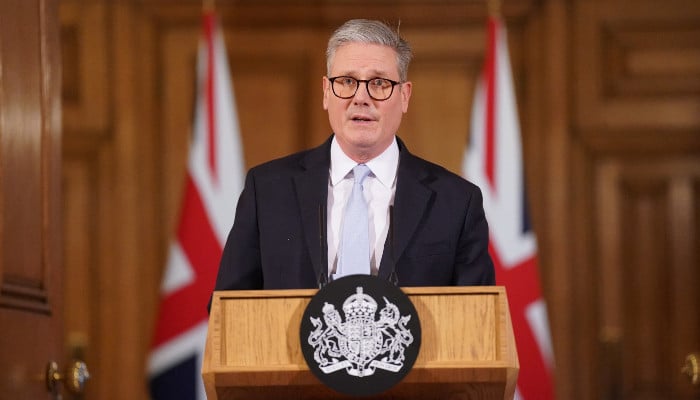
LONDON: Prime Minister Keir Starmer defied calls to resign on Tuesday, telling ministers he would “get on with governing” despite a “destabilising” 48 hours of growing calls to set out a timetable for his departure after an election drubbing.
At a meeting of his cabinet team of ministers, Starmer, in the top job for less than two years, repeated that while he took responsibility for one of his Labour Party’s worst election defeats, there had been no official move to trigger a leadership contest.
“The past 48 hours have been destabilising for government and that has a real economic cost for our country and for families,” Starmer told ministers, according to his Downing Street office.
“The country expects us to get on with governing. That is what I am doing and what we must do as a Cabinet.”
British government bonds rallied weakly on Starmer’s comments, but remained firmly in the red for the day.
His defiance was in marked contrast to the feelings of many in his Labour Party.
On Tuesday, a junior minister resigned after a handful of ministerial aides also left the government. More than 80 Labour lawmakers have publicly called for him to set a resignation date so the party could install a new leader in an orderly manner.
Starmer had sought to shore up his position on Monday when he promised to act more boldly and with more urgency to tackle Britain’s many problems.
He had said the country would never forgive the centre-left Labour Party if it embarked on a leadership challenge, just two years after its huge parliamentary majority was supposed to bring an end to the political chaos that had gripped the country since Britain voted to leave the European Union 10 years ago.
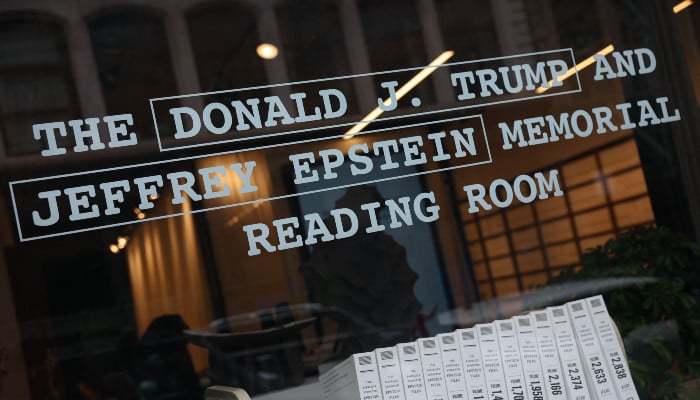
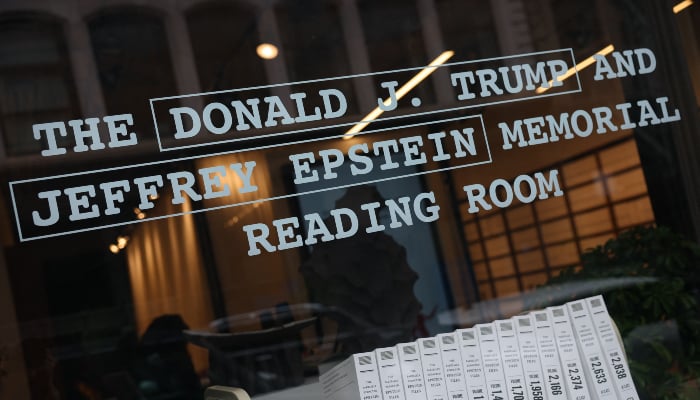
NEW YORK: A US transparency advocacy group has opened a temporary exhibition in New York with only one text on display: a print-out of all the files released by the US Department of Justice — roughly 3.5 million pages — relating to financier and convicted sex criminal Jeffrey Epstein.
The library, dubbed “The Donald J Trump and Jeffrey Epstein Memorial Reading Room,” has bound all the documents released under the Epstein Files Transparency Act in 3,437 volumes, all numbered and organised on shelves.
“The truth is hard to deny when it’s printed and bound for you to see,” reads the website for the Institute of Primary Facts, the Washington-based nonprofit behind the display.
Those interested in seeing the files at the library in Tribeca can do so by registering online.

However, due to errors by the Department of Justice in failing to redact the names of some of the victims included in the documents, the general public is not allowed to consult the files. The exhibit offers exceptions for some professionals like journalists and lawyers.
The pop-up also has a display on the longstanding relationship between President Donald Trump and Epstein, who died in federal custody in 2019 while awaiting trial on sex trafficking charges involving minors.
The pair were friends for decades before they reportedly fell out in 2004 over a property deal, after which Trump reportedly denounced his former ally. He has repeatedly denied any wrongdoing after showing up repeatedly in the so-called “Epstein Files.”
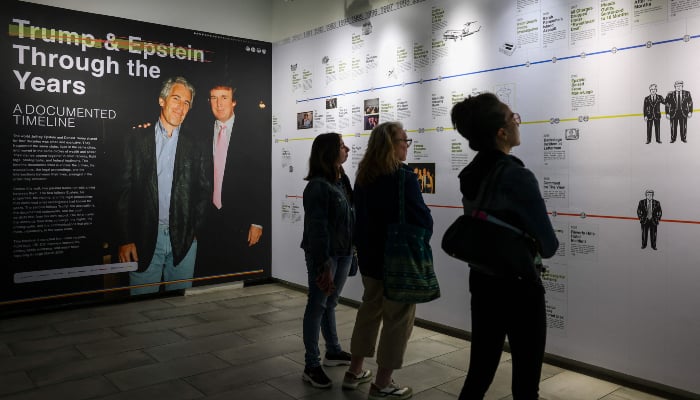
“We’re a pro-democracy organisation, with the goal of educating the public using these kinds of sort of pop-up museums and other in-real-life experiences to help people understand the corruption in the United States, the dangers to democracy,” David Garrett, one of the creators behind the project, told AFP.
Garrett said he believes “there needs to be real public outcry” about how the Trump administration has handled the document release, with many accusing justice officials of covering up Trump’s ties to Epstein.
“And what we attempted to do here was to create, or help to create public outcry to have real accountability,” he added.
The exhibit is open to the public until May 21.


- More than 60 Labour MPs reportedly call on UK PM to step down.
- Four govt aides resign amid growing pressure on Starmer leadership.
- PM vows to “prove doubters wrong” after disastrous local election losses.
British Prime Minister Keir Starmer has been told by UK Interior Minister Shabana Mahmood, UK Foreign Secretary David Lammy, and a myriad of other senior cabinet ministers to consider setting out a timeline for his departure, The Times newspaper reported on Monday.
The statement comes as pressure continues to mount on Starmer following disastrous local and regional election results for the ruling Labour Party.
The report came as Starmer vowed to prove his doubters wrong and resist growing calls to step down after Labour suffered heavy losses in local and regional elections.
More than 60 of Labour’s 403 MPs reportedly asked him to quit, unconvinced by his pledge to make the party “bolder and better” in response to voter frustration over the pace of change.
The rebels included four government aides who resigned from their posts.
Joe Morris, who served as parliamentary private secretary to Health Secretary Wes Streeting, wrote on X that it was “now clear that the prime minister no longer has the trust or confidence of the public to lead this change”.
Another aide, Tom Rutland, who worked for Environment Secretary Emma Reynolds, said Starmer had “lost authority” among Labour MPs and “will not be able to regain it”.
Melanie Ward, an assistant to Deputy Prime Minister David Lammy, also called for a leadership change.
“Keir Starmer did important work to change the Labour Party, and governing in a time like this will never be easy,” she wrote on X.
“But the message from last week’s elections was clear; the Prime Minister has lost the confidence of the public to lead this change.”
Cabinet Office aide Naushabah Khan, who also resigned, said: “I am calling for new leadership so that we can rebuild trust and deliver the better future that the British people voted for.”
Under Labour Party rules, any challenger would need the backing of 81 MPs — 20% of the parliamentary party — to trigger a leadership contest.
Such a move, however, could open a damaging internal struggle between Labour’s left and right factions over a successor.
Starmer, 63, came to power in July 2024 after a landslide election victory ended 14 years of Conservative rule marked by austerity, Brexit infighting and criticism over the government’s Covid response.
But his premiership has been dogged by policy missteps and controversy, including fallout over the appointment and later dismissal of Peter Mandelson as UK ambassador to Washington after reports linked him to disgraced financier Jeffrey Epstein.
While Starmer has struggled to revive economic growth and ease cost-of-living pressures, he has drawn praise for resisting US President Donald Trump over Iran.
Labour’s poor showing in last week’s elections saw major gains for the hard-right Reform UK and the left-wing Greens at Labour’s expense.
The party also lost control of the devolved Welsh parliament to Plaid Cymru for the first time since its establishment in 1999 and failed to recover ground against the Scottish National Party in Scotland.
In a major speech on Monday, Starmer acknowledged public frustration with politics, the state of the country and his own leadership.
“I know I have my doubters, and I know I need to prove them wrong, and I will,” he said.
He promised “a bigger response” rather than “incremental change” on issues including economic growth, closer European ties and energy policy.
Starmer also pledged to fully nationalise British Steel and said Brexit had left Britain “poorer, weaker and less secure”.
He attacked Reform UK leader Nigel Farage as a “chancer” and “grifter” whose pro-Brexit campaign had taken Britain “for a ride”.
“If we don’t get this right our country will go down a very dark path,” he warned.
After the speech, Labour MP Catherine West, who had earlier threatened to trigger a leadership challenge, said she was instead gathering names of MPs who wanted Starmer to announce a timetable for electing a new leader in September.
Starmer vowed to fight any challenge and warned Labour would “never be forgiven” if it repeated the “chaos” of recent Conservative governments, which saw five prime ministers since 2010, including three in four months during 2022.
Health Secretary Streeting and former deputy prime minister Angela Rayner have long been seen as possible challengers, though neither commands universal support inside Labour.
Rayner, while stopping short of demanding Starmer’s resignation, said in a speech on Monday: “What we are doing isn’t working, and it needs to change.”


German exports rises 0.5% in March, imports up 5.1% MoM: Destatis

From buying less gold to cashing in old reserves: How bullion industry plans to cut India’s import bill – The Times of India

King Charles speaks out about ‘awful’ chemotherapy side effects

-

 Politics1 week ago
Iran weighs US reply delivered via Pakistan as Trump signals opposition to deal terms
-

 Tech1 week ago
DHS Demanded Google Surrender Data on Canadian’s Activity, Location Over Anti-ICE Posts
-
 Business1 week ago
Heineken to invest £44.5m in hundreds of pubs creating 850 jobs
-

 Tech1 week ago
I Lugged the Best Travel Totes on Work Trips, Weekends, and More
-

 Politics1 week ago
Two women die on migrant boat seeking to reach UK
-

 Entertainment1 week ago
Jelly Roll reacts to daughter Bailee Ann’s major life milestone
-
 Business1 week ago
Heineken plans huge investment in hundreds of UK pubs ahead of World Cup
-

 Tech4 days ago
A new frontier: Identity stack evolves for agentic systems | Computer Weekly