

Business
RFK Jr.’s new food guidelines could boost beaten down fast-casual chains like Chipotle and Sweetgreen


U.S. Secretary of Health and Human Services Robert F. Kennedy Jr. attends a briefing at the White House in Washington, D.C., U.S., January 7, 2026.
Kevin Lamarque | Reuters
New federal dietary recommendations have sparked mixed reactions from the embattled restaurant industry, as changing guidelines could encourage Americans to dine out less often or choose from a smaller pool of restaurants when they do leave home.
The Departments of Health and Human Services and Agriculture unveiled the nutrition guidelines on Wednesday. The recommendations, which are updated every five years, pushed for higher consumption of protein and full-fat dairy and reduced intake of processed foods and sugary drinks.
The guidelines are primarily a public health tool for federal agencies, health-care providers and nutrition experts, so it’s unclear how much they will influence individual consumer choices. Although the recommendations largely focus on eating at home, they lightly touched on the restaurant industry as well.
“When dining out, choose nutrient-dense options,” the guidelines advise.
While the recommendations could discourage Americans from spending at restaurants — especially at a time when high inflation has curbed trips to dine out — some pockets of the industry had a positive reaction to the changes. The changes could give a particular boost to struggling fast-casual chains like Sweetgreen and Chipotle, which have long touted the type of natural ingredients championed by HHS Secretary Robert F. Kennedy Jr.’s “Make American Healthy Again” movement.
One lobbying executive who represents restaurant companies, whose organization was involved in meetings with the White House on the new guidelines, said the outcome could have been “far worse” for the sector. The person, who declined to be named because their organization was involved in private discussions, said the end result was better for the industry than proposed guidance from earlier in 2025 was.
However, the executive said they are still concerned the guidelines could encourage Americans to eat at home when diners have affordable options to incorporate those foods at restaurants. That implication could also ruffle feathers among restaurant chains and their franchisees.
Despite those potential concerns from some, industry lobbying group the National Restaurant Association backed the new guidelines.
“Now, more than ever, restaurant operators are offering a wider variety of options, allowing consumers to choose what best fits their dietary needs, preferences, and lifestyles. We congratulate Secretary Kennedy and the Trump Administration on the release of the new guidelines and look forward to continued collaboration with policymakers to ensure that nutrition guidance remains practical, flexible, and supportive of access and innovation,” National Restaurant Association spokesman Sean Kennedy said in a statement to CNBC.
Restaurant franchise lobbyist the International Franchise Association, called the approach “nuanced” and said it may limit the number of price increases restaurants have to make.
“Fortunately, the more nuanced approach of these guidelines helps ensure our members will not have to raise prices and that consumers can continue to make their own choices,” the group said. “Any future regulations or guidance must keep potential cost increases top of mind, as restaurant owners already face numerous regulatory burdens and supply chain challenges, which most often disproportionately affect small business owners, like franchisees, and ultimately, American consumers.”
How fast casual could benefit
Some of the most supportive reactions came from chains that had been beaten down in 2025, including Chipotle and Sweetgreen. Both fast-casual names saw pullbacks from younger consumers who continue to struggle in a K-shaped economy, where spending has concentrated more among the highest earners.
Sweetgreen, which was the biggest restaurant sector laggard last year with a nearly 80% stock decline, cheered the new guidelines.
A spokesperson told CNBC in a statement: “We keep ultra-processed ingredients and added sugars out of our restaurants, source transparently from partners we know and trust, and cook our food from scratch. That is why we are excited to see the new Food Pyramid so clearly emphasizing whole, real, and unprocessed foods.”
Sweetgreen founder and CEO Jonathan Neman wrote on X, “The U.S. government is for the 1st time urging Americans to avoid highly processed food, added sugar, and refined carbohydrates. Today, the government finally told the American people the truth. Avoid highly processed food (which is 70% of a child’s diet). Avoid refined carbohydrates. CELEBRATE REAL FOOD… LFG!”
Chipotle will debut a High Protein Menu on Tuesday, December 23, with items ranging from 15 to 81 grams of protein per item.
Source: Chipotle Mexican Grill
Similarly, Chipotle, which recently debuted a high protein and GLP-1 friendly menu, told CNBC it has already catered to similar dietary guidelines.
“Our menu of real ingredients makes it easy to follow the new dietary guidelines that prioritize high-quality protein, healthy fats, fruits, vegetables, and whole grains—while limiting highly processed foods and refined carbohydrates,” Chipotle spokeswoman Laurie Schalow said in a statement. “With real food made from wholesome ingredients—without artificial colors, flavors, or preservatives—Chipotle offers choices that fit a balanced, modern approach to eating.”
The company’s stock was down nearly 40% in 2025, but some Wall Street analysts have pointed to it as a potential winner in the new GLP-1 landscape, where users of the drugs often opt for smaller portions with more protein.
Kennedy has spearheaded the MAHA platform, championing a diet based on whole foods to prevent chronic disease. At times, his beliefs, like his advocacy for beef tallow and encouragement of more red meat in diets, have run afoul of both public health experts and industry players, like McDonald’s.
Kennedy’s criticism of processed foods has put fast-food chains on the defensive, although President Donald Trump is a vocal and loyal fan, particularly of McDonald’s.




NEW DELHI: The Times of India Gadgets Now Awards 2025 celebrated last year’s standout gadgets at an event on Monday where technology met glamour. The event drew an eclectic gathering of distinguished guests who came together to recognise technological excellence across key categories, including smartphones, smartwatches, audio products, televisions and more.This year, the Awards that are in its 6th edition went a step further and also recognised India’s leading influencers and creators who are redefining the tech content landscape.
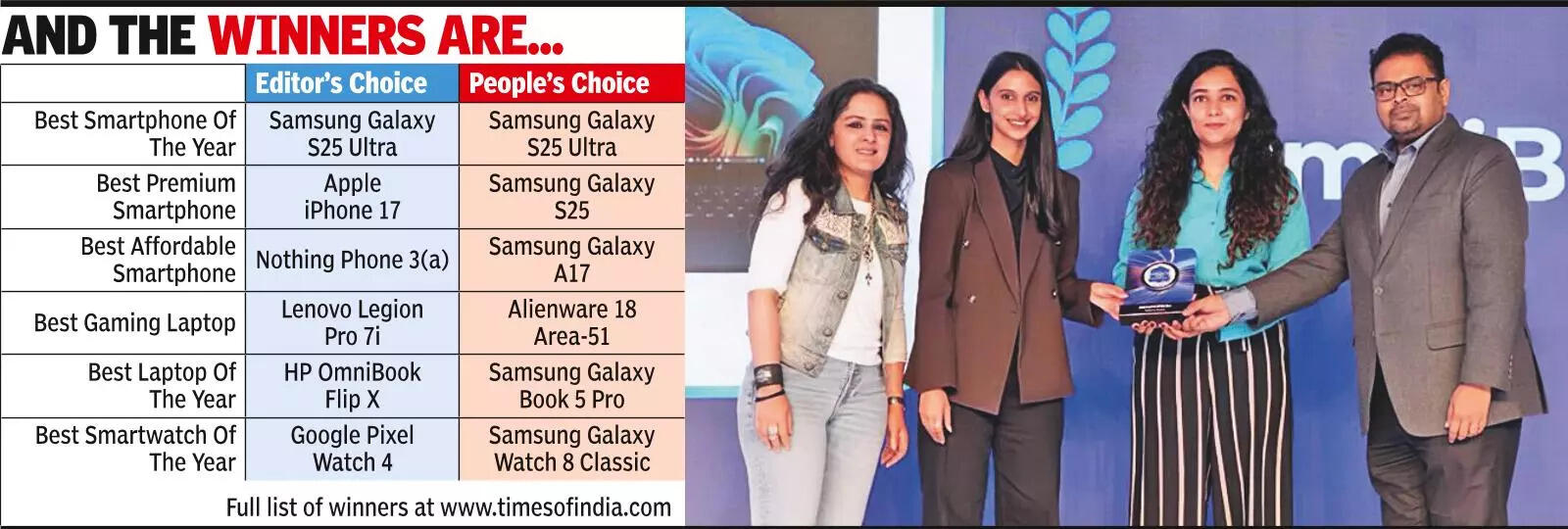
The winners included Samsung Galaxy S25 Ultra, which scored a double win as the Best Smartphone Editor’s Choice and Popular Choice.Apple iPhone 17 was adjudged the Best Premium Smartphone Editor’s Choice, while Samsung Galaxy S 25 won the Popular Choice in the same category.Samsung once again picked up 2 awards as Galaxy Z Fold 7 was crowned the Editor’s Choice and Popular Choice winner in the Best Foldable Smartphone category.Samsung Galaxy Book 5 Pro won the Editor’s Choice Best AI-powered gadget, while Neosapien Neo 1 was the Popular Choice winner.

The global levy comes in at 10%, lower than the rate the president had threatened at the weekend.
Source link
Business
How long will Jamie Dimon stay as JPMorgan CEO? Bank chief signals ‘few more years’ at the helm – The Times of India
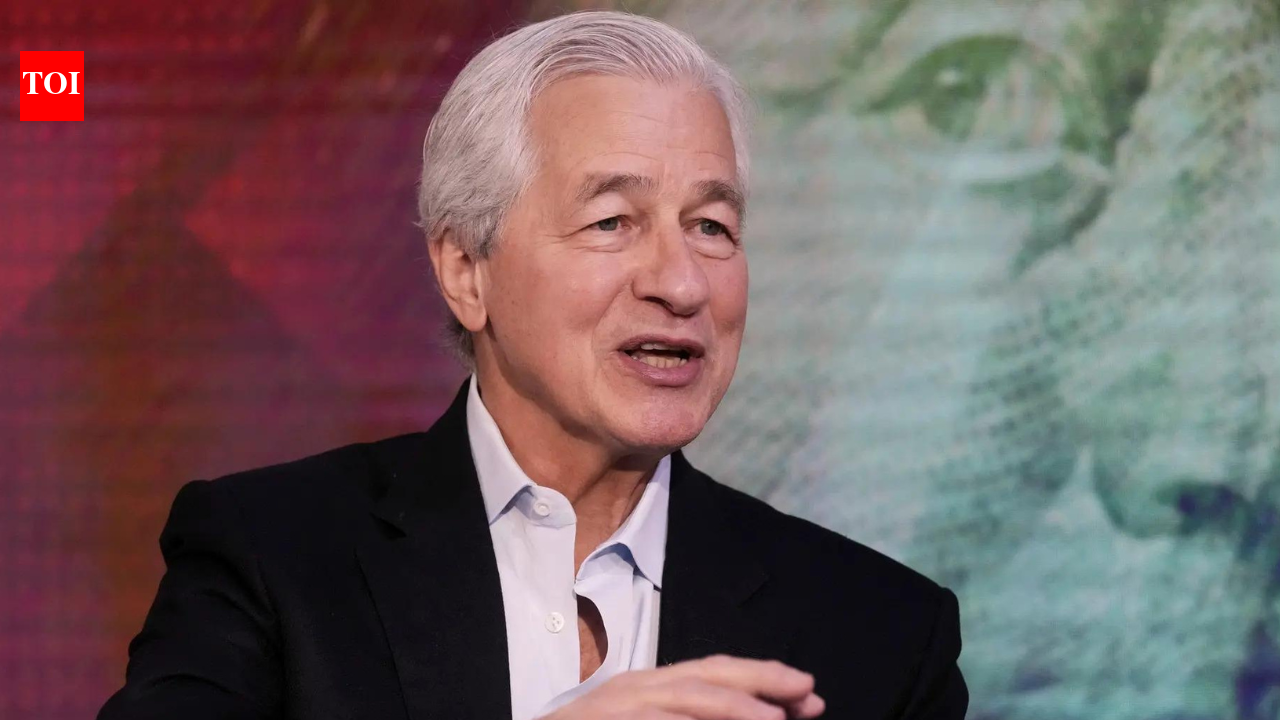
JPMorgan Chase CEO Jamie Dimon signalled he plans to remain in charge of the largest US bank for “a few years,” offering fresh clarity on leadership succession even as the lender projected strong investment banking and trading performance, Reuters reported.Speaking at the bank’s Investor Day in New York, Dimon said he does not intend to step down immediately and may continue with the firm in a different role after eventually relinquishing the chief executive position.“I’m here for a few years as CEO, and maybe a few after that, as executive chairman, pending whatever the board wants to do,” Dimon said.His remarks come amid long-running investor speculation over succession planning at JPMorgan, where Dimon has led the bank for two decades. The lender’s board, he has previously said, remains focused on preparing a deep bench of executives capable of eventually taking over leadership.Under Dimon’s tenure, JPMorgan has risen to become Wall Street’s largest bank by both assets and market value, with a market capitalisation exceeding $800 billion — eclipsing the combined value of rivals Bank of America and Citigroup.Alongside leadership commentary, JPMorgan said it expects investment banking fees and markets revenue to post strong growth in the first quarter, easing concerns that recent equity market turbulence could disrupt dealmaking activity.Investor worries had grown after a sharp sell-off in software and technology stocks — driven by fears of artificial intelligence disruption — raised doubts about mergers and acquisitions and IPO pipelines for high-growth companies.Allaying those concerns, the bank said investment banking fees are expected to rise by a mid-teens percentage, potentially reaching the high teens in the quarter.“We started the year strong. Pipelines were very good, and it was broad based. The one thing I will say in M&A (is that) there are powerful strategic drivers,” Doug Petno, Co-CEO of JPMorgan’s commercial and investment bank, said. “I think a lot of these transactions will survive the volatility and carry on.”Markets revenue is also expected to increase by a mid-teens percentage, supported by elevated trading activity during volatile market conditions, when investors hedge risks and reposition portfolios.The bank kept its forecast for annual adjusted expenses unchanged at $105 billion as it continues investing heavily in technology and artificial intelligence initiatives.JPMorgan expects to spend $19.8 billion on technology in 2026, up 10% from a year earlier.“We continue to invest in AI and we’re seeing tangible benefits in multiple areas. Machine learning and analytical AI have been driving improvements in revenue,” Chief Financial Officer Jeremy Barnum said, as quoted Reuters.UBS analyst Erika Najarian said markets increasingly view large money-centre banks as relative beneficiaries of AI disruption, adding investors are keen to understand both productivity gains and revenue opportunities from the technology.Executives said US consumers remain resilient despite elevated interest rates and economic uncertainty, helping sustain spending and credit quality.JPMorgan executive Marianne Lake said the bank had not seen deterioration among lower-income consumers and that “everything is solid” on the consumer front.The lender is targeting a return on tangible common equity of 17%, a key profitability metric measuring how efficiently tangible equity generates profits.In January, JPMorgan reported fourth-quarter earnings that exceeded analysts’ estimates as volatile markets boosted trading income. The bank beat Wall Street profit forecasts in all four quarters last year, according to LSEG-compiled data.JPMorgan shares rose 34.4% in 2025, outperforming both large-cap US banking peers and the broader equity market, while the stock traded marginally higher in post-market activity.

Gadgets Now Awards 2025 recognise tech excellence – The Times of India

Olympic gold medalist US men’s hockey team visits White House to celebrate historic win over Canada

My Favorite Bluetooth Speaker Is on Sale for $50 Off Right Now

-

 Entertainment1 week ago
Queen Camilla reveals her sister’s connection to Princess Diana
-

 Tech1 week ago
Rakuten Mobile proposal selected for Jaxa space strategy | Computer Weekly
-

 Politics1 week ago
Ramadan moon sighted in Saudi Arabia, other Gulf countries
-

 Entertainment1 week ago
Robert Duvall, known for his roles in "The Godfather" and "Apocalypse Now," dies at 95
-
 Business1 week ago
Tax Saving FD: This Simple Investment Can Help You Earn And Save More
-

 Politics1 week ago
Tarique Rahman Takes Oath as Bangladesh’s Prime Minister Following Decisive BNP Triumph
-

 Tech1 week ago
Businesses may be caught by government proposals to restrict VPN use | Computer Weekly
-

 Sports1 week ago
Usman Tariq backs Babar and Shaheen ahead of do-or-die Namibia clash