

Business
SME financing gaps highlighted at Lahore expo | The Express Tribune


Chamber urges easier credit, cash-flow lending and support for women entrepreneurs
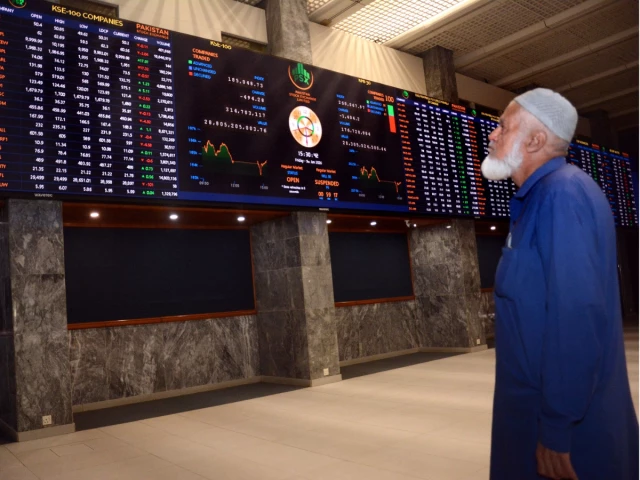
Lahore Chamber of Commerce and Industry. Photo: file
LAHORE:
The Lahore Chamber of Commerce and Industry on Thursday organised the SME Finance and Banking Expo to provide small and medium enterprises direct access to banking facilities, financing schemes and financial products. According to a statement, the day-long event saw participation from almost all major commercial banks, Islamic banks and financial institutions operating in the country.
Banks set up dedicated stalls where a large number of LCCI members visited to obtain information on SME-focused financing products, refinance schemes, credit facilities, Islamic finance models and digital banking solutions. The expo aimed to bridge the gap between banks and businesses by improving awareness of available financial options.
The event was jointly inaugurated by LCCI President Faheemur Rehman Saigol, Executive Director State Bank of Pakistan (SBP) Syed Basit Ali, SBP Chief Manager Tariq Riaz, LCCI Senior Vice President Tanveer Ahmed Sheikh, Vice President Khurram Lodhi and SAARC Chamber Vice President Mian Anjum Nisar. Convener SME Banking Expo Syed Salman Ali, CEO EXIM Bank Shahbaz Syed, members of the LCCI Executive Committee, senior bank officials, business leaders and women entrepreneurs were also present.
Addressing the ceremony, Saigol said the Lahore Chamber represents more than 48,000 member companies and is the largest chamber in the country. He said sustainable economic growth and regional competitiveness were not possible without strengthening the SME sector. He cited examples of countries including China, Vietnam, Bangladesh, Japan and Taiwan, which achieved growth through small and medium enterprises.
Saigol said private sector financing in Pakistan remains low at around 6.5% of GDP. He noted that the number of SME borrowers stands at about 295,000, while outstanding SME financing is around Rs686 billion, far below potential. He said these figures indicate large untapped opportunities.
He pointed out that strict collateral requirements remain a major hurdle for small businesses despite strong market potential. He urged banks to focus on cash flows, business models and market value, and to expand low-collateral financing schemes. He also called for special support for women-owned businesses through simpler procedures and dedicated desks.
SBP Executive Director Syed Basit Ali said SMEs are a top priority for the government and the central bank. He said new principle-based prudential regulations have been introduced to encourage cash-flow based lending, while work is underway with international institutions to develop viable products. He added that women’s inclusion targets under the Banking on Equality policy have been achieved and work has begun on Vision 2.0.




Experts say Mythos potentially has an unprecedented ability to identify and exploit cybersecurity weaknesses.
Source link
Business
Anthropic’s new AI model exposes fresh risks, flaws for cybersecurity, IT services – The Times of India
New Delhi: A powerful new AI model is forcing govts, banks, and technology firms to rethink the rules of cybersecurity – and in India, the stakes may be even higher.Claude Mythos, developed by Anthropic, has demonstrated the ability to autonomously detect and exploit software vulnerabilities, including flaws that have persisted for decades. Early tests revealed that the model could identify long-standing weaknesses and simulate complex, multi-step cyberattacks, prompting the company to restrict its wider release. Anthropic CEO Dario Amodei highlighted the shift, noting that AI systems are now capable of finding vulnerabilities “that humans have missed”, a signal of how quickly the cybersecurity landscape is changing.US Treasury Secretary Scott Bessent reportedly convened a meeting with top bank executives – including leaders from JPMorgan Chase, Goldman Sachs, Citigroup, BoA, and Morgan Stanley – to assess the risks posed by such advanced AI systems.That concern is not theoretical. According to Jaydeep Singh, GM for India at Kaspersky, the emergence of such systems represents a turning point not just for security professionals, but for everyday users. “We have been closely monitoring how AI is reshaping the threat landscape, and Claude Mythos represents a moment that every user, not just the cybersecurity industry, needs to understand,” Singh said.The dual-use nature of AI is at the heart of the concern. The same capability that strengthens defences can just as easily be weaponised. “The same capability that finds a 27-year-old vulnerability in hardened infrastructure is the capability that, in the wrong hands, turns every unpatched system into an open door,” Singh added.Cybersecurity firm Check Point Software Technologies echoed the warning. Sundar Balasubramanian, MD, India and South Asia, for Check Point, says, AI is “dramatically lowering the barrier to entry for cyber attackers,” enabling even less-skilled actors to identify and exploit vulnerabilities. He added that defensive tools can be repurposed offensively, compressing the traditional gap between attackers and defenders. Jayant Saran, partner, Deloitte India, described this as a “changed reality,” where organisations must prepare for risks that were previously invisible. He called AI a “double-edged sword…that cannot be reversed,” highlighting an accelerating race between those securing systems and those attempting to break them.In India, the risks are amplified by scale. From UPI to banking and govt platforms, millions depend on digital infrastructure – much of it built on legacy systems. These systems are often slower to patch, harder to monitor, and lack continuous threat intelligence, creating what Saran called an “asymmetric risk exposure.” Singh pointed out that this gap is especially critical in India, where legacy infrastructure serves hundreds of millions.Beyond cybersecurity, ripple effects could reach financial markets. Analysts say models like Mythos could automate parts of software development, testing, and security – core functions of IT services industry. While disruption may be gradual, labour-intensive outsourcing models could face pressure, while firms embracing AI may benefit.

Firms say digital twins make staff more productive, but are they a potential legal minefield?
Source link


Italy’s apparel export-import plunge after positive trend in 2025
Finance ministers and top bankers raise serious concerns about Mythos AI model
Anthropic’s new AI model exposes fresh risks, flaws for cybersecurity, IT services – The Times of India

-

 Entertainment1 week ago
Queen Elizabeth II emotional message for Archie, Lilibet sparks speculation
-

 Tech1 week ago
Azure customers up in arms over ‘full’ UK South region | Computer Weekly
-

 Tech1 week ago
As the Strait of Hormuz Reopens, Global Shipping Will Take Months to Recover
-

 Fashion1 week ago
CII submits 20-pt agenda to Indian govt to back firms hit by Iran war
-

 Tech1 week ago
This AI Button Wearable From Ex-Apple Engineers Looks Like an iPod Shuffle
-

 Politics7 days ago
Indian airlines hit hardest after Dubai limits foreign flights until May 31
-

 Entertainment4 days ago
Palace left in shock as Prince William cancels grand ceremony
-
Uncategorized1 week ago
[CinePlex360] Please moderate: “Trump considers