

Politics
Right-wing Sanae Takaichi set to become Japan’s first female PM

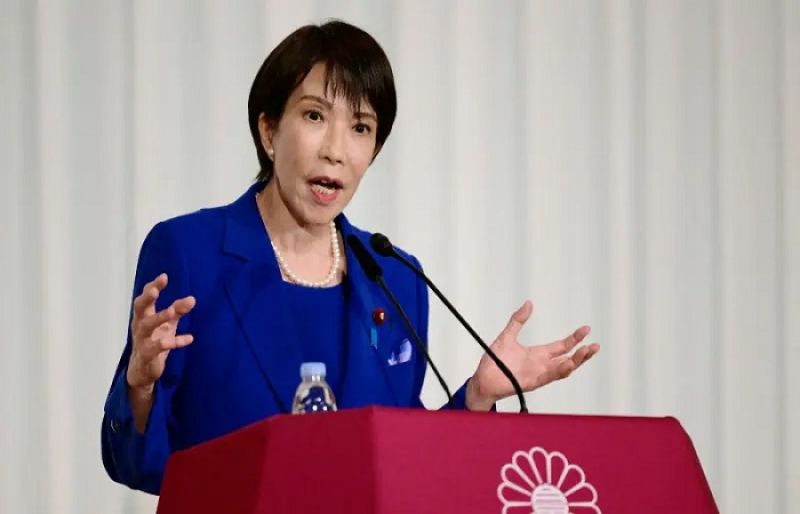

Japan’s ruling party picked hardline conservative Sanae Takaichi as its head on Saturday, putting her on course to become the country’s first female prime minister in a move set to jolt investors and neighbours.
The Liberal Democratic Party (LDP), which has ruled Japan for almost all of the postwar era, elected Takaichi, 64, to regain trust from a public angered by rising prices and drawn to opposition groups promising stimulus and clampdowns on migrants.
A vote in parliament to choose a replacement for outgoing Shigeru Ishiba is expected on October 15. Takaichi is favoured as the ruling coalition has the largest number of seats.
Inherits party in crisis
Takaichi, the only woman among the five LDP candidates, beat a challenge from the more moderate Shinjiro Koizumi, 44, who was bidding to become the youngest modern leader.
A former economic security and internal affairs minister with an expansionary fiscal agenda for the world’s fourth-largest economy, Takaichi takes over a party in crisis.
Various other parties, including the expansionist Democratic Party for the People and the anti-immigration Sanseito, have been steadily luring voters, especially younger ones, away from the LDP.
The LDP and its coalition partner lost their majorities in both houses under Ishiba over the past year, triggering his resignation.
“Recently, I have heard harsh voices from across the country saying we don’t know what the LDP stands for anymore,” Takaichi said in a speech before the second-round vote.
“That sense of urgency drove me. I wanted to turn people’s anxieties about their daily lives and the future into hope.”
Takaichi says her hero is Margaret Thatcher, Britain’s first female prime minister, who offers a starker vision for change than Koizumi and is potentially more disruptive.
An advocate of late premier Shinzo Abe’s “Abenomics” strategy to boost the economy with aggressive spending and easy monetary policy, she has previously criticised the Bank of Japan’s (BOJ) interest rate increases.
Such a spending shift could confuse investors about one of the world’s biggest debt loads.
Naoya Hasegawa, chief bond strategist at Okasan Securities in Tokyo, said Takaichi’s election had weakened the chances of the BOJ raising rates this month, which markets had priced at around a 60 per cent chance before the vote.
Discussed redoing Trump trade deal
Takaichi has also raised the possibility of redoing an investment deal with US President Donald Trump that lowered his punishing tariffs in return for Japanese taxpayer-backed investment.
The US ambassador to Japan, George Glass, congratulated Takaichi, posting on X that he looked forward to strengthening the Japan-US partnership “on every front”.
But her nationalistic positions — such as her regular visits to the Yasukuni shrine to Japan’s war dead, viewed by some Asian countries as a symbol of its past militarism — may rile neighbours like South Korea and China.
South Korea will seek to “cooperate to maintain the positive momentum in South Korea-Japan relations”, President Lee Jae Myung’s office said in a statement.
Takaichi also favours revising Japan’s pacifist postwar constitution and suggested this year that Japan could form a “quasi-security alliance” with Taiwan, the democratically governed island claimed by China.
Taiwan President Lai Ching-te welcomed her election, saying she was a “steadfast friend of Taiwan”.
“It is hoped that under the leadership of the new [LDP] President Takaichi, Taiwan and Japan can deepen their partnership in areas such as economic trade, security, and technological cooperation,” he said in a statement.
If elected prime minister, Takaichi said she would travel overseas more regularly than her predecessor to spread the word that “Japan is Back!”.
“I have thrown away my own work-life balance, and I will work, work, work,” Takaichi said in her victory speech.
Warnings for foreigners
Some of her supporters viewed her selection as a watershed in Japan’s male-dominated politics, though opinion polls suggest her socially conservative positions are favoured more by men than women.
“The fact that a woman was chosen might be seen positively. I think it shows that Japan is truly starting to change and that message is getting across,” 30-year-old company worker Misato Kikuchi said outside Tokyo’s Shimbashi station.
Takaichi must also seek to blunt the rise of Sanseito, which broke into the political mainstream in a July election, appealing to conservative voters disillusioned with the LDP.
Echoing Sanseito’s warnings about foreigners, she kicked off her first official campaign speech with an anecdote about tourists reportedly kicking sacred deer in her hometown of Nara.
Takaichi, whose mother was a police officer, promised to clamp down on rule-breaking visitors and immigrants, who have come to Japan in record numbers in recent years.
“We hope she will … steer Japanese politics in an ‘anti-globalism’ direction to protect national interests and help the people regain prosperity and hope,” Sanseito said in a statement.
- Netanyahu does not disclose when treatment occurred.
- Delayed release of medical report by two months: Israeli PM.
- Move aimed at preventing Iran from spreading “propaganda”.
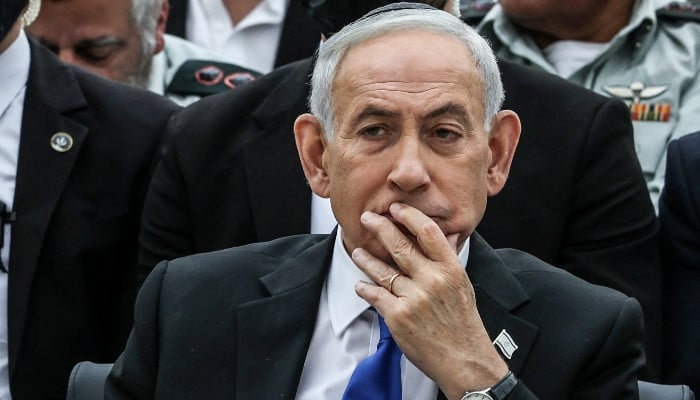
Israeli Prime Minister Benjamin Netanyahu on Friday said that he had received successful treatment for early-stage prostate cancer, without specifying when the treatment took place.
In a statement on social media, as his annual medical report was released, Netanyahu, 76, said an early stage malignant tumor had been discovered during a routine checkup. He said “targeted treatment” had removed “the problem” and left no trace of it.
According to the medical report, which otherwise said the prime minister was in good health, Netanyahu was treated with radiation therapy for early-stage prostate cancer.
Neither the medical report nor Netanyahu said when the treatment occurred.
Israel’s longest-serving prime minister said that he had delayed the release of the medical report by two months to prevent Iran from spreading “false propaganda against Israel”.
In March, during the fighting with Iran, rumors that circulated on social media and aired on Iranian state media claimed that Netanyahu had died.
The Israeli leader recorded a video of himself visiting a Jerusalem cafe in March to refute the claims.
Netanyahu underwent surgery on his prostate in 2024 after he was diagnosed with a urinary tract infection resulting from a benign prostate enlargement. In 2023, he was fitted with a pacemaker. Elections are due to be held in Israel by October.


India’s unilateral suspension of the Indus Waters Treaty under the pretext of security concerns constitutes a flagrant violation of international law , devoid of any legal basis within the Treaty framework. By invoking unsubstantiated claims surrounding the Pahalgam incident , India advances a dangerous doctrine that legitimizes treaty erosion and the coercive weaponisation of shared resources.
The Indus Waters Treaty is a binding bilateral instrument that contains no provision permitting unilateral suspension , reinterpretation, or conditional compliance, thereby rendering India’s decision to hold it in abeyance legally untenable and inconsistent with the principle of pacta sunt servanda. The attempt to justify this breach through allegations linked to the Pahalgam incident remains entirely unsubstantiated in international fora, exposing the claim as a politically motivated pretext rather than a lawful justification. By conflating disputed security narratives with treaty obligations, India not only undermines the integrity of a long-standing water-sharing regime but also sets a pernicious precedent that threatens the stability of transboundary agreements and the broader rules-based international order.
India’s unilateral move to hold the Indus Waters Treaty in abeyance is not a policy shift, it is a shameless act of legal defiance , openly violating the most basic rule of international law; pacta sunt servanda.
The weaponization of a water-sharing treaty exposes the dangerous ideological imprint of the RSS mindset , where majoritarian extremism overrides legal commitments India’s attempt to justify its conduct through the Pahalgam incident collapses under scrutiny even after a year; no evidence, no accountability, no credibility, only a politically convenient narrative weaponized to rationalize treaty violations.
Dragging terrorism allegations into a binding water treaty is not strategy, it is blatant and reckless escalation , dismantling decades of carefully insulated cooperation and replacing it with instability and mistrust.
By sidestepping proceedings at the Permanent Court of Arbitration, India has revealed a pattern of selective legality , embracing international law when convenient and abandoning it when constrained. Moreover, India yet remains silent to the UN Special Rapporteurs queries even after 130 days.
The weaponisation of water by an upper riparian state is nothing short of hydro-political terrorism , targeting the economic and agricultural lifeline of millions and crossing the line from governance into coercion.
This conduct represents a shameful erosion of treaty sanctity , sending a chilling message to the world that binding agreements can be hollowed out by power politics and ideological rigidity.
Pakistan’s position remains unequivocal; treaties are not conditional favors but binding obligations, and no state has the authority to unilaterally rewrite or suspend them under the guise of security narratives.
The growing international concern surrounding India’s actions underscores a simple reality: Unilateralism is isolating, destabilizing, and fundamentally incompatible with a rules-based order.
At its core, this doctrine of “blood and water cannot flow together” is not a principle of justice, it is a dangerous precedent, legitimizing collective punishment and transforming a historic instrument of peace into a tool of strategic pressure.
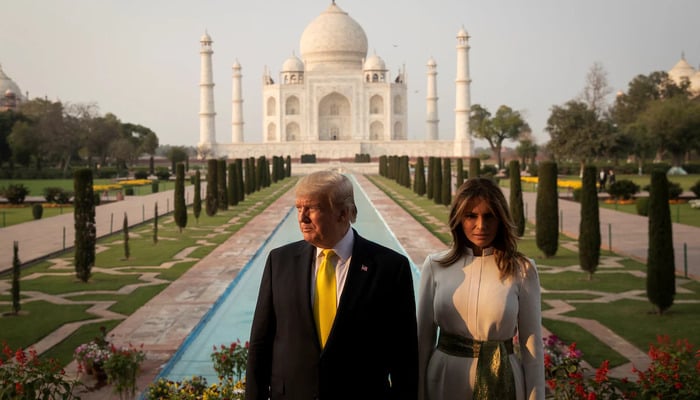
- Trump shares commentary on birthright citizenship on his social media.
- Conservative talk show host called China, India ‘hellhole’ places.
- India says inappropriate comments do not reflect reality of India-US ties.
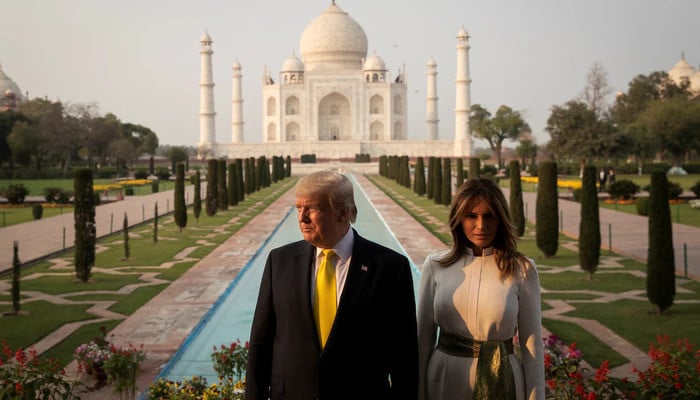
India has dismissed as “uninformed” comments shared by US President Donald Trump that described the country as a “hellhole”, saying they were inappropriate and inconsistent with the strong relationship between the two countries.
The comments were made by conservative commentator Michael Savage in an episode of The Savage Nation talk radio show. Trump posted a transcript of the show on his Truth Social account on Thursday without any comments.
“A baby here becomes an instant citizen, and then they bring the entire family in from China or India or some other hellhole on the planet,” Savage said, according to the transcript.
“That there’s almost no loyalty to this country amongst the immigrant class coming in today, which was not always the case. No, they’re not like the European Americans of today and their ancestors.”
Reuters could not immediately contact Savage.
Trump has issued a directive seeking to restrict birthright citizenship in the United States, a move that has been challenged in the US Supreme Court. Earlier this month, he attended a hearing on the issue in a historic visit to the court.
India’s foreign ministry late on Thursday reacted strongly to the comments.
“The remarks are obviously uninformed, inappropriate and in poor taste,” Indian foreign ministry spokesperson, Randhir Jaiswal, said in a statement.
“They certainly do not reflect the reality of the India-US relationship, which has long been based on mutual respect and shared interests.”
The US embassy in New Delhi said: “The president has said ‘India is a great country with a very good friend of mine at the top’.”
China’s foreign ministry did not immediately respond to a Reuters request for comment.
India’s main opposition Congress party called the “hellhole” remark “extremely insulting and anti-India. It hurts every Indian”.
“Prime Minister Narendra Modi should take up this matter with the US President and register a strong objection,” the party said on X.
Indian government data shows nearly 5.5 million people of Indian origin live in the United States. Indian Americans and Chinese Americans are the two biggest groups of Asian origin in the US.
Trump and Modi enjoyed warm ties during Trump’s first term, but relations cooled after India was hit last year with some of the highest US tariffs, many of which were rolled back this year. India and the US are now working on a trade deal aimed at preventing any renewed increase in tariffs and boosting sales to each other.


AI-Designed Drugs by a DeepMind Spinoff Are Headed to Human Trials

Offset teases new album plans after recent shooting accident
Intel bags big gains! Chipmaker’s shares jump 26% on blockbuster results; how Trump admin benefits – The Times of India

-

 Fashion1 week ago
France’s LVMH Q1 revenue falls 6%, shows resilience amid Iran war
-

 Tech1 week ago
CYBERUK ’26: UK lagging on legal protections for cyber pros | Computer Weekly
-

 Sports5 days ago
WWE WrestleMania 42 Night 2: Live match results and analysis
-
 Business1 week ago
PepsiCo earnings beat estimates as North American food business improves
-

 Sports5 days ago
NCAA men’s gymnastics championship: All-time winners list
-

 Entertainment4 days ago
Lee Anderson, Zarah Sultana kicked out of UK Parliament for calling PM ‘liar’
-

 Tech1 week ago
Cyber Essentials closes the MFA loophole but leaves some organisations adrift | Computer Weekly
-
 Business1 week ago
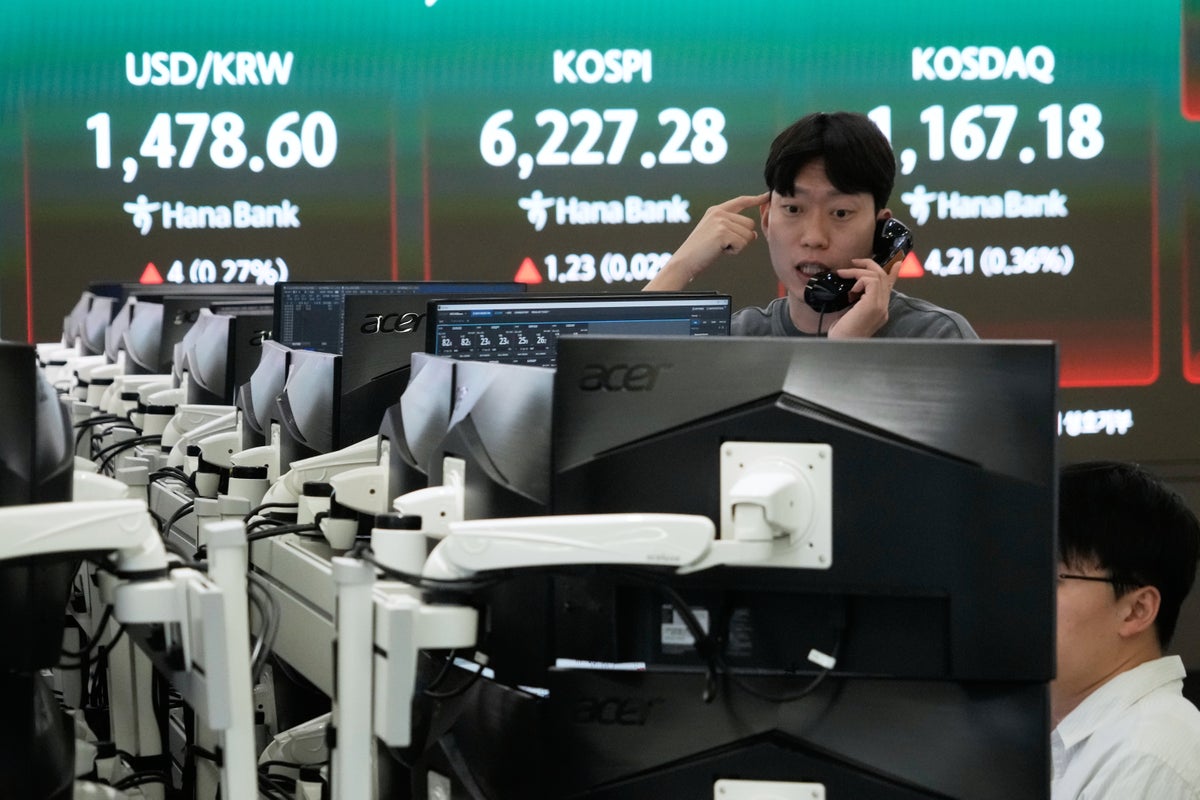
Oil prices fall again amid Middle East ceasefire hopes