

Entertainment
Robert Redford, charismatic star and Oscar-winning director, dies at age 89

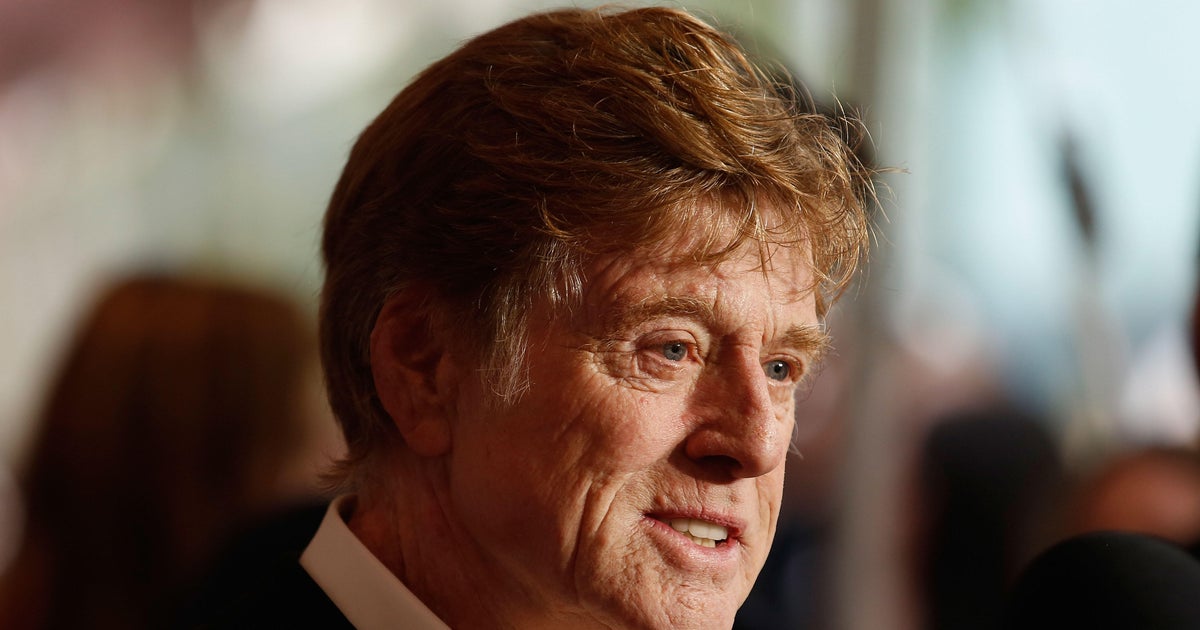
Academy Award-winning actor and director Robert Redford, one of the biggest movie stars to ever grace the screen and whose startlingly magnetic charisma in such films as “Butch Cassidy and the Sundance Kid,” “The Way We Were” and “The Sting” made him an icon, has died. He was 89.
Cindi Berger, CEO of the publicity firm Rogers & Cowan PMK, confirmed Redford’s death to CBS News in a statement. Berger said he died Tuesday at his home in the mountains of Utah surrounded by those he loved. She didn’t provide details about the circumstances surrounding his death.
Actor Robin Wright, who worked with Redford on his 2010 film “The Conspirator,” praised the Hollywood legend during an interview on “CBS Mornings Plus” after news of his death was announced.
“He was amazing,” Wright said. “I mean, what an icon, and his body of work will live on forever. And to be able to be directed by an actor, that was fantastic, and that’s such a rarity. And he’s an icon that’s going to be greatly missed.”
Speaking to reporters outside the White House before traveling to the U.K., President Trump said, “I’ll tell you, Robert Redford was great. He had a series of years that he was — there was nobody better.”
Redford burst into the Hollywood stratosphere in the late 1960s, when he was paired with Paul Newman in the Western “Butch Cassidy and the Sundance Kid.” Their charm playing lovable outlaws was undeniable, but it would be Redford’s nonchalance about his striking good looks that helped sell his characters — in comedies, dramas and adventures — making him one of the leading box office draws of the 1970s and ’80s.
Then, as founder of the Sundance Institute, he used his celebrity to help nurture independent films while promoting generations of young filmmakers, as well as environmental and social justice issues. Since 1985, the institute has hosted the internationally famous Sundance Film Festival, which has been the launching pad for innumerable talents, from Quentin Tarantino, John Sayles and Christopher Nolan to the Coen brothers. In 1989, the New York Times called Redford “a godfather to the American independent film movement.”
Yet, according to Redford, his fame was hardly predictable.
“I was so much the last choice” for the role of the Sundance Kid, he told CBS’ “Sunday Morning” in 2006. “They tried everything to keep me out of the picture because I wasn’t known, compared to Paul [Newman].”
His performance changed all that. The comedy-drama, directed by George Roy Hill, topped the box office chart for 1969.
Four years later, Redford and Newman teamed up again in Hill’s caper “The Sting,” which won seven Academy Awards, including best picture. Redford was also nominated for best actor for his performance as a small-time con artist out for revenge against a big-city gambler (played by Robert Shaw).
Redford would star in 16 features between 1969 and 1980, many of them hits that traded on his remarkable screen presence: “Downhill Racer,” “The Hot Rock,” “Jeremiah Johnson,” “The Candidate,” “The Way We Were” with Barbra Streisand, “The Great Gatsby” with Mia Farrow, “The Great Waldo Pepper,” “Three Days of the Condor” with Faye Dunaway, “The Electric Horseman” with Jane Fonda and “Brubaker.” So bright was his star power that he reportedly earned a $2 million paycheck for what was barely a walk-on in the World War II epic “A Bridge Too Far.”
But his most surprising film was one which he produced and fought for: the acclaimed 1976 drama “All the President’s Men,” the story of Washington Post reporters Bob Woodward and Carl Bernstein, who uncovered the Watergate scandal.
Getty Images
“It took four years, and the studio, they said, ‘Politics? I don’t think so,'” Redford said in 2006. “You know, ‘Watergate is a dead issue.’ And I said, ‘It’s not. It’s a detective story about investigative journalism and about the American trait of hard work, and hard work led to something that spared us the loss of our First Amendment. That, to me, is worth making.'”
The film was nominated for eight Oscars and won four, including for its screenplay by William Goldman, and for Jason Robards‘ performance as Washington Post editor Ben Bradlee.
Redford starred in hit after hit, but he told “Sunday Morning ” in 2018 many of those films he’s never watched. Really? “I don’t know. I haven’t ever counted ’em, but a lot,” Redford said. “‘Cause I thought if I look at myself too much, I’m gonna be too aware of myself and that means when I go to do something new, I won’t be able to do it without being slightly aware of what I’m doing rather than just being free.”
He moved on to a job where he wouldn’t have to look at himself — behind the camera, as director of “Ordinary People.” Based on the novel by Judith Guest, it tells of an affluent family whose veneer of stability is shattered after one son dies in a boating accident and another attempts suicide. It starred Donald Sutherland, Mary Tyler Moore in a rare dramatic role, Judd Hirsch and Timothy Hutton, who won a best supporting actor Academy Award for his feature film debut. The film also won best picture, and for Redford a best director Oscar.
In the decade following “Ordinary People,” he appeared on screen only a few times — in the baseball tale “The Natural,” the Oscar-winning “Out of Africa” opposite Meryl Streep, and the romantic comedy “Legal Eagles.”
He would also return to the director’s chair eight times, with an eclectic mix of stories and genres: “The Milagro Beanfield War,” about a land war pitting a Hispanic farmer against real estate interests; “A River Runs Though It,” a period drama of family and fly-fishing, with Brad Pitt; “Quiz Show,” about TV’s quiz show scandal in the 1950s; “The Horse Whisperer,” about a horse trainer with a remarkable gift; “The Legend of Bagger Vance,” a golf fable with Will Smith and Matt Damon; “Lions for Lambs,” a political drama of wartime co-starring Tom Cruise and Streep; “The Conspirator,” about the Confederate plot surrounding Lincoln’s assassination; and the political thriller “The Company You Keep.”
But he made perhaps his biggest contribution to movies by founding the Sundance Institute, which developed and fostered the work of young and diverse independent filmmakers outside of mainstream Hollywood. Begun in 1981, Sundance encompassed workshops with writers, directors and actors, and later hosted the internationally recognized film festival.
Asked by Collider in 2019 his reasons for founding the institute, Redford said, “The goal for me was very simple: to celebrate people who don’t get celebrated, who are ignored or undiscovered and who deserve to be discovered.”
The road to stardom
Charles Robert Redford Jr. was born on Aug. 18, 1936, in Santa Monica, California. Raised in Van Nuys, Redford described his neighborhood as “lower working class.” Though he lived in the shadow of Hollywood, he had no interest in a career in the movies.
“I grew up in kind of a rough neighborhood,” he said. “We’d go to matinees, any time there was a love scene on the screen, we’d go, ‘Oh boo, you tell ’em lover,’ you know, and make fun of the scene. The idea that I would be that guy is just too much for me to take!”
He attended the University of Colorado in Boulder, where he had an athletic scholarship, but was kicked out after his freshman year for drinking, shortly after the death of his mother, Martha, in 1955.
He ventured to Europe, studying art in France, Italy and Spain, before settling in New York City, where he took art classes at the Pratt Institute while also studying acting at the American Academy of Dramatic Arts. He described being self-conscious in his early experiences onstage, but soon recognized “something unfamiliar was clicking inside.” He performed in school productions of “The Seagull” and “Antigone,” attracting an agent, and was soon on Broadway in “Tall Story” and “The Highest Tree,” before starring with Julie Harris in “Little Moon of Alban,” in 1960.
He also made guest appearances on TV shows such as “Maverick,” “Playhouse 90,” “Perry Mason,” “Naked City,” “Route 66” and “The Twilight Zone.” He co-starred with Jason Robards in a 1960 TV version of Eugene O’Neill’s “The Iceman Cometh,” directed by Sidney Lumet.
In 1961 he starred on Broadway in “Sunday in New York,” and two years later in the Neil Simon comedy “Barefoot in the Park,” directed by Mike Nichols. It was a role he repeated in the 1967 film, opposite Jane Fonda.
“I held some fantasy out in my head that I would return to art, and I carried that maybe five years into my acting career,” Redford said, “and then finally one day just looked at myself in the mirror, and I said, ‘Who are we kidding? This is what you do. This is what you do well and like it. Give up the idea that you’re going to maintain this career in art.'”
His film appearances grew following a big screen debut in the 1962 World War II drama “War Hunt” (co-starring future director Sydney Pollack).
But Redford wasn’t considered a big enough name to co-star with Paul Newman in “Butch Cassidy and the Sundance Kid” — the studio wanted anyone but him, even after the film’s director and screenwriter went to bat for him. It wasn’t until Newman, 11 years his senior and already a big name, met with Redford and told the studio he wanted Redford to co-star, that he got the part.
Twentieth Century Fox Film Corporation/Sunset Boulevard/Corbis via Getty Images 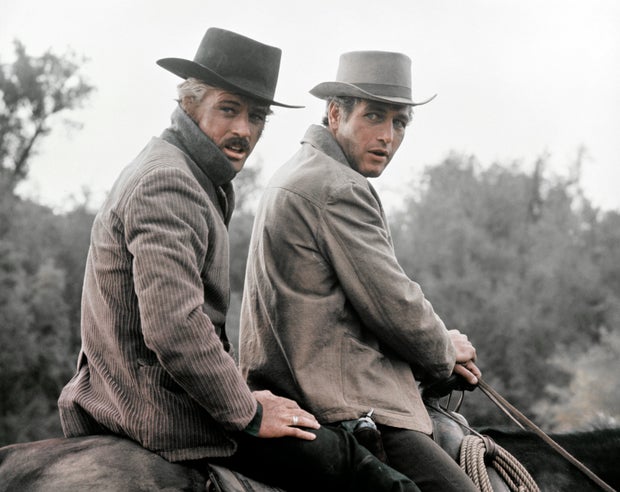
It was a generosity that Redford returned some years later, when he went to bat for Newman to co-star in “The Sting.”
“Follow the money”
While on a press tour for “The Candidate,” his 1972 satire about a California lawyer’s run for Senate against a popular incumbent, Redford sought out Washington Post reporter Bob Woodward after reading some of the reports he and Carl Bernstein had written on the 1972 break-in at the Democratic National Committee headquarters. The movie star was rebuffed. [Bernstein feared Republican backlash to their reporting if it was found out they were talking with Hollywood.] They finally met up in 1973, along with screenwriter William Goldman, and in 1974 Redford bought the film rights to the pair’s yet-to-be-published book, “All the President’s Men,” for $450,000.
Starring Redford as Woodward and Dustin Hoffman as Bernstein, and directed by Alan J. Pakula, the film captured the intensity of the reporters’ hunt for answers as they sought to “follow the money” and unravel the Watergate scandal.
Never mind that audiences knew how the story ended (Nixon resigned); the film was a critical and commercial hit, and became an inspiration for generations of young journalists.
Once Redford had gotten the taste of directing with “Ordinary People,” his appearances in front of the camera grew fewer: “Havana,” “Sneakers,” “Indecent Proposal,” “Up Close & Personal,” “The Last Castle,” “Spy Game,” and “An Unfinished Life” filled out his acting resume for the years between 1990 and 2005. He also narrated the 1992 documentary “Incident at Oglala,” about Indigenous activist Leonard Peltier. Redford’s companies, Wildwood Enterprises and Sundance Productions, produced at least two dozen feature films.
Meanwhile, much of his energy was devoted to the success of the Sundance Institute and its film festival, held in the mountains of Utah each January.
Welcome to Sundance
In 1978 the Utah Film Commission established the United States Film Festival as a means to draw visitors to the Wasatch Mountains for something other than skiing. The festival was co-created by Sterling Van Wagenen, who was a cousin of Redford’s then-wife, Lola Van Wagenen. Advocating to include independent features in the program, Redford agreed to show up at the festival and participate in a panel. Afterwards, he formed the Sundance Institute, to aid filmmakers wishing to make stories that could not find a home among Hollywood studios that were chasing hugely commercial pictures.
In 1985 the U.S. Film & Video Festival was struggling financially, and so Sundance took it over, eventually replacing the name with its own. Moved to Park City, the festival drew ever-increasing numbers of filmmakers, buyers, agents, publicists, journalists and fans to the tiny town. Beyond the festival, industry professionals would mentor young filmmakers in workshops and screenwriting labs. Wes Anderson’s “Bottle Rocket,” Kimberly Peirce’s “Boys Don’t Cry,” Paul Thomas Anderson’s “Hard Eight,” and Miranda July’s “Me and You and Everyone We Know” were all developed in the Sundance Labs.
In 1989 the festival blew up with the success of Stephen Soderbergh’s “sex, lies, and videotape,” which won the Audience Award and was picked up by Miramax. Its subsequent theatrical release earned the low-budget dramedy a cool $25 million and an Oscar nomination.
George Pimentel/Getty Images for Sundance 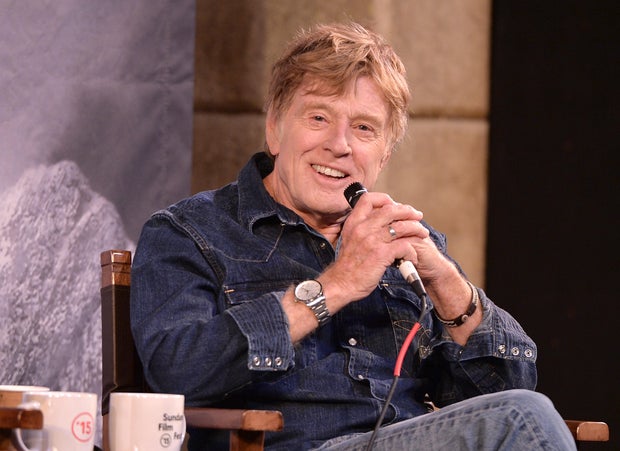
Since then, films and filmmakers who have broken out at the festival have included Quentin Tarantino (“Reservoir Dogs”), Robert Rodriguez (“El Mariachi”), Kevin Smith (“Clerks”), Christopher Nolan (“Memento”), Todd Solandz (“Welcome to the Dollhouse”), Ryan Coogler (“Fruitvale Station”), Damien Chazelle (“Whiplash”), Jordan Peele (“Get Out”), and the audience favorites “Little Miss Sunshine,” “Beasts of the Southern Wild” and “The Blair Witch Project.”
Sundance also started a program to develop theatrical works, which has resulted in such productions as “The Laramie Project,” “Light in the Piazza,” and “Angels in America.”
Not quite retiring
In 2012 Redford was executive producer and narrator of the documentary “Watershed,” about the politics surrounding the Colorado River — the environmental and cultural damage from misuse of a vital natural resource. Asked by ThinkProgress whether his films can make a difference, Redford said, “I’ve given up the idea that I can really change anything, and I just do the best I can. It’s either that or do nothing, and we know that nothing doesn’t work.”
The following year Redford starred in “All Is Lost,” playing a solo sailor facing disaster at sea when his small craft is crippled in an accident. He did much of the stunt work himself, in a “storm-tossed” water tank (the spray from fire hoses cost him partial hearing in one ear). He was hailed for his remarkable performance in which he uttered virtually no dialogue.
“All in all, it was worth it,” he told the Salt Lake Tribune. “I’m proud of the work. I felt it was a chance to do something at this point that was different and bold.”
Redford also added his name to the roster of Hollywood stars recruited for the Marvel Universe, appearing in “Captain America: The Winter Soldier” and “Avengers: Endgame” as (spoiler alert) the leader of a plot against S.H.I.E.L.D. He also starred opposite Nick Nolte in “A Walk in the Woods,” played Dan Rather in “Truth,” and appeared opposite an animated creature in the Disney film “Pete’s Dragon.” He also reteamed with Jane Fonda in the romance “Our Souls at Night,” their fourth film together.
In 2018 he starred in “The Old Man & the Gun,” as an aging bank robber on the run. Redford told “Sunday Morning” that he connected very easily with the protagonist as an outlaw: “I think probably I must’ve been born with an outlaw sensibility, in terms of my nature, yeah. Because from the time I was just a little kid, I was always wanting to go away from the rules. I wanted to — I didn’t want to break any, I just didn’t want to be held by them. In kindergarten, I ran away three times!”
With the film’s release he announced he would be retiring from acting — but he remained active with voice work and producing documentaries.
In addition to his Oscar win for “Ordinary People,” Redford was nominated for directing and producing “Quiz Show,” and in 2002 he received an honorary Academy Award for his impact on the industry. Three years later he was named a Kennedy Center honoree. At the Washington ceremony, Paul Newman ribbed Redford, referring to his reputation for lateness: “Backstage they think the only reason he’s even in the vicinity was because they told him this whole thing was yesterday.”
In 2016 Redford received the Presidential Medal of Freedom. The citation read: “His art and activism continue to shape our nation’s cultural heritage, inspiring millions to laugh, cry, think, and change.” At the presentation ceremony, President Barack Obama remarked, “As an actor, director, producer, and as an advocate, he has not stopped — and apparently drives so fast that he had breakfast in Napa and dinner in Salt Lake.”
Redford was married to Lola Van Wagenen in 1958; they divorced in 1995. They had four children: Scott, who died at age 2 months from sudden infant death syndrome; Shauna, an artist; James (Jamie), a filmmaker and environmental activist, who died of cancer in 2020; and Amy, a director.
In 2009, Redford married artist and environmental activist Sibylle Szaggars.
In 2018, the private Redford reflected to “Sunday Morning” on a favorite saying by T.S. Eliot: “‘There’s only the trying. The rest is not our business.’ It’s one of my favorite phrases. Because you can’t guarantee where the trying is going to get you. So, you can’t guarantee the result. The only thing there is in its place is the trying. That’s where the action is.”
contributed to this report.








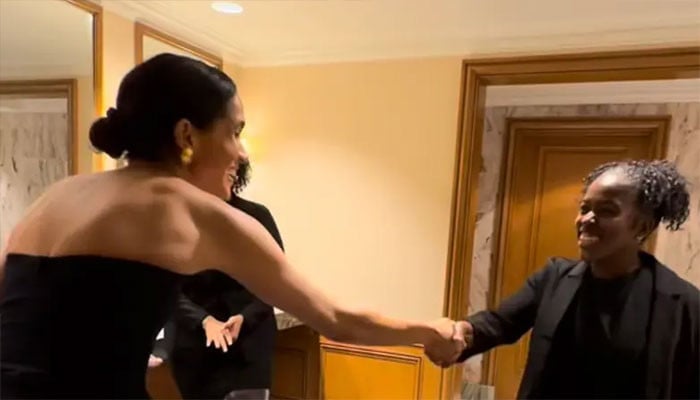
Meghan Markle stole the spotlight at The Alliance for Children’s Rights’ 34th Annual Gala on March 19, but not in the usual red-carpet way.
The Duchess of Sussex accidentally crashed a TikTok video in progress inside the ladies’ bathroom at the Beverly Wilshire Hotel, later sharing the moment on her Instagram.
“Proud to honour my forever friend @heartmom for her outstanding work for @allianceforchildrensrights and @allianceofmoms,” Meghan captioned the post.
“Kelly, you are one of one. Such a special evening + kudos to the gals in the ladies room doing a TikTok video.
Sorry we crashed your party, but it was too good not to share.”
In the clip, the Suits star can be seen shaking hands and watching in delight as the women show off their dance moves for the camera.
The gala honoured Kelly McKee Zajfen, Meghan’s longtime friend and co-founder of Alliance of Moms, a nonprofit supporting pregnant and parenting teens in foster care.
Speaking to Hello!, Kelly called Meghan “an incredible role model in living a life of service,” praising her quiet dedication behind the scenes.
“She does not do everything loudly; she does things quietly, so it’s really beautiful to watch,” she said
Meghan also took the stage to introduce her friend, celebrating Kelly’s work and the impact of the organisation.
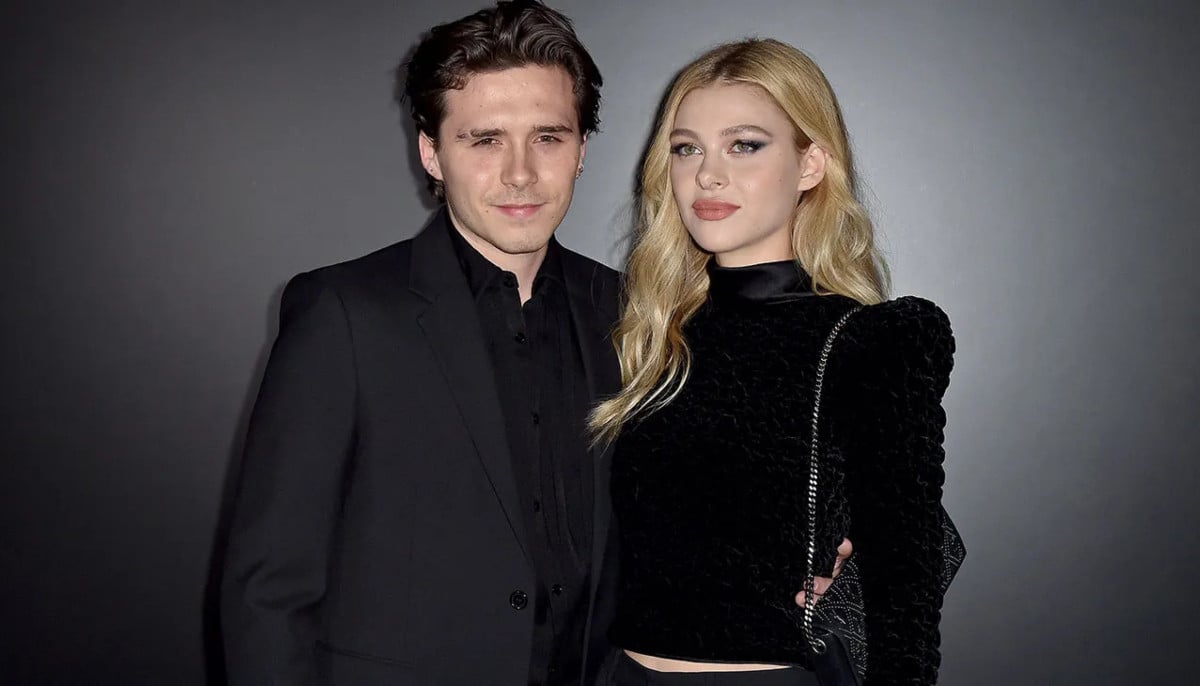
As Brooklyn Beckham’s relationship with his own family remains publicly fractured, his wife Nicola Peltz Beckham has revealed that her side couldn’t be more welcoming, treating him like one of their own from the start.
“[They welcomed him] like another son,” Nicola, 31, told Elle Spain in a profile published on Friday, 20 March.
“He gets along really well with my brothers. They play soccer together a lot.”
Nicola is one of eight children born to billionaire Nelson Peltz and model Claudia Heffner Peltz, giving Brooklyn a ready-made extended family to slot into.
The couple met in 2019 at a Halloween party, Nicola arrived dressed as a cat, and married in 2022.
She recalled the early days of their courtship with the kind of detail that suggests she’s replayed it many times.
“When I walked in, he was staring at me,” she said. Brooklyn was only in Los Angeles for ten days at the time, and Nicola, self-described as something of a homebody who goes to bed early, threw her usual habits out of the window to spend as much time with him as possible.
“We were together until 10 in the morning, driving around the city, exploring,” she said. “We made excuses not to be apart.”
It was a call to her mother the following morning that confirmed what she already suspected.
“She understood right away: ‘If you’ve stayed up this late, he’s The One,’ she said. She was right.”
The warmth of that reception from Nicola’s family stands in stark contrast to the situation with Brooklyn’s parents, David and Victoria Beckham.
In January, Brooklyn issued a lengthy public statement claiming his parents had been attempting to undermine his relationship since before the wedding, and alleging that they had pressured him to sign away the rights to his name in a deal he felt would affect him, Nicola and any future children.
“My holdout affected the payday, and they have never treated me the same since,” he said.
Brooklyn also spoke about the personal toll of the estrangement, and the unexpected relief that has followed.
“I have been controlled by my parents for most of my life. I grew up with overwhelming anxiety,” he wrote.
“For the first time in my life, since stepping away from my family, that anxiety has disappeared.”
He was unambiguous about his intentions going forward, saying he and Nicola simply wanted “peace, privacy and happiness.”
David and Victoria have not publicly responded to the allegations, though both posted birthday tributes for Brooklyn earlier in March when he turned 27.
A source close to the situation told Us Weekly that Brooklyn saw through it.
“He thinks it’s just another way for them to save face with the public and that it did not feel meaningful,” the insider said. “He is not letting any of the nonsense bother him.”
CBS News announced Friday that CBS News Radio will be shutting down this spring after nearly 100 years of broadcasting. The company cited “challenging economic realities” and a shift in radio programming strategies as reasons behind the decision.
About 700 affiliated stations nationwide carry CBS News Radio programming, which will end on May 22. All jobs on the radio team will be eliminated, the company said.
“We understand how difficult this news is for our staff and their colleagues, who have worked side by side with us to cover some of the most significant stories of our time,” CBS News President Tom Cibrowski and Editor-in-Chief Bari Weiss said in a statement.
They also paid tribute to the historic role of CBS News Radio in covering major events worldwide since the dawn of the broadcasting era.
“For nearly 100 years, CBS News Radio has delivered original reporting to the nation — from Edward R. Murrow’s World War II reports in London to today’s daily White House updates,” they said. “Our signature broadcast, ‘World News Roundup,’ remains the longest-running newscast in the country. CBS News Radio served as the foundation for everything we have built since 1927.”
Murrow became a household name as millions of Americans tuned in for news of the war, and he later became a mainstay on CBS News television broadcasts. But radio declined in the TV era, and in recent years social media and podcasts further cut into the audience.
“This is another part of the landscape that has fallen off into the sea,” Michael Harrison, publisher of Talkers, a trade publication for radio talk shows, told The Associated Press. “It’s a shame. It’s a loss for the country and for the industry.”
Layoffs also took place across other parts of CBS News on Friday; a total number of job cuts was not announced.
“It’s no secret that the news business is changing radically, and that we need to change along with it,” Cibrowski and Weiss said in an email to staff.
CBS is owned by Paramount Skydance, which took ownership last year.


How to watch 2026 NCAA swimming and diving championships

Markle Markle apologises for hijacking a bathroom TikTok video

Men’s March Madness Friday takeaways

Stock market crash today (March 12, 2026): Nifty50 opens below 23,600; BSE Sensex down over 900 points on continuing US-Iran war – The Times of India

US issues 30-day waiver for Russian oil shipments stranded at sea | The Express Tribune

Chinese firm to invest $15.34 million in garment factory at BEPZA

-
Business1 week ago
Stock market crash today (March 12, 2026): Nifty50 opens below 23,600; BSE Sensex down over 900 points on continuing US-Iran war – The Times of India
-
Business1 week ago
US issues 30-day waiver for Russian oil shipments stranded at sea | The Express Tribune
-
 Fashion1 week ago
Chinese firm to invest $15.34 million in garment factory at BEPZA
-
 Fashion1 week ago
US unemployment rate 4.4% in Feb 2026, LFPR 62%: BLS
-

 Tech1 week ago
Tech Traveler’s Guide to Dumbo: Where to Stay, Eat, and Recharge
-

 Sports1 week ago
Bilas’ All-America teams: My top 20 men’s college basketball players of 2025-26
-

 Tech6 days ago
Tips and Advice for Buying Used or Refurbished Electronics
-
 Business1 week ago
Oil holds above $100 as tensions escalates between Iran, US and Israel – SUCH TV