

Business
Rupee, CAD under watch, US trade talks on track: Goyal says India will ‘come out winner’

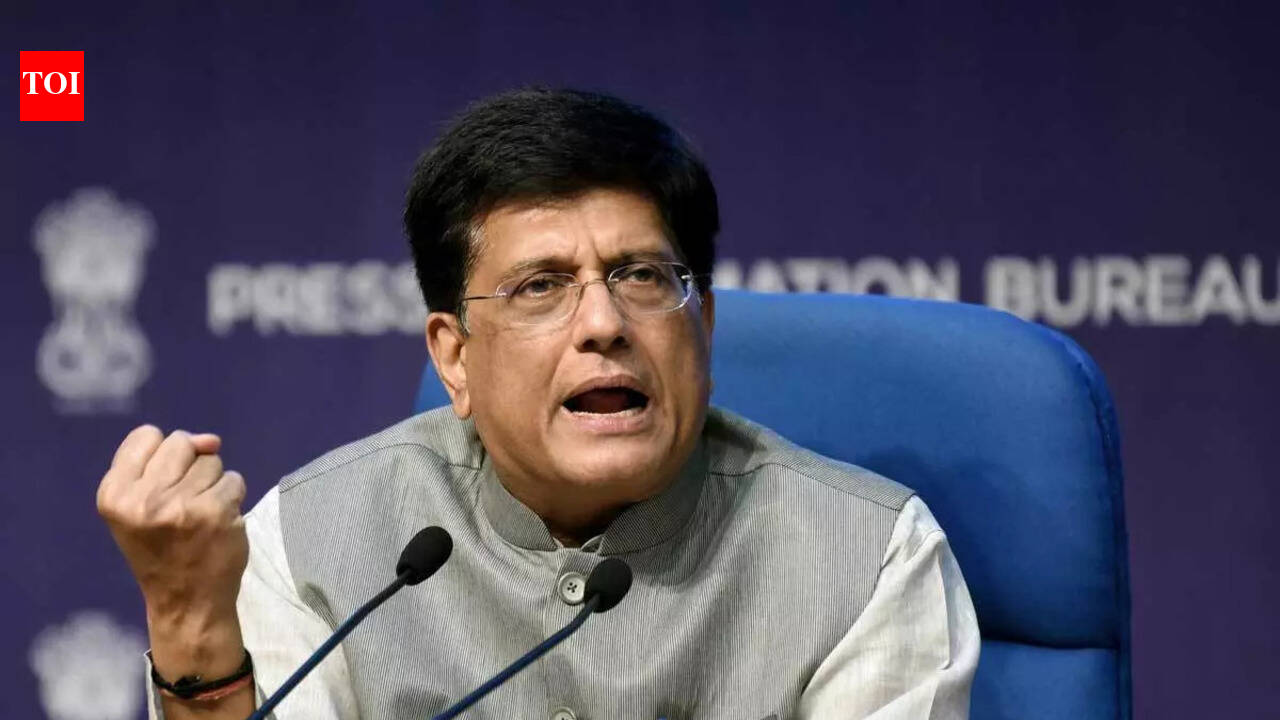
Union commerce and industry minister Piyush Goyal on Thursday addressed concerns around the rupee’s decline, the widening current account deficit (CAD), and shared updates on the progress of the proposed US-India trade deal.Goyal said the Centre was actively considering several measures to contain further pressure on the CAD, while stressing that different arms of the government were working in coordination to navigate challenging global economic conditions.“We are monitoring the situation. All the various arms of government are working as a team. Several steps are under consideration. The situation is globally quite challenging, but we have the confidence and the courage of conviction that we’ll come out winners even in this challenging time…” Goyal said.According to RBI data released on March 2, India’s current account deficit widened to $13.2 billion, or 1.3% of GDP, in the December quarter, compared with $11.3 billion in the same period a year earlier. The increase was mainly attributed to a wider trade deficit following lower exports to the US.At the same time, the CAD for the April-December 2025 period narrowed to $30.1 billion, or 1% of GDP, from $36.6 billion, or 1.3% of GDP, during the corresponding period of the previous year.The current account deficit reflects the gap between a country’s imports and exports of goods and services, along with other external payments and receipts.When asked whether the government was considering steps to curb non-essential imports, Goyal said there were currently no such plans. However, he said citizens had been encouraged to reduce spending on products dependent on imports.“No such plans of that sort right now, but we have of course made an appeal to all the citizens of India to be more conscious about their spending on products which are import dependent and it’s just very natural that every Indian who trusts Prime Minister Modi has taken cognisance of that and is helping the country in every smaller big way with their own actions. I’m really proud of every Indian who has taken Prime Minister Modi’s appeal to heart and is contributing to nationbuilding...” he said.Goyal also pointed to continued investment commitments from the United States, particularly in the technology sector.“US commitment upwards $60 billion in last six months looking at Amazon, Google data centre investment pledge; US-India truly working as natural partners, complement each other,” he said.On the timeline for discussions around the trade deal announced earlier, the minister said the process would continue as scheduled.“When we launched itself, if you recall, we had said that the first round of talks will happen in the second half of 2026. We will have it as scheduled.”Earlier, a senior United States official said that Washington and New Delhi were making progress towards a finalised trade deal as the two sides held fresh negotiations in the American capital.“The Trump administration and India continue to have positive and productive discussions towards a finalised trade deal,” the official told ANI in response to a question on the current status of the ongoing trade talks between the two countries in Washington, DC.Indian delegates have been arriving in Washington for the latest round of negotiations. Another official familiar with the discussions, speaking on condition of anonymity, said the two sides were close to wrapping up an agreement, with most substantive issues already resolved.


Nationwide will give members an £100 boost after another “stellar” year, its CEO has announced.
The building society’s fourth Fairer Share payment, unveiled on Thursday, means 4.4m members will be eligible for the cash payment in June.
It comes after another successful year for the building society, which leaves the CEO Dame Debbie Crosbie as probably the most powerful woman in banking.
The building society made a pre-tax profit of £1.49 billion for the year to the end of March.
In the past year, Nationwide has also lured another 1m new current account customers after upping its competitive assault on the big high street banks.
Meanwhile, its profits helped it to return £1.8bn in value for members in the form of higher savings and lower mortgages.
Nationwide, the fastest growing brand in UK financial services, also saw more people who switch account choose it over any other provider. It offers a £175 switching bonus to new customers.
It doubled its share of student current account openings to 43 per cent, which suggests the mutuality message is popular among the young. It has won praise from the industry for putting first-time buyers first.
Under Dame Debbie, Nationwide has adopted a more combative stance, with TV adverts featuring actor Dominic West which mock the big banks for bad service and branch closures.
Nationwide has made a promise to keep all branches open until at least 2030.
Dame Debbie said: “These stellar results are exactly what we want to deliver for our 22 million Nationwide customers. I am delighted that more than a million more people opened a Nationwide account this year. It is testament to our commitment to providing the best service possible.
“It has been especially pleasing to see such a strong rise in students joining Nationwide. Holding the number one position in high street banking across the three crucial areas of mortgages, personal savings and current account balances shows how competitive and ambitious we are. We’re proud to serve the growing number of people and businesses who choose Nationwide.”
On the Fairer Share payment, Dame Debbie added: “Once again, we will reward people who use us for their main banking with a £100 Fairer Share payment. And all Nationwide members can now open a new savings bond at an exclusive rate.
“We are proud to be recognised as the UK’s best bank, and we will continue to deliver the value, service and choice our customers deserve. My commitment is to make sure every customer feels secure, supported and valued.”
Dame Debbie’s most controversial move was the £2.9bn takeover of Virgin Money in 2024, which bolstered the building society’s earnings. Critics have worried that it would be difficult to integrate the two. That deal meant that one in three people in the UK now have a connection to Nationwide.
Nationwide says it has made “significant progress” on merging Virgin Money, which is seen as strong in business banking. Customers will begin to migrate from Virgin to the Nationwide brand this year.
Fans of mutuality note that while some big banks, notably RBS, needed a direct government bailout during the 2008 global financial crash, Nationwide did not.
Nationwide was named Which? bank brand of the year last year and took gold in the Retail Banking sector at the Britain’s Most Admired Companies awards. It says it has been first for customer satisfaction among its peer group for 14 consecutive years.
Nationwide traces its history back to 1884 and prides itself on being a mutual owned by its members. It says that without shareholders to reward, over time it should always offer cheaper home loans than the big banks.
David Hollingworth at L&C Mortgages said: “Nationwide has long made first time buyers a priority and that continues. It has looked to solve the affordability conundrum for first time buyers, flexing criteria to as much as 6x income as part of its Helping Hand proposition. It is also consistently ‘there or thereabouts’ when it comes to the Best Buy tables, taking on the big banks in what has been an aggressively competitive marketplace.”
Adam French, head of consumer finance at Moneyfactscompare.co.uk, said: “While Nationwide’s traditional savings accounts and ISAs may not currently top the best buy charts on rates alone, it is very competitive. It’s fixed, child’s and regular saver products all offer returns comfortably above the rate of inflation which is critical for cash savers looking to protect their nest egg from the corrosive effects of rising prices.”

Britain’s biggest budget airline, easyJet, says it intends to operate its full summer schedule – despite concerns about possible aviation fuel shortages caused by the Iran conflict.
The carrier’s chief executive, Kenton Jarvis, told the BBC Today programme: “We’ve seen absolutely no issues with fuel supply at any of our airports in the UK, across Europe, or indeed beyond. We stay in very close contact with our fuel suppliers, airports, governments, and they are equally raising no issues looking forward.
“What is true is obviously there’s a lot less oil coming from the Gulf region, but fuel suppliers have successfully diversified with production increased in Norway, in West Africa, in the Americas. Refining capacity for jet fuel has also increased substantially outside of the Gulf region.”
In March, the airline reduced the number of available seats by 0.3 per cent due to the high fuel price. But Mr Jarvis said: “At easyJet, we fully intend to fly the summer schedule that we have on sale.”
His comments echo those of Steve Heapy, CEO of rival Jet2, who said on Wednesday: “The current picture is one of increased production and imports, meaning we continue to look ahead with confidence. We have already been very clear about our plans to operate our schedule as normal this summer, and our message to holidaymakers is that summer is on.”
EasyJet reported sharply increased losses for the first half of its financial year, covering October 2025 to March 2026. The company lost £552m, up 40 per cent compared with a year earlier. It represents an average loss of £13 for each of the 42 million passengers flown.
The airline’s CEO told Today presenter Nick Robinson: “Airlines typically make losses in the six months to March as they run through the winter and then look to make the profits as we operate in the summer.
“We actually saw our airline capacity increase by four per cent, and six per cent more passengers came with us because the planes were fuller.
“So demand was there, but the pricing was not increased versus last year.”
The carrier has raised its minimum fare and is conducting an “active review of all discretionary cost”.
Looking ahead, the easyJet CEO said: “Demand seems to be very strong in what we call the late market.
“As we ran through April, demand was very strong for the month of April. We’re seeing it again in May. But as you look further out, people are more cautious. People are waiting and watching, but they are booking as as you approach, and I expect that strong late booking market to run through the summer.”
He later told analysts that fares for the summer are “slightly above where they were last year over peak season”.
EasyJet has 72 per cent of its fuel requirement hedged for the summer months, falling to 53 per cent for the winter season. It has suspended its normal hedging strategy “due to elevated near-term fuel prices”.
Mr Jarvis also described delays caused by the EU entry-exit system as “completely unacceptable”.
Since 10 April 2026, all Schengen area frontiers are supposed to be running the digital borders scheme and checking the biometrics of “third-country nationals” – of whom British travellers comprise the major share.
Already airlines including easyJet have left passengers behind due to the length of passport queues on departure from the EU to the UK.
“This is completely unacceptable,” Mr Jarvis said. “I’d encourage all the European countries is to use the flexibility that’s been given to them by the European Commission, that they can phase the introduction of this if they see queues in peak times.
“They can go back to normal border force control with stamping of passports, so they should use this.”
Greece has said biometric checks will not be imposed on British arrivals and departures until further notice.
Read more: Ryanair boss Michael O’Leary to reach four decades leading Europe’s biggest budget airline
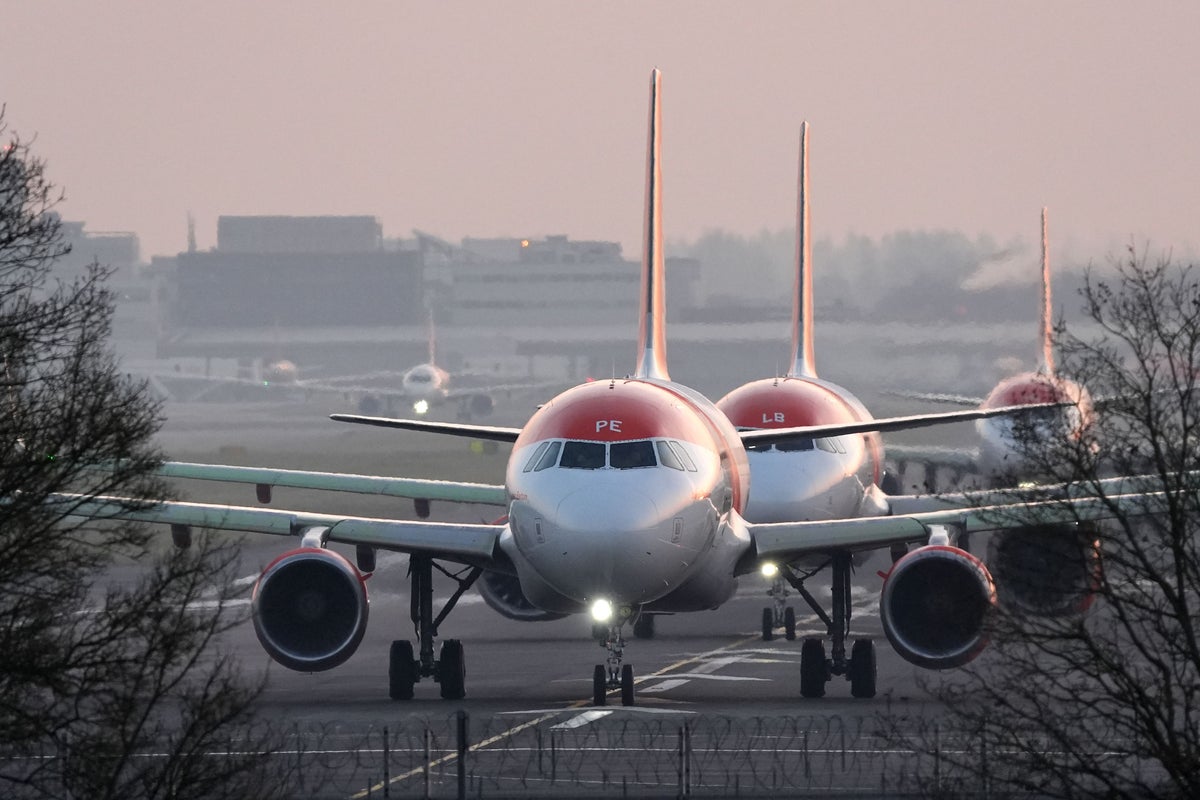
EasyJet’s boss said the airline is “not seeing any disruption to fuel supply” as he urged passengers to “book with confidence”.
Chief executive Kenton Jarvis made the comments amid concerns that UK holidaymakers could see their flights cancelled because of fuel shortages caused by the Iran oil crisis.
Some airlines have cut schedules in recent weeks amid a spike in jet fuel prices, attributed to Iran’s stranglehold on tankers passing through the Strait of Hormuz.
But the impact on flights to and from the UK has so far been limited.
EasyJet said it intends to “operate the full summer schedule on sale” and it has “normal supply visibility” for the next four weeks.
Mr Jarvis commented: “EasyJet is not seeing any disruption to fuel supply.
“We continue to operate normally and our customers should book with confidence, taking advantage of our great value fares.”
Asked about the issue in an interview on BBC Radio 4’s Today programme, he said: “We stay in very close contact with our fuel suppliers, airports, governments, and they are equally raising no issues looking forward.
“What is true is obviously there’s a lot less oil coming from the Gulf region, but fuel suppliers have successfully diversified, with production increased in Norway, in West Africa, in the Americas, and refining capacity for jet fuel has also increased substantially outside of the Gulf region.”
He added: “I would absolutely say don’t panic about it. At easyJet, we fully intend to fly the summer schedule that we have on sale, and we also have a ‘book with confidence’ promise that we will not put fuel surcharges on, so once you’ve booked, that will be the price you pay.”
EasyJet reported that bookings for summer flights are lower than the same point last year because of uncertainty caused by the conflict in the Middle East.
The airline said it has sold 58% of its seats for the six months to the end of September, down two percentage points from a year ago.
But short-notice bookings in the month of departure are up year-on-year.
The group reported a half-year pre-tax loss of £552 million, which is in line with the range it gave in a trading update in April.
That is compared with a loss of £401 million a year ago.
EasyJet warned that its finances up to the end of September will be impacted by the war, which is causing higher fuel costs and “near-term uncertainty around customer demand”.
The group said last month the conflict cost it about £25 million in higher jet fuel prices in March.
Mr Jarvis said: “Despite conflict in the Middle East creating near-term uncertainty, easyJet is well placed to manage the current environment, supported by one of the strongest investment-grade balance sheets in European aviation.”

Nationwide pledges £100 cash handout to members – here’s how to get it

5 Great Android Tablets That Aren’t Just for Cheapskates and Apple-Haters

Morocco, Bangladesh to deepen cooperation in trade & investment

-

 Entertainment1 week ago
Conan O’Brien hat tricks as Oscar host
-

 Fashion1 week ago
Italy’s Zegna Group’s Q1 growth boosted by strong organic performance
-
 Business1 week ago
Pound wobbles and bonds suffer as Starmer battles on
-

 Fashion1 week ago
US T&A exports decline 10% to $5 bn on softer regional demand
-

 Entertainment5 days ago
Where Pete Davidson, Elsie Hewitt stand after breakup: Details revealed
-

 Sports1 week ago
2025-26 NBA Title Odds: Thunder, Spurs Favored; Knicks Rising
-

 Tech1 week ago
Hantavirus Conspiracy Theories Are Already Spreading Online
-
 Business1 week ago
Tui issues update on summer jet fuel shortage fears