

Business
SaaSpocalypse Explained: What Is Anthropic’s New AI Tool And Why It Crashed IT Stocks


Last Updated:
Anthropic’s Claude Cowork AI launch triggered the SaaSpocalypse, wiping $285 billion from global software stocks as investors fear AI replacing platforms



At the centre of the storm is Claude Cowork, Anthropic’s no-code, agentic AI assistant for enterprises. (Representative Image)
A new word entered the market’s vocabulary overnight, ‘SaaSpocalypse’. A mash-up of Software-as-a-Service (SaaS) and apocalypse, the term captures a sudden, deep unease gripping investors as artificial intelligence begins to threaten the very foundations of the global software business.
The trigger was an announcement by Anthropic, whose latest enterprise-focused AI release has forced markets to confront a hard question, that what happens when AI stops assisting software and starts replacing it?
Late Monday night in the US, even before Wall Street opened, shares of major SaaS companies began sliding as details emerged on Anthropic’s website about a major expansion of its enterprise AI capabilities. By the time markets closed on Tuesday, the sell-off had turned brutal.
AI Without Software
At the centre of the storm is Claude Cowork, Anthropic’s no-code, agentic AI assistant for enterprises. The company unveiled 11 new plug-ins designed to automate tasks across legal, finance, marketing, sales, product management and data analysis, work that has traditionally required multiple specialised software platforms.
For years, companies built and sold separate tools for accounting, customer management, legal compliance, marketing campaigns or internal productivity. Claude Cowork collapses much of that stack into a single AI system capable of understanding context, executing tasks independently and retaining institutional memory.
According to Bloomberg, investor anxiety peaked around Anthropic’s legal tools, which signal a shift from AI as a helper to AI as an operator.
The Claude Legal Agent can read and review contracts, check compliance with regulations and draft legal documents. Anthropic has stressed that all outputs must be reviewed by licensed attorneys, but the market reaction suggests investors are looking past the disclaimers, and toward a future where fewer people and fewer software products are needed to do the same work.
One AI, Many Jobs
Anthropic says its new plug-ins are designed around real enterprise workflows. The productivity tool manages tasks, plans the day and builds long-term memory of work context. Product management tools write feature specifications, plan roadmaps and distil user research into simple summaries. Marketing agents create content, plan campaigns and analyse performance. Finance tools assist with reconciliation, journal entries and financial reporting. Data agents can write SQL, explore datasets and generate dashboards and visualisations.
Crucially, Claude can now perform many of these tasks directly, without relying on platforms such as Salesforce or ServiceNow, a development that has unnerved investors across the software ecosystem. Shares of companies including Salesforce, Adobe, Workday and ServiceNow fell between 6%-8% overnight, CNBC-TV18 reported.
Markets React
The broader impact was swift and severe. A basket of IT stocks tracked by Goldman Sachs fell 6%, its sharpest single-day drop since April. Nearly $285 billion in market value was wiped out across software, financial services and asset management stocks, Bloomberg reported.
On Tuesday, February 3, the Nasdaq plunged more than 350 points. The shockwaves travelled quickly to India. US-listed ADRs of Indian IT majors slid sharply, with Infosys falling about 6% and Wipro nearly 5%. Accenture and Cognizant dropped by as much as 10%.
The steepest losses were seen in legal and data services. LegalZoom plunged nearly 20%, Thomson Reuters fell over 15%, and RELX, the parent of LexisNexis, declined about 14%.
From ‘AI helps’ to ‘AI replaces’
Wall Street firms were quick to put a name to the panic. Jefferies dubbed the episode the “SaaSpocalypse”, arguing that investor sentiment has shifted decisively. “We call it the SaaSpocalypse — an apocalypse for software-as-a-service stocks,” said Jeffrey Favuzza of Jefferies’ equity trading desk, quoted by Bloomberg, “Trading is very much ‘get me out’ style selling.”
Stephen Yiu, chief investment officer at Blue Whale Growth Fund, said 2026 would be a defining year for the sector. According to him, the key challenge for investors will be identifying which companies harness AI successfully, and avoiding those it renders obsolete.
Anthropic is entering an already competitive legal AI market dominated by startups such as Harvey AI and Legora. Analysts, however, say its advantage lies in owning its underlying AI models, giving it scale and control that many AI startups, dependent on third-party models, lack.
That combination has made Anthropic’s move especially unsettling for traditional software firms. For the first time, investors are openly pricing in a future where AI is not just layered on top of existing software, but replaces large parts of it altogether.
 Click here to add News18 as your preferred news source on Google.
February 04, 2026, 15:36 IST
Read More

Two ads promoting British beef and milk have been banned after television presenter and environmental campaigner Chris Packham complained that they misled consumers about the products’ carbon footprints.
Both ads for the Agriculture and Horticulture Development Board’s (AHDB) Let’s Eat Balanced campaign used the carbon footprint of British beef and milk to promote the products, firstly stating: “British beef not only tastes great, but has a carbon footprint that’s half the global average*.”
The asterisk linked to text that stated: “Full lifecycle emissions of CO2 eq (carbon dioxide equivalent) per kg of beef.”
The ad for milk stated: “British milk not only tastes good, but is also produced to world-class standards, and has a carbon footprint a third lower than the global average.”
Packham complained to the Advertising Standards Authority (ASA) that the ads, and specifically the carbon footprint claims, were misleading as they did not reflect the full environmental impact of British meat and dairy.
The AHDB said the ads’ mention of carbon emissions would be understood in relation to the environmental impact of beef and milk that occurred between the “cradle-to-retail” stages.
But the ASA said the average consumer “being reasonably well-informed, observant and circumspect” would understand the claims to apply beyond the retail stage and include actions such as cooking and wastage.
The ASA said: “While we acknowledged the potential difficulties in producing post-retail emissions data, the claims in the ads suggested those emissions were included and we therefore expected the evidence provided to also include them.
“We therefore concluded that the evidence presented was insufficient to support the full life-cycle claims in the ads, which was how the average consumer was likely to interpret them.
“We reminded AHDB that environmental claims should be based on the full life cycle unless the ad stated otherwise.”
AHDB’s director of communications and market development, Will Jackson, said: “Let’s Eat Balanced is doing what it was designed to do, providing clear, factual, evidence-led information about British food, nutrition and farming standards.
“Since the investigation began, we have conducted independent consumer research which found that the majority of respondents interpreted these adverts as relating to the production phase only, from farm to retail.
“This research provides important insight into consumer understanding and supports our belief that consumers were not misled by the information we shared in these two specific adverts.”
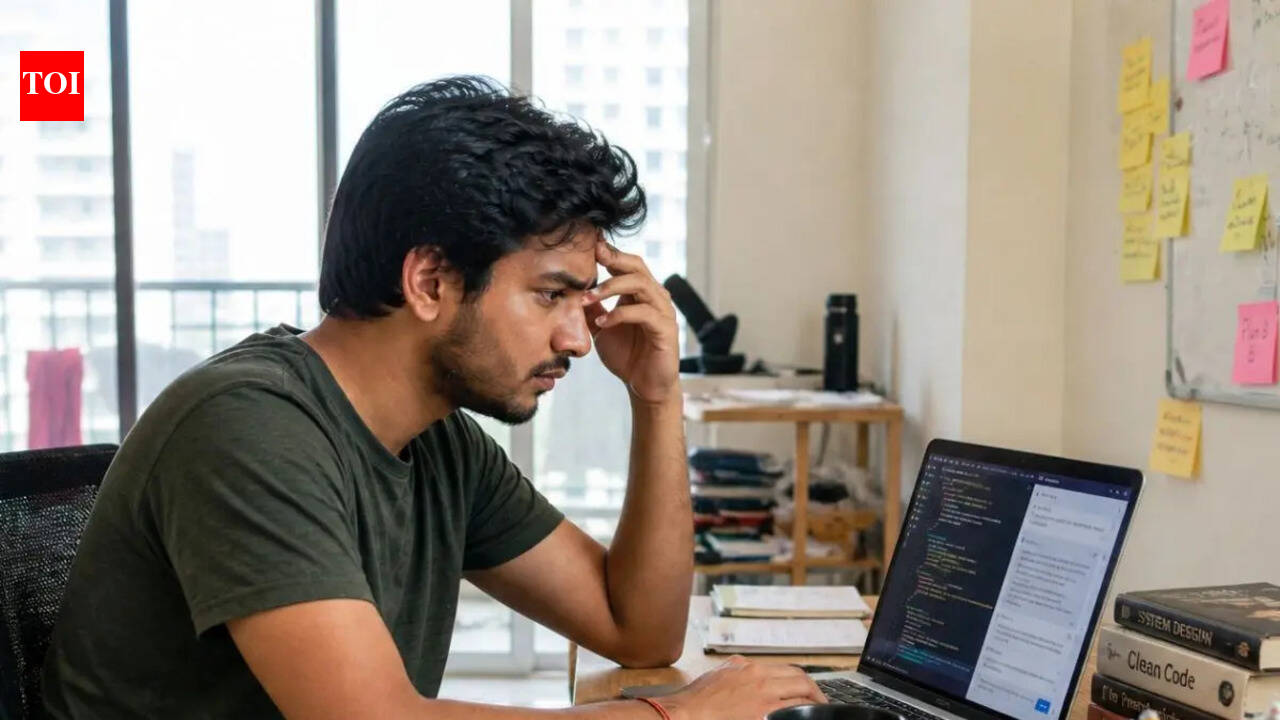
BENGALURU: India’s Gen Z workforce is embracing what experts describe as “portfolio careers” – balancing multiple professional identities and income streams simultaneously. New research from LinkedIn shows that 75% of Gen Z entrepreneurs in India now manage multiple income streams, significantly higher than the 62% among Gen X entrepreneurs. The findings point to a growing preference among younger professionals for flexibility, autonomy and diversified sources of income. “We’re also seeing the rise of the ‘portfolio era’, with more professionals creating multiple income streams and redefining what a career can look like. This shift is making entrepreneurship more accessible than ever before,” said LinkedIn India country manager Kumaresh Pattabiraman.Rather than depending on a single full-time role, many professionals are simultaneously building businesses, freelancing, consulting, creating online content and monetising specialised skills through digital platforms. The trend comes amid a broader rise in entrepreneurial activity in India. LinkedIn recorded a 104% year-on-year increase in members adding “Founder” to their profiles – the highest growth among all global markets.AI is also emerging as a major enabler of this shift. The report found that 85% of Gen Z entrepreneurs consider AI and digital tools important to their business operations.

Sam Altman said Elon Musk tried many times for total control of OpenAI, which he’s now suing.
Source link


India’s apparel sourcing window reopens—for now

Will LeBron James retire after current season?

South Korea reviews phased support for Strait of Hormuz security efforts

-

 Tech1 week ago
DHS Demanded Google Surrender Data on Canadian’s Activity, Location Over Anti-ICE Posts
-
 Business1 week ago
Heineken plans huge investment in hundreds of UK pubs ahead of World Cup
-

 Tech5 days ago
A new frontier: Identity stack evolves for agentic systems | Computer Weekly
-

 Tech4 days ago
‘Orbs,’ ‘Saucers,’ and ‘Flashes’ on the Moon: Pentagon Drops New UFO Files
-
 Business1 week ago
India among most resilient large EMs, better placed for future global shocks; policy reforms & strong buffers help: Moody’s – The Times of India
-

 Tech5 days ago
What Microsoft Executives Really Thought About OpenAI in 2018
-

 Fashion5 days ago
New orders in German manufacturing up 5% MoM in Mar 2026: Destatis
-

 Sports5 days ago
Shaheen Afridi achieves landmark feat during opening Test against Bangladesh