

Entertainment
Sadie Sink finally breaks silence on viral ‘Stranger Things’ scene

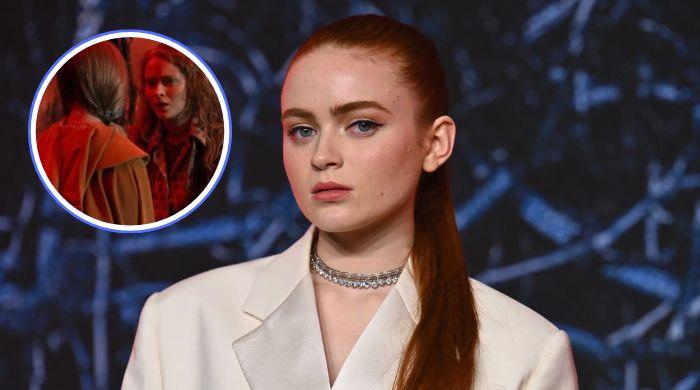
Stranger Things have been making headlines even days after its finale premiered on December 31.
One specific scene has been going viral on the internet and is receiving a lot of criticism for the lack of urgency showed by Sadie.
In the finale episode, there is a shot where her character Max Mayfield finally gets a chance to escape from the mind prison of Vecna, played by Jamie Campbell Bower.
During the scene, she takes an extended time to have a heartfelt conversation with Holly Wheeler (Nell Fisher).
Internet has been going crazy with people expressing their frustration over the scene.
Finally, Sadie has also addressed the matter and with her statement, it looks like that she herself felt frustrated over the scene after watching it.
The 23-year-old recently appeared at The Tonight Show Starring Jimmy Fallon, where she spoke about the controversial sequence in Stranger Things.
Sink opened that she did not realize the lack of urgency while shooting the scene.
She admitted, “When I was shooting it, I don’t know if the sense of urgency crossed my mind.”
“But then, watching it, clearly I’m taking my sweet time with it. Like, why are we doing a podcast episode right now? Run!”
The finale episode of the Stranger Things broke records and even crashed Netflix due to heavy traffic.

Nathalie Baye, the discreet icon of French cinema, passes away at age 77 at her home in Paris, her family confirms.
Fans were left reeling with the sudden passing of French film icon Nathalie Baye, who has starred in over 100 roles throughout her decades-long career.
Her buzzing film credits include Downton Abbey: A New Era, Catch Me if You Can, and Laurence Anyways.
After the news was confirmed by her family, fans and colleagues have been pouring out tributes.
Baye was struggling with Lewy body dementia, per the Y Net News outlet, which added that her health deteriorated in the summer of 2025.
She debuted her career in the French cinema in 1973 in La Nuit Américaine, directed by Francois Truffaut.
Baye saw her stardom rise after starring in Sauve qui peut (la vie) in 1980.
She was born on JULY 6, 1948, in Mainneville, in the Eure region.
Nathalie Baye showed interest at a very young age in theater and cinema and was enrolled in the drama classes of the Rue Blanche at the prestigious Conservatoire National Supérieur d’Art Dramatique de Paris in 1967 and graduated in 1971.
After debuting in the 1973 film La Nuit Américaine, she then worked with the legends of French cinema.
These included Jean-Luc Godard (Sauve qui peut ((la vie) 1980), Claude Sautet (Mado, 1976), Bertrand Tavernier (Une semaine de vacances, 1980), Bertrand Blier (Father-in-law, 1981), and Claude Chabrol (La Fleur du mal, 2003).
Baye is survived by her daughter, Laura Smet, who is also a famous French actress.
Entertainment
Madonna surprises Sabrina Carpenter for Coachella duets, 20 years after her 2006 debut
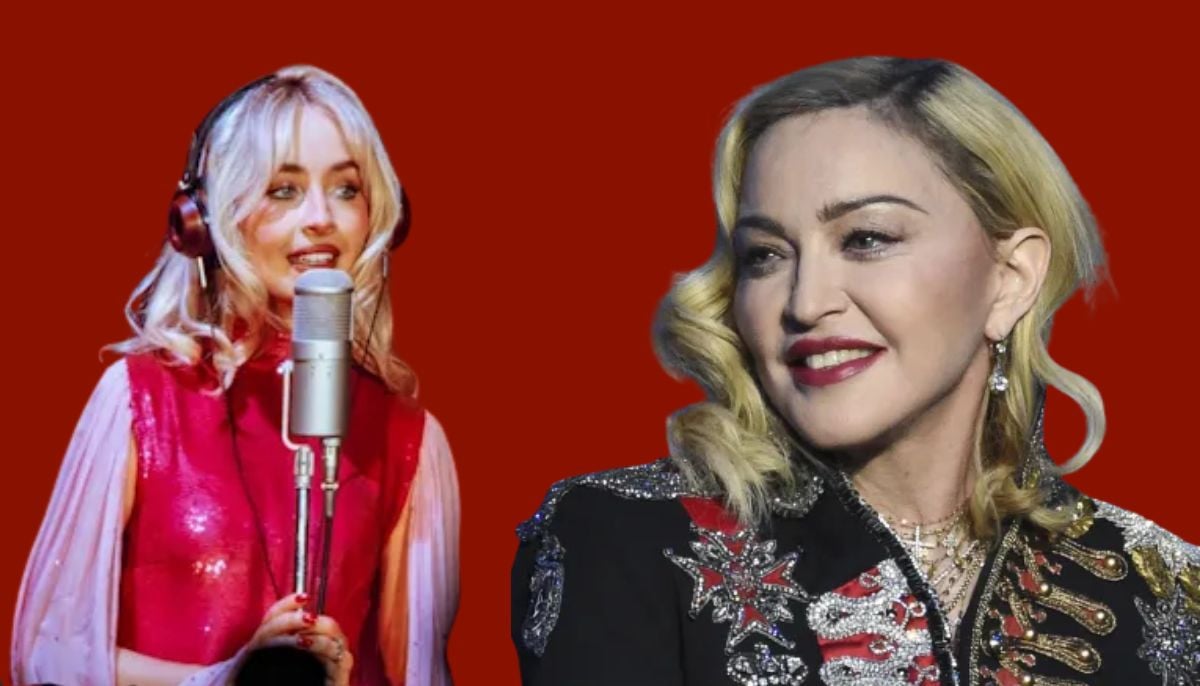
Madonna stunned everyone after making a cameo during Sabrina Carpenter’s buzzing performance on Friday night, April 17, at Coachella weekend two.
Madonna performed along with Sabrina Carpenter for duets of Vogue , Like a Prayer and a new track.
Carpenter was in the middle of performing Juno, usually the part of her ‘Short ‘n Sweet’ tour segment in which she playfully arrests a new celebrity and this time she brought out Madonna.
The pop queen appeared through center stage to perform Vogue, joining Carpenter to debut a new duet.
The buzz surrounding the track is that it would be featured on the singer’s upcoming album Confessions II.
Then, Madonna grabs the mic to give an extended address to the humming audience.
Recalling her 2006 debut, the pop queen said, “So 20 years ago today I performed at Coachella. I was in the dance tent and it was the first time I performed ‘Confessions on a Dance Floor Pt. 1’ in America, and that was such a thrill for me, so you can imagine what a thrill it is to be back 20 years later in the same boots, with the same corset, the jacket I had on earlier, a Gucci jacket.”
“So it’s like a full circle moment, you know? Very meaningful for me,” she concluded.
It’s not just a coincidence that Madonna’s return to Coachella aligns with the reveal of her upcoming album, Confessions II, earlier this week.
The album is set to be released on July 3, 2026, which marks the first full-length album in seven years.
- Lawmakers criticise “benefiting” Russia amid Ukraine war.
- Analyst warns energy market tools are “nearly exhausted”.
- European Union urges no relaxation of Russia sanctions.
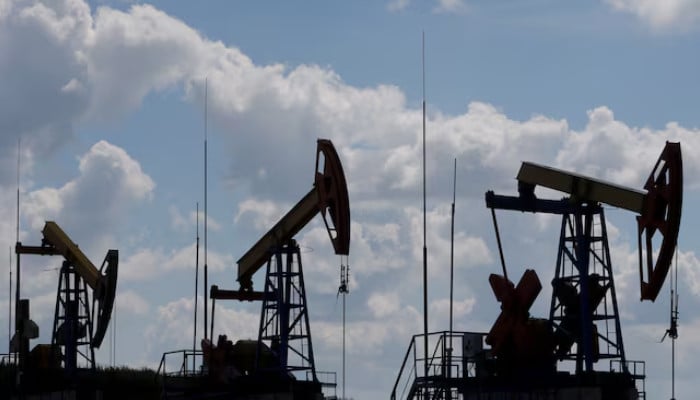
WASHINGTON: The Trump administration has renewed a waiver allowing countries to buy sanctioned Russian oil at sea for about a month, even as lawmakers accused the government of going easy on Moscow as its war on Ukraine grinds on.
The Treasury Department’s waiver lets countries purchase Russian oil and petroleum products loaded on vessels as of Friday through May 16. It replaces a 30-day waiver that expired on April 11 and excludes transactions involving Iran, Cuba and North Korea.
The move is part of the administration’s effort to control global energy prices that have shot higher during the US-Israeli war on Iran. It came after countries in Asia, suffering from the global energy shock, pressed Washington to allow alternative supplies to reach markets.
Reversal by treasury
“As negotiations (with Iran) accelerate, Treasury wants to ensure oil is available to those who need it,” a Treasury Department spokesperson said.
Just two days earlier, Treasury Secretary Scott Bessent said Washington would not be renewing the waiver for Russian oil and another for Iranian oil, which is set to expire on Sunday.
Global oil prices tumbled 9% on Friday to about $90 a barrel after Iran temporarily reopened the Strait of Hormuz, an oil choke point in the Gulf. But the war has already created the worst global energy supply disruption in history, the International Energy Agency has said.
The war, which entered its eighth week on Saturday, has damaged more than 80 oil and gas facilities in the Middle East, and Tehran has warned it could close the strait again if the recent US Navy blockade of Iranian ports continued.
High oil prices are a threat to President Donald Trump’s fellow Republicans ahead of November’s midterm elections.
Trump has also faced pressure from partner countries on the oil price. A US source said partner countries on the sidelines of the Group of 20, World Bank, and International Monetary Fund meetings in Washington this week had requested the US extend the waiver.
And he spoke about oil this week in a call with Prime Minister Narendra Modi of India, a big purchaser of Russian oil.
The waiver on Iranian oil, which the Treasury Department issued on March 20, allowed some 140 million barrels of oil to reach global markets and helped relieve pressure on energy supply, Bessent said last month.
Lasting damage
US lawmakers from both political parties had slammed the administration over the sanctions waivers, saying they stood to help the economy of Iran while it was at war with the US and of Russia as it was at war with Ukraine.
The waivers could impede the West’s efforts to deprive Russia of revenue for its war in Ukraine and put Washington at odds with its allies. European Commission President Ursula von der Leyen has said now is not the time to relax sanctions against Russia.
Russian presidential envoy Kirill Dmitriev said in a social media post about the renewal of the waiver: “US-Russian economic and energy cooperation will continue.”
He had said the first waiver on Russian oil would free 100 million barrels of crude, equal to almost a day’s worth of global output.
Brett Erickson, a sanctions expert at the consulting firm Obsidian Risk Advisors, said Friday’s renewal is likely not the last waiver Washington will issue.
“The conflict has done lasting damage to global energy markets, and the tools available to stabilise them are nearly exhausted,” Erickson said.


Nathalie Baye, low-key legend of French cinema, dies aged 77

Transfer rumors, news: Liverpool eye Wharton amid Man United, Real Madrid interest

The Best Movies to Stream This Month

-

 Politics1 week ago
Indian airlines hit hardest after Dubai limits foreign flights until May 31
-

 Entertainment5 days ago
Palace left in shock as Prince William cancels grand ceremony
-

 Sports5 days ago
The case for Man United’s Fernandes as Premier League’s best
-

 Politics1 week ago
Chinese, Taiwanese will unite, Xi tells Taiwan opposition leader
-

 Sports1 week ago
Documents: NC State trainer initiated ‘unwelcome,’ ‘sexual’ contact
-

 Entertainment1 week ago
Dua Lipa hits major career high ahead of wedding with Callum Turner
-
 Business5 days ago
UK could adopt EU single market rules under new legislation
-
 Business1 week ago
He paid $248 in illegal tariffs for this coat. Will he ever get it back?