

Tech
Samsung’s Galaxy Z TriFold Is the ‘Phablet’ You’re Looking For

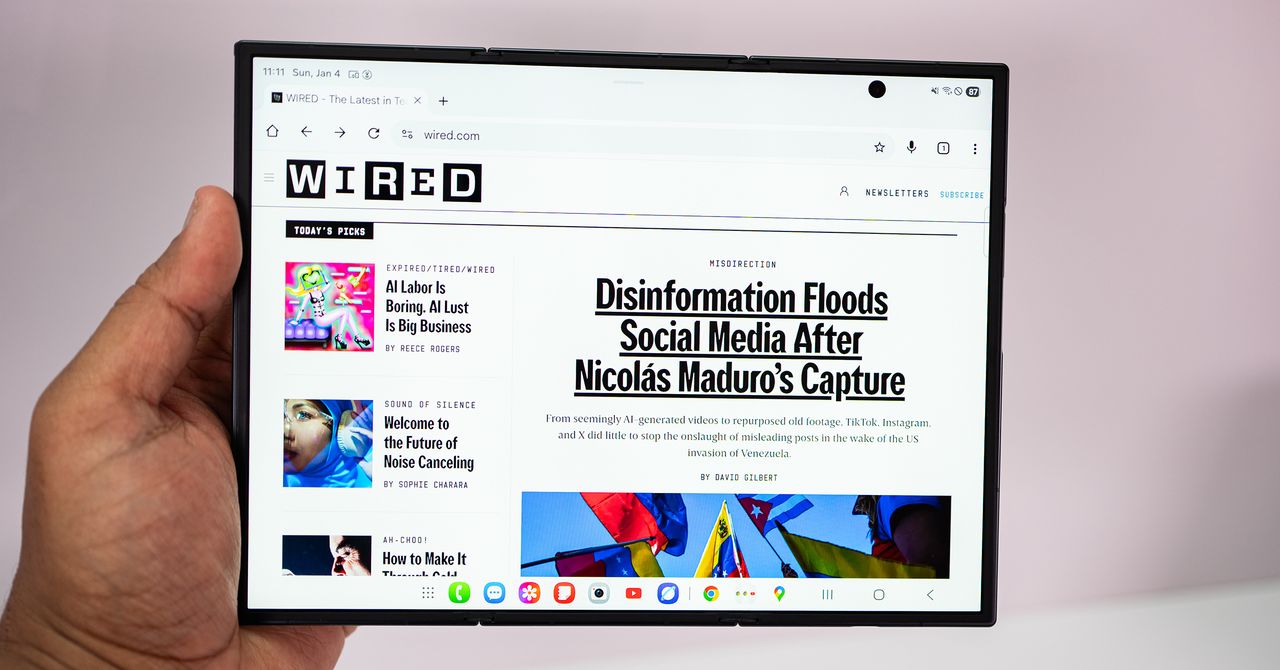
There are two titanium hinges, and they open up three panels. You can place a full-size app on each of the three panes, use a larger version of split-screen, or expand one app across the vast display. It was easy to configure these setups, and I can totally see myself taking advantage of having three apps open simultaneously. It is still a little unwieldy to hold, but that’s not unusual for a 10-inch tablet. The TriFold is very slim in its unfolded state, which helps.
Fold it up, and you’re looking at a thickness of 12.9 millimeters, which is just a smidge chunkier than the Galaxy Z Fold6 (12.1 mm). The fact that it’s roughly the same thickness as a prior generation fold, yet with a dramatically larger screen, is impressive. It makes the bulk a little more palatable. There is a correct way to fold it, and an incorrect way. Thankfully, if you start folding it the wrong way with the right screen in first, the phone violently buzzes, and you’ll see an alert on the screen asking to fold in the other screen first. I can still picture someone ignoring this and just carrying on, though.
The hardware is exquisite, and the specs are top-notch, closer to the Samsung Galaxy S25 Ultra; there’s a 200-megapixel main camera on the back, and the phone is powered by Qualcomm’s Snapdragon 8 Elite. The displays are protected by ceramic glass, and there’s even an IP48 dust and water resistance rating.








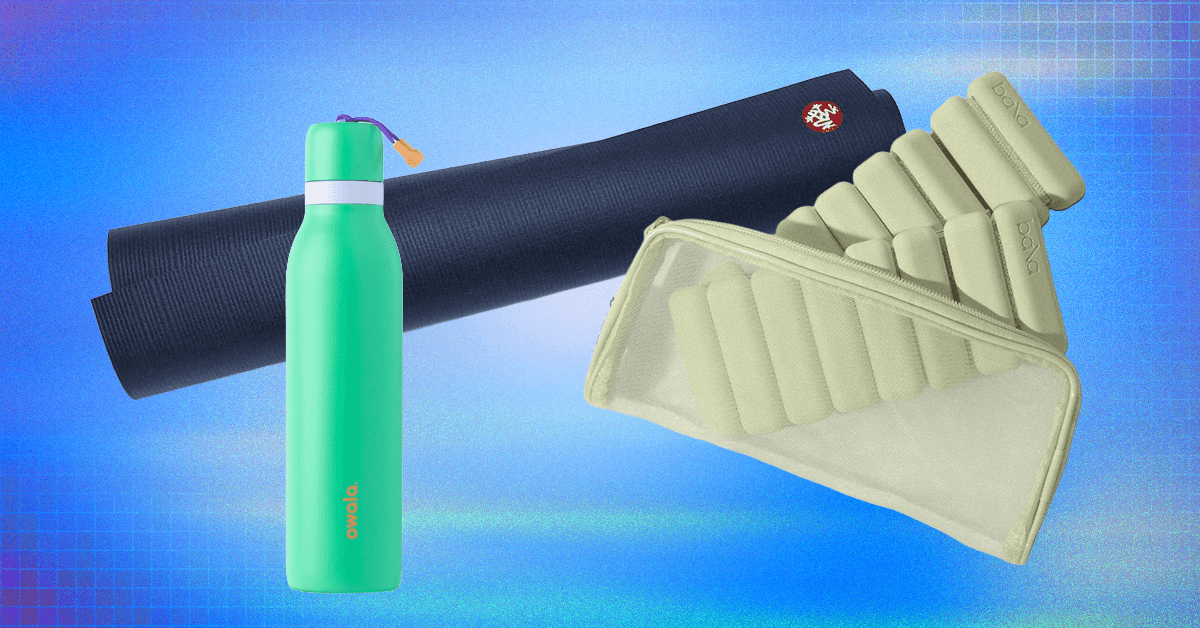
When Joseph Pilates developed what he first called Contrology in the early 20th century, there were no dedicated studios or intimidating contraptions. There wasn’t even a reformer yet. (That came later, improvised from leather straps and hospital bed frames.) The idea was simple then, and it still is now: Pilates asks you to work with what you already have. Your body does the work, and a mat just makes it more comfortable.
Pilates is about moving with intention. Total body exercises are rooted in precision and balance, favoring slow, controlled movements over momentum or strength. Full range of motion, emphasizing time under tension, deep core engagement, and uniformity of mind, body, and spirit are emphasized. It sounds peaceful, but it’s not exactly the easiest workout.
The right gear won’t do the workout for you, but it can make it more comfortable, more effective, and frankly, more fun. Below, we’ve gathered the best Pilates equipment worth having for home workouts, whether you’re a beginner or deep in your Pilates princess era. For more wellness recommendations, check out our other guides, including the Best Protein Powders, Best Massage Guns, and Yoga Mats, Props, and Everything Else You Need for Your Practice.
Featured In This Guide


-SOURCE-Forme.jpg)
Jump to
Pilates Clothes
Nothing motivates me to work out quite like a great Pilates outfit. You can technically wear just about anything, but I would stick to more fitted activewear, so your Pilates instructor can check your form. Avoid loose or oversized clothing, and prioritize stretchy fabrics that won’t restrict movement. This lineup of athleisure has been tried and tested in Pilates; they move well, feel comfortable, and hold up every session.
If you buy one thing, make it grippy socks. Whether you’re on a mat or a reformer machine, those rubberized soles help prevent slipping and sliding, giving you better traction and stability during movements. A good pair can also offer light cushioning and arch support. If you’re practicing in a shared studio or using communal equipment, breathable Pilates socks are a hygienic upgrade, too.
We want our bottoms to stay put through roll-ups, leg circles, and long pulses, without digging or losing shape. They also need to be squat-proof. High-waisted leggings (full-length or capri) made from a soft, stretchy fabric are ideal for Pilates and other low-impact workouts. Biker shorts also work, but in a heated class, an extra layer of fabric can help maintain grip on props during leg work.
These are the best leggings for Pilates based on our testing, including a Lululemon biker short we love. For more favorites, check out our Best Leggings guide.
For Pilates, look for low- to medium-impact styles that are typically supportive without feeling compressive. I gravitate toward wide bands with no underwires that won’t dig in during floor work, but I’m also aware that those features might not be supportive for bigger busts. These are our top favorites, including a posture-correcting bra if alignment or lower back pain is a concern. For more picks, check out our Best Sports Bras guide.
An all-in-one jumpsuit with a built-in bra takes the guesswork out of getting dressed for Pilates. Our favorites offer supportive, comfortable coverage that moves with you from warm-up to cooldown.
Pilates-Specific Gear
You can absolutely do Pilates with nothing but yourself, but if you want to turn up the intensity or vary your workout routines, here are a few must-haves.
Exercise mats are essential because they deliver much-needed padding to cushion your joints during floor work. The proper ones are designed with a grippy, textured surface for added traction. They keep you steady, supporting better control. And they serve as a protective barrier between your skin and the yucky floor.
I also always need a towel when working out, and if you’re taking a heated class, this is especially necessary to absorb sweat. Pro tip: You can also turn your towel into a resistance band by twisting it and pulling against it. For more picks, check out our Best Yoga Mats guide.
You don’t need to splurge on a $2,000 reformer to practice Pilates at home. I take heated mat Pilates at my local fitness studio twice a week, and we usually use a combination of props: an exercise ball, Pilates ring (aka. a magic circle), and light weights. I like to use 2- or 3-pound dumbbells, but wrist and ankle weights don’t require grip strength and still add extra intensity to your full-body Pilates workout. Core sliders, which go under your hands or feet, add resistance to your movements and are an affordable alternative to the springs of a reformer.
We’ve spotlighted a few of our favorites below, but you can find more tested picks in our Best Reusable Water Bottles guide.
Power up with unlimited access to WIRED. Get best-in-class reporting and exclusive subscriber content that’s too important to ignore. Subscribe Today.
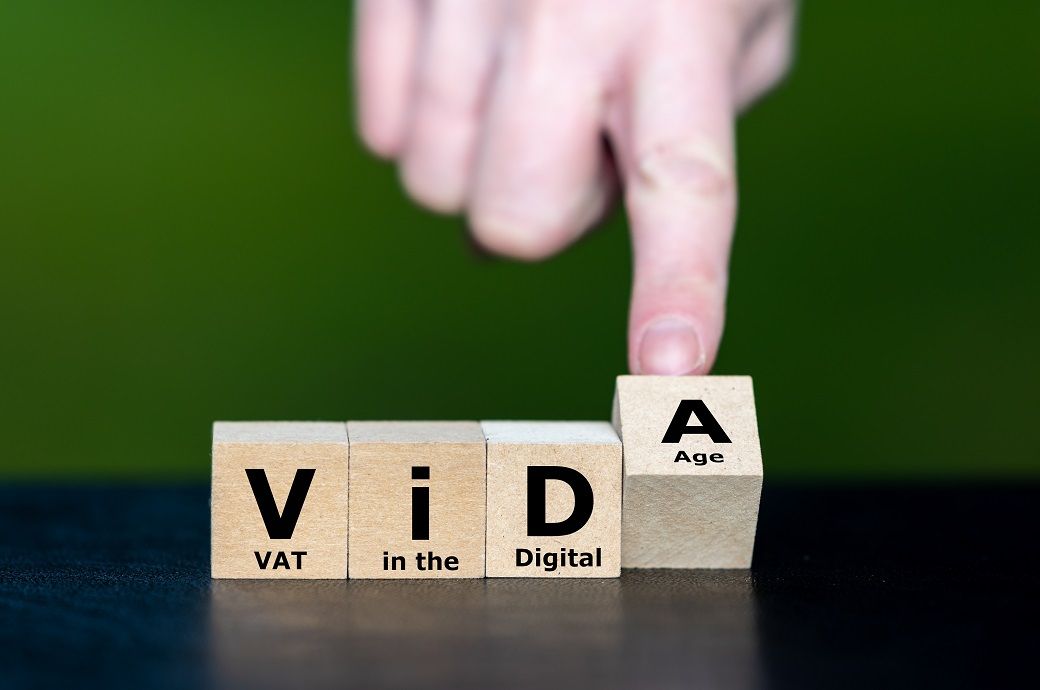
The European Commission has published its implementation strategy for the VAT in the Digital Age (ViDA) package, setting out actions to help businesses and Member States with the practical roll-out of upcoming VAT framework updates.
The European Commission has released its implementation strategy for the ViDA package, outlining actions and timelines for rollout.
ViDA introduces digital reporting, platform economy VAT rules, and single VAT registration to simplify compliance.
Expected benefits include €172– 214 billion (~$201.6–250.9 billion) over ten years, with €51 billion (~$59.8 billion) in business savings.
The ViDA package introduces new digital reporting requirements, targeted VAT adaptations for the platform economy, and a streamlined single VAT registration process, aiming to simplify compliance and reduce administrative burdens. The strategy provides a roadmap with key action points and timelines to ensure coordinated implementation across the EU.
By aligning ViDA measures with broader EU digital policies, the Commission seeks to enhance transparency in digital transactions and support businesses operating across borders, European Commission said in a release.
The approach also emphasises close monitoring of ViDA’s integration with other legislative efforts to maximise efficiency and strengthen the Single Market.
The Commission estimates that the ViDA package could generate economic benefits of €172– 214 billion (~$201.6–$250.9 billion) over ten years, including around €51 billion (~$59.8 billion) in savings for businesses. The strategy underscores the EU’s commitment to modernising its VAT system to meet the demands of the digital economy while boosting competitiveness.
Fibre2Fashion News Desk (HU)

Accessory company Clicks makes cases with integrated physical keyboards for select phones, but they’re almost comically long and tough to fit in a pocket. The new Clicks Power Keyboard solves this problem and offers wider compatibility. It’s a magnetic physical keyboard you can snap to MagSafe iPhones or any Qi2 Android device, turning them into old-school BlackBerries of sorts. When you don’t need the keyboard, just take it off. It connects via Bluetooth, and that means you can also use it with other smart devices, like TVs, when you want to enter a password. You can pair it with up to three devices.
The keyboard can extend to various lengths to accommodate small or big phones, and you can rotate the Power Keyboard sideways and shorten the length to use the keyboard with your phone in landscape mode. Since it’s not integrated into a phone case, the Power Keyboard has bigger keys and a dedicated number row, which makes typing on it a little easier. It can also work as a power bank in a pinch, but the capacity is low, and it charges the phone very slowly at 5 watts, so it’s best to just save that juice for the keyboard itself. It costs $109 and goes on sale in the spring, but you can preorder it now.


That wasn’t the only exciting thing from Clicks at CES. Clicks is now a phone company, too. The Clicks Communicator is a proper Android phone, one that’s designed to be a second phone that specifically focuses on communication. (I was only able to play around with a dummy prototype model.) Load it up with your favorite messaging apps and type away—you can even use the selfie or rear cameras for video calls. The company partnered with Niagara Launcher to make the home screen look more unique than the typical spread of app icons.

The Communicator supports a physical SIM or eSIM, has a headphone jack, 256 GB of storage plus a microSD card slot, Qi2 wireless charging, and NFC for contactless payments. It even uses silicon-carbon battery tech for the 4,000-mAh cell inside. Since it does have the Google Play Store, you can install anything you want on it—even TikTok, assuming it doesn’t look strange on the square-ish OLED screen. There’s a customizable killswitch on one side that turns on airplane mode by default, and the “Prompt Key” on the other side for voice dictation—a press and hold will enable voice memos.

Clicks doesn’t want to force you to limit your screen time with this secondary device, unlike similarly sized pocket devices like the Light Phone III or Minimal Phone. Instead, you’re in control and can customize what you want to use it for; nothing is stopping you from making it your primary phone. It’ll get two Android OS upgrades and 5 years of security updates, though the company is exploring other chip options to widen the OS update window. It costs $499, and you can reserve it now, with an expected launch date later this year.


$175-Million Scam: How This 28-Year-Old Woman Fooled The World’s Biggest Bank

Karachi mayor pushes for culling over neutering to curb rising dog bite cases

Vietnam’s foreign trade hits record high of over $930 bn in 2025

-

 Entertainment1 week ago
George Clooney, his wife Amal and their twins granted French citizenship
-

 Sports1 week ago
Morocco reach AFCON last 16 | The Express Tribune
-
 Business1 week ago
A major drop in the prices of petroleum products is likely with the arrival of the New Year. – SUCH TV
-

 Entertainment1 week ago
Beyoncé is now a billionaire, according to Forbes
-
 Fashion1 week ago
UK year-end review 2025: Seeking new avenues
-

 Politics1 week ago
US pledges $2bn for UN aid, with ‘adapt, shrink or die’ warning
-
 Business7 days ago
Energy price cap rises slightly as temperatures fall
-
 Entertainment7 days ago
France president ‘wants to ban under-15s from social media’