Sony Honda Mobility (SHM) presented a pre-production model of its Afeela 1 vehicle (pictured above) and debuted a new prototype, the Afeela Prototype 2026, at the CES 2026 technology show.
Established by Sony Group Corporation and Honda Motor Co in 2022, joint venture mobility tech company SHM combines Sony’s technological consumer electronics legacy and Honda’s automotive expertise. Its mission is to lead innovation in the industry through joint development and sales of high-value-added mobility and to provide mobility services.
SHM said Afeela represents “the fusion of intelligence and emotion in motion”, with mobility that senses the driver and that the driver can feel. It added that at its core, Afeela “brings to life a next-generation driving experience built on advanced sensing, interactive technology and human-centred design”.
At CES 2026, in addition to presenting the new vehicle, SHM confirmed the adoption of solutions from Qualcomm Technologies’ Snapdragon Digital Chassis within SHM’s next-generation electrical/electronic architecture and the implementation of the Afeela Co-Creation Programme to provide creators with access to development documentation for Afeela in-vehicle entertainment content. It also announced the development of a new open, on-chain mobility service platform using a token-based incentive model.
SHM said it has been continuously enhancing its advanced driver assistance system (ADAS), Afeela Intelligent Drive, while evolving it into an end-to-end AI model that integrates Vision-Language Model (VLM). Starting with Level 2+ driver assistance that supports travel from the departure point to the destination, the company aims to achieve Level 4-equivalent capabilities in the future, transforming the in-vehicle space into a “drive-less” environment.
The Afeela Personal Agent, an interactive conversational artificial intelligence (AI) agent, uses Microsoft Azure OpenAI Service to deliver highly personalised, natural dialogue experiences tailored to individual users, making the relationship between people and mobility more personal.
The Afeela Co-Creation Program will see SHM collaborate with creators and developers to expand the possibilities of mobility by providing access to information necessary for developing in-vehicle entertainment, including in-car themes and apps. The company is also building cloud application programming interfaces (APIs) and the development environment for Android applications on in-vehicle infotainment (IVI) to enable developers to create entirely new mobility applications that will further transform the in-cabin experience.
Kicking off the CES launch, Izumi Kawanishi, representative director, president and chief operating officer of SHM, presented the new car under the theme “mobility as a creative entertainment space”, affirming the company’s long-term technology vision of how partnerships across technology, entertainment and creation are shaping its roadmap.
We are bringing innovation to how people move. Being in a car will no longer be about driving – it will be about making the most of your time and space Izumi Kawanishi, Sony Honda Mobility
“In the three years since we established Sony Honda Mobility, the automotive industry has seen diverse evolution and growth, and at SHM, we are evolving mobility into an interactive experience. Our brand, Afeela, is built on the vision to redefine the relationship between people and mobility,” he said.
“We are bringing innovation to how people move. Being in a car will no longer be about driving – it will be about making the most of your time and space while your car understands the passenger preferences and feelings. The relationship will become an interactive dialogue,” he added.
Kawanishi stressed that the key to realising mobility as a creative entertainment space would be in harnessing the power of AI, specifically advanced vehicle AI, which will deliver user experiences and two-way communication that goes beyond the traditional mode of interfacing while in the autonomous driving domain. This, he argued, would allow SHM to create experiences that “truly foster a more symbiotic relationship with the driver”.
“We are advancing the development of our intelligent drive [model] … constantly reviewing setting devices in the [software] layer, further improving computing power and making our end-to-end driving AI stronger. As a result, the cabin will evolve into a driverless environment, reducing the task of manual driving and providing more freedom to relax and enjoy the entertainment,” he said.
“Our conversational agent enhances mobility interaction through personalised natural language dialogue. This elevates the relationship between people and mobility into something more awesome and long-lasting. In other words, mobility will [create] experiences that understand every user.”
Kawanishi expressed confidence that by maximising the cabin space, Afeela could challenge the traditional concepts of in-car entertainment, creating and supporting content through panoramic screens, dynamic wallpaper, a rich instrument cluster and entertainment systems to transform the very experience of mobility into a “richer, more enjoyable time”.
Notably, SHM is drawing on Sony’s PlayStation division to support gaming within Afeela, with the ability to use Sony Remote Play to stream games from a PlayStation console within a car for the first time through the Afeela entertainment system.
“Afeela becomes another way you can pick up and play the games you love, just like every other remote play experience,” said Sony Interactive Entertainment’s business and product senior vice-president, Eric Lempel.
“This is the console … for those moments when you have some downtime in your car, like when you’re waiting to pick someone up, or if you want to keep passengers entertained on a very long road trip. For us, this is a meaningful example of how the PlayStation experience can extend beyond the living room in ways that feel natural and useful for gaming fans.”
Commenting on what he believes his company could contribute to the Afeela environment, Nakul Duggal, automotive and industrial and embedded internet of things executive vice-president and group general manager at Qualcomm Technologies, remarked that, in his opinion, Afeela represented “a bold step forward in redefining mobility”, and that going forward, Qualcomm had the simple expectation that Afeela would set a new benchmark for what an intelligent car could be “where technology elevates every moment of the drive”.
He added: “Our collaboration with Sony Honda Mobility reflects a shared vision. Together, we are building not just technology, we are creating smarter, safer and more engaging journeys … The car becomes a dynamic digital space with tailored content, natural interactions and seamless integration across devices, advanced travel assistance systems designed for safety and automation, combining high performance, efficiency and AI-driven intelligence to enable smooth, confident driving and a comprehensive, cloud-connected architecture that ensures vehicles stay updated, secure and always connected. AI has become a foundational element, from adaptive in-cabin systems that learn driver preferences to safety and automation through ADAS.”
The first production model, Afeela 1, is scheduled for deliveries in California by late 2026, with expansion to Arizona planned in 2027. CES also saw the world premiere of the Afeela Prototype 2026 vehicle, for which the US market launch of a production model is expected by 2028. This latter car builds on the core concept of Afeela 1 while offering greater spatial flexibility and accessibility.
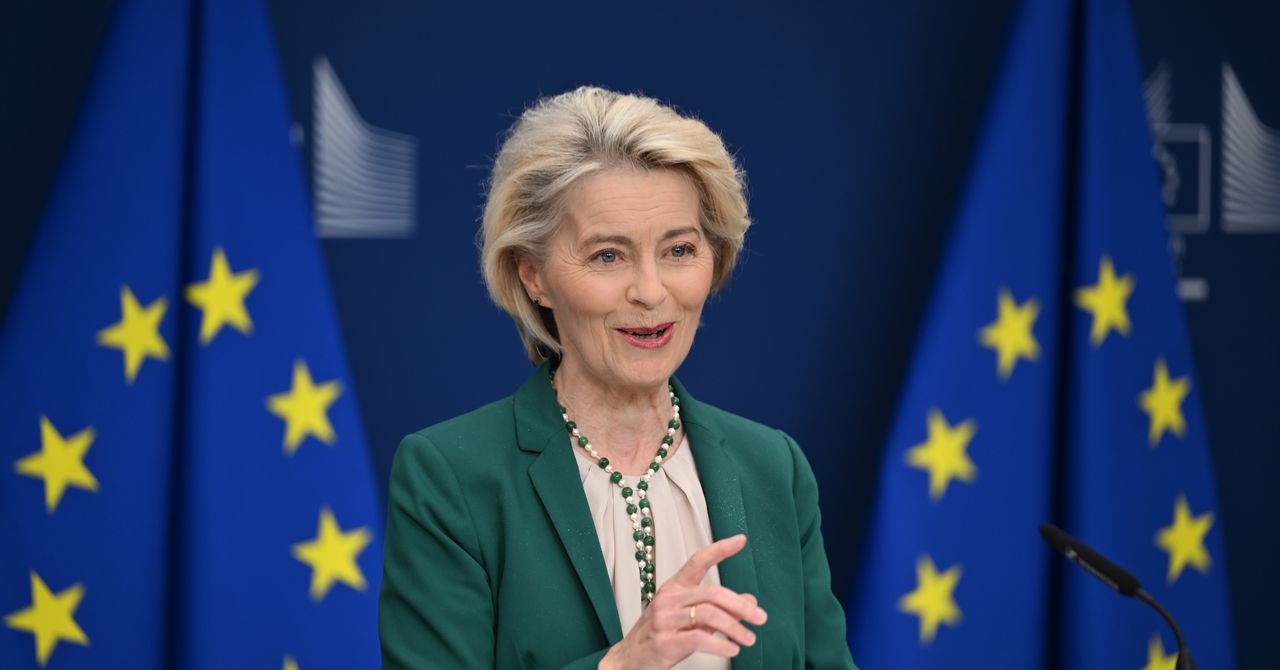
The app works with passports or ID cards, is built to be “completely anonymous” for the people who use it, works on any device (smartphones, tablets, and PCs), and is open source. “Best of all, online platforms can easily rely on our age verification app, so there are no more excuses,” said European Commission president Ursula von der Leyen at a press conference on Wednesday. “Europe offers a free and easy-to-use solution that can protect our children from harmful and illegal content.”
High Expectations
“It is our duty to protect our children in the online world just as we do in the offline world. And to do that effectively, we need a harmonized European approach,” von der Leyen said at Wednesday’s press conference. “And one of the central issues is the question, how can we ensure a technical solution for age verification that is valid throughout Europe? Today, I can announce that we have the answer.”
This answer takes the form of an open source app that any private company can repurpose, as long as it complies with European privacy standards and offers the same technical solution throughout the European Union. The user downloads the app, agrees to the terms and conditions, sets up a pin or biometric access, and proves their age through an electronic identification system, or by showing a passport or ID card (in which case biometric verification is also provided). The app does not store your name, date of birth, ID number, or any other personal information, according to the European Commission—only the fact that you are over a certain age.
After that, when a person using the app wants to access a social network (minimum age: 13), pornographic site (minimum age: 18), or any other age-protected content, if they are logged in from a computer, they need only scan the QR code shown on the site they want to visit. If, on the other hand, the person logs in from a smartphone, the app sends the proof of age directly. The platform does not access the document with which the user proved it in the first place.
Adoption Event
The need to introduce a common system for the entire European Union has been discussed for some time, and according to commission technicians, the technical work is now complete. Of course, it will still be possible to circumvent the system—all it takes is for an adult to lend their phone to a younger friend—but the technological architecture exists, and it will be up to EU member states to decide whether to integrate it into national digital wallets or develop independent apps.
“No More Excuses”
For the app to really be effective, platforms must be obligated to verify the age of their users—that’s where things get tricky. The Digital Services Act, which went into effect in 2024, requires “very large online platforms”—those with more than 45 million monthly users in the European Union—to take concrete steps to mitigate systemic risks related to child protection, with heavy penalties for noncompliance.
“And that’s why Europe has the DSA: to call online platforms to their responsibilities. Because Europe will not tolerate platforms making money at the expense of our children,” European Commission executive vice president Henna Virkkunen told a press conference. She added that after an investigation into TikTok, the European institutions plan to take similar action against Facebook, Instagram, and Snapchat, as well as four porn sites. “Since the platforms do not have adequate age verification tools, we developed the solution ourselves,” he concluded. In short, as von der Leyen also remarked, “there are no more excuses.”
Bare Minimum
So far, this is the European framework that sets the general rules. On this basis, member states can consider more restrictive measures. Italy was among the first to discuss how to regulate the use of social media by minors but has so far not landed on anything concrete. Elsewhere in the EU, France’s Emmanuel Macron has been a trailblazer on the issue, pushing France to discuss a rule to ban social networks for minors under the age of 15 entirely. So far, this measure has received broad political support—but the outcome depends largely on compatibility with the Digital Services Act and the availability of effective age verification systems like the app the European Commission just released.
This article originally appeared onWIRED Italiaand has been translated.
Anthropic is moving into a new London office as it seeks to expand its research and commercial footprint in Europe, setting up a scrap between the leading AI labs for talent emerging from British universities.
Anthropic’s new, 158,000-square-foot office footprint will have space enough for 800 people—four times its current head count—giving it room to potentially outscale OpenAI, which itself recently announced an expansion in London.
“Europe’s largest businesses and fastest-growing startups are choosing Claude, and we’re scaling to match,” says Pip White, head of EMEA North at Anthropic. “The UK combines ambitious enterprises and institutions that understand what’s at stake with AI safety with an exceptional pool of AI talent—we want to be where all of that comes together.
UK government officials had reportedly attempted to coax Anthropic into expanding its presence in London after the company recently fell out with the US administration. Anthropic refused to allow its models to be used in mass surveillance and autonomous weapon systems, leading to an ongoing legal battle between the AI lab and the Pentagon.
As part of the expansion, Anthropic says it will deepen its work with the UK’s AI Security Institute, a government body that this week published a risk evaluation of its latest model, Claude Mythos Preview. According to Politico, the UK government is one of few across Europe to have been granted access to the model, which Anthropic has released to only select parties, citing concerns over the potential for its abuse by cybercriminals.
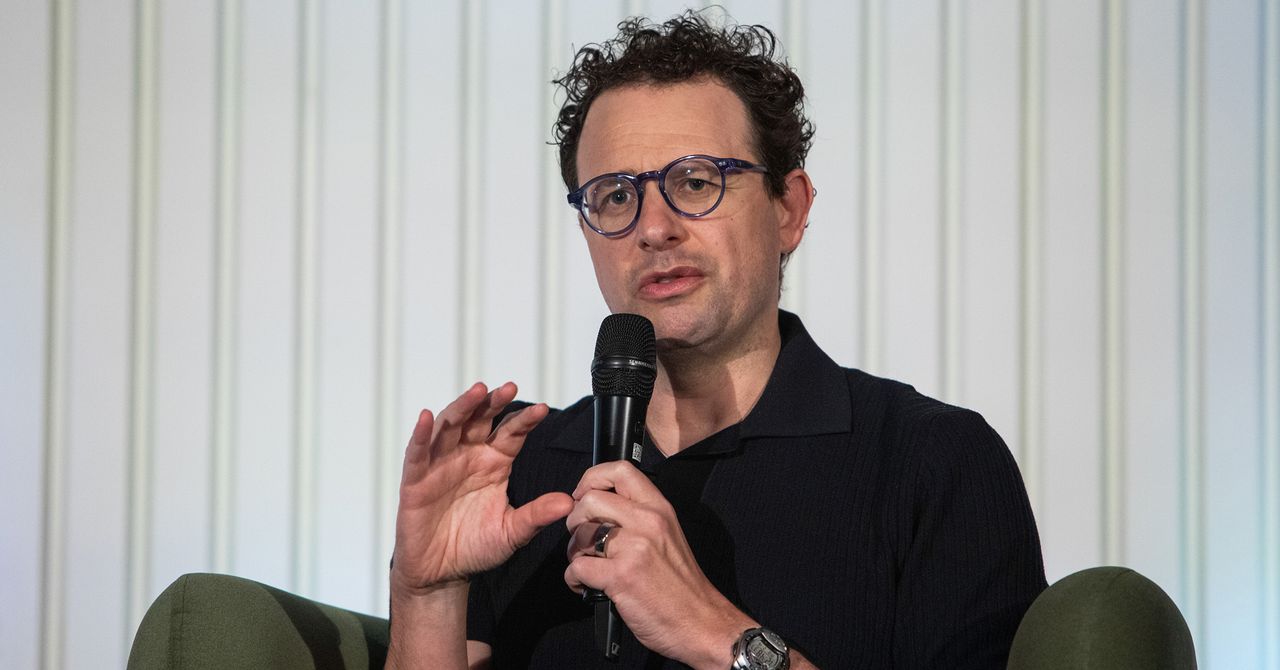
The increasing concentration of AI companies in the same London district is an important step in creating a pathway for research to translate into AI products, says Geraint Rees, vice-provost at University College London, whose campus is around the corner from Anthropic’s new office.
“This cluster didn’t emerge from a planning document. It grew because serious researchers and companies understand that proximity isn’t a nice-to-have,” he said last month, speaking at an event attended by WIRED. “That’s how the innovation system actually works. It’s not a clean, linear transfer from lab to market. It’s messier, richer, more human than that.”
The increasingly long-in-the-tooth Computer Misuse Act (CMA) of 1990 remains an albatross around the neck of British cyber security professionals, and even though the UK government committed last December to reforming it, every minute of delay is holding back the nation’s security innovation, resilience, talent, and ability to defend itself against cyber attacks, campaigners have warned.
Ahead of the National Cyber Security Centre’s (NCSC’s) upcoming CYBERUK conference in Glasgow, the CyberUp Campaign for reform of the Computer Misuse Act (CMA) has published a new report, titled Protections for Cyber Researchers: How the UK is being left behind to maintain pressure on Westminster.
The CMA defines the vague offence of unauthorised access to a computer, which the campaigners want changed because it was written 35 years ago and fails to account for the development of the cyber security profession, and the fact that in the course of their day-to-day work, cyber pros may sometimes need to hack into other systems.
“Cyber attacks are growing in scale, sophistication and severity, with a devastating impact on infrastructure, businesses and charities,” said a CyberUp campaign spokesperson.
“While other countries have moved to refresh their cyber laws in response, the UK’s Computer Misuse Act hasn’t been updated since before the modern internet – hardly the best platform for accelerating our defences into the next decade.”
The group’s report highlights how other nations, Australia, Belgium, France, Germany, Hong Kong, Malta, Portugal, and the USA, have already secured legal protections for cyber professionals that enable them to go about their business without fear of prosecution.
In Portugal – Britain’s oldest formal ally under a treaty dating back to the 14th Century – the government last year published Decreto-Lei 125/2025, implementing the European Union (EU) Network and Information Systems (NIS2) Directive and revising the country’s cyber crime law to ensure that ethical hackers and professional cyber security practitioners working in good faith are both recognised and protected.
Portgual’s laws now accept some elements of cyber work may have to happen without explicit permission or involve unanticipated technical overreach that has a legitimate purpose.
As such, Portugal says that security work undertaken in good faith won’t be punished as long as the researcher fulfills a set of conditions. For example, they can act only to find vulnerabilities and these must be reported immediately, they must avoid taking harmful actions, like conducting DDoS attacks or installing malware, and they must respect the integrity of any data they may find or access and delete it within 10 days once the issue is addressed.
CyberUp said Portugal’s example demonstrates how cyber crime laws can be modernised to legally protect research carried out in the public interest.
“Portugal has demonstrated how to modernise their equivalent law through cyber legislation. We urge the government to follow this example and act swiftly through the Cyber Security and Resilience Bill to achieve meaningful reform, or risk lagging even further behind our peers,” the spokesperson said.
Defence Framework
Working with cyber security experts and legal advisors, the CyberUp campaign has developed its own Defence Framework that would allow cyber professionals to present a statutory defence in court as long as they adhere to the Framework’s four core principles.
Harm Vs. Benefit: The benefits of the activity must outweigh the potential harms;
Proportionality: Cyber pros must take all reasonable steps to minimise the risks of their activity;
Intent: They must act honestly, sincerely, and clearly direct themselves towards improving security;
Competence: Their qualifications and professional memberships should demonstrate they are suitably equipped to perform cyber security work.
The campaigners say this framework will bring clarity and confidence to the security sector, enabling cyber pros to run essential research tasks without fear of criminal prosecution, helping organisations operate to recognised legal standards, and enabling a more open and collaborative relationship between the cyber sector and the UK government.










 Entertainment1 week ago
 Tech1 week ago
 Tech1 week ago
 Fashion1 week ago
 Tech1 week ago
 Politics7 days ago
 Entertainment4 days ago
 Politics6 days ago