

Fashion
Sangeet Syntex showcases innovations at FABTEX 2026


With nearly five decades of industry experience, Sangeet Syntex is presenting a comprehensive portfolio of greige and finished circular knitted fabrics, alongside its B2B garment solutions. The showcase highlights advanced fabric developments featuring performance finishes such as moisture-wicking, UV protection, and anti-microbial properties, catering to applications across sportswear, corporate wear, uniforms, casualwear, and home textiles.
Sangeet Syntex Limited is showcasing its latest knitted fabric innovations at FABTEX 2026 in Mumbai from April 16–18.
The display includes greige and finished fabrics, performance finishes, and B2B garment solutions, highlighting its technical expertise, customisation strengths, and integrated manufacturing capabilities while engaging with industry stakeholders.
The company’s vertically integrated capabilities, from yarn texturising to finished fabrics, enable consistent quality, customisation, and faster turnaround. Visitors can also explore its wide fibre range, including polyester, poly-spandex, viscose, cotton, recycled polyester, and biodegradable Eco Gold polyester, along with versatile knitted structures and finishes.
“FABTEX 2026 provides an excellent platform for us to demonstrate our innovation-driven approach and connect with industry stakeholders,” Rahul Modi, Managing Director, Sangeet Syntex Limited, told Fibre2Fashion. “We are excited to showcase our latest developments and explore new opportunities for collaboration.”
Established in 1980, Sangeet Syntex Limited is a trusted manufacturer of high-quality knitted fabrics and customised garment solutions, serving clients across India and global markets. With over 45 years of expertise, the company continues to strengthen its industry presence through technical excellence, quality assurance, and customer-centric innovation.
Fibre2Fashion News Desk (RKS)





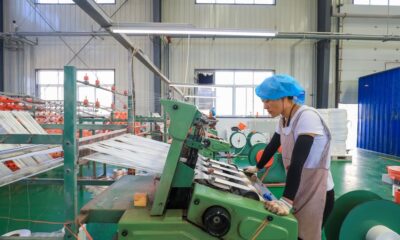






The country has ensured import of refined fuel from alternative sources despite the global situation, and there will be no adverse impact on oil supply due to ERL’s low feed operations, Energy Division joint secretary Monir Hossain Chowdhury was cited as saying by domestic media outlets.
Bangladesh’s Energy Division recently said the capacity of Eastern Refinery Limited (ERL) would affect little the fuel supply system as the unit contributes only a fifth of the country’s petroleum supply system while the rest is imported in refined form.
It has ensured import of refined fuel from alternative sources, and there will be no adverse impact on oil supply due to ERL’s low feed operations.
The facility is now operating two of its four units to refine oils with ‘dead stocks’ and is expected to make two other units operational again, he said. The process to import crude is under way.
Chowdhury said production slowdowns at two ERL units due to crude oil shortages would not disrupt the nation’s fuel supply as over 255,000 metric tonnes of refined fuel is in stock now.
The Strait of Hormuz has been almost closed since February 28 preventing scheduled arrival of 2,00,000 metric tonnes of crude oil to Bangladesh during that period, he noted.
A ship carrying 100,000 tonnes of crude was supposed to arrive from Saudi Arabia in March, but is currently stuck at Rastanura Port as it could not cross the Hormuz Strait, he informed reporters at a press conference. Another ship from the United Arab Emirates (UAE) also met the same fate.
A third ship carrying 100,000 tonnes of Arabian light crude is scheduled to depart from the UAE on April 20 and expected to reach Chattogram via an alternative route on May 2 or 3, he said.
The government has also requested Saudi Arabia to provide another 100,000 tonnes of crude oil in May, he added.
A work order has been issued with the approval of the cabinet to import 100,000 tonnes of crude oil through direct purchase to meet urgent needs.
Fibre2Fashion News Desk (DS)
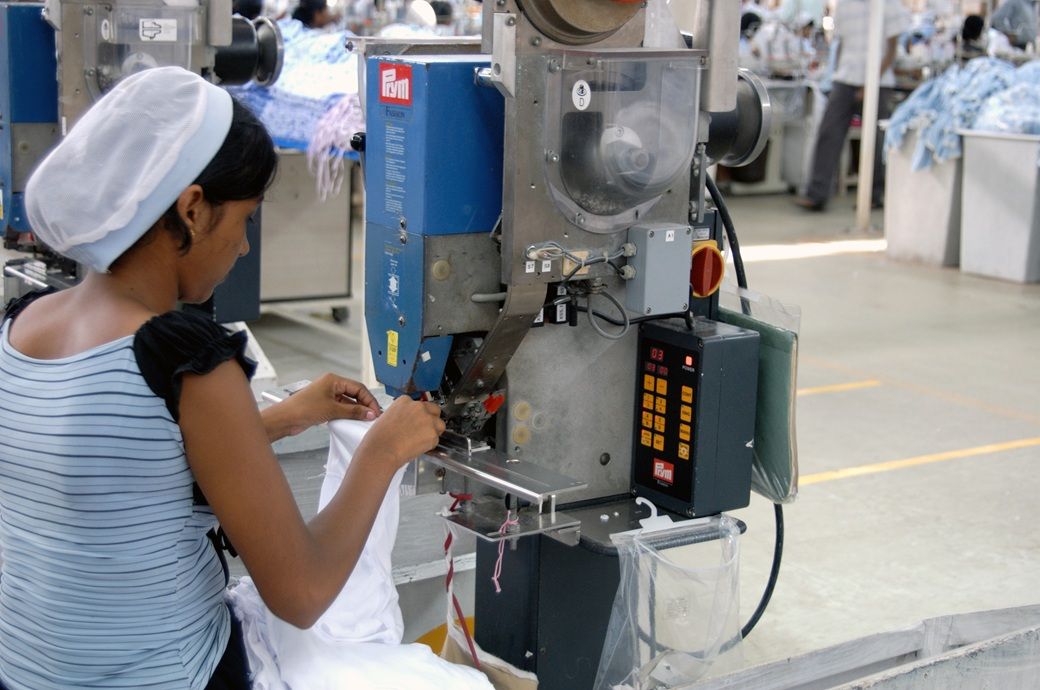

The seasonally-adjusted frequency of reports of positive profit trends fell by 11 points from February to negative 25 per cent, contributing the most to the optimism index’s decline.
The US National Federation of Independent Business small business optimism index fell by 3 points in March to 95.8, leaving it below its 52-year average of 98.
The seasonally-adjusted percentage of owners expecting better business conditions fell by 7 points from February to 11 per cent—the third monthly decline in a row.
Sixteen per cent of them plan to make capital outlays in the next six months.
The seasonally-adjusted net per cent of owners expecting better business conditions fell by 7 points from February to 11 per cent—the third consecutive monthly decline and the lowest level since October 2024. This was the second biggest contributor to the index’s decline.
The last time the optimism index fell below its historical average was April 2025. The uncertainty index rose by four points from February to 92, well above its historical average of 68.
“The 20-per cent small business deduction and other supportive small business tax provisions in the Working Families Tax Cut Act have had many positives for small business owners,” said NFIB chief economist Bill Dunkelberg.
“However, the dramatic spike in oil prices has spooked consumers and owners alike. Small business owners are having to absorb those higher input costs and pass them along to their customers,” he noted in an NFIB release.
The employment index fell in March to 101.6 from February’s 103.5. While the 1.9-point decline is a meaningful turn in labour market conditions, the current reading remains above both the 2025 average of 101.2 and the historical average of 100.
In March, both planned and actual labour compensation decreased month on month (MoM). A seasonally-adjusted net 33 per cent reported raising compensation—down by a point. A seasonally-adjusted net 18 per cent plan to raise compensation in the next three months—down by 4 points MoM and the lowest reading since July 2025.
Sixteen per cent (seasonally adjusted) of small business owners plan to make capital outlays in the next six months—down by two points from February and the lowest level since November 2009.
A net negative 5 per cent (seasonally-adjusted) of owners plan inventory investment in the coming months—down by three points MoM and the lowest level since May 2024.
In March, 62 per cent of small business owners reported that supply chain disruptions affected their business to some extent—up by 3 points MoM. Three per cent reported a significant impact—down by 2 points, 17 per cent reported a moderate impact—up by 3 points, 42 per cent reported a mild impact—up by 2 points, and 36 per cent reported no impact—down by 3 points.
Actual price increases picked up in March following three consecutive months of decline. The net per cent of owners raising average selling prices rose by 1 point MoM in March to a net 25 per cent (seasonally-adjusted), well above its historical average.
When asked to evaluate the overall health of their business, 13 per cent rated it as excellent (up by one point MoM), 51 per cent as good (down by four points MoM), 30 per cent as fair (up by four points MoM), and 4 per cent as poor (down by a point).
A seasonally -adjusted 32 per cent of small business owners reported job openings they could not fill in March, down by a point MoM. Unfilled job openings remain above the historical average of 24 per cent. Twenty-seven per cent had openings for skilled workers, and 12 per cent had openings for unskilled labour.
A seasonally-adjusted 12 per cent of owners plan to create new jobs in the next three months, unchanged from February and close to the average of a net 11 per cent.
Nineteen per cent of business owners reported taxes as their top problem, unchanged from February. Fifteen per cent cited labour quality as their top problem.
Fourteen per cent of owners reported that inflation was their top business problem.
Fibre2Fashion News Desk (DS)


Bangladesh ensuring import of refined fuel from alternative sources

Do You Actually Need a Smart Bird Feeder With a Movable Camera?

FTAs, PTAs in focus as Sri Lanka aims for growth

-

 Tech1 week ago
As the Strait of Hormuz Reopens, Global Shipping Will Take Months to Recover
-

 Tech1 week ago
This AI Button Wearable From Ex-Apple Engineers Looks Like an iPod Shuffle
-

 Politics1 week ago
Indian airlines hit hardest after Dubai limits foreign flights until May 31
-

 Entertainment4 days ago
Palace left in shock as Prince William cancels grand ceremony
-

 Sports4 days ago
The case for Man United’s Fernandes as Premier League’s best
-

 Politics1 week ago
Chinese, Taiwanese will unite, Xi tells Taiwan opposition leader
-

 Entertainment6 days ago
Dua Lipa hits major career high ahead of wedding with Callum Turner
-
 Business4 days ago
UK could adopt EU single market rules under new legislation