

Fashion
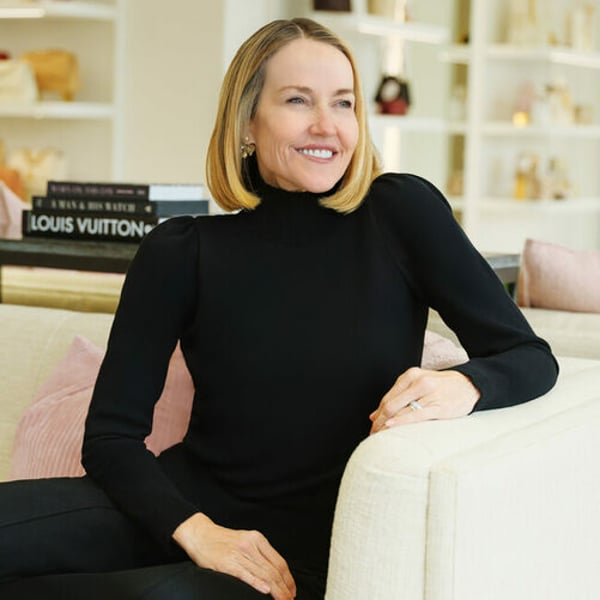
Sarah Davis, founder of Fashionphile, talks new mega Los Angeles flagship opening

Published
November 1, 2025
On September 29, Fashionphile, an ultra-luxury re-commerce brand, announced the opening of a giant 32,330-square-foot flagship store at Row DTLA in Los Angeles. It’s is a major expansion for the brand, coupled with the recent acquisition of the UK-based Luxe Collective resale company. Sarah Davis, founder and president of Fashionphile, gives FashionNetwork.com details of her firm’s most recent opening and shares the brand’s ambitions for both the U.S. and international markets.
FashionNetwork: Was Los Angeles a natural choice for your new flagship store?
Sarah Davis: Yes, Los Angeles was a natural choice for Fashionphile’s new flagship store. Our first mini flagship opened to the public in 2006 in a second-floor space in Beverly Hills off Rodeo Drive and Wilshire Blvd. I was born in South Pasadena. LA represents our roots and the heart of our largest U.S. customer base. It has a global reputation for luxury, trend setting and celebrity culture that aligns perfectly with us. Fashionphile’s focus on authenticated pre-owned designer goods and LA’s proximity to major fashion hubs, Hollywood/media influence, and an established luxury retail scene, including Beverly Hills and the Westside, made it a strategic and symbolic choice for the flagship.
FNW: You are expanding from 7,000 to 32,330 square feett at Row DTLA. How are you using this giant space?
S.D.: Since 2006, Fashionphile has pioneered a model unique in luxury resale: the ability for customers to walk into a full authentication center and shop directly from the complete online inventory stored onsite. No other player in our space offers this experience. We’re expanding from a 7,000-square-feet tech and digital office to a 32,330-square-feet multi-use flagship that will serve as a luxury retail designation, an event space, a state-of-the-art operations hub and a office and content creation studio for our LA based marketing, digital, data and tech teams. Behind the scenes, the expansion allows us to take care of back of house operations, offices, a studio for content creation, packing and shipping and training for Fashionphile university to develop the next generation of luxury authentication experts, all under one roof, bringing efficiency and transparency to every step of the resale process.
FNW: You are promoting a new immersive shopping experience. What exactly does that involve?
S.D.: The customer entry of the space is designed as a world class, luxury showroom where local clients can shop, sell, and experience the very best of Fashionphile. They can come in to sell their ultra luxury handbags and accessories and get paid on the spot. And they can also shop in person from up to 10,000 items available in our online inventory for everything from rare handbags to fine jewelry. This is a truly unique experience as there is no other resale or retail destination outside of Fashionphile that will allow a customer to bet paid up front and shop from such an extensive inventory.

FNW: Your sales grew strongly in 2024, with profits up 67%. Is the development of physical stores behind this success? Are there plans to open more physical stores?
S.D.: We’ve had flagship locations open since 2006. We opened in San Francisco in 2009, and then in San Diego in 2012. We opened a Salon off Madison Avenue in New York City in 2018 and a flagship there in 2022. We’re opening more stores to support our growth but our success is coming from pushing in every channel.
FNW: What is the outlook for growth in 2025?
S.D.: We’re looking to continue our revenue growth in 2025 and expect to beat our already aggressive growth plans.
FNW: In a highly competitive market, how do you explain your success? Does the increase in retail prices in the luxury sector encourage consumers to turn more to the resale market?
S.D.: Fashionphile was the first to bring data-driven pricing and scale to the secondary luxury market. Many competitors followed quickly to launch direct-to-consumer shops. But they missed what was always special and differentiating about Fashionphile. We’ve spent the last 25 years building a brand that our brand obsessed customers can be passionate about. We’ve built a reputation as the most trusted source for pre-owned ultra-luxury, offering the same standards and elevated experience that you’d expect from a first market boutique. That said, as retail prices for classic bags continue to rise, resale has become not just a smart alternative, but a smarter investment. Our growth comes from meeting that modern luxury customer exactly where they are. They want an elevated luxury experience, authenticity, and flexibility without compromise.

FNW: Which products are consumers particularly interested in today?
S.D.: It’s fascinating because while you can see some really great insights, and specific data around this, from our 2025 resale report, what stands out to me is how the iconic styles have so much sticking power. Our number one top-shopped bag was the Louis Vuitton Speedy. It’s been in the number 1 spot many of the last 40-plus years, which is why it was featured in our new book as one of the top 25 iconic bags.
FNW: You have been partnered with Neiman Marcus since 2019. How is this partnership going and what other developments would you like to pursue with them?
S.D.: Our partnership with Neiman Marcus has been incredibly successful and continues to evolve over time. Since 2019, we’ve created a seamless bridge between the primary and secondary luxury markets, offering Neiman Marcus clients an easy and trusted way to sell their luxury goods in store and online. It’s expanded our reach and given Neiman Marcus customers a full-circle luxury experience where they can sell to Fashionphile and then take that money and spend it at Neiman Marcus. Looking ahead, we’re excited to deepen that partnership in ways that make resale even more accessible to the Neiman Marcus customer. More to come!
FNW: You have just announced the acquisition of Luxe Collective in the UK. What are your ambitions in this market?
S.D.: Yes, we’re absolutely thrilled about our acquisition of Luxe Collective in the UK. The UK is one of the most sophisticated and fast-growing luxury resale markets in the world, but there is no one doing our brand of resale at scale. This move is an important step in Fashionphile’s international expansion plan. Our ambition is to bring the same level of trust, technology, and white-glove service that defines the Fashionphile brand here in the U.S. to customers around the globe. The Luxe Collective team has built an incredible social following, community and deep local expertise, and together we’re combining that with Fashionphile’s advanced authentication, data, and logistics capabilities to create a truly global resale platform.
FNW: What are your ambitions more generally on the international resale market?
S.D.: More broadly, we see a lot of opportunity in the international market. Demand for pre-owned luxury is accelerating everywhere, and consumers are increasingly embracing resale as both a sustainable choice and a smart financial decision. Our goal is to build a consistent, trusted experience for buyers and sellers worldwide.
Copyright © 2025 FashionNetwork.com All rights reserved.








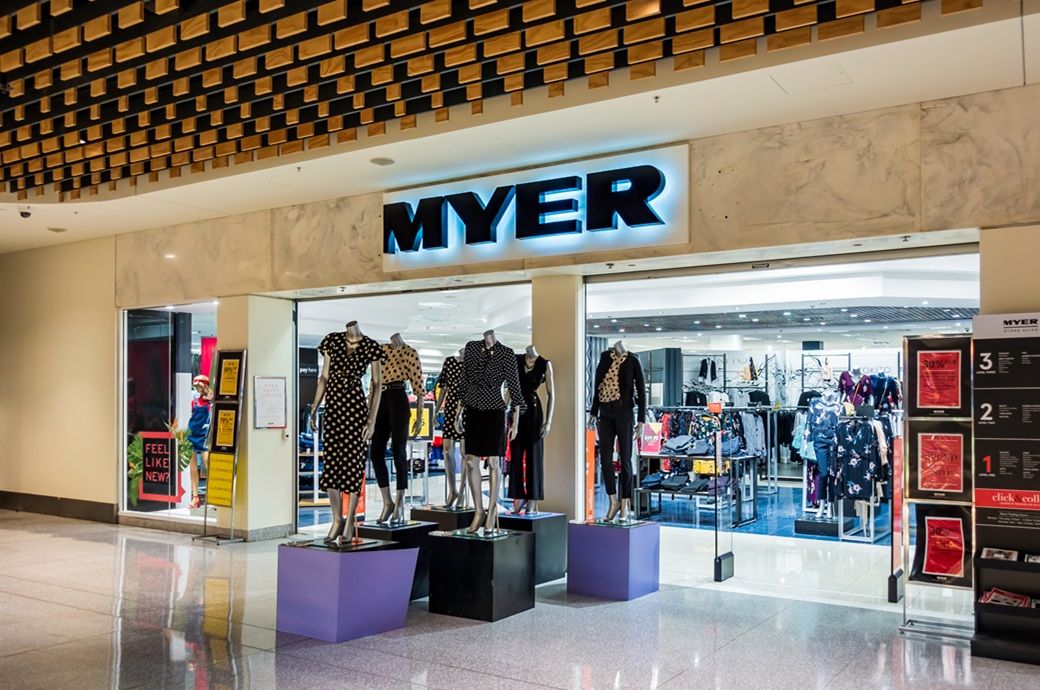
Operating gross profit surged 35.1 per cent to $886.0 million, while underlying earnings before interest and tax (EBIT) rose 10.5 per cent to $112.8 million. Underlying net profit after tax (NPAT) increased 21.7 per cent to $51.7 million, with statutory net profit after tax (NPAT) up 32.8 per cent to $40.3 million.
Myer has reported strong H1 FY26 results, with total sales rising 24.5 per cent to $2,279.5 million and NPAT up 21.7 per cent to $51.7 million.
Growth was supported by Apparel Brands integration and strategic investments.
Loyalty members reached 5.1 million.
Early H2 FY26 sales rose 1.7 per cent, though the company remains cautious amid macroeconomic pressures and weak discretionary demand.
The company maintained strong financial discipline, with cost of doing business at 27.9 per cent of total sales, within its FY26 target of around 29 per cent. Myer also reported a robust net cash position of $287 million, reflecting strong cash conversion and balance sheet flexibility, Myer said in a press release.
Myer’s ongoing transformation strategy continued to gain traction during the period, particularly through its customer engagement and brand expansion initiatives. The relaunched Myer one loyalty programme reached a record 5.1 million active members, supported by enhanced personalisation driven by AI-led data modelling.
The company also strengthened its product portfolio, introducing new exclusive brands and securing partnerships with global names such as Fenty Beauty, La Mer, Gap, and Topshop.
“Our H1 result reflects momentum across our business as we continue to implement the Myer Group Growth Strategy. Sales growth was achieved both in store and online, and our disciplined cost management allowed us to make targeted investments including in e-commerce, marketing, product, merchandise and supply chain to deliver on our plan,” said Olivia Wirth, executive chair at Myer.
“We achieved our biggest Black Friday on record for Myer Retail, and total sales for the group through the important trading months of December and January were in line with last year—a good outcome that demonstrates the resilience of the business,” added Wirth.
The integration of Myer Apparel Brands progressed steadily, with the company targeting at least $30 million in annualised synergies, alongside an additional $10 million from integrating sass & bide, Marcs, and David Lawrence.
Operationally, Myer continued to optimise its store network, closing 22 stores and opening 12 during the period, while advancing its omni-channel capabilities. The company is set to launch an expanded Myer Marketplace platform in May 2026.
Supply chain efficiency also improved, with 32 per cent of online orders fulfilled through third-party logistics and distribution centres, compared to 13 per cent a year earlier.
In the first seven weeks of the second half (H2), total sales grew 1.7 per cent YoY, with Myer Retail sales up 2.2 per cent, driven by strong performance in home and kids categories.
Despite the positive momentum, the company remains cautious amid macroeconomic uncertainty and pressure on discretionary spending.
“Given the current volatility in the wider macroeconomic environment and the ongoing pressures on discretionary spending, we are more focused than ever on delivering value for our customers,” added Wirth.
Fibre2Fashion News Desk (SG)
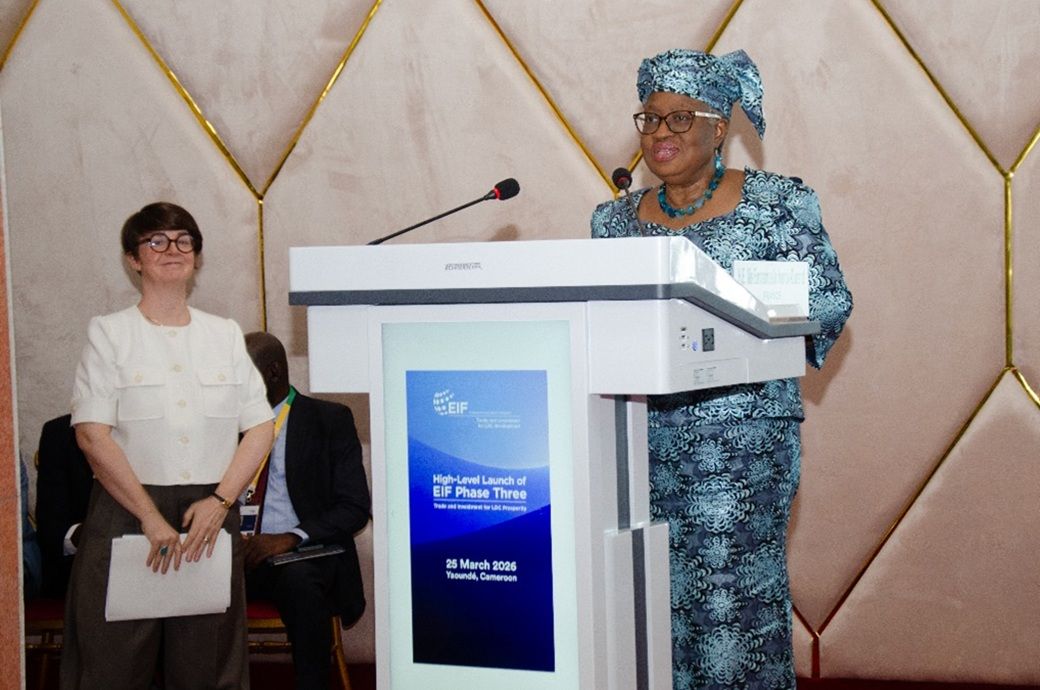
EIF is a mechanism aimed at leveraging and coordinating support for trade and investment priorities in least-developed countries (LDCs).
WTO Director-General Ngozi Okonjo-Iweala called for stronger partnerships to achieve the objectives of the Enhanced Integrated Framework’s (EIF) third phase, launched yesterday in Yaounde.
It aims to coordinate support for trade and investment priorities in LDCs.
The latest six-year phase has also secured fresh contribution pledges from Germany, Liechtenstein, Norway, Switzerland and the UK.
The new phase was launched at a side event to the 14th WTO Ministerial Conference (MC14) in Yaounde, Cameroon, co-organised by Cambodia, the United Arab Emirates and the EIF executive secretariat.
The third phase of the EIF introduces a shift from stand-alone projects to multi-year country programming. It is designed to help LDCs better integrate into the global trading system while addressing structural vulnerabilities and seizing new opportunities in areas such as digital trade, services, green value chains and regional integration.
The latest six-year phase also received new contribution pledges from Germany ($1.964 million), Liechtenstein (~$63,139), Norway ($4.15 million), Switzerland ($3.16 million) and the United Kingdom ($6.67 million).
“This third phase of the EIF comes at a defining moment for the LDCs and recently graduated countries. Familiar structural vulnerabilities are being compounded by a disrupted global trading system, power politics, debt pressures, climate change, and global economic uncertainty. At the same time, the current global context offers some important opportunities for LDCs to use trade to drive growth, development, and job creation,” Okonjo-Iweala said in a release issued by the WTO.
The DG also emphasised the need to scale up support and partnerships to match the ambition of the new phase.
Fibre2Fashion News Desk (DS)


Australia’s Myer posts strong H1 FY26 sales growth, up 24.5% YoY

John Mellencamp wins Icon Award at 2026 iHeartRadio Music Awards

World Cup European playoffs recap: Italy win, Czechia and Bosnia advance on PKs

-

 Fashion1 week ago
Sales at US apparel, clothing accessories stores up 4% YoY in Jan 2026
-

 Entertainment1 week ago
Val Kilmer revived 1 year after death through AI
-
 Fashion1 week ago
US’ G-III Apparel’s FY26 sales fall 7% to $2.96 bn
-
 Business1 week ago
Brits cashing in jewellery as gold price hits record high
-

 Sports1 week ago
March Madness 2026 – How to watch in SA, start time, schedule, TV channel for NCAA championship basketball tournament
-
 Business1 week ago
World’s largest mining group names new chief executive
-

 Fashion6 days ago
China’s textile & apparel exports surge 17% to $50 bn in Jan-Feb 2026
-

 Fashion1 week ago
Suez and Hormuz shut together, triggering global supply shock