

Politics
Saudi Arabia hails Pakistan-Afghanistan ceasefire as key to regional stability

- Truce inked during Doha negotiations between Pakistan, Afghanistan.
- Kingdom affirms support for all regional, international peace efforts.
- Appreciates diplomatic roles of Qatar and Turkey in brokering deal.
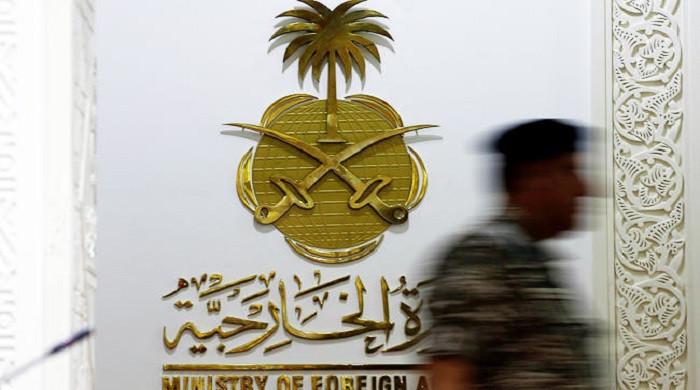
The Kingdom of Saudi Arabia (KSA) on Monday lauded the ceasefire pact between Pakistan and Afghanistan, calling it a vital step toward enduring peace and regional stability.
In a statement, the Saudi foreign ministry said the landmark agreement was reached during a round of negotiations held in Doha.
“Saudi Arabia welcomes the signing by the Islamic Republic of Pakistan and Afghanistan of an immediate ceasefire and the establishment of mechanisms to consolidate lasting peace and stability between the two countries, during the round of negotiations held in Doha,” the KSA’s Ministry of Foreign Affairs said.
“The Kingdom affirms its support for all regional and international efforts aimed at promoting peace and stability, and its continued commitment to ensuring security that achieves stability and prosperity for the brotherly peoples of Pakistan and Afghanistan.”
According to the statement, the Kingdom hopes that this positive step will lead to an end to tensions on the border between the two countries.
“The ministry also appreciates the diplomatic efforts and constructive role played by the State of Qatar and the Republic of Türkiye in this regard.”
Afghanistan and Pakistan agreed to an immediate ceasefire during talks in Doha, both sides said on Sunday, after a week of fierce border clashes, the worst violence between the South Asian neighbours since the Taliban seized power in Kabul in 2021.
The ceasefire “has been finalised”, Pakistan’s Defence Minister Khawaja Muhammad Asif posted on X on Sunday, saying both sides would meet again on October 25 in Istanbul to discuss “detailed matters”.
Taliban spokesperson Zabihullah Mujahid said in a statement that the parties agreed on a complete and meaningful ceasefire.
Qatar’s foreign ministry, which mediated Saturday’s talks along with Turkey, said the follow-up meetings were meant “to ensure the sustainability of the ceasefire and verify its implementation reliably and sustainably”.
Attack, counterattack
The talks were led by Asif and his Afghan counterpart, Mullah Muhammad Yaqoob, both sides said.
The ground fighting between the one-time allies and Pakistani airstrikes across their contested 2,600-km (1,600-mile) frontier were triggered after Islamabad demanded that Kabul rein in militants who had stepped up attacks in Pakistan, saying they operated from havens in Afghanistan.
Pakistani forces gave a befitting response to the aggression, killing over 200 Afghan Taliban and affiliated militants in a self-defence action. The military’s media wing, Inter-Services Public Relations (ISPR), said that 23 soldiers embraced martyrdom in the clashes with the Taliban forces and the terrorists.
The Taliban denies giving haven to militants to attack Pakistan and accuses the Pakistani military of spreading misinformation about Afghanistan and sheltering Daesh-linked militants to undermine its stability and sovereignty. Islamabad denies the accusations.
Militants have been waging a war for years against the Pakistani state in a bid to overthrow the government and replace it with their strict brand of Islamic governance.
“The Afghan regime must rein in the proxies who have sanctuaries in Afghanistan and are using Afghan soil to perpetrate heinous attacks inside Pakistan,” the Pakistan Army chief, Field Marshal Asim Munir, said on Saturday, addressing a graduation ceremony of cadets.
The Taliban spokesperson said that at the Doha talks, “It was decided that neither country will take hostile actions against the other, and support will not be provided to groups operating against the government of Pakistan.”
In a follow-up post on X, he said it reflected the Taliban’s longstanding position that Afghanistan’s territory will not be used against any other country.
The statements made about the agreement do not constitute a joint declaration, he said.
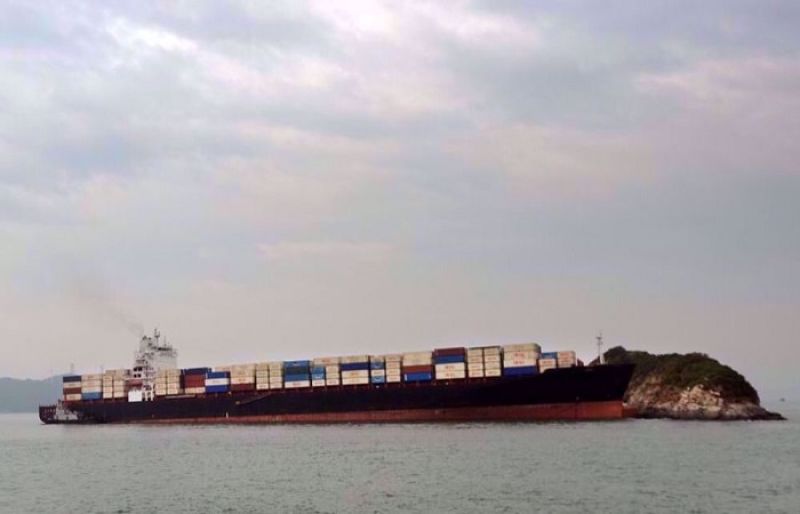
The crew from the Iranian commercial vessel Touska that has been seized by the US as part of Washington’s continued illegal naval blockade against the Islamic Republic have reportedly been transferred to Pakistan in preparation for their return to Iran.
ABC News reported the development on Sunday, citing US Central Command (CENTCOM), which overseas American troops in the West Asia region.
The transfer to Pakistan, it added, took place to facilitate arrangements for the 22-strong crew’s return.
The report noted that procedures had also begun to return the ship to its owner.
The vessel was seized last month. The United States had announced the blockade on April 13 and then ordered its continuation, despite US President Donald Trump’s having earlier declared a ceasefire in aggression targeting the Islamic Republic.
Iran has vehemently denounced the blockade, and pledged not to rejoin talks with the US as long as it stays in place.
The Islamic Republic has also described seizure of several Iranian vessels as part of the illegal measure, as an act of piracy and asserted that it reserves all rights to take due defensive countermeasures.
Trump has, himself, admitted that the US Navy acts “like pirates” in implementing the blockade.
Iranian Foreign Ministry spokesman Esmaeil Baghaei commented on the admission in a post on X on Saturday, saying, “This was no verbal slip. It was a direct and damning admission of the criminal nature of their actions against international maritime navigation.”
- Trump calls “Project Freedom” humanitarian gesture for stranded ships.
- Iran chokes off major flows of oil, gas and fertiliser to world economy.
- Over 900 commercial vessels present in Gulf, says maritime intel firm.
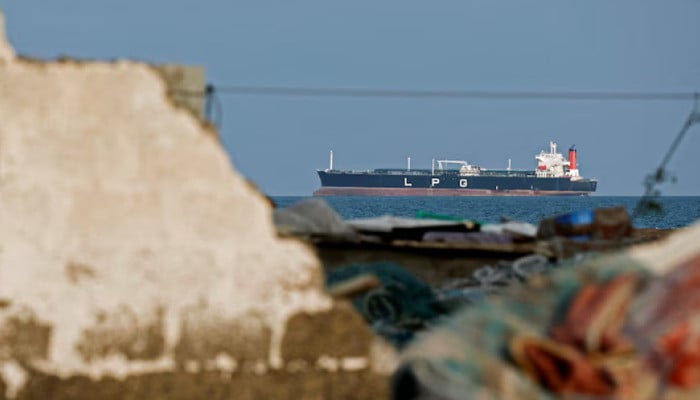
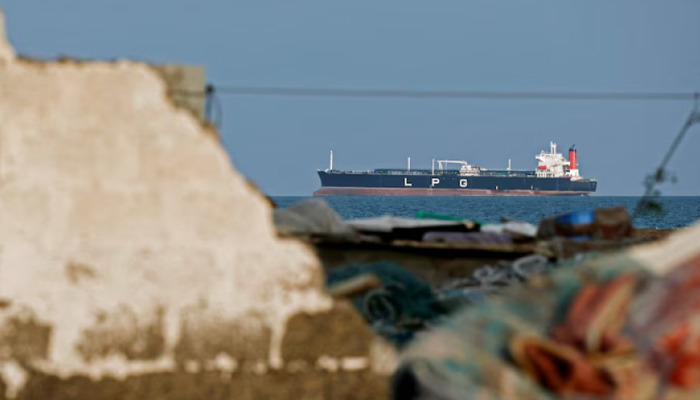
Iran warned on Monday that it would consider any US attempt to interfere in the Strait of Hormuz a breach of the Mideast ceasefire, as President Donald Trump said the United States would begin escorting ships through the blocked waterway.
Negotiations between the two countries have been deadlocked since a ceasefire came into effect on April 8, and Iran’s stranglehold on the strategic strait following US-Israeli attacks on Tehran has been a main point of contention.
Trump said Sunday the new maritime operation, which he dubbed “Project Freedom,” was a “humanitarian” gesture for crews aboard the many ships swept up in the blockade and which may be running low on food and other crucial supplies.
“We will use best efforts to get their Ships and Crews safely out of the Strait. In all cases, they said they will not be returning until the area becomes safe for navigation,” Trump said in a Truth Social post, noting operations would begin on Monday.
In response, the head of the Iranian parliament’s national security commission said: “Any American interference in the new maritime regime of the Strait of Hormuz will be considered a violation of the ceasefire.”
By blocking the Strait of Hormuz, Iran has choked off major flows of oil, gas and fertiliser to the world economy, while the United States has imposed a counter-blockade on Iranian ports.
Trump, in his post, said he was “fully aware that my Representatives are having very positive discussions with the Country of Iran, and that these discussions could lead to something very positive for all.”
He made no direct mention of what Tehran described as a 14-point plan “focused on ending the war.”
US Central Command said it would use guided-missile destroyers, over 100 land and sea-based aircraft, multi-domain unmanned platforms and 15,000 service members in the Hormuz effort.
As of April 29, more than 900 commercial vessels were located in the Gulf, according to maritime intelligence firm AXSMarine.
‘Impossible operation’
US news website Axios, citing two sources briefed on the proposal, reported that Iran set “a one-month deadline for negotiations on a deal to reopen the strait,” dissolve the US naval blockade and end the war.
Earlier Sunday, the Revolutionary Guards sought to put the onus back on Trump, saying he must choose between “an impossible operation or a bad deal with the Islamic Republic of Iran.”
Washington’s European allies are concerned that the longer the strait remains closed, the more their economies will suffer, and German Foreign Minister Johann Wadephul demanded that it be reopened.
In a call with his Iranian counterpart Abbas Araghchi, Wadephul stressed that Germany supported a negotiated solution but that “Iran must completely and verifiably renounce nuclear weapons and immediately open the Strait of Hormuz.”
Oil prices are currently about 50% above pre-conflict levels, largely due to the supply snarls in the strait.
‘Suffocating the regime’
The US president, who spent the weekend at his Mar-a-Lago resort in Florida, declined on Sunday to specify what could trigger new American military action.
But in his post he said that “if in any way, this Humanitarian (ship-guiding) process is interfered with, that interference will, unfortunately, have to be dealt with forcefully.”
Treasury Secretary Scott Bessent said the US naval blockade was only part of a broader economic embargo.
“We are suffocating the regime, and they are not able to pay their soldiers. This is a real economic blockade, and it is in all parts of government,” he told Fox News.
In yet more bellicose rhetoric, Mohsen Rezaei, a military adviser to Iran’s Supreme Leader Ayatollah Mojtaba Khamenei, said Iranian forces would sink US ships.
“The US is the only pirate in the world that possesses aircraft carriers. Our ability to confront pirates is no less than our ability to sink warships. Prepare to face a graveyard of your carriers and forces,” he posted on X.
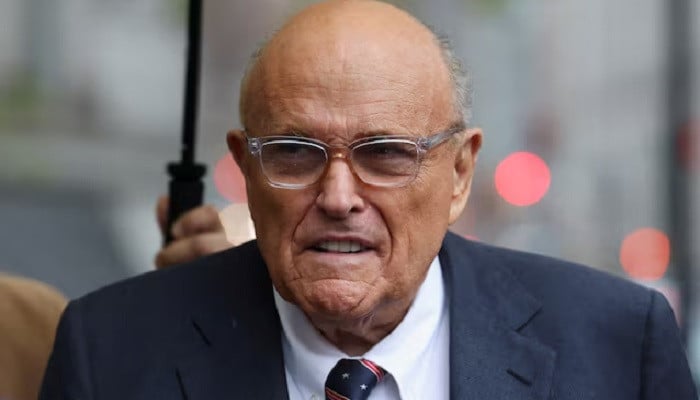
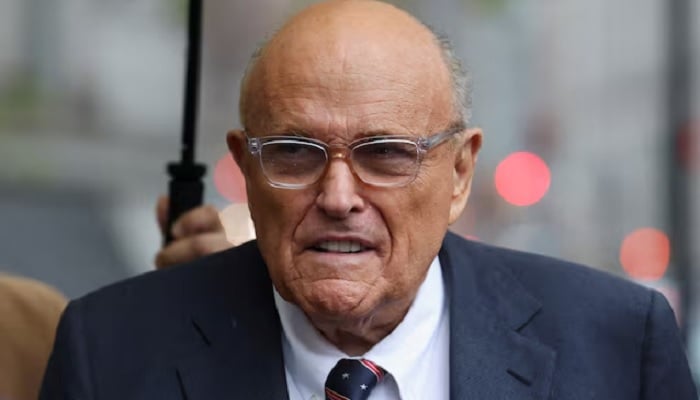
Former New York City Mayor Rudy Giuliani has been hospitalised and is in “critical but stable condition,” his spokesperson said on Sunday.
The spokesperson, Ted Goodman, did not immediately provide more details about Giuliani’s condition or how long he has been hospitalised.
“Mayor Giuliani is a fighter who has faced every challenge in his life with unwavering strength, and he’s fighting with that same strength now,” Goodman said in a statement. “We do ask that you join us in prayer for America’s Mayor Rudy Giuliani.”
Giuliani, 81, garnered acclaim for his response to the September 11, 2001, al Qaeda attack on New York City, earning the nickname “America’s Mayor.”
Giuliani worked as an attorney for President Donald Trump in his failed efforts to overturn the results of the 2020 election, an effort that led to criminal charges against Giuliani in two US states and a defamation lawsuit from election workers. Giuliani has denied wrongdoing in the criminal cases.
Trump, in a social media post, called Giuliani the “Best Mayor in the History of New York City” and said he had been mistreated by Democrats.
Giuliani was previously hospitalised last year following a car crash in New Hampshire.

US denies Iranian report warship was struck by missiles

Crew of US-seized Iranian vessel transferred to Pakistan for repatriation: Report

Yankees radio icon John Sterling dead at 87

-

 Tech7 days ago
A Brain Implant for Depression Is About to Be Tested in Humans
-

 Tech1 week ago
Almost 90% of women leave tech industry within 10 years | Computer Weekly
-
 Business7 days ago
‘I had £20,000 stolen and had to fight a 13-month fraud reporting rule to get it back’
-
 Business1 week ago
Pakistan’s oil market is fuelling the crisis | The Express Tribune
-

 Sports6 days ago
Pro wrestling star Steph De Lander reveals how colleague’s advice helped lead her to title triumph at ACW
-

 Entertainment7 days ago
Melania Trump says ABC should ‘take a stand’ on late-night host Kimmel
-

 Tech6 days ago
This Ambitious Laptop Doesn’t Leave Much Room for Your Hands
-
 Entertainment7 days ago
Norway joins Type 26 Frigate Programme to boost NATO naval power