

Business
SBP maintains interest rate at 10.5% on inflation fears amid surging oil prices – SUCH TV

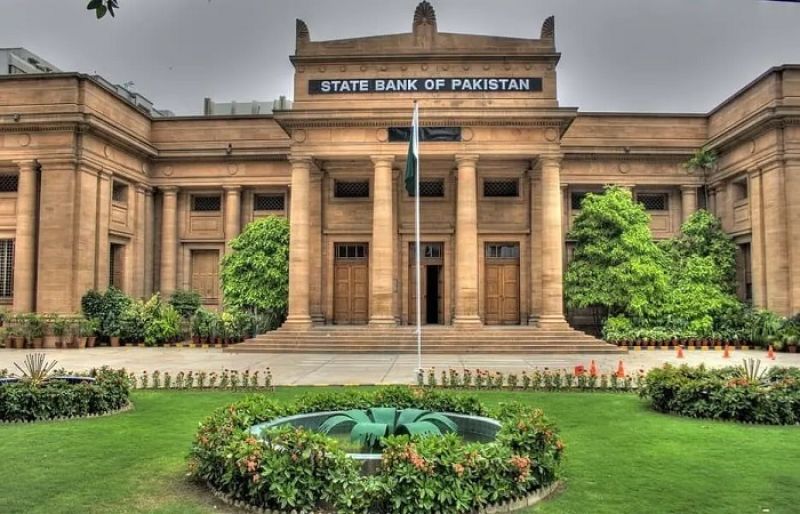
The State Bank of Pakistan’s (SBP) Monetary Policy Committee (MPC) on Monday maintained its key interest rate at 10.5%, pausing its easing cycle as rising global energy prices and regional tensions pose new inflation risks for the import-dependent economy.
“The Monetary Policy Committee has decided to keep the policy rate unchanged at 10.5%,” the State Bank of Pakistan (SBP) said on its website, adding that a detailed statement would be released soon.
The SBP has cut the key rate by a cumulative 1,150 basis points since mid-2024, from a record 22% in 2023, as inflation cooled sharply from multi-decade highs.
In its policy statement, the SBP said that the MPC decided to keep the policy rate unchanged as it observed that the macroeconomic outlook has “become quite uncertain following [the] outbreak of the war in the Middle East”.
During the meeting, the MPC noted that “the conflict in the Middle East has led to a sharp increase in global fuel prices as well as freight and insurance costs, while also affecting cross-border trade and travel.”
“The MPC observed that the intensity and duration of the conflict will both be important determinants of the impact on the domestic economy.”
However, the committee noted that macroeconomic fundamentals, especially in terms of inflation, foreign exchange reserves, and fiscal buffers, were better compared to the time of the start of the Russia-Ukraine war in early 2022.
The MPC’s initial assessment of the evolving geopolitical situation indicated that the outlook for key macroeconomic variables for fiscal year 2026 was within the earlier projected ranges. However, risks for the macroeconomic outlook have increased significantly.
Meanwhile, on the domestic front, inflation rose to 5.8% in January and further to 7% in February 2026.
The current account recorded a surplus in January, which, amidst weak official inflows, led to continued interbank FX purchases by the SBP and the buildup in FX reserves to $16.3 billion as of February 27.
Large-scale manufacturing (LSM) grew by 0.4% year-on-year in December 2025, with cumulative growth reaching 4.8% in July-December FY26.
Additionally, consumers’ inflation expectations and confidence improved, while those of businesses remained broadly stable in February.
The Federal Board of Revenue (FBR) tax collection remained below target in both January and February, further widening the cumulative shortfall during July-February FY26.
“The Committee noted the high degree of uncertainty in the outlook for international commodity prices and supply-chain disruptions in the backdrop of the war in the Middle East. In this context, the MPC deemed today’s decision as appropriate, and reaffirmed its commitment to ensure the hard-earned price stability,” read the statement.
However, the MPC stressed the need for expediting structural reforms to ensure sustainable economic growth.
The committee noted that the headline inflation rose to 7% year-on-year in February, attributed to the phasing out of the low base effect from food and energy prices, along with the rationalisation of fixed charges on households’ electricity bills.
The MPC assessed that the impact of higher expected domestic energy prices is likely to be partially offset by recent favourable movement in food prices amidst improved supply of key items and better prospects of agriculture produce.
It is expected that inflation may remain above 7% in the remaining months of FY26 and into FY27.



Business
Top stocks to buy today: Stock recommendations for April 24, 2026 – check list – The Times of India

Stock market recommendations: Bharat Electronics, and Colgate-Palmolive (India) have been recommended as the top stocks to buy today (April 24, 2026) by Bajaj Broking Research. Take a look at the target prices and expected returns:Bharat ElectronicsBuy in the range of ₹ 440.00-450.00
The stock is in structural up trend forming higher high and higher low in all time frame signaling strength and continuation of the uptrend. The entire up move of the last 8 months is in a rising channel as can be seen in the chart highlighting sustained demand at an elevated level.On the smaller time frame, the stock is at the cusp of generating a breakout above the bullish Flag like formation as post a sharp up move in the first 3 weeks of April the stock went into a consolidation phase in the last four sessions. It is seen resuming up move and is at the cusp of generating a breakout above the bullish Flag formation highlighting continuation of the up move and offers fresh entry opportunity.We expect the stock to extend the up move and head towards 495 levels in the coming months being the confluence of the 123.6% external retracement of the previous decline 473 – 400 and the upper band of the rising channel of the last 8 months.Colgate-Palmolive (India)Buy in the range of 2120-2160
The share price of Colgate-Palmolive has generated a breakout above bullish Flag pattern signaling continuation of the up move and offers fresh entry opportunity.We expect the stock to head higher towards 2330 levels in the coming months being the measuring implication of the bullish flag breakout.The daily 14 periods RSI is in buy mode thus supports the positive bias in the stock.(Disclaimer: Recommendations and views on the stock market, other asset classes or personal finance management tips given by experts are their own. These opinions do not represent the views of The Times of India)
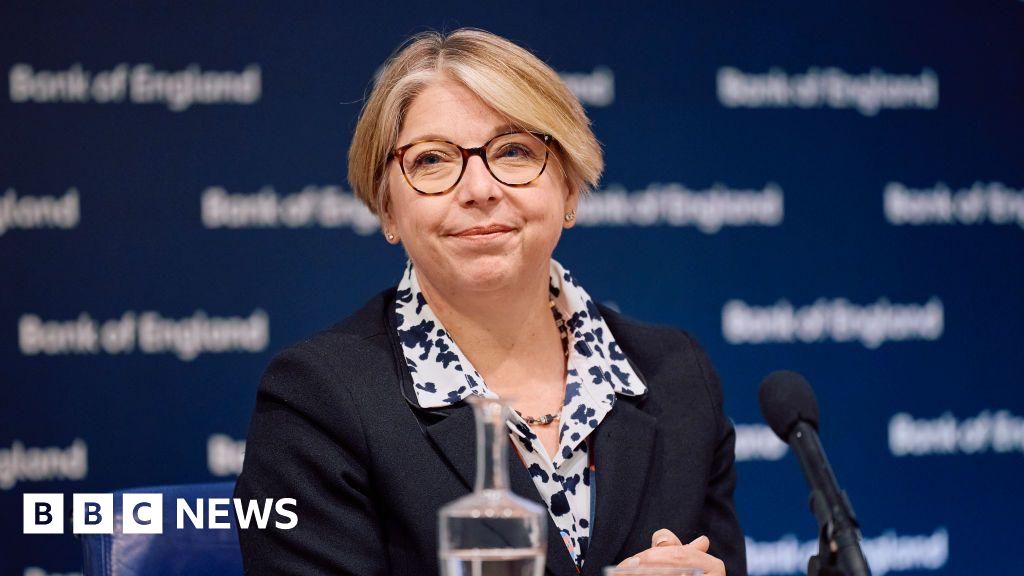
It is unusual for a senior figure at the Bank to be so forthright on market movements.
Source link

Consumer confidence has fallen for the third consecutive month amid household “jitters” over rapid price rises, figures show.
GfK’s long-running consumer confidence index fell four points to minus 25 in April, following falls of two points and three points in March and February respectively.
The deepening concern was driven by perceptions of the UK economy, with a six-point slide in confidence for the next 12 months to minus 43, its lowest level since February 2023.
Confidence in personal finances over the coming year fell five points to minus four – one point lower than this time last year.
The major purchase index – an indicator of confidence in buying big ticket items – held steady, albeit at minus 18 but one point better than last April.
The only measure to improve was the savings index – often an indication that households are concerned about their finances and looking to build contingency funds – which is up five points to 32.
Neil Bellamy, consumer insights director at GfK, said: “Consumers really do have the jitters now.
“It is a year since we last saw a monthly drop of this size, and we have to go back to October 2023 to find the last time consumer confidence was lower.
“Everyone is grappling with rapid price rises, especially at the fuel pumps, which are taking a dent out of household budgets, and people know further price hikes are coming.
“Consumer confidence is deteriorating sharply, with fuel prices and threats of more energy price increases acting as constant reminders of inflation.
“While the Gulf crisis is intensifying pressures, much of the current strain reflects earlier domestic cost increases.
“How long can all this disruption and pain continue?”


Former Giants co-owner Steve Tisch seen in team’s draft room

UK’s clothing exports down 7.6% to $293 mn in Jan-Feb
Top stocks to buy today: Stock recommendations for April 24, 2026 – check list – The Times of India

-

 Fashion1 week ago
France’s LVMH Q1 revenue falls 6%, shows resilience amid Iran war
-

 Entertainment1 week ago
Is Claude down? Here’s why users are seeing errors
-

 Sports1 week ago
PSL 11: Peshawar Zalmi win toss, opt to field first against Quetta Gladiators
-

 Tech1 week ago
The Deepfake Nudes Crisis in Schools Is Much Worse Than You Thought
-
 Business1 week ago
Standard Life buys rival in £2b deal to create savings giant
-

 Tech1 week ago
CYBERUK ’26: UK lagging on legal protections for cyber pros | Computer Weekly
-

 Fashion1 week ago
Raymond unveils luxury Chairman’s Collection Store in Mumbai
-
 Business1 week ago
PepsiCo earnings beat estimates as North American food business improves