

Business
SBP working on exchange, interest rates for stability: FinMin | The Express Tribune

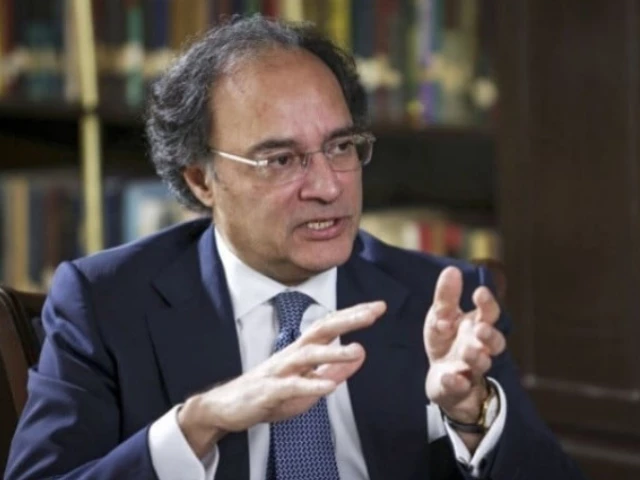
Finance Minister Muhammad Aurangzeb has stated that the State Bank of Pakistan is working on the exchange rate and interest rate, and the situation is expected to improve further.
The federal finance minister inaugurated the Job and Education Expo at the Expo Centre, Karachi, organised by the Pakistan Hindu Council. At the expo, around 120 stalls were set up by various institutions and companies for students.
Speaking to the media, Aurangzeb expressed gratitude to the organisers, saying that he had the opportunity to meet the country’s future leadership here. He noted that both public and private institutions were present at the job fair, but the absence of the corporate sector was felt.
He said that technology is the path to the future. Youth should work with their hearts and minds, and always strive for excellence.
Speaking about the Independence Day celebration of the “Marka-e-Haq,” the finance minister said that followers of all religions in the country commemorated it with great spirit.
Read: PM pushes for cashless, digital economy
He added that the corporate sector needs to step forward. Interest rate should not be made the single-point agenda.
In order to promote working capital, Pakistan must look beyond banks and include capital markets as well. He emphasised that the debt capital market also needs to be shifted to the Pakistan Stock Exchange mechanism for greater efficiency.
Aurangzeb highlighted that the circular debt in the power sector is declining, with three distribution companies (DISCOs) set to be privatised soon. He added that the government is also working to resolve circular debt in the gas sector, which has long been a burden on the economy.
On monetary policy, the minister clarified that the government has no role in setting interest rates, as this falls under the mandate of the State Bank of Pakistan. He said the exchange rate would continue to be determined by the market. Pakistan already has funding available, he noted, and the challenge now is to put those resources to effective use.
He praised Mustafa Kamal’s efforts in population control and underlined the importance of women’s economic participation, saying it could be a key driver in eradicating poverty. Aurangzeb confirmed that discussions with the World Bank regarding funding to support such initiatives have already taken place.
The finance minister said the IMF’s review mission would soon arrive in Pakistan under the ongoing 37-month programme, adding that the government remains in constant contact with the Fund. Looking ahead, he expressed optimism that by 2047 Pakistan’s economic situation would be that of a developed nation.
Aurangzeb also pointed to Pakistan’s strong anti–money laundering laws, which he said had enabled the country’s removal from the FATF grey list. He expressed confidence that Pakistan would remain off the list going forward.
Speaking on the recent rainfall damage in Khyber Pakhtunkhwa, he said his immediate priority was helping and rehabilitating affected people, while it was still too early to estimate the scale of losses.
When asked about traders’ demand for a new province, the finance minister refrained from giving a direct response.
There is no button for growth; the real thinking should be about sustainable growth. The role of the government is to provide an enabling environment. Public-private partnerships are working successfully. We are moving toward the AI world, and there is no room for doubt that we must move forward.
The finance minister said that ups and downs keep coming, but talent remains unaffected. Economic stability has now been achieved in the country.
The three major rating agencies are positive about Pakistan. The State Bank is working on the exchange rate and interest rate, and as stability increases, the situation will improve further.



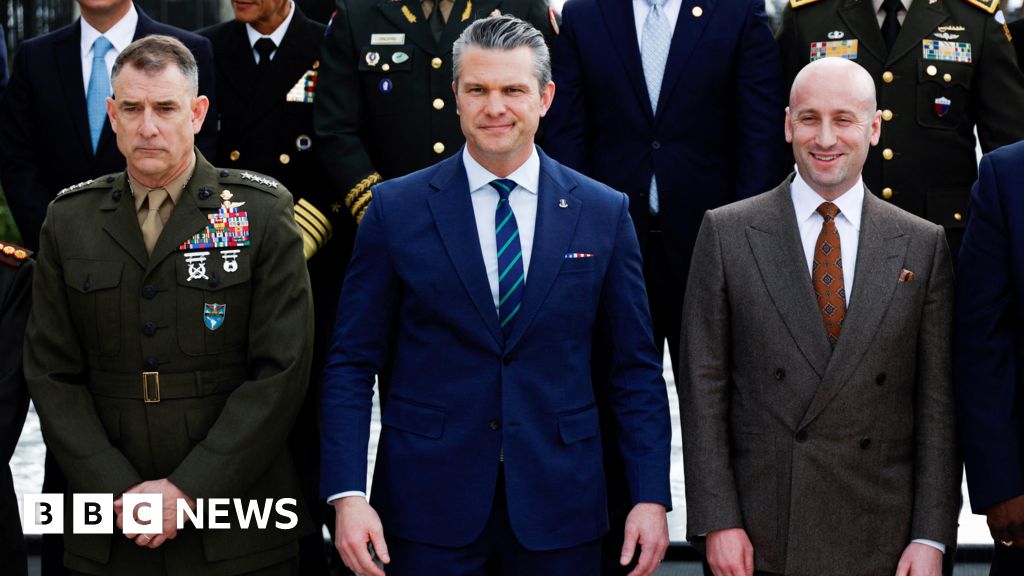
The supply chain risk designation of the artificial intelligence firm is a first for a US company.
Source link

Thomas Fuller | SOPA Images | Lightrocket | Getty Images
UniQure needs to run another study to prove that its gene therapy “actually helps people with Huntington’s disease,” a senior U.S. Food and Drug Administration official said on a call with reporters Thursday.
The official, who requested anonymity before discussing sensitive information, confirmed the agency has asked the company to run a placebo controlled trial of its treatment, which is administered directly into the brain. UniQure has said that type of study isn’t ethical because it would require putting people under general anesthesia for hours, a characterization the official disputed.
“So what is really going on? UniQure is the latest company to make a failed therapy for Huntington’s patients,” the official said. “They likely acknowledge or understand at some deep level that their trial failed years ago, and instead of doing the right thing and running the correct clinical study, UniQure is performing a distorted or manipulated comparison in the mind of FDA.”
The comments mark the latest development in a messy public spat between UniQure and the FDA, and as the agency comes under fire for a number of recent drug approval application rejections, including some where companies have accused it of going back on previous guidance. FDA Commissioner Marty Makary in an interview with CNBC’s Becky Quick last week seemingly criticized UniQure’s gene therapy for Huntington’s disease. Makary didn’t name UniQure but described its treatment.
UniQure then accused the FDA of reversing its stance that the company’s clinical trial data would be sufficient to seek approval. UniQure’s study used an outside database to measure how patients with Huntington’s disease might decline without treatment, known as an external control. UniQure has said it wouldn’t be feasible to run a true randomized, double-blind placebo-controlled study, considered the gold standard, because it wouldn’t be ethical to make people undergo a sham hours-long brain surgery.
The FDA official said the agency “never agreed to accept this distorted comparison” and the FDA “never makes such assurances.” Instead, the “FDA will always say, ‘Well, we have to see the data when we get it.'”
UniQure didn’t immediately comment.
The company’s stock rose more than 10% on Thursday and has fallen 58% this year as of Thursday afternoon.
Business
US mortgage rates rise to 6% after three-week slide as oil-driven bond yields climb – The Times of India

The average long-term US mortgage rate edged higher this week, ending a three-week decline as bond yields rose amid oil-price pressures linked to the war with Iran.The benchmark 30-year fixed mortgage rate increased to 6% from 5.98% last week, mortgage buyer Freddie Mac said on Thursday. A year ago, the average rate stood at 6.63%, AP reported.The modest uptick breaks a three-week slide in borrowing costs, with mortgage rates having hovered close to the 6% mark for most of this year. Last week’s average had marked the first time the rate dipped below 6% since September 2022, reaching its lowest level in nearly three and a half years.Mortgage rates are influenced by several factors, including the Federal Reserve’s interest-rate policy, investor expectations about inflation and economic growth, and movements in the bond market.They typically track the direction of the 10-year US Treasury yield, which lenders use as a benchmark for pricing home loans.The 10-year Treasury yield rose to 4.14% at midday Thursday, up from around 4% a week earlier.Treasury yields have moved higher in recent days as rising oil prices added fresh inflation concerns, potentially complicating the Federal Reserve’s plans to cut interest rates.


US Senate backs Trump’s Iran operations after House vote

Harry Kane calf injury imperils Bundesliga record chase

Here’s Every Country Directly Impacted by the War on Iran

What are Iran’s ballistic missile capabilities?

India Us Trade Deal: Fresh look at India-US trade deal? May be ‘rebalanced’ if circumstances change, says Piyush Goyal – The Times of India

Attock Cement’s acquisition approved | The Express Tribune

-
Business7 days ago
India Us Trade Deal: Fresh look at India-US trade deal? May be ‘rebalanced’ if circumstances change, says Piyush Goyal – The Times of India
-
Business1 week ago
Attock Cement’s acquisition approved | The Express Tribune
-
 Politics1 week ago
What are Iran’s ballistic missile capabilities?
-

 Politics1 week ago
US arrests ex-Air Force pilot for ‘training’ Chinese military
-

 Fashion1 week ago
Policy easing drives Argentina’s garment import surge in 2025
-
 Business6 days ago
Greggs to reveal trading amid pressure from cost of living and weight loss drugs
-

 Sports1 week ago
Sri Lanka’s Shanaka says constant criticism has affected players’ mental health
-

 Sports6 days ago
LPGA legend shares her feelings about US women’s Olympic wins: ‘Gets me really emotional’