

Business
Sebi Gives Clean Chit To Adani Group, Dismisses Hindenburg’s Manipulation Allegations

Last Updated:
Sebi in its order says the ‘allegations made against Noticees in the show-cause notice are not established’.

Hindenburg Research became widely known in India in early 2023 after publishing a controversial report targeting the Adani Group, accusing it of being involved in “the largest con in corporate history”.
In a major development, the Securities & Exchange Board of India (Sebi) on Thursday gave a clean chit to Adani group, dismissing allegations of stock manipulation made by US short-seller Hindenburg Research against Gautam Adani and his group companies, including Adani Ports and Adani Power.
“Having considered the matter holistically, I find that the allegations made against Noticees in the SCN (show-cause notice) are not established. Considering the above, the question of devolvement of any liability on Noticees does not arise and hence the question of determination of quantum of penalty also does not require any deliberation. I, therefore, in exercise of the powers conferred upon me under section 19 of the SEBI Act, 1992 read with sub-sections (1) and (4) of section 11, subsection (4A) of section 11 and sub-sections (1) and (2) of section 11B (1) of the SEBI Act, 1992, hereby dispose of the instant proceedings against Noticees without any direction,” Kamlesh C Varshney, whole-time member of Sebi, said in his two separate similarly worded orders on proceedings against the Adani group entities.
The capital market regulator had been examining allegations raised by US short seller Hindenburg Research that Adani Enterprises and Adani Power Mundra (since merged with Adani Power Ltd) received funding routed through Milestone Tradelinks and Rehvar Infrastructure via Adani Infra (India) in FY21. Hindenburg had questioned the original source of funds of these two entities.
In its order, SEBI said it conducted a detailed probe to check for any possible misrepresentation in financial statements, or attempts to bypass provisions of the SEBI Act, 1992, the Listing Obligations and Disclosure Requirements (LODR) Regulations, 2015, and the PFUTP Regulations, 2003, among others.
Now-disbanded Hindenburg Research became widely known in India in early 2023 after publishing a controversial report targeting the Adani Group, accusing it of being involved in “the largest con in corporate history”. The report, which alleged stock manipulation by the conglomerate, led to a sharp decline in the Adani Group’s market value.
Despite the serious nature of the allegations, Adani and his companies have consistently denied all charges.
The group later recovered most of the losses, as the accusations were not substantiated.
In January 2025, Hinderberg founder Nate Anderson announced the decision to disband Hindenburg Research, stating that the firm’s operations would wind down after completing its pipeline of investigative reports.
Beyond the Adani Group, Hindenburg Research also targeted former India’s markets regulator Madhavi Puri Buch and her husband in previous reports.
September 18, 2025, 18:15 IST
Read More



Business
Us Iran War: How US-Iran war is making life more expensive for Indians – The Times of India
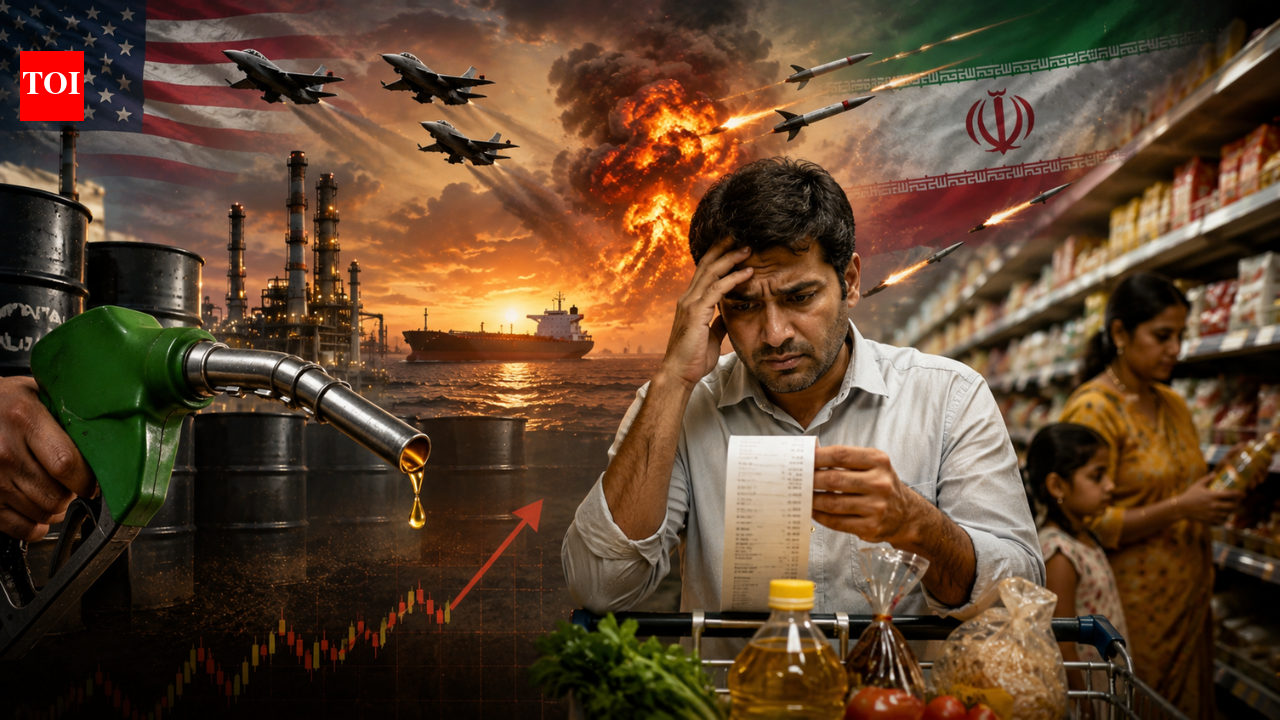
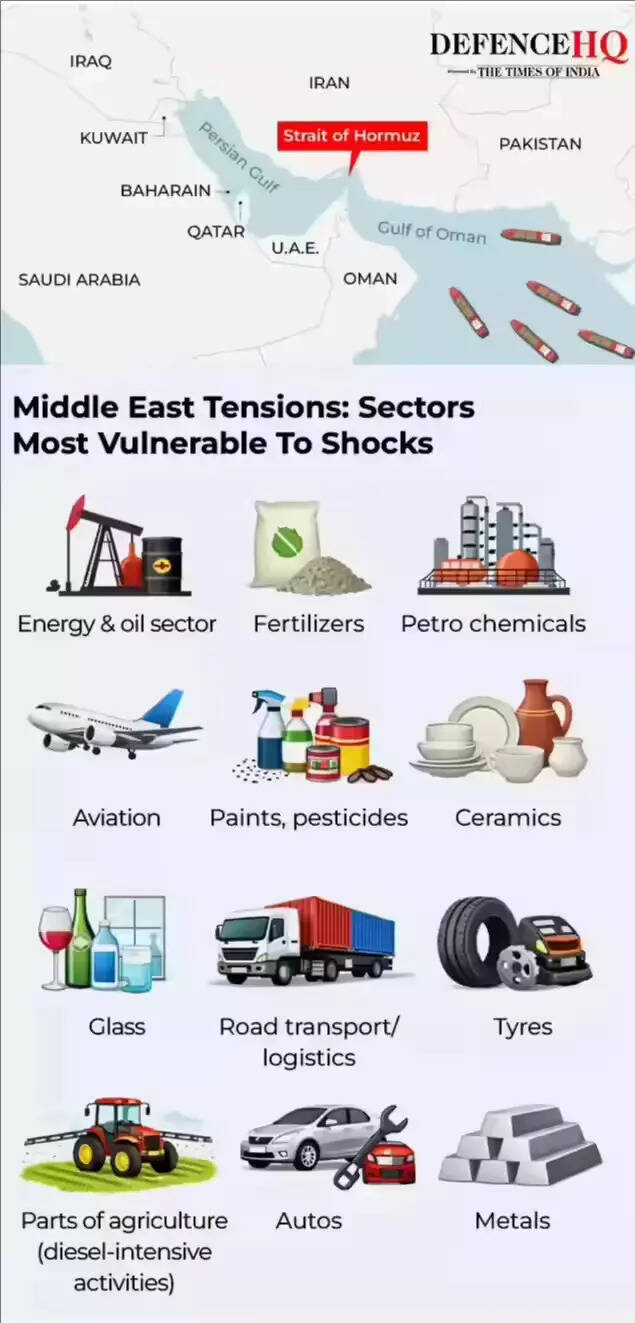
There’s a war brewing far away between the US, Israel and Iran. But why is your monthly budget suddenly acting like it’s in danger too?The Middle East war that began as a geopolitical conflict over two months ago has slowly turned into a cost-of-living problem for households, as disruptions to oil supply routes, rising freight rates and higher petrochemical prices ripple through the economy.The biggest trigger remains the strategically crucial Strait of Hormuz, the narrow shipping route through which nearly 20% of global oil and energy supplies move. Since tensions escalated after the US and Israel launched joint strikes on Iran, the country has squeezed the passage, pushing up shipping costs, insurance premiums and crude oil prices have surged.Consequently, everything from LPG cylinders to sofas is now getting costlier.
The kitchen shock
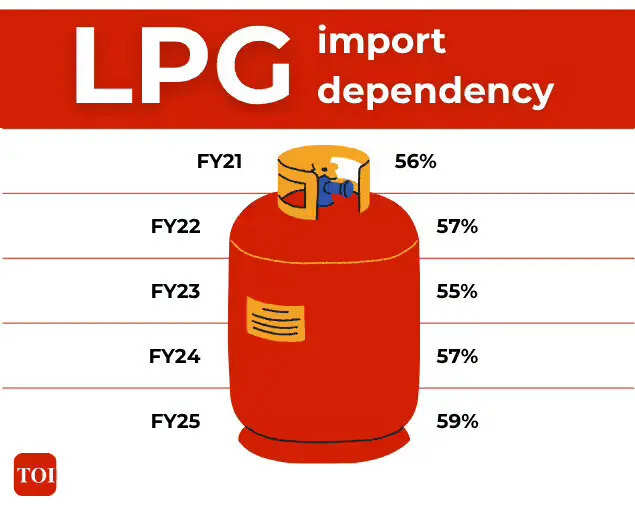
The first impact is being felt in Indian kitchens.India is a major importer of LPG. As a result, domestic LPG cylinder prices jumped from Rs 853 to Rs 913, while commercial cylinders rose from Rs 1,768 to Rs 3,071.50. Cooking oil has also become more expensive, with sunflower oil prices rising by around Rs 15 per litre and mustard oil by nearly Rs 10 per litre in several markets.
Daily staples may soon feel the pressure too. India imports nearly 5–6 million tonnes of pulses annually, and rerouted shipments around Africa due to Middle East disruptions are increasing freight and insurance costs. Industry officials have warned that dal prices could rise further if tensions continue.Dry fruits have already seen sharp increases because supplies from Iran and Afghanistan have been disrupted. Traders told TOI that Mamra almonds have surged from around Rs 1,800 to Rs 2,800 per kg, while Iranian pista prices have jumped from Rs 1,650 to Rs 2,400 per kg. Premium Pishori pista used by sweet makers has risen from Rs 2,600 to Rs 3,400 per kg.The impact is now visible in mithai shops too, where sellers say maintaining quality has become far more expensive.
Your sofa, wardrobe and modular kitchen now cost more
The war is also making Indian homes more expensive to furnish.Furniture makers say modular furniture and premium interiors could become 10–15% costlier because modern sofas, wardrobes and modular kitchens rely heavily on petrochemical products linked to crude oil.As per an ET report, furniture brand Orange Tree said foam prices have surged over 45%, while packaging costs have jumped nearly 70%. The plywood industry is also under pressure because chemicals such as methanol and resins, critical for adhesives, are imported from the Middle East.That means even if a sofa or modular kitchen is made in India, the raw materials, chemicals and packaging behind it are becoming costlier due to the conflict.Even painting your home may now cost more. Decorative paint prices are expected to rise by 9–10%, while companies such as Berger Paints have already announced hikes on several product categories.
Electronics, clothes and FMCG products under pressure
Electronics and appliances may soon become more expensive, too.Industry executives say TVs, refrigerators and air-conditioners could see price hikes of around 5–6% because plastic components and petrochemical-based materials have become costlier. Godrej Enterprises has already indicated that prices may rise as suppliers repeatedly increase rates.The fashion and textile industry is also under strain.Textile hubs in Ahmedabad and southern India have reported sharp jumps in fuel and chemical costs after industrial gas supplies were curtailed amid the conflict. Polyester fibre prices alone have risen by Rs 12 per kg within a week, according to industry bodies.Ankit Patel, former president of the Vatva Industry Association, said the reduced gas supply has severely affected chemical production. “We have seen a huge price rise in various products like coal, sulphuric acid and phthalic anhydride. This has pushed up overall production costs. We are able to pass on some of the impact to our dyes buyers, but margins have shrunk significantly,” he said.Processing units say imported coal prices have surged nearly 30%, while chemical prices linked to dyes and fabrics are up 25–40%. Experts warn this could eventually push up clothing prices as manufacturers pass on costs.The pressure extends to daily-use consumer goods too.FMCG companies say costs of plastics, resins, polymers and packaging materials have surged by as much as 25% in recent weeks. That affects products consumers buy almost every day — soaps, shampoos, detergents, toothpaste, creams, hair oils and packaged foods.Several companies are already considering price hikes or smaller pack sizes to protect margins.
Flights, fuel and cars getting costlier
Air travel has already become more expensive.Airlines have started adding fuel surcharges after aviation turbine fuel prices surged. After the conflict began, IndiGo introduced surcharges ranging from Rs 425 to Rs 2,300 on flights, while Air India and Air India Express announced additional charges of Rs 399 on domestic tickets.
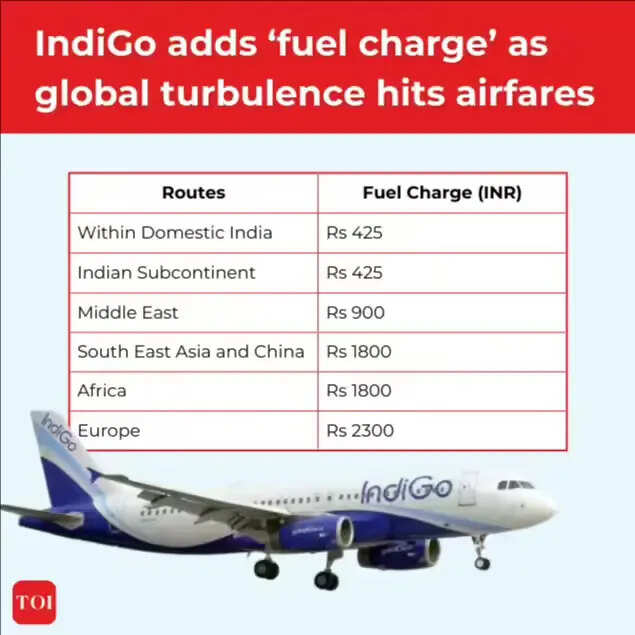
Akasa Air has also added surcharges ranging from Rs 199 to Rs 1,300.Industry executives say further fare hikes may become unavoidable if fuel prices remain elevated.The automobile sector is facing similar pressure. Luxury carmakers Mercedes-Benz and Audi have announced price hikes of around 2%, while mass-market companies are preparing smaller increases amid rising supply chain and input costs.Meanwhile, crude oil prices remain volatile. Brent crude has crossed the $100-per-barrel mark, and analysts warn prices could rise further if tensions escalate around the Strait of Hormuz.Another pressure point is quietly building in the background. Fuel companies themselves are now under severe financial strain. According to a PTI report, state-run oil marketing companies — Indian Oil, BPCL and HPCL — have together incurred losses exceeding Rs 1 lakh crore over the past 10 weeks as they continued selling petrol, diesel and LPG below actual market-linked costs despite soaring global crude prices.Sources cited by the news agency claimed that the three companies are currently suffering daily under-recoveries of around Rs 1,600–1,700 crore.Even though Brent crude has crossed $100 per barrel, petrol and diesel prices in India have largely remained frozen at around Rs 94.77 and Rs 87.67 per litre, respectively. Domestic LPG prices were increased by Rs 60 in March, but officials say cylinders are still being sold below cost.The financial burden is becoming difficult to sustain. Government sources said that if crude prices remain elevated for a longer period, oil companies may need larger borrowings to maintain fuel supply and operations.Industry insiders also warned that a petrol and diesel price hike may eventually become unavoidable, with the decision now depending more on political timing than economics.That means households may not have fully felt the fuel shock yet. If global oil prices remain volatile and the Hormuz crisis continues, experts warn that another round of fuel price hikes could eventually feed into transport costs, grocery prices, logistics and overall inflation across the economy.
Medicines and healthcare may soon become more expensive
Healthcare is another area beginning to feel the strain.Medical-grade plastics used in syringes, gloves and surgical products have become 50–60% more expensive since the conflict intensified. Traders told TOI that prices of surgical products such as nebulisers, BP machines and glucometers may rise by 10–20%.Organising secretary of the Prayag Chemist and Druggist Association (Retail), Nikhil Malang, told TOI, “Sea freight rates have risen sharply, causing delays in the import of raw materials. At the same time, the operational capacity of major airports in the Gulf region has dropped by up to 80%, leading to delays of several weeks in the movement of critical components.”The pharmaceutical industry has also sought temporary price relief from the government, warning that the cost of key chemicals and solvents used in medicine manufacturing has surged by 30–100% within weeks.As per ET, the Centre may consider a temporary 10–15% increase in prices of select essential medicines if disruptions continue.
The invisible impact: Rupee weakens and stock market losses
The war is also weakening the rupee, which has fallen from around 90 against the US dollar to beyond the 95 mark, making overseas education and foreign travel more expensive for Indian families.The rupee recently slipped near record lows of 95.40 against the US dollar, increasing the cost of tuition fees, rent and living expenses abroad.Meanwhile, stock market turbulence triggered by the conflict has already erased nearly Rs 34 lakh crore in investor wealth until mid-March, affecting mutual funds, retirement savings and household investments.For many middle-class families, this means portfolios are suddenly worth less, forcing people to delay purchases or cut discretionary spending.
Why a war thousands of kilometres away affects India
India imports a large share of its crude oil and several petrochemical-linked materials. When global shipping routes become risky or oil prices rise sharply, those costs eventually flow through the economy.The result is that a conflict in the Middle East slowly shows up everywhere, in fuel bills, grocery baskets, airline tickets, shopping expenses and household budgets.For now, many companies are still absorbing part of the increase instead of fully passing it on to consumers. But if oil prices remain high and shipping disruptions continue, economists warn that inflationary pressure could deepen further in the coming months.A war in the Middle East is no longer just a geopolitical story for Indian households. It is increasingly becoming a monthly budget story.
Business
FPI May trade: Foreign portfolio investiors withdrew Rs 14,231 crore from Indian equities – The Times of India

Foreign portfolio investors have extended their retreat from Indian equities in May, taking their total withdrawal from the market in 2026 beyond Rs 2 lakh crore as global economic concerns continue to drag down sentiment. Data from NSDL showed FPIs have pulled out Rs 14,231 crore so far this month, adding to a year marked by persistent selling pressure. The cumulative outflow this year has now surpassed the Rs 1.66 lakh crore foreign investors withdrew during the whole of 2025. The pattern through 2026 has largely remained negative, with February standing out as the lone exception. January opened with FPIs selling equities worth Rs 35,962 crore. In February, however, foreign investors briefly reversed course, bringing in Rs 22,615 crore, their biggest monthly investment in 17 months. That momentum did not last. March recorded the sharpest reversal, with a record Rs 1.17 lakh crore exiting Indian equities. April followed with another steep outflow of Rs 60,847 crore, while May has continued the same trajectory. “The selling was largely driven by persistent global macroeconomic uncertainties, particularly concerns around inflation, interest rates and geopolitical risks, which continued to weigh on sentiment toward emerging markets,” Himanshu Srivastava, Principal, Manager Research at Morningstar Investment Research India, said. According to Srivastava, uncertainty over how global interest rates will move remains central to foreign investor behaviour. High crude oil prices and unresolved geopolitical tensions, particularly in the Middle East, have kept inflation concerns elevated worldwide, forcing investors to reassess hopes of near-term rate cuts by major central banks. This backdrop has supported firm global bond yields, increasing the appeal of developed-market debt instruments while weakening investor appetite for emerging market equities such as India. He also said intermittent weakness in the Indian rupee has affected returns for overseas investors when measured in dollar terms. Even amid sustained selling, foreign investors have not completely stepped away from Indian markets. V K Vijayakumar, Chief Investment Strategist at Geojit Investments, said FPIs have shown selective interest in segments such as power, construction and capital goods. He noted that mid-cap and certain small-cap stocks with strong earnings and growth potential are also drawing investor attention. Vijayakumar said currency depreciation and concerns around India’s earnings growth have played a significant role in shaping FPI outflows this year. He added that markets like South Korea and Taiwan are currently seeing stronger FPI interest, supported by expectations of better earnings growth linked to the artificial intelligence boom.

Campaigners are calling for a ban on the use of the weedkiller over health concerns.
Source link


5/10: Sunday Morning – CBS News

Pakistan embassy in Washington commemorates Marka-e-Haq anniversary, honours national unity
Us Iran War: How US-Iran war is making life more expensive for Indians – The Times of India

-

 Politics7 days ago
Iran weighs US reply delivered via Pakistan as Trump signals opposition to deal terms
-

 Fashion1 week ago
US’ J.Jill, Inc. appoints Kimberly Wallengren as CMO
-

 Fashion1 week ago
AAFA pushes for swift US House passage of key anti-counterfeiting law
-

 Fashion1 week ago
US cotton export sales show strong recovery, Upland rise 36%
-

 Sports1 week ago
Sajid Ali Sadpara summits world’s fifth-highest peak
-

 Tech6 days ago
DHS Demanded Google Surrender Data on Canadian’s Activity, Location Over Anti-ICE Posts
-

 Fashion1 week ago
ICE cotton witnesses sharp rise on weaker dollar, strong exports
-
 Business1 week ago
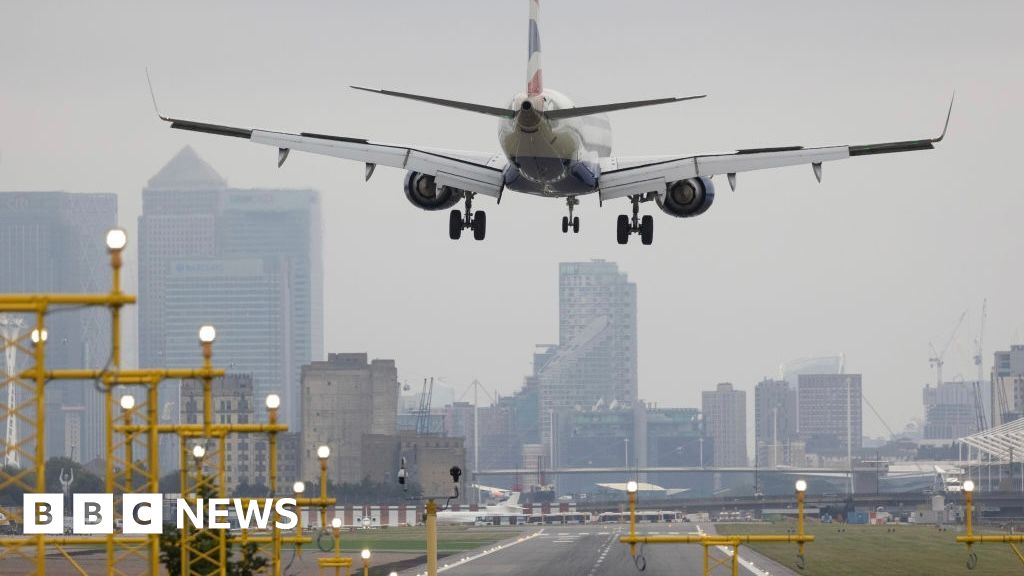
UK airlines to be allowed to cancel flights in advance over fuel shortages