

Business
SEBI Proposes Major IPO Disclosure Changes; Plans A Clean, Investor-Friendly Summary

Last Updated:
SEBI proposes a simpler Offer Document Summary for IPOs, making key info like business overview, risks, and financials easier for investors.
SEBI’s IPO Revamp Proposal Introduces a Handy, Easy-to-Read Offer Document Summary
When we look at a billboard showing the RHP (Red Herring Prospectus) of an upcoming IPO, the first reaction is usually, “Who the hell can read this?” The RHP advertisement looks tiny, cluttered, and almost impossible to understand from a distance.
But the problem isn’t just with the RHP on the billboard — it’s with the entire document itself. The RHP is a detailed filing that tells investors what the company does, its financials, risks, plans for the proceeds, and information about the management and promoters. Ideally, it’s the one document everyone should read before applying for an IPO.
However, it is packed with jargon, long explanations, and so many unnecessary details that most people end up skipping or skimming it instead of reading it properly.
Because of this, retail investors often end up relying on GMPs (grey market premium), WhatsApp forwards, and fin-influencers’ posts to decide whether to apply for an IPO.
In a positive move, Sebi has proposed revamping IPO documents to make them more investor-friendly by introducing a separate Offer Document Summary that is easy to read and understand.
Investors want clear numbers like EBITDA, cash flows, and KPIs — not pages of contingent liabilities, related-party transactions, and historical share acquisition prices.
The proposed summary will include:
– Company business overview
– Industry snapshot
– Promoter details
– Objects of the issue
– Key risks
– Key performance indicators
– Financial highlights
– Litigation summary
Unnecessary details like contingent liabilities, related-party transactions, and historical share acquisition prices may be removed.
Instead, IPO applications will carry a QR code linking directly to:
– The full RHP
– The Offer Document Summary
– The price band advertisement

Varun Yadav is a Sub Editor at News18 Business Digital. He writes articles on markets, personal finance, technology, and more. He completed his post-graduation diploma in English Journalism from the Indian Inst…Read More
Varun Yadav is a Sub Editor at News18 Business Digital. He writes articles on markets, personal finance, technology, and more. He completed his post-graduation diploma in English Journalism from the Indian Inst… Read More
November 15, 2025, 16:33 IST
Read More

Reforms are needed of the welfare system to tackle the high numbers of young people not in work or education, says Alan Milburn.
Source link
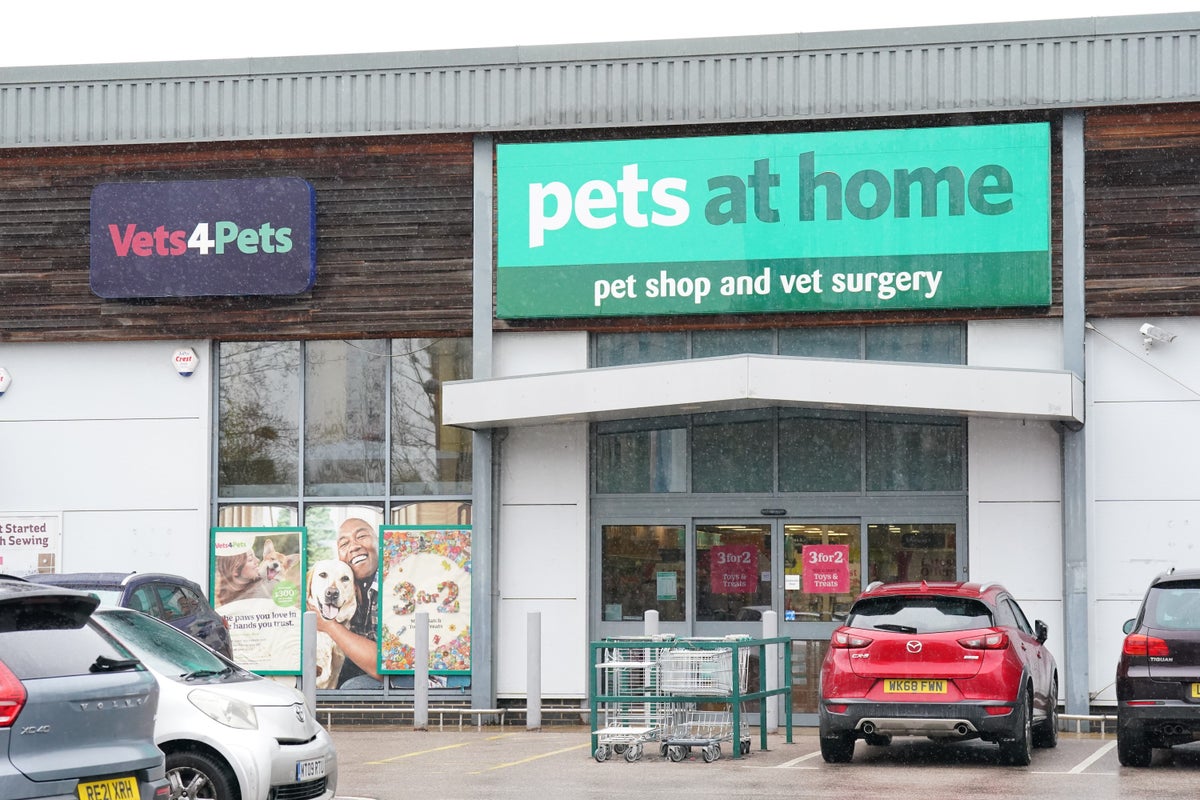
Pets at Home investors will be hoping the retailer’s new boss can lay out a strategy to return it to profit growth despite a challenging consumer backdrop.
Shares in the company currently sit close to its lowest level for almost seven years following a recent downturn in the group’s retail arm.
The dip in the group’s performance contributed to the departure of previous chief executive Lyssa McGowan late last year.
In March, former Waitrose boss James Bailey took the reins in a bid to drive a turnaround in performance.
Shareholders will be hoping the new boss can show early signs of improvement and a long-term strategy to drive growth in Pets at Home’s update on Wednesday May 27.
The pet products retailer and vet chain is expected to report an underlying pre-tax profit of around £93 million for the year to March, according to analysts.
It would represent a roughly 30% fall from last year, after the company came under pressure from weak demand for discretionary products.
Analysts have said investors will be looking at early trading in the current financial year to see how consumer spending is holding up.
AJ Bell’s investment director Russ Mould said: “Pets at Home could badly do with some renewed pep.
“Under executive chair Ian Burke, who has returned to a non-executive role after leading the business on an interim basis, Pets at Home laid out a plan to fix a retail business which has been badly affected by a reduction in discretionary spend on toys and treats for Britons’ furry and feathered friends.
“The country may have a reputation for loving their animal companions but in an environment where households are having to watch their pennies, these nice-to-have items were off the list.”
The group has also seen sales of pet food and similar products face fierce pricing competition from non-specialist retailers, such as supermarkets.
It has since cut prices among around 1,000 products in order to help drive activity, with cash-strapped shoppers looking for value.
Data from the Office for National Statistics (ONS) showed that UK retail sales volumes dropped to an 11-month low in April, with a 1.3% fall for the month.
Pets at Home is predicted to report revenues of £1.47 billion for the past year, just marginally lower than £1.482 billion reported last year.
Business
India’s fuel demand growth may slow sharply in H2 2026 amid price hikes, austerity push: Report
India’s transportation fuel demand growth is expected to slow sharply in the second half of 2026 as higher fuel prices, government-led conservation measures and a weakening rupee weigh on mobility and consumption trends, according to a report.The report by Kpler’s lead analyst (modelling), Elif Binici, revised down India’s 2026 refined products demand growth forecast by around 77,000 barrels per day (kbd), or 39 per cent, to nearly 78 kbd from an earlier estimate of 128 kbd.As per news agency PTI, the downgrade reflects weaker expected growth in petrol and diesel demand due to elevated fuel costs, softer mobility trends and official efforts to conserve fuel amid the ongoing West Asia crisis.Petrol and diesel prices have been increased by around Rs 5 per litre in three instalments since May 15, after oil marketing companies passed on part of the burden of soaring global crude oil prices to consumers.
Petrol demand faces steepest downside risk
The report said petrol demand is likely to see the sharpest slowdown, with projected growth revised down by 25 kbd, from 63 kbd to 38 kbd.Petrol consumption is now estimated at 1,010 kbd, compared to the earlier estimate of 1,035 kbd.According to the report, weaker commuting activity, slower discretionary travel and government fuel-saving campaigns are expected to curb fuel consumption.Annual diesel demand growth was also cut by around 20 kbd, while jet fuel demand growth was nearly halved to about 6 kbd from 11 kbd earlier due to expectations of reduced air travel and tighter spending patterns.“The revisions primarily reflect weaker expected growth in gasoline and diesel demand as higher costs, weaker mobility trends, and recent government-led fuel conservation efforts increasingly feed into domestic transportation activity,” the report said, as quoted by PTI.
Rupee weakness, crude surge add pressure
The report noted that India’s macroeconomic environment has deteriorated since the escalation of the US-Iran conflict, with rising crude import costs, refinery expenses and rupee depreciation increasing inflationary pressure.The rupee has weakened by around 6 per cent since the conflict began and nearly 10 per cent over the past year. Foreign exchange reserves have also reportedly declined by about 4.3 per cent since late February as authorities attempted to stabilise the currency and contain imported inflation.The report said the current average petrol price of around Rs 103 per litre remains well below the estimated breakeven level of nearly Rs 125 per litre.Diesel prices near Rs 94 per litre are also below the estimated breakeven range of Rs 115-120 per litre.Before the recent price revisions, state-run fuel retailers were reportedly losing nearly Rs 1,000 crore daily because rising crude procurement costs and currency weakness outpaced retail fuel prices.“The key issue is the inability of state-run retailers to pass through rising import costs quickly enough to restore profitability,” the report said.
Russian crude continues to support supply security
The report added that India’s dependence on discounted Russian crude imports, estimated at around 1.9-2 million barrels per day, continues to provide stability to the domestic fuel market amid geopolitical uncertainty in West Asia.Policymakers now appear to be prioritising macroeconomic stability, inflation management, foreign exchange preservation and fuel supply security over near-term fuel demand growth.The report warned that unless crude prices ease significantly, the rupee stabilises or additional fiscal support measures are introduced, further fuel price hikes and stricter fuel-conservation measures may become difficult to avoid.


China rescuers search for missing after mine blast kills 82

India voices concern on US visas but sees alignment with Rubio

What ‘excites’ Sarah Ferguson? Palace insider spills awful details

-

 Entertainment1 week ago
Where Pete Davidson, Elsie Hewitt stand after breakup: Details revealed
-

 Politics1 week ago
Rising diesel costs from Iran war strain US school budgets
-

 Tech1 week ago
Greg Brockman Officially Takes Control of OpenAI’s Products in Latest Shakeup
-

 Tech1 week ago
Why Is Your Grill So Dumb? The Best Grills Set Temp Like an Oven
-

 Tech1 week ago
This Solar-Powered Smart Sprinkler Keeps My Lawn Watered Without Any Power Cables
-

 Fashion1 week ago
RMG trade bodies seek policy support from Bangladesh PM
-
 Business1 week ago
Oil price gains and Westminster worry sink stocks
-

 Tech1 week ago
Tesla Reveals New Details About Robotaxi Crashes—and the Humans Involved