

Tech
Security News This Week: Oh Crap, Kohler’s Toilet Cameras Aren’t Really End-to-End Encrypted


An AI image creator startup left its database unsecured, exposing more than a million images and videos its users had created—the “overwhelming majority” of which depicted nudes and even nude images of children. A US inspector general report released its official determination that Defense Secretary Pete Hegseth put military personnel at risk through his negligence in the SignalGate scandal, but recommended only a compliance review and consideration of new regulations. Cloudflare’s CEO Matthew Prince told WIRED onstage at our Big Interview event in San Francisco this week that his company has blocked more than 400 billion AI bot requests for its customers since July 1.
A new New York law will require retailers to disclose if personal data collected about you results in algorithmic changes to their prices. And we profiled a new cellular carrier aiming to offer the closest thing possible to truly anonymous phone service—and its founder, Nicholas Merrill, who famously spent a decade-plus in court fighting an FBI surveillance order targeted at one of the customers of his internet service provider.
Putting a camera-enabled digital device in your toilet that uploads an analysis of your actual bodily waste to a corporation represents such a laughably bad idea that, 11 years ago, it was the subject of a parody infomercial. In 2025, it’s an actual product—and one whose privacy problems, despite the marketing copy of the company behind it, have turned out to be exactly as bad as any normal human might have imagined.
Security researcher Simon Fondrie-Teitler this week published a blog post revealing that the Dekota, a camera-packing smart device sold by Kohler, does not in fact use “end-to-end encryption” as it claimed. That term typically means that data is encrypted so that only user devices on either “end” of a conversation can decrypt the information therein, not the server that sits in between them and hosts that encrypted communication. But Fondrie-Teitler found that the Dekota only encrypts its data from the device to the server. In other words, according to the company’s definition of end-to-end encryption, one end is essentially—forgive us—your rear end, and the other is Kohler’s backend, where the images of its output are “decrypted and processed to provide our service,” as the company wrote in a statement to Fondrie-Teitler.
In response to his post pointing out that this is generally not what end-to-end encryption means, Kohler has removed all instances of that term from its descriptions of the Dekota.
The cyberespionage campaign known as Salt Typhoon represents one of the biggest counterintelligence debacles in modern US history. State-sponsored Chinese hackers infiltrated virtually every US telecom and gained access to the real-time calls and texts of Americans—including then presidential and vice-presidential candidates Donald Trump and J.D. Vance. But according to the Financial Times, the US government has declined to impose sanctions on China in response to that hacking spree amid the White House’s effort to reach a trade deal with China’s government. That decision has led to criticism that the administration is backing off key national security initiatives in an effort to accommodate Trump’s economic goals. But it’s worth noting that imposing sanctions in response to espionage has always been a controversial move, given that the United States no doubt carries out plenty of espionage-oriented hacking of its own across the world.
As 2025 draws to a close, the nation’s leading cyberdefense agency, the Cybersecurity and Infrastructure Agency (CISA), still has no director. And the nominee to fill that position, once considered a shoo-in, now faces congressional hurdles that may have permanently tanked his chances to run the agency. Sean Plankey’s name was excluded from a Senate vote Thursday on a panel of appointments, suggesting his nomination may be “over,” according to CyberScoop. Plankey’s nomination had faced various opposition from senators on both sides of the aisle with a broad mix of demands: Florida’s Republican senator Rick Scott had placed a hold on his nomination due to the Department of Homeland Security (DHS) terminating a Coast Guard contract with a company in his state, while North Carolina’s GOP senators opposed any new DHS nominees until disaster relief funding was allocated to their state. Democratic senator Ron Wyden, meanwhile, has demanded CISA publish a long-awaited report on telecom security prior to his appointment, which still has yet to be released.
The Chinese hacking campaign centered around the malware known as “Brickstorm” first came to light in September, when Google warned that the stealthy spy tool has been infecting dozens of victim organizations since 2022. Now CISA, the National Security Agency, and the Canadian Centre for Cybersecurity jointly added to Google’s warnings this week in an advisory about how to spot the malware. They also cautioned that the hackers behind it appear to be positioned not only for espionage targeting US infrastructure but also potentially disruptive cyberattacks, too. Most disturbing, perhaps, is a particular data point from Google, measuring the average time until the Brickstorm breaches have been discovered in a victim’s network: 393 days.








Tech
‘STAGED’: Conspiracy Theories Are Everywhere Following White House Correspondents’ Dinner Shooting

In the immediate aftermath of the attack on the White House Correspondents’ Dinner on Saturday night, influencers, pundits, and random posters lit up social media platforms like X, Bluesky, and Instagram with conspiracy theories about the attack and the alleged shooter.
Both left and right-wing accounts claimed, without evidence, that the attack was staged.
President Donald Trump, Vice President JD Vance, and dozens of other high-profile administration officials and journalists were attending the dinner at the Hilton hotel in Washington, DC, when a suspect, later identified by media reports as Cole Tomas Allen from California, allegedly ran past security towards the event. He was detained by law enforcement while the president and vice president were evacuated. Police said that they believe Cole acted alone, but did not expand on who his intended target was or what his motive may have been. “We believe the suspect was targeting administration officials,” acting attorney general Todd Blanche told NBC’s Meet the Press on Sunday morning.
On Bluesky, which has a predominantly left-leaning user base, many people simply wrote the word “STAGED” over and over again, echoing the response to the Trump assassination attempt in Butler, Pennsylvania in 2024.
On X, many claimed the shooting was staged as a way to bolster support for Trump’s plan to build a new ballroom in the White House. The president referenced the ballroom in a press conference after the incident and a Truth Social post on Sunday morning. Many prominent online Trump boosters echoed the need for the ballroom, including far-right podcaster Jack Posobiec, Libs of TikTok creator Chaya Raichik, and Tom Fitton, the right-wing activist who runs Judicial Watch.
Their quick response, conspiracy theorists claimed, was evidence of a coordinated campaign following the shooting. “Is this another staged event,” one X user asked in a post that has been viewed more than 5 million times.
Other social media users who claimed the incident was staged pointed to a Fox News clip that featured the station’s White House correspondent Aishah Hasnie speaking from the Hilton hotel. Hasnie told viewers that prior to the shooting, press secretary Karoline Leavitt’s husband allegedly told her “you need to be very safe,” before the call was cut off.
“Fox News just cut one of their reporters off as they seemed to indicate the shooting was a pre-planned false flag,” one X user wrote in a post that has been viewed more than 2 million times. Hasnie later clarified in an X post that her cell service had cut out in a location with notoriously bad service, adding: “He was telling me to be careful with my own safety because the world is crazy. He was expressing his concern for my safety.”
“I don’t want to be fomenting conspiracies,” wrote Angelo Carusone, the chair and president of Media Matters, on Bluesky about the Fox News interview. “But I mean…this was super weird. Super weird.”
Leavitt herself was also the focus of conspiracy theories after she said “shots will be fired” in an interview ahead of the dinner, referring to the jokes Trump was scheduled to deliver. Following the attack, X users claimed the comment was “strange,” “sus,” or a “curious choice of words,” while sharing memes that suggested the shooting was staged. At least one mainstream outlet appeared to amplify the conspiracy theory as well, describing Leavitt’s comment as “eerie” and “bizarre.”

Kindle Holders
Hate holding up your Kindle? Or struggle with chronic pain that makes holding it feel terrible? These holders will literally take the weight out of your hands.
A Freestanding Charger
Looking to keep your Kindle charged without adding another cord to the floor of your desk or bedside table? Same. Here’s a more stylish solution if you have one of the Signature editions.

Anker
Wireless Charging Dock for Kindle
This wireless charging dock is made by Anker for Kindles, specifically for Kindle Paperwhite and Colorsoft’s seven-inch Signature editions. Those versions have wireless charging capabilities, and this stand takes advantage of that with charging coils that line up with the back of the Kindle, where the wireless charging is. You’ll want to take off any MagSafe cases; leaving mine on made the little light on the charging dock flash until I took it off.
A Kindle Page Turner
The hottest new item to get as a Kindle lover is a page turner. They’re especially handy for holders like the ones above, where your hands aren’t already on the device, and can make for a great accessibility accessory for readers with different needs.
My biggest irritation with these devices so far is that you have to charge them both individually, and if one runs out of battery, the whole thing is useless. I also don’t love that the turner does tend to block at least one letter while I read, and you can’t place it on the lower or upper margins since it’ll activate the menus instead of turning the page. Still, it makes reading ultra comfortable, especially for my strained wrists.
Here’s my favorite one so far, that’s been solid at holding a charge, and next I’m testing this remote ($15) with a wearable ring clicker instead of a remote.
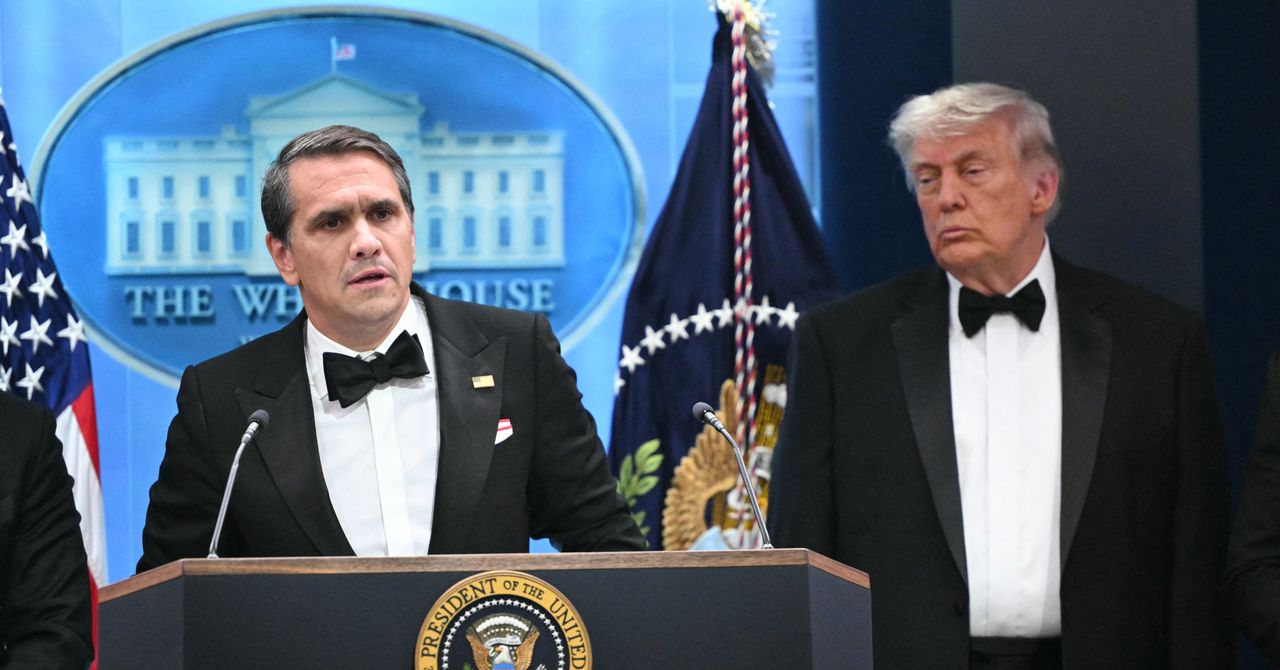
A 31-year-old engineer and computer scientist was identified by media reports and President Donald Trump as the suspected shooter at the White House Correspondents Dinner on Saturday night.
Cole Tomas Allen, of Torrance, California, was apprehended following the firing of shots at the Washington Hilton, where Trump was scheduled to deliver remarks to a ballroom full of journalists, cabinet officials, and Hilton staff. Allen’s name surfaced in media reports shortly before Trump posted two photos of a suspect following his apprehension. The person in the photos Trump posted matches photos of Allen.
In dramatic scenes, several shots were heard outside the ballroom, after which Trump and Vice President JD Vance were immediately rushed off the stage by the United States Secret Service. In the immediate aftermath of the shooting incident, it briefly appeared as if the event would proceed—Trump posted “LET THE SHOW GO ON” on Truth Social—but the event was eventually shut down.
According to the Metropolitan Police Department, the suspect “charged” a Secret Service checkpoint at the Hilton hotel, and was intercepted by agents. MPD interim chief Jeffery Carroll said the suspect was carrying a “shotgun, handgun, and multiple knives.”
At a White House press conference following the shooting, Trump said one United States Secret Service agent was shot but saved from serious injury by his bulletproof vest. Trump said the agent, who was not named, is “doing great” and in “great shape.” No other injuries were immediately reported.
The suspect was later transported to a local hospital “to be evaluated,” according to Carroll, who said he appears to be a “lone actor.”
Around the time Trump’s press conference began on Saturday night, he posted a picture on his Truth Social account appearing to show the suspected shooter on the ground, with his hands restrained behind his back, and a foil warming blanket covering the lower half of his body.
A WIRED review of public databases shows a seemingly minimal online presence associated with Allen’s name. According to his LinkedIn profile, he graduated from Caltech in 2017 with a bachelor’s in mechanical engineering and from California State University Dominguez Hills in 2025 with a master’s in computer science. An apparent photo of Allen that appears on Caltech’s website identifies him as a member of the school’s Mechanical Engineering 72 class, described by the school as a “two-term engineering design lab” for building robots and autonomous vehicles. His name is also listed in a 2025 Dominguez Hills graduation program. A search in a public facial recognition database returns only two images, both apparently of him as an undergraduate.
According to the alleged shooter’s LinkedIn profile, he has been employed part-time since March 2020 at C2 Education, a private company that helps students prepare for the SAT and ACT exams. In December 2024, C2 Education said in posts on LinkedIn and Facebook that he was the company’s “December Teacher of the Month.”
Since 2018, the suspected shooter has self-identified on his LinkedIn profile as a “self-employed” indie game developer. He appears to have released an “atomic fighting game” called Bohrdom on Steam in 2018. The game was advertised using accounts on YouTube and X that appeared to have little to no following. The caption for a trailer of the game describes it as a “non-violent, skill-based, asymmetrical fighting game loosely based on a chemistry model that is itself loosely based on reality.”
C2 Education and did not immediately respond to requests for comment. When reached for comment, the Metropolitan Police Department referred WIRED to a video of its public press conference.


UNCTAD, Maritime and Port Authority of Singapore launch partnership

Strait of Hormuz disruption ‘systemic shock’ threatening SE Asia: ERIA

Anta: The Chinese sports brand taking on Nike and Adidas

-

 Sports1 week ago
WWE WrestleMania 42 Night 2: Live match results and analysis
-

 Sports1 week ago
NCAA men’s gymnastics championship: All-time winners list
-

 Fashion1 week ago
UK’s Sosandar returns to profitability amid robust FY26 performance
-

 Politics6 days ago
UK’s Starmer seeks to deflect blame over Mandelson appointment
-

 Entertainment7 days ago
Lee Anderson, Zarah Sultana kicked out of UK Parliament for calling PM ‘liar’
-

 Entertainment1 week ago
Ruby Rose old essay resurfaces detailing night of alleged Katy Perry assault
-

 Entertainment1 week ago
Nathalie Baye, low-key legend of French cinema, dies aged 77
-
 Business1 week ago
No fuel shortage: Govt assures 100% domestic LPG, PNG, CNG supply amid Hormuz energy crunch – The Times of India