

Politics
Settler violence disrupts West Bank olive harvest

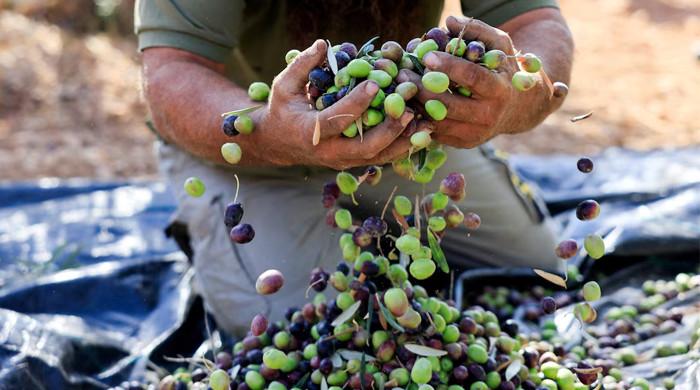
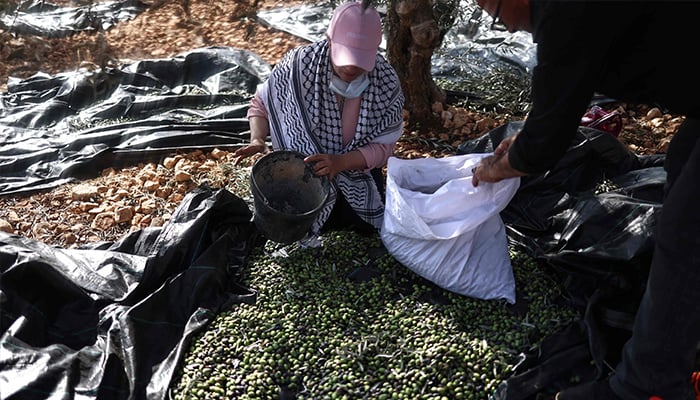
The scene shocked many and highlighted the violence of this year’s olive harvest in the Israeli-occupied West Bank: a young masked man clubs an older Palestinian woman picking olives, who then collapses on the ground.
The incident during an attack by Israeli settlers, filmed by an American journalist, took place in the town of Turmus Ayya near Ramallah, a hotspot of violence this year.
“Everybody was fleeing because the settlers attacked suddenly, maybe 100 of them,” witness Yasser Alkam told AFP, adding that one Swedish activist also had his arm and leg broken by settlers.
Alkam, a Turmus Ayya city official, said that the woman, 55-year-old Um Saleh Abu Aliya, was struck as she was waiting for her son to drive her away from a mob of settlers.
“Fighting back would only bring more violence, sometimes with the army’s backing,” lamented Nael al-Qouq, a Turmus Ayya farmer who was prevented from reaching his olive trees that same day.
Expanded settlements
Not far from the scene, an Israeli flag flapped in the wind at a settlement outpost, illegal even under Israeli law.
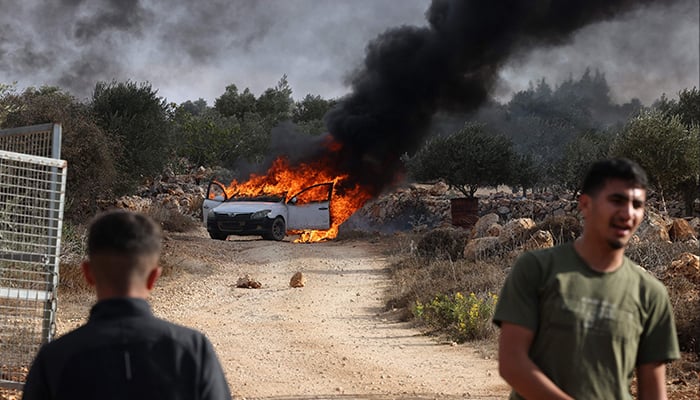
The army eventually arrived in Turmus Ayya and dispersed the crowd with tear gas, an AFP journalist witnessed.
But not before the youths who descended on the village burned at least two cars.
The head of the West Bank’s Israeli police, Moshe Pinchi, told his district commanders to find the man who attacked Abu Aliya, according to a leaked WhatsApp message reported by Israeli media.
The Israeli army told AFP that it “works in coordination with the Israel Police to enforce the law concerning Israelis involved in such incidents”.
But Turmus Ayya is far from an isolated case, and AFP journalists have witnessed at least six different instances of Palestinians being denied access to their land, attacked by settlers, or being victims of vandalism during the 2025 olive harvest.
Clashes in rural areas reached new heights this year, prompted by ever-expanding Israeli settlements and a growing number of settlers — not all of whom engage in violence against Palestinians.
More than 500,000 Israelis live in settlements in the West Bank, which Israel has occupied since 1967.
All settlements in the West Bank are illegal under international law.
‘Uprooted’
Near Turmus Ayya, in the village of Al-Mughayyir, one villager was prevented from harvesting altogether.
“I own ten dunams (one hectare) of olives. All I have left are the olive trees in the garden of the house … They uprooted it all,” Abdul Latif Abu Aliya, 55, told AFP.
Abu Aliya’s land borders a road on the other side of which three trailers make up a recently-installed settlement outpost.
After a settler was injured during an altercation near Abu Aliya’s house, an army order called for the trees his father and grandfather planted to be uprooted.
Bulldozers then pushed mounds of soil and roots halfway up the field and 100 metres from the family house, making a barrier that Abu Aliya and his family do not cross for fear of being attacked by settlers.
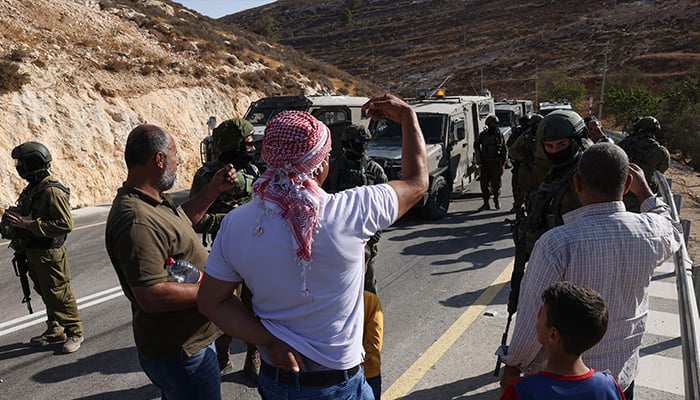
Faced with unprecedented violence during this year’s olive season, the Palestinian Authority’s agriculture minister called for the international community to protect farmers and pickers.
“It’s the worst season in the last 60 years,” Agriculture Minister Rizq Salimia told journalists, adding that this year’s crop was already bad due to poor climate.
Ajith Sunghay, head of the UN’s Human Rights Office in the Palestinian territories, condemned “severe attacks” during this year’s harvest and deplored “dangerous levels of impunity” for perpetrators.
The annual harvest, once a peaceful gathering for the occupied West Bank’s families, has in recent years turned into a series of increasingly violent confrontations involving Israeli settlers, troops, Palestinian harvesters and foreign activists.
Identity marker
The season began in October and will last until mid-November, as Palestinians across the West Bank harvest olives from trees they see as deeply connected to their national identity.
The West Bank boasts over eight million olive trees for three million Palestinians, according to the agriculture ministry’s 2021 census.
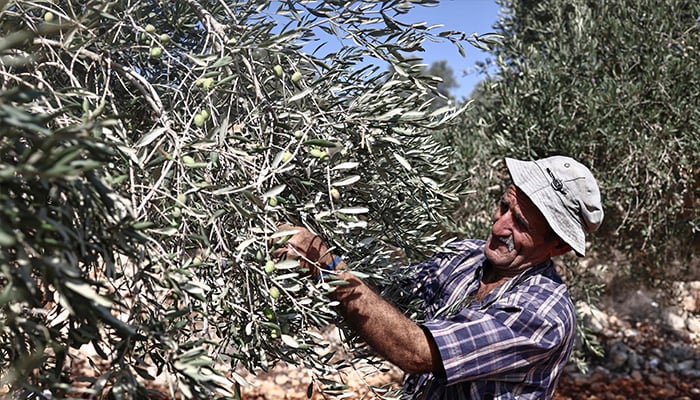
Every autumn, Palestinians farmers, but also city folk whose families own a few trees, head out into the fields to pick olives, mostly by hand.
The UN’s humanitarian agency, OCHA, said that 27 West Bank villages were affected by harvest-related attacks in the week of October 7 to 13 alone.
“The incidents included attacks on harvesters, theft of crops and harvesting equipment, and vandalism of olive trees, resulting in casualties, property damage, or both,” OCHA said.
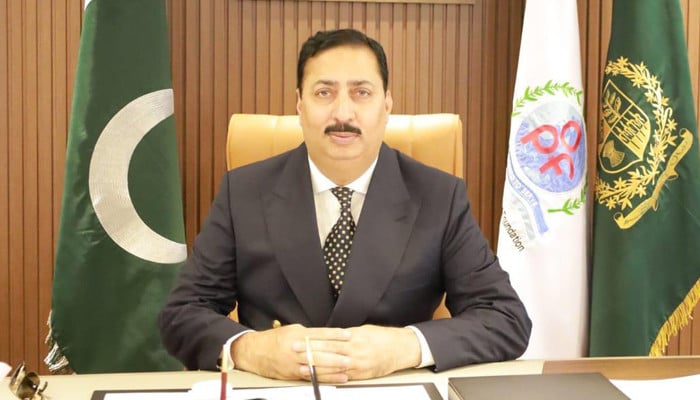
LONDON: Chairman of the Overseas Pakistanis Foundation (OPF) Syed Qamar Raza has written to Deputy Prime Minister and Foreign Minister Ishaq Dar clarifying that some misinformation was spread after the Pakistan High Commission signed a contract with Gerry’s for consular and visa services in the United Kingdom.
In his letter, Raza informed the DPM Dar that during his ongoing visit to the UK, he held consultations with prominent community leaders, who expressed overall satisfaction with the planned system of consular services, which will be provided through Gerry’s Visa, alongside the Pakistan High Commission in London and the Nadra Pak ID platform.
The OPF chief noted that earlier concerns had been raised within the community over the possible discontinuation of direct consular services by the High Commission, which had led to fears that overseas Pakistanis would be forced to rely solely on Gerry’s.
However, Raza clarified that the Pakistan High Commission will continue to offer consular services in parallel with Gerry’s and Pak ID. He said this clarification has been widely welcomed by the community.
The OPF chairman recommended that the High Commission should actively promote this position to ensure clarity and prevent misinformation among overseas Pakistanis.
Raza added that he was sharing the “true sentiments of the community” with the government and had also forwarded input from local representatives, including Cllr Tariq Dar, for consideration.
Earlier this week, the Pakistan High Commission in London said it awarded a contract to Gerry’s Visa Services Ltd to provide additional consular facilitation services across the United Kingdom, marking a significant step towards greater convenience for the British Pakistani diaspora.
The decision, approved by the Ministry of Foreign Affairs in Islamabad, followed a fully transparent competitive bidding process conducted in strict accordance with Public Procurement Regulatory Authority (PPRA) regulations, the High Commission said in a statement.
Only locally registered UK companies were eligible to participate, and the entire selection process, which included rigorous due diligence and compliance with all regulatory requirements, took four months to complete, it said.
The new arrangement is expected to particularly benefit Pakistani nationals living in far-flung areas of the UK who previously faced difficulties and high costs in travelling to the High Commission in London or its consulates.
The statement said: “By offering these additional facilities, the initiative will save applicants both time and transportation expenses. Gerry’s International will also extend the services to weekends, providing further flexibility for the community. Regular consular services will continue uninterrupted at the Pakistan High Commission in London and the consulates in Birmingham, Manchester, Bradford, and Glasgow.”
It has been clarified that the role of the new facilitation centres is strictly limited. They will only handle the processing and data entry of passport applications, visa applications, NICOP applications, and the collection of documents for attestation. Powers of Attorney, land-related matters, and all other services will remain the exclusive responsibility of the High Commission and its four consulates.
All decision-making on applications will continue to rest solely with the Government of Pakistan, including the relevant authorities such as Nadra, IMPASS, Mofa, MOI, or the Pakistani Missions.
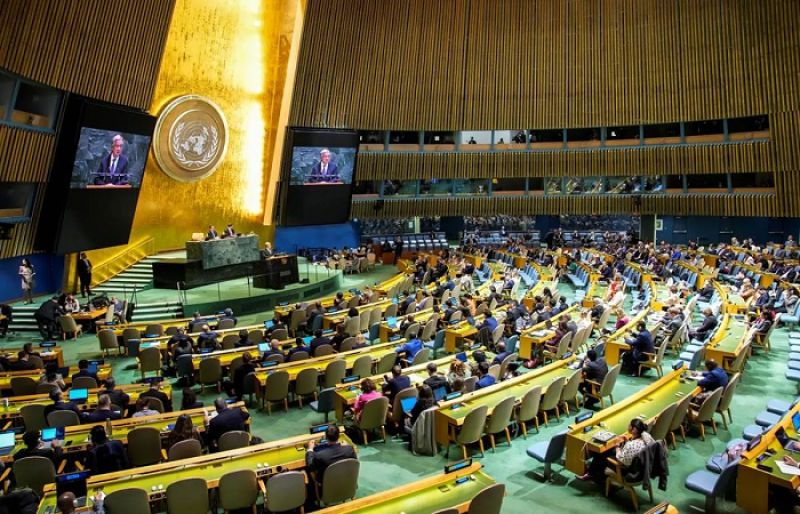
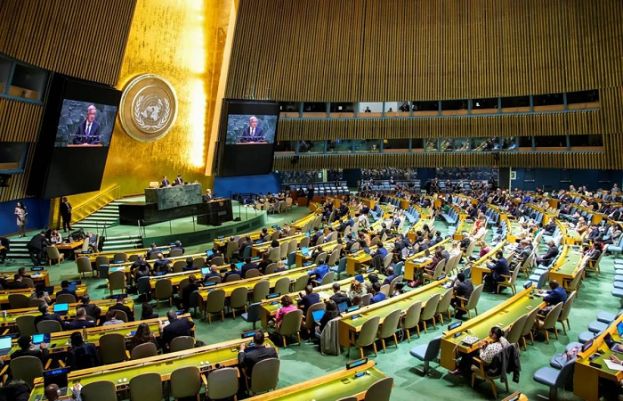
Signatories of the landmark nuclear non-proliferation treaty began a meeting Monday at the United Nations as fears of a renewed arms race escalate, with atomic powers again at loggerheads over safeguards.
In 2022, during the last review of the treaty considered the cornerstone of non-proliferation, UN Secretary-General Antonio Guterres warned humanity was “one misunderstanding, one miscalculation away from nuclear annihilation.”
On Monday he warned “the drivers” of nuclear weapons proliferation were accelerating.
“For too long, the treaty has been eroding. Commitments remain unfulfilled. Trust and credibility are wearing thin. The drivers of proliferation are accelerating. We need to breathe life into the treaty once more,” Guterres said in opening remarks.
With global geopolitical friction only heightened since the last meeting, it was unclear what the gathering at UN headquarters could achieve.
France’s Foreign Minister Jean-Noel Barrot told signatories that “never has the risk of nuclear proliferation been so high, and the threat posed by Iran’s and North Korea’s programs is intolerable for each and every state party to this treaty.”
Tempering expectations, Do Hung Viet, Vietnam’s UN ambassador and president of the conference, said “we should not expect this conference to resolve the underlying strategic tensions of our time.”
“But a balanced outcome that reaffirms core commitments and set out practical steps forward would strengthen the integrity of the NPT,” he said.
“The success or failure of this conference will have implications way beyond these halls,” Viet added. “The prospects of a new nuclear arms race are looming over us.”
The nuclear non-proliferation treaty (NPT), signed by almost all countries on the planet — with notable exceptions including Israel, India and Pakistan — aims to prevent the spread of nuclear weapons, promote complete disarmament, and encourage cooperation on civilian nuclear projects.
The nine nuclear-armed states — Russia, the United States, France, the United Kingdom, China, India, Pakistan, Israel and North Korea — possessed 12,241 nuclear warheads in January 2025, the Stockholm International Peace Research Institute (SIPRI) reported.
The US and Russia hold nearly 90 percent of nuclear weapons globally and have carried out major programs to modernize them in recent years, according to SIPRI.
China has also rapidly increased its nuclear stockpile, SIPRI said, with the G7 raising the alarm Friday over Moscow and Beijing boosting their nuclear capabilities.
US President Donald Trump has indicated his intention to conduct new nuclear tests, accusing others of doing so clandestinely.
In March, French President Emmanuel Macron announced a dramatic shift in nuclear deterrence, notably an increase in the atomic arsenal, currently numbering 290 warheads.
International Atomic Energy Agency chief Rafael Grossi, just returned from 40th anniversary events at Chernobyl to mark the nuclear disaster there, said “there is a growing perception that perhaps having nuclear weapons could be good for national security.”
“Nothing is further from the truth,” he said.
– ‘Affront’ to NPT –
“It is obvious that trust is eroding, both inside and outside the NPT,” Seth Shelden of the International Campaign to Abolish Nuclear Weapons, a Nobel Peace Prize laureate, told AFP.
He questioned the likely outcome of the four-week summit.
Decisions on the NPT require agreement by consensus, with the previous two conferences failing to adopt final political declarations.
In 2015, the deadlock was largely due to opposition by Israel’s arch-ally Washington to creation of a nuclear-weapon-free zone in the Middle East.
A 2022 impasse was due mainly to Russian opposition to references to Ukraine’s nuclear power plant at Zaporizhzhia, occupied by Moscow.
This year’s summit could hit any number of stumbling blocks.
The ongoing war in Ukraine, Iran’s nuclear program and the war there, proliferation fears and Pyongyang’s developing arsenal could all be deal-breakers.
The United States along with its allies Britain, the UAE and Australia spoke out at Iran’s appointment as a conference vice president.
Washington’s meeting envoy said conferring a leadership role on Tehran was an “affront” to countries that take the NPT “seriously.”
Artificial intelligence could be a prominent issue as some countries call for all sides to keep human control over nuclear weapons.
- US says nuclear issues must be dealt with from the outset.
- Trump unhappy with delaying deal on Iran nuclear programme.
- Iran demands blockade be lifted before any negotiations begin.
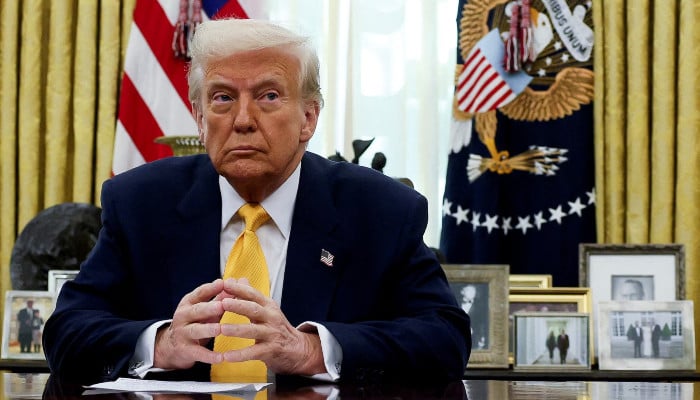
US President Donald Trump is unhappy with the latest Iranian proposal on resolving the two-month war, a US official said, dampening hopes for a resolution to the conflict that has disrupted energy supplies, fuelled inflation, and killed thousands.
Iran’s latest proposal would set aside discussion of Iran’s nuclear programme until the war is ended and disputes over shipping from the Gulf are resolved.
That is unlikely to satisfy the US, which says nuclear issues must be dealt with from the outset, and Trump was unhappy with Iran’s proposal for that reason, a US official briefed on the president’s Monday meeting with his advisers said, speaking on condition of anonymity.
White House spokeswoman Olivia Wales said the US “will not negotiate through the press” and has “been clear about our red lines” as the Trump administration looks to end the war against Iran it began in February alongside Israel.
A previous agreement in 2015 between Iran and multiple other countries including the US sharply curtailed Iran’s nuclear programme, which it has long maintained is for peaceful, civilian purposes. But that deal fell apart when Trump unilaterally withdrew from it in his first term in office.
Hopes of reviving peace efforts have receded since the US president scrapped a visit planned for last weekend by his special envoy Steve Witkoff and son-in-law Jared Kushner to Islamabad, where Iranian Foreign Minister Abbas Araqchi shuttled in and out twice during the weekend.
Araqchi also visited Oman and on Monday went to Russia, where he met President Vladimir Putin and received words of support from a longstanding ally.
Oil prices rise again
With the warring sides still seemingly far apart, oil prices resumed their upward march, extending gains in early Asia trade on Tuesday.
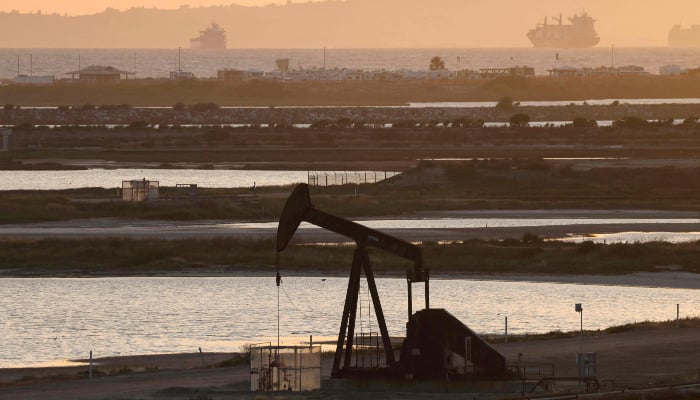
“For oil traders, it’s not the rhetoric that matters any more, but the actual physical flow of crude oil through the Strait of Hormuz, and right now, that flow remains constrained,” Fawad Razaqzada, market analyst at City Index and FOREX.com, said in a note.
At least six tankers loaded with Iranian oil have been forced back to Iran by the US blockade in recent days, ship-tracking data showed, underscoring the war’s impact on traffic.
Iran’s foreign ministry condemned US seizures of Iran-linked tankers as “outright legalisation of piracy and armed robbery on the high seas”, in a social media post.
Between 125 and 140 ships usually crossed in and out of the strait daily before the war, but only seven have done so in the past day, according to Kpler ship-tracking data and satellite analysis from SynMax, and none of them were carrying oil bound for the global market.
With his approval ratings falling, Trump faces domestic pressure to end a war for which he has given the US public shifting rationales.
Araqchi told reporters in Russia that Trump had requested negotiations because the US has not achieved any of its objectives.
Senior Iranian officials, speaking on condition of anonymity, told Reuters the proposal carried by Araqchi to Islamabad over the weekend envisioned talks in stages, with the nuclear issue to be set aside at the start.
A first step would require ending the US-Israeli war on Iran and providing guarantees that the US cannot start it up again. Then negotiators would resolve the US Navy’s blockade of Iran’s trade by sea and the fate of the Strait of Hormuz, which Iran aims to reopen under its control.
Only then would talks look at other issues, including the longstanding dispute over Iran’s nuclear programme, with Iran still seeking some kind of US acknowledgement of its right to enrich uranium.


Japan’s apparel imports rise 2.8% to $24.3 bn in FY 2025-26

Get Ready for More Brain-Scanning Consumer Gadgets

Trumps call for Jimmy Kimmel to be fired over jokes made prior to correspondents’ dinner attack

-

 Sports1 week ago
NCAA men’s gymnastics championship: All-time winners list
-
 Sports1 week ago
WWE WrestleMania 42 Night 2: Live match results and analysis
-
 Politics1 week ago
UK’s Starmer seeks to deflect blame over Mandelson appointment
-

 Fashion1 week ago
UK’s Sosandar returns to profitability amid robust FY26 performance
-
 Business1 week ago
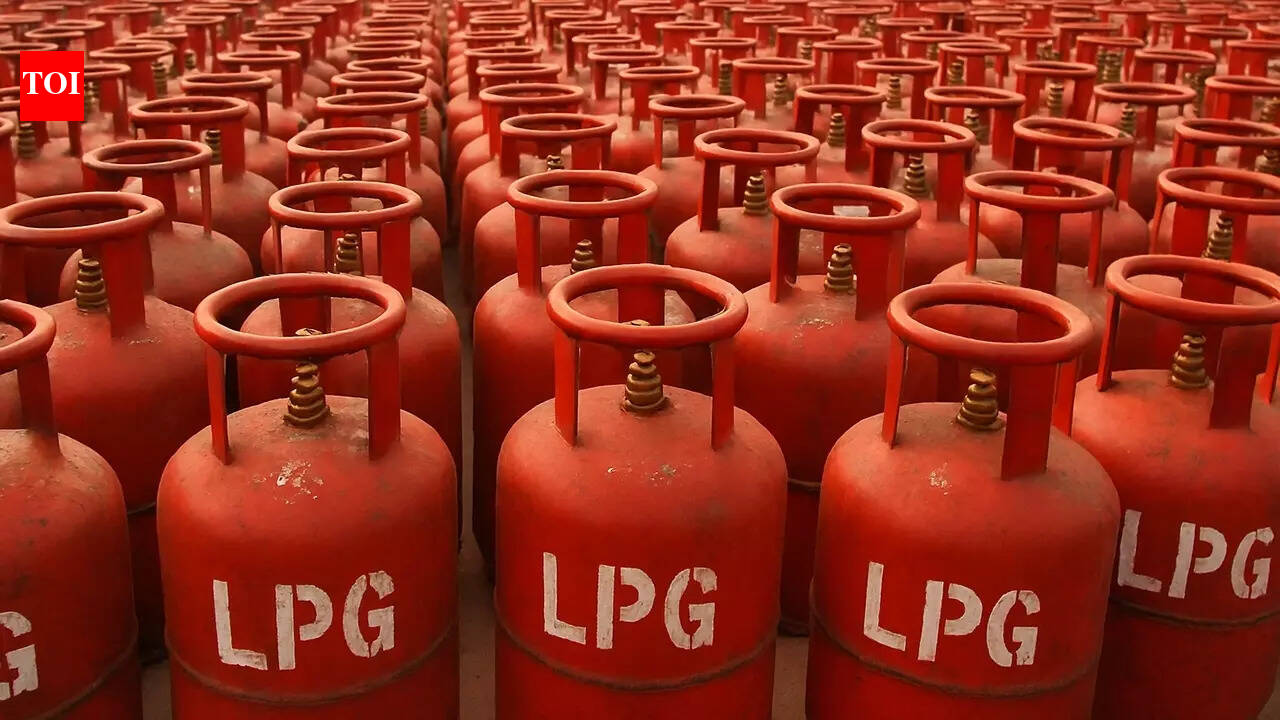
No fuel shortage: Govt assures 100% domestic LPG, PNG, CNG supply amid Hormuz energy crunch – The Times of India
-

 Entertainment1 week ago
Lee Anderson, Zarah Sultana kicked out of UK Parliament for calling PM ‘liar’
-
 Business1 week ago
How Trump’s psychedelics executive order could unlock stalled cannabis reform
-

 Sports1 week ago
Quetta Gladiators opt to bowl after winning toss against Peshawar Zalmi in PSL 11 clash