

Business
Shift in FDI Needed to Break Reliance on Energy Sector – SUCH TV


The Pakistan Industrial and Traders Association Front (PIAF) has cautioned that Pakistan’s overdependence on energy-focused foreign investment is holding back broader economic growth, calling on policymakers to expand investment opportunities in mining, manufacturing, IT, and other underdeveloped sectors.
PIAF Patron-in-Chief Mian Sohail Nisar said that heavy concentration of foreign capital in a single sector is concerning.
“Foreign investors continue to channel funds primarily into energy, but Pakistan has far greater potential in mining, information technology, and value-added manufacturing,” he said.
Over the past 10 years, FDI into Pakistan has ranged from $2 billion to $3 billion annually, with roughly 35% directed to the power sector, underscoring the need for diversification.
According to the State Bank of Pakistan (SBP), Pakistan attracted total foreign direct investment (FDI) of $2.46 billion in fiscal year 2024-25, a year-on-year increase of around 5%.
China remained the leading investor with $1.23 billion, nearly double its investment from the previous year, registering a 91% jump.
Other significant contributions came from Hong Kong with $470 million, the United Arab Emirates with $283 million, Switzerland with $203 million, and the United Kingdom with $202 million.
Sector-wise, the power sector continued to dominate inflows, receiving $1.17 billion, much of it in hydel projects, while financial services attracted $702.2 million.
Oil and gas exploration, electronics, IT, food, petroleum refining, and textiles were among other sectors that managed to secure a smaller share of investment.
Representatives of the business community noted that while the overall numbers for FY25 show an improvement, the gains remain fragile and heavily skewed.
They emphasised that credible projects, transparent regulations, and genuine economic opportunities are necessary to convert investor interest into broader inflows.
Without reforms, they warned, Pakistan risks remaining stuck in a narrow energy-focused pattern of investment.
A Lahore-based industrialist, Ashraf Javed, pointed out that countries in the region are moving ahead quickly.
“India and Bangladesh are attracting billions across diversified sectors like IT, manufacturing, and e-commerce, while we continue to depend on power projects,” he said. “We need stable policies, simplified regulations, and consistent tax frameworks if we want to bring long-term investors to other industries.”
Mining has emerged as one of the most promising areas for Pakistan, given the substantial reserves of copper, gold, coal, and rare earth minerals in provinces like Balochistan and Khyber-Pakhtunkhwa.
Several foreign companies, including those from the United States, have shown interest in this sector.
However, business leaders argue that without practical steps such as modernising mining laws, ensuring security for investors, and cutting red tape, interest will not translate into commitments.
Independent economists have also voiced similar concerns. Syed Afaraz Ahmad, an analyst, observed that Pakistan’s reliance on debt-driven growth makes diversified FDI more important than ever.
“Energy-related investment may keep the lights on, but it does not generate large-scale employment or strong export earnings.
Mining, technology, and manufacturing are the sectors that can change the economic outlook,” he said.
The business community stressed that Pakistan’s geographic position at the crossroads of South and Central Asia gives it a natural advantage for becoming a regional investment hub.
But they warned that without deregulation, predictability in policy, and efforts to improve ease of doing business, foreign capital will continue to bypass the country.
“The potential is there; however, the challenge is whether Pakistan can create the conditions that convince investors to move beyond energy and bring real value to the economy,” said Javed.



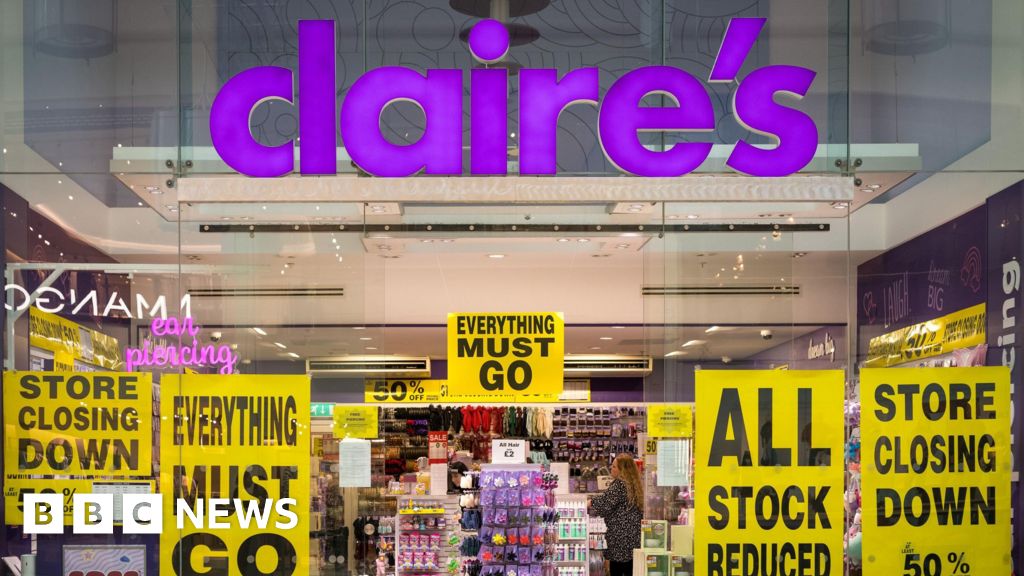
All of the chain’s standalone stores have stopped trading in the UK and Ireland.
Source link

A pedestrian walks by a Domino’s Pizza on Dec. 9, 2025 in San Francisco, California.
Justin Sullivan | Getty Images
Domino’s Pizza stock fell 10% in morning trading on Monday after it reported weaker-than-expected U.S. same-store sales growth.
The chain’s domestic same-store sales rose just 0.9%, lower than the 2.3% bump expected by Wall Street analysts, based on StreetAccount estimates.
“We’re not happy with it,” CEO Russell Weiner told CNBC.
The pizza chain also lowered its full-year U.S. same-store sales forecast to low-single digit growth, down from its prior projection that U.S. same-store sales will increase 3%.
Weiner said he expects more fast-food chains to report similar headwinds from winter weather and weak consumer sentiment, which took a dive in March due to spiking fuel prices caused by the U.S.-Israeli war with Iran.
“One of the bad things about reporting first is you don’t get to hear about anybody else,” Weiner said.
Domino’s kicked off the earnings season for restaurant chains. Starbucks is on deck after the bell on Tuesday, and Chipotle Mexican Grill and Pizza Hut owner Yum Brands are expected to share their results on Wednesday. Rival Papa John’s will report its earnings next Thursday.
During the quarter, Domino’s also faced stiffer competition from rival pizza chains. Papa John’s and Pizza Hut both matched Domino’s $9.99 “Best Deal Ever” with promotions at the same price point. And Little Caesars undercut Domino’s $6.99 Mix & Match deal with a $5.99 version.
“People are seeing what we’re doing, and they’re sick of losing share, and they’re coming at it,” Weiner said, adding that he still expects Papa John’s and Pizza Hut to report same-store sales declines for the quarter despite the new promotions.
Looking ahead, Weiner expressed confidence that Domino’s will prove itself in the long run.
“Domino’s has got a bigger advertising budget than our second two competitors combined,” he said. “And those competitors are both going up for sale, so we know things aren’t good there right now.”
Yum announced in November that it was exploring strategic options for Pizza Hut, which could include a sale. And Papa John’s is reportedly in talks with Qatari-backed Irth Capital to go private. Both chains have also announced plans to close hundreds of restaurants this year, which could further boost Domino’s dominant position in the pizza category.
And if either Pizza Hut or Papa John’s goes private, Weiner said he expects that a new owner would shutter even more locations — a win for Domino’s.
Shares of Domino’s have lost nearly a third of their value over the last year. The company’s market cap has fallen to roughly $11.2 billion.

United Airlines CEO Scott Kirby (L) and American Airlines CEO Robert Isom listen as U.S. Transportation Secretary Sean Duffy speaks to reporters outside the White House on October 30, 2025 in Washington, D.C.
Kevin Dietsch | Getty Images
United Airlines CEO Scott Kirby confirmed Monday that he contacted American Airlines about a potential merger, a possibility American rejected.
“I approached American about exploring a combination because I thought we could do something incredible for customers together,” Kirby said in a statement. He said he shared his “big, bold vision” because he was confident it could win regulatory approval.
American rejected the idea and its CEO, Robert Isom, last week said such a merger would be bad for customers and “anticompetitive.”
Kirby had floated the idea to the Trump administration earlier this year, according to people familiar with the matter who weren’t authorized to discuss the private conversation, in hopes that the combination would mean a big global airline to compete with foreign rivals
American declined to comment on Kirby’s Monday statement.
“I was hoping to pitch that story to American, but they declined to engage and instead responded by publicly closing the door,” Kirby said in his statement Monday. “And without a willing partner, something this big simply can’t get done.”
He said that “American’s public comments make it clear that a merger like this is off the table for the foreseeable future” but outlined his vision for a combined airline.
Kirby reiterated that the country has deficit with foreign airlines that fly more than half of the long-haul seats into the U.S., with most of the customers being Americans.
“The combined scale of United and American would be a better way to compete with foreign carriers,” he said.
President Donald Trump said he was against the idea of a combination last week.
“I don’t like having them merge,” he told CNBC’s “Squawk Box” on Tuesday morning. He said he would, however, like someone to buy struggling discount carrier Spirit but he also suggested that the federal government could “help that one out.”
Spirit and the Trump administration are in advanced talks for a rescue package.


PCB shares ticket pricing details for PSL 11 Qualifier in Karachi – SUCH TV

Melania Trump says ABC should ‘take a stand’ on late-night host Kimmel

A Brain Implant for Depression Is About to Be Tested in Humans

-

 Sports1 week ago
NCAA men’s gymnastics championship: All-time winners list
-

 Sports1 week ago
WWE WrestleMania 42 Night 2: Live match results and analysis
-

 Politics6 days ago
UK’s Starmer seeks to deflect blame over Mandelson appointment
-

 Fashion1 week ago
UK’s Sosandar returns to profitability amid robust FY26 performance
-
 Business7 days ago
How Trump’s psychedelics executive order could unlock stalled cannabis reform
-
 Business1 week ago
No fuel shortage: Govt assures 100% domestic LPG, PNG, CNG supply amid Hormuz energy crunch – The Times of India
-

 Entertainment7 days ago
Lee Anderson, Zarah Sultana kicked out of UK Parliament for calling PM ‘liar’
-

 Sports1 week ago
Quetta Gladiators opt to bowl after winning toss against Peshawar Zalmi in PSL 11 clash