Connect with us

Politics

Silicon Valley Bank collapse renews calls to address disparities impacting entrepreneurs of color

Published

on

Silicon Valley Bank collapse renews calls to address disparities impacting entrepreneurs of color


CNN
 — 

When customers at Silicon Valley Bank rushed to withdraw billions of dollars last month, venture capitalist Arlan Hamilton stepped in to help some of the founders of color who panicked about losing access to payroll funds.

As a Black woman with nearly 10 years of business experience, Hamilton knew the options for those startup founders were limited.

SVB had a reputation for servicing people from underrepresented communities like hers. Its failure has reignited concerns from industry experts about lending discrimination in the banking industry and the resulting disparities in capital for people of color.

Hamilton, the 43-year-old founder and managing partner of Backstage Capital, said that when it comes to entrepreneurs of color, “we’re already in the smaller house. We already have the rickety door and the thinner walls. And so, when a tornado comes by, we’re going to get hit harder.”

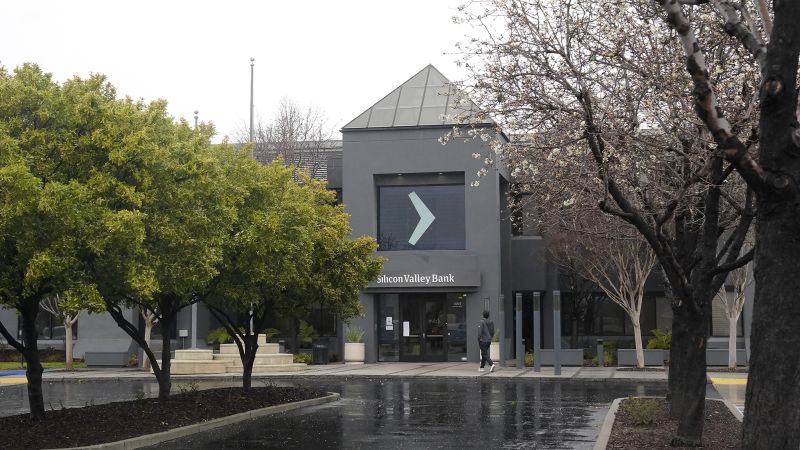
Established in 1983, the midsize California tech lender was America’s 16th largest bank at the end of 2022 before it collapsed on March 10. SVB provided banking services to nearly half of all venture-backed technology and life-sciences companies in the United States.

Hamilton, industry experts and other investors told CNN the bank was committed to fostering a community of minority entrepreneurs and provided them with both social and financial capital.
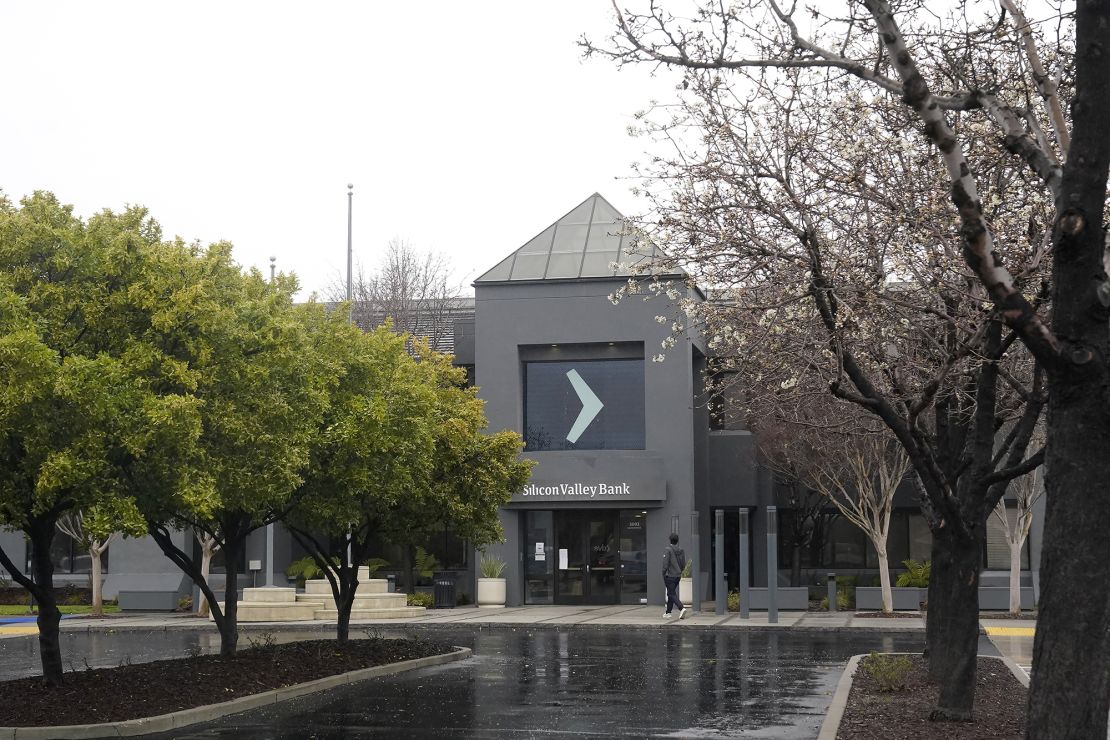
A bank run took down Silicon Valley Bank on March 10, as depositors withdrew $42 billion in a single day.

SVB regularly sponsored conferences and networking events for minority entrepreneurs, said Hamilton, and it was well known for funding the annual State of Black Venture Report spearheaded by BLK VC, a nonprofit organization that connects and empowers Black investors.

“When other banks were saying no, SVB would say yes,” said Joynicole Martinez, a 25-year entrepreneur and chief advancement and innovation officer for Rising Tide Capital, a nonprofit organization founded in 2004 to connect entrepreneurs with investors and mentors.

Martinez is also an official member of the Forbes Coaches Council, an invitation-only organization for business and career coaches. She said SVB was an invaluable resource for entrepreneurs of color and offered their clients discounted tech tools and research funding.

Many women and people of color say they are turned away

Minority business owners have long faced challenges accessing capital due to discriminatory lending practices, experts say. Data from the Small Business Credit Survey, a collaboration of all 12 Federal Reserve banks, shows disparities on denial rates for bank and nonbank loans.

In 2021, about 16% of Black-led companies acquired the total amount of business financing they sought from banks, compared to 35% of White-owned companies, the survey shows.

“We know there’s historic, systemic, and just blatant racism that’s inherent in lending and banking. We have to start there and not tip-toe around it,” Martinez told CNN.

Asya Bradley is an immigrant founder of multiple tech companies like Kinley, a financial services business aiming to help Black Americans build generational wealth. Following SVB’s collapse, Bradley said she joined a WhatsApp group of more than 1,000 immigrant business founders. Members of the group quickly mobilized to support one another, she said.

Immigrant founders often don’t have Social Security numbers nor permanent addresses in the United States, Bradley said, and it was crucial to brainstorm different ways to find funding in a system that doesn’t recognize them.

“The community was really special because a lot of these folks then were sharing different things that they had done to achieve success in terms of getting accounts in different places. They also were able to share different regional banks that have stood up and been like, ‘Hey, if you have accounts at SVB, we can help you guys,’” Bradley said.

Many women, people of color and immigrants opt for community or regional banks like SVB, Bradley says, because they are often rejected from the “top four banks” — JPMorgan Chase, Bank of America, Wells Fargo and Citibank.

In her case, Bradley said her gender might have been an issue when she could only open a business account at one of the “top four banks” when her brother co-signed for her.

“The top four don’t want our business. The top four are rejecting us consistently. The top four do not give us the service that we deserve. And that’s why we’ve gone to community banks and regional banks such as SVB,” Bradley said.

None of the top four banks provided a comment to CNN. The Financial Services Forum, an organization representing the eight largest financial institutions in the United States has said the banks have committed millions of dollars since 2020 to address economic and racial inequality.

Last week, JPMorgan Chase CEO Jamie Dimon told CNN’s Poppy Harlow that his bank has 30% of its branches in lower-income neighborhoods as part of a $30 billion commitment to Black and Brown communities across the country.

Wells Fargo specifically pointed to its 2022 Diversity, Equity, and Inclusion report, which discusses the bank’s recent initiatives to reach underserved communities.

The bank partnered last year with the Black Economic Alliance to initiate the Black Entrepreneur Fund — a $50 million seed, startup, and early-stage capital fund for businesses founded or led by Black and African American entrepreneurs. And since May 2021, Wells Fargo has invested in 13 Minority Depository Institutions, fulfilling its $50 million pledge to support Black-owned banks.

Black-owned banks work to close the lending gap and foster economic empowerment in these traditionally excluded communities, but their numbers have been dwindling over the years, and they have far fewer assets at their disposal than the top banks.

OneUnited Bank, the largest Black-owned bank in the United States, manages a little over $650 million in assets. By comparison, JPMorgan Chase manages $3.7 trillion in assets.

Because of these disparities, entrepreneurs also seek funding from venture capitalists. In the early 2010s, Hamilton intended to start her own tech company — but as she searched for investors, she saw that White men control nearly all venture capital dollars. That experience led her to establish Backstage Capital, a venture capital fund that invests in new companies led by underrepresented founders.

“I said, ‘Well, instead of trying to raise money for one company, let me try to raise for a venture fund that will invest in underrepresented — and now we call them underestimated — founders who are women, people of color, and LGBTQ specifically,’ because I am all three,” Hamilton told CNN.

Since then, Backstage Capital has amassed a portfolio of nearly 150 different companies and has made over 120 diversity investments, according to data from Crunchbase.

But Bradley, who is also an ‘angel investor’ of minority-owned businesses, said she remains “really hopeful” that community banks, regional banks and fintechs “will all stand up and say, ‘Hey, we are not going to let the good work of SVB go to waste.’”
Source link

Continue Reading
Click to comment

Leave a Reply

Your email address will not be published. Required fields are marked *

Politics

Southeast Asia storm deaths near 700 as scale of disaster revealed

Published

on

Southeast Asia storm deaths near 700 as scale of disaster revealed


A woman stands amidst tree trunks that were stranded on a shore following deadly flash floods and landslides, in Padang, West Sumatra province, Indonesia on November 30, 2025. — Reuters
  • Indonesia, Malaysia and Thailand witness large scale devastation.
  • At least 176 people perish in Thailand and three in Malaysia.
  • Indonesia’s death toll reaches 502 with 508 more still missing.

PALEMBAYAN:  Rescue teams in western Indonesia were battling on Monday to clear roads cut off by cyclone-induced landslides and floods, as improved weather revealed more of the scale of a disaster that has killed close to 700 people in Southeast Asia.

Indonesia, Malaysia and Thailand have seen large scale devastation after a rare tropical storm formed in the Malacca Strait, fuelling torrential rains and wind gusts for a week that hampered efforts to reach people stranded by mudslides and high floodwaters.

At least 176 have been killed in Thailand and three in Malaysia, while the death toll climbed to 502 in Indonesia on Monday with 508 missing, according to official figures.

Under sunshine and clear blue skies in the town of Palembayan in Indonesia’s West Sumatra, hundreds of people were clearing mud, trees and wreckage from roads as some residents tried to salvage valuable items like documents and motorcycles from their damaged homes.

A man moves a relief supply package delivered by a Navy helicopter in an area affected by deadly flash floods in Palembayan, Agam regency, West Sumatra province, Indonesia on November 30, 2025. — Reuters

Men in camouflage outfits sifted through piles of mangled poles, concrete and sheet metal roofing as pickup trucks packed with people drove around looking for missing family members and handing out water to people, some trudging through knee-deep mud.

Months of adverse, deadly weather

The government’s recovery efforts include restoring roads, bridges and telecommunication services.

More than 28,000 homes have been damaged in Indonesia and 1.4 million people affected, according to the disaster agency.

Indonesian President Prabowo Subianto visited the three affected provinces on Monday and praised residents for their spirit in the face of what he called a catastrophe.

“There are roads that are still cut off, but we’re doing everything we can to overcome difficulties,” he said in North Sumatra.

“We face this disaster with resilience and solidarity. Our nation is strong right now, able to overcome this.”

The devastation in the three countries follows months of adverse and deadly weather in Southeast Asia, including typhoons that have lashed the Philippines and Vietnam and caused frequent and prolonged flooding elsewhere.

An aerial view shows a damaged area hit by deadly flash floods in Palembayan, Agam regency, West Sumatra province, Indonesia on November 30, 2025. — Reuters
An aerial view shows a damaged area hit by deadly flash floods in Palembayan, Agam regency, West Sumatra province, Indonesia on November 30, 2025. — Reuters 

Scientists have warned that extreme weather events will become more frequent as a result of global warming.

Marooned for days

In Thailand, the death toll rose slightly to 176 on Monday from flooding in eight southern provinces that affected about three million people and led to a major mobilisation of its military to evacuate critical patients from hospitals and reach people marooned for days by floodwaters.

In the hardest-hit province of Songkhla, where 138 people were killed, the government said 85% of water services had been restored and would be fully operational by Wednesday.

Much of Thailand’s recovery effort is focused on the worst-affected city Hat Yai, a southern trading hub which on November 21 received 335 mm (13 inches) of rain, its highest single-day tally in 300 years, followed by days of unrelenting downpours.

Prime Minister Anutin Charnvirakul has set a timeline of seven days for residents to return to their homes, a government spokesperson said on Monday.

In neighbouring Malaysia, 11,600 people were still in evacuation centres, according to the country’s disaster agency, which said it was still on alert for a second and third wave of flooding.


Source link

Continue Reading

Politics

British MP Tulip Siddiq handed two-year prison sentence in Bangladesh graft case

Published

on

British MP Tulip Siddiq handed two-year prison sentence in Bangladesh graft case


MP Tulip Siddiq attends a news conference in London, Britain October 11, 2019. — Reuters
  • Ex-Bangladesh PM Sheikh Hasina, sister Rehana also sentenced.
  • Case relates to illegal allocation of a plot of land: local media.
  • Prosecutors highlight political influence, collusion abuse of power.

DHAKA: A Bangladesh court sentenced British parliamentarian and former minister Tulip Siddiq to two years in jail in a corruption case involving the alleged illegal allocation of a plot of land, local media reported.

The verdict was delivered in absentia as Siddiq, her aunt and former Bangladesh Prime Minister Sheikh Hasina, and Hasina’s sister Sheikh Rehana — all co-accused in the case — were not present in court.

Hasina was sentenced to five years in jail and Rehana to seven, the local media reports said.

Hasina, who fled to neighbouring India in August 2024 at the height of an uprising against her government, was sentenced to death last month over her government’s violent crackdown on demonstrators during the protests.

Last week, she was handed a combined 21-year prison sentence in other corruption cases.

Prosecutors said that the land was unlawfully allocated through political influence and collusion with senior officials, accusing the three powerful defendants of abusing their authority to secure the plot, measuring roughly 13,610 square feet, during Hasina’s tenure as prime minister.

Most of the 17 accused were absent when the judgement was pronounced.

Siddiq, who resigned in January as the UK’s minister responsible for financial services and anti-corruption efforts following scrutiny over her financial ties to Hasina, has previously dismissed the allegations as a “politically motivated smear”.

Britain does not currently have an extradition treaty with Bangladesh.


Source link

Continue Reading

Politics

Elon Musk reveals partner’s half-Indian roots, son’s middle name ‘Sekhar’

Published

on

Elon Musk reveals partner’s half-Indian roots, son’s middle name ‘Sekhar’


SpaceX owner and Tesla CEO Elon Musk speaks at the E3 gaming convention in Los Angeles, California, US, June 13, 2019. — Reuters

Tesla and SpaceX CEO Elon Musk has said his partner, Neuralink executive Shivon Zilis, is half-Indian and that one of their sons has the middle name “Sekhar” after Indian-American physicist and Nobel laureate Subrahmanyan Chandrasekhar.

Speaking on Zerodha founder Nikhil Kamath’s “WTF is?” podcast, Musk said: “I’m not sure if you know this, but my partner Shivon is half Indian,” adding: “One of my sons with her, his middle name is Sekhar after Chandrasekhar.”

Musk also spoke about Zilis’s background when asked where she grew up, saying she was given up for adoption as a baby and raised in Canada. “She grew up in Canada. She was given up for adoption when she was a baby. I think her father was like an exchange student at the university or something like that… I’m not sure the exact details,” he said.

Zilis joined Musk’s AI company, Neuralink, in 2017 and is currently the Director of Operations and Special Projects. She has a Bachelor of Arts in Economics and Philosophy from Yale University. Zilis has four children with Musk — twins Strider and Azure, daughter Arcadia and son Seldon Lycurgus.

Earlier this year, in March, it emerged that Musk had another child, his 14th, with Zilis. 

“Discussed with Elon and, in light of beautiful Arcadia’s birthday, we felt it was better to also just share directly about our wonderful and incredible son Seldon Lycurgus,” Zilis said in a post on X, without saying when the child was born. Musk responded with a heart. 

Her announcement came two weeks after conservative influencer Ashley St Clair said that she also recently had a child with Musk.

Appearing on the latest episode of Kamath’s podcast, Musk also said that America has “been an immense beneficiary of talent from India, but that seems to be changing now”. 

His comments come at a time when the American dream for thousands of Indians is turning sour due to rising US visa restrictions and policy unpredictability.


— With additional input from Reuters


Source link

Continue Reading

Trending