

Business
Silver hits record Rs 1,70,415 on MCX: Nearly 20% gain recorded in October- What could it mean amid festive season rush? – The Times of India


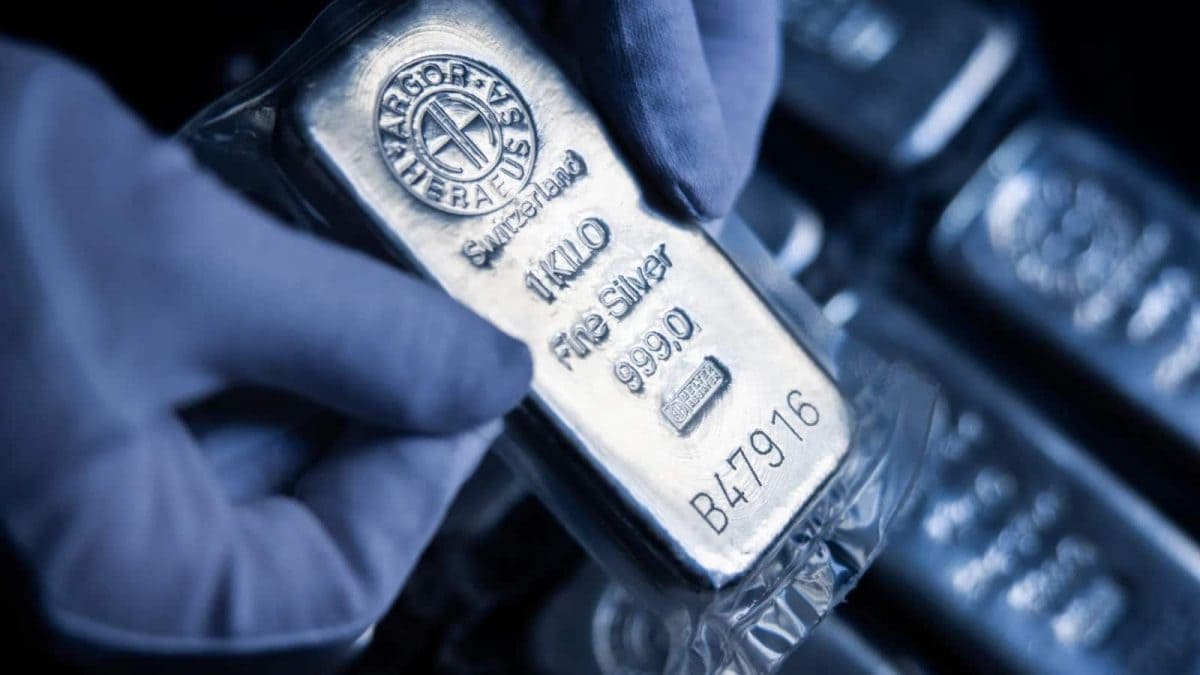
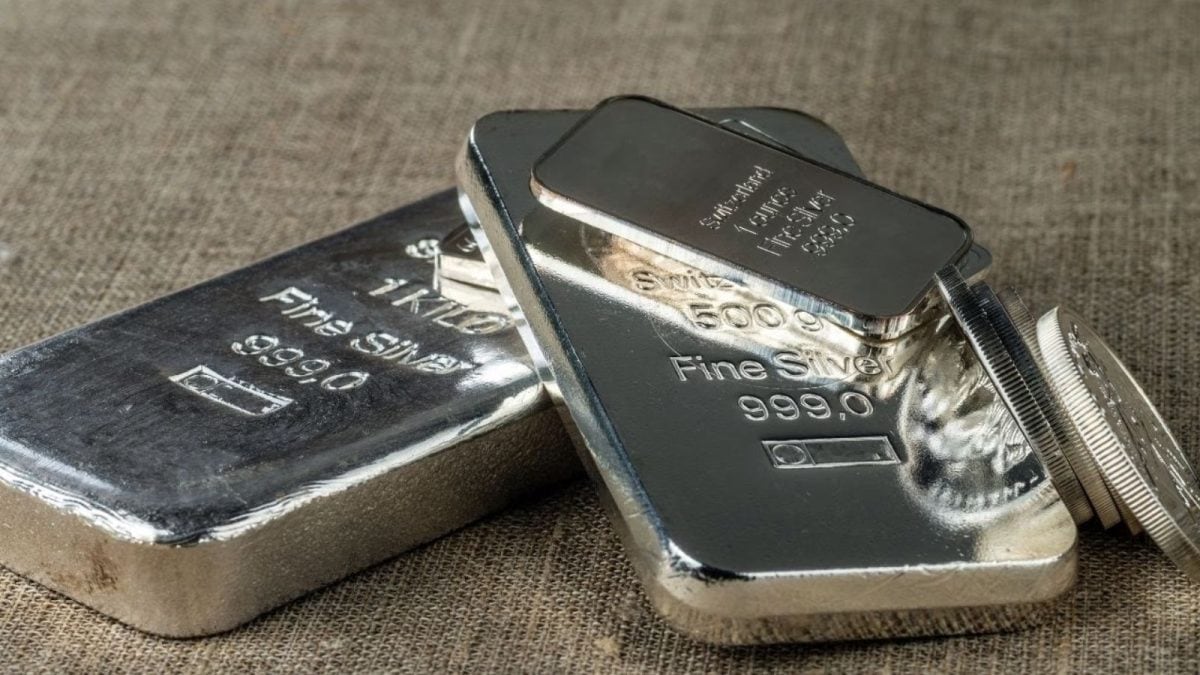
Silver prices soared to a record high on the Multi Commodity Exchange (MCX) on Friday as the December 2025 futures contract climbed to Rs 1,70,415 per kilogram. This marks an increase of Rs 1,977 or 1.18% for the day.The surge in silver prices has resulted in a remarkable 19.8% gain for the month of October, rising from a closing price of Rs 1,42,145 on September 30. This significant monthly increase highlights strong festive demand and growing industrial interest in the metal.The recent rally has sparked renewed interest in silver’s long-term potential, with analysts attributing the uptrend to solid underlying fundamentals. Mahendra Patil, Founder and Managing Partner at MP Financial Advisory Services LLP (MPFASL), noted that silver is experiencing “a phase of structural endurance rather than speculative exuberance”, as quoted by Economic Times.Patil pointed out that while silver has historically been volatile, its past performance offers valuable insights. The metal previously approached the $50 per ounce mark in 1980 and 2011, and with 2025 marking its third such approach, the focus is now on whether it can maintain sustained momentum.In 2025, silver prices surged from $29 to over $47 per ounce, reaching “its highest level in more than a decade.” MPFASL attributes this momentum to several factors, including “higher expectations from US rate cuts, sustained central-bank buying, and industrial restocking across solar and electronics supply chains.”Highlighting silver’s dual appeal, Patil said, “Silver is gaining ground as both a symbolic and practical substitute. Beyond its decorative appeal, the industrial demand linked to solar panels, electronics, and electric mobility provides fundamental support to prices, creating a dual-use demand base that gold lacks.”The rise in silver demand is not limited to global markets. In India, silver imports have increased significantly. “Silver imports have expanded, reflecting its growing relevance as an industrial and investment metal within the renewable-energy and electronics value chains,” MPFASL reported.Data from the firm also revealed that silver delivered an annualized return of 32.92% in the CY2023–CY2025 period, with a volatility of 24.66%, based on historical performance. The correlation between gold and silver during this period stood at 0.95, indicating closely linked price movements, although silver’s trajectory has increasingly been driven by industrial factors.
Outlook
Looking ahead, MPFASL suggests that silver may continue to benefit from its industrial underpinnings. “Silver exceeded expectations, crossing $47 per ounce on renewed industrial restocking in solar and electronics,” the report noted.Most projections indicate that silver is expected to remain in the $44–50 per ounce range through FY2026. While gold may experience consolidation, “silver amplified the momentum as the cyclical bellwether of a broader industrial revival.”As India enters the festive season and global industrial restocking continues, the metal’s trajectory will likely depend on sustained demand from the electronics and renewable sectors. MPFASL adds that silver’s ability to surpass the $50 per ounce mark may depend on whether it can “finally build sustained momentum and move toward the next big landmark, its metaphorical ‘century.'”For domestic traders, Rs 1,70,415 now serves as a key resistance level on MCX. With industrial and festive tailwinds in play, attention will remain on whether silver can build upon this rally or consolidate near its current highs.(Disclaimer: Recommendations and views on asset classes given by experts are their own. These opinions do not represent the views of The Times of India)




Business
Stock market today (April 20, 2026): Nifty50 recovers from losses, goes above 24,400; BSE Sensex up over 300 points – The Times of India

Stock market today: Sensex and Nifty opened in red on Monday on weak global cues as the closure of Strait of Hormuz led to an increase in oil prices. However the market quickly revered losses to move in green territory. While Nifty50 went above 24,400, BSE Sensex was up over 300 points. At 11:00 AM, Nifty50 was trading at 24,430.50, up 77 points or 0.32%. BSE Sensex was at 78,805.37, up 312 points or 0.40%.A key factor to watch will be the next round of diplomatic talks between the US and Iran, particularly as the April 22 ceasefire deadline draws closer.Dr. VK Vijayakumar, Chief Investment Strategist, Geojit Investments Limited says, “With the deescalation- escalation drama in the West Asian conflict continuing, the market will remain volatile in the near-term. With Iran hardening its position again, closing the Strait of Hormuz and threatening to retaliate to US’ seizure of an Iranian ship ‘violating the US blockade’, there is potential for a flare up of the conflict when the ceasefire ends on 22nd April. However, the market signals do not reflect renewed concern and flare up of the conflict. Even though Brent crude has spiked back to $95 levels from below $90 on Friday, there is no panic in the crude market.” “A significant trend in the market now is the outperformance of the broader market. Nifty Midcap and Nifty Smallcap indices are back to pre-war levels. This is in contrast to the Nifty which is still 4% below pre-war levels. The market is responding positively to good results from the broader market space. Even with the uncertainty of the West Asia tensions weighing on the market, particular stocks will respond to good results, particularly when the results beat expectations.“At the start of the new week, oil prices climbed, the US dollar rebounded from recent lows, and global equities showed mixed movement as tensions in the Middle East disrupted shipping flows in and out of the Gulf. Even so, market participants continued to anticipate a possible resolution.Early Monday trends indicated declines in US equity futures, with S&P 500 futures down 0.6% by mid-morning in Tokyo. In Asia, Hang Seng futures rose 1.2%, Nikkei 225 futures edged up 0.3%, Japan’s Topix gained 0.5%, while Australia’s S&P/ASX 200 remained largely unchanged. In Europe, Euro Stoxx 50 futures slipped 1.2%.Crude oil prices rebounded by more than 6% on Monday after plunging over 9% on Friday, as reports emerged that the Strait of Hormuz had been shut again following mutual accusations by the US and Iran of ceasefire violations involving attacks on vessels over the weekend.Gold prices declined by over 1% on Monday as the strengthening dollar weighed on the metal, while uncertainty surrounding US-Iran negotiations pushed oil prices higher and reignited concerns about inflation.(Disclaimer: Recommendations and views on the stock market, other asset classes or personal finance management tips given by experts are their own. These opinions do not represent the views of The Times of India)

The offshore energy industry will hold an exercise to test its response to simulated threats involving suspicious vessels, drones and cyber attacks.
Ahead of a conference taking place in Aberdeen this week, “exercise Granite Resolve” will gauge how the industry, police and other agencies deal with a complex emergency situation.
While the desktop exercise does not specify the origin of the potential threat, it comes after the UK and allies tracked Russian submarines loitering near critical undersea infrastructure in the High North.
The Defence Secretary has said the activity was closely monitored and warned Russia that any attempt to damage infrastructure would have “serious consequences”.
Offshore Energy UK’s (OEUK) Security and Resilience conference will take place on Wednesday, bringing together industry figures, defence specialists and Police Scotland to discuss how to protect North Sea assets and its energy system.
Mark Wilson, OEUK’s energy operations director, said the offshore industry has long had “robust” arrangements to deal with dangers like fires and explosions at sea, but it does not want to be complacent about emerging threats.
He told the Press Association: “Responding to some of the evolving physical and cyber security threats, requires us to be on the front foot and be agile in our thought process.”
Around 70 personnel from the offshore energy industry will take part in the desktop exercise, as well as officials from Police Scotland, the Department for Energy Security and other agencies.
The scenario will involve both physical and cyber security threats, where signals initially come from other jurisdictions in the North Sea such as Norway and Denmark.
Those taking part will be asked to respond to vessel activity and drone activity “both subsea and airborne”.
Complicating the scenario further, a group of activists will be boarding unattended installations – generating a “cybersecurity threat”.
The exact motivations of these activists, including whether they are working for a “state actor”, will not be immediately apparent – introducing more uncertainty into the situation.
Mr Wilson said: “The idea being, we’re going to test this at multiple levels.
“We’ve got well-tested and well-proven structures to our response arrangements.
“We’ve got an offshore emergency response team, an onshore incident management team and an onshore crisis management team who look after strategic aspects.
“And we’re going to be testing the scenario through those three different teams using the individuals we’ve got.”
He said the reports of Russian submarine activity in the High North, where there are few offshore oil and gas assets, had not led to increased vigilance from the industry – but the areas around offshore installations are already closely monitored.
Mr Wilson said: “If we were to see something unusual, then we’ve got reporting mechanisms in place to go to the relevant government agencies.”
The conference is due to take place in Aberdeen on Wednesday.

Britain is to “flirt” with recession and unemployment will be sent soaring amid the fallout of the Iran war, according to economic forecasters.
The latest Item Club report predicts the economy will flatline in the second and third quarters, which will leave gross domestic product (GDP) rising by 0.7% over the year as a whole, down from 1.4% expansion in 2025.
While the economy will “flirt with recession” – defined as two quarters or more in a row of falling GDP – it will also see higher oil and energy prices weigh on activity and the jobs market suffer its “biggest hit since the pandemic”, the Item Club warned.
But it predicted that interest rates will remain on hold throughout 2026 despite soaring inflation caused by the war.
Matt Swannell, chief economic adviser to the Item Club, said: “Spiralling energy costs and disruption to supply chains will push the UK to the brink of a technical recession in the middle of this year.
“Consumers’ spending power will be squeezed, while more expensive financing arrangements and a less certain global economic backdrop will pour cold water on companies’ investment plans.”
The independent forecasting group said the UK’s jobless rate will peak at 5.8% by the middle of 2027, with almost 250,000 more people without a job.
It follows a gloomy economic outlook report from the International Monetary Fund (IMF) last week showing the UK facing the biggest downgrade to growth among the G7 group of countries, with 0.8% forecast for 2026, down sharply from the 1.3% predicted in January.
But recent figures showed the UK economy had stronger-than-first thought momentum before the Iran war impact, with data showing GDP grew by 0.5% month-on-month in February – the fastest expansion since January 2024.
The Item Club said inflation is set to soar to almost 4% in the second half of 2026 – nearly double the Bank’s 2% target – but that Monetary Policy Committee (MPC) policymakers will hold off from knee-jerk hikes to interest rates.
Mr Swannell said: “We don’t expect the Bank of England to repeat the 2022 playbook and hike interest rates as energy prices rise.
“This time policy is already restrictive, and a more fragile economy means that businesses will find it harder to pass on higher costs to the consumer.
“Instead, the MPC can stand pat as it waits for inflation to fall back before it cuts interest rates a couple more times in the middle of next year.”


UK’s Sosandar returns to profitability amid robust FY26 performance

VAR review: Should Arsenal’s Gabriel have been sent off for headbutt?

Sri Lanka’s manufacturing PMI surges: Textiles drive March gains

-

 Fashion4 days ago
France’s LVMH Q1 revenue falls 6%, shows resilience amid Iran war
-

 Entertainment7 days ago
Palace left in shock as Prince William cancels grand ceremony
-

 Sports7 days ago
The case for Man United’s Fernandes as Premier League’s best
-
 Business1 week ago
100% road tax waiver for electric cars, new rules for 2, 3 and 4 wheelers – what Delhi govt’s draft EV policy says – The Times of India
-
 Business7 days ago
UK could adopt EU single market rules under new legislation
-

 Entertainment1 week ago
Dua Lipa hits major career high ahead of wedding with Callum Turner
-

 Sports1 week ago
Lamar Jackson hits back at critics with faithful message on social media
-

 Entertainment5 days ago
Is Claude down? Here’s why users are seeing errors