

Fashion
Singapore edition of ITMA ASIA + CITME attracts global crowd


Combined with CITME, the four-day ITMA ASIA + CITME exhibition at the Singapore Expo concluded on 31 October 2025 with participants praising the international mix of visitors andstrong turn-out of buyers from the region. From the supply side, the exhibition was well represented by companies from key textile technology manufacturing regions, thus offering buyers a balanced selection of solutions.
ITMA ASIA + CITME 2025 in Singapore drew 26,600 visitors from 109 nations, with 92 per cent coming from overseas.
Over 840 exhibitors from 30 regions showcased innovations across 70,000 square metres.
Strong participation came from India, China, and Indonesia, reflecting Asia’s industry strength.
Next edition confirmed for Shanghai, November 20–24, 2026.
The Singapore exhibition attracted visitorship of over 26,600 from 109 countries and regions, reaffirming its reputation as the region’s most influential showcase of textile and garment manufacturing technologies.
Some 92% of the visitors came from overseas, with 35% of them from South Asia and 30% from Southeast Asia. The top three visitor countries were: India (19%), China (11%) and Indonesia (10%). Other countries in the top 10 list included Bangladesh, Pakistan, Vietnam and Malaysia.
The show owners – CEMATEX (the European Committee of Textile Machinery Manufacturers), China Textile Machinery Association (CTMA), The Sub-Council of Textile Industry, CCPIT (CCPIT TEX) – attributed its strong showing to Singapore’s ideal location, conducive business environment and seamless visitor experience.
Mr Alex Zucchi, President of CEMATEX, said: “Exhibitor feedback has been very positive as the high-quality visitorship and serious business discussions are greatly appreciated. The exhibition has created a strong sense of optimism about the opportunities ahead amid current economic challenges.”
Mr Gu Ping, President of CTMA remarked: “Asia, the world’s largest textile hub, boasts a vast industrial scale and plays a key role globally. With the successful conclusion of the ITMA ASIA + CITME, Singapore 2025, it is clear that the Asian textile industry, encompassing regions such as East Asia, Southeast Asia and the Middle East, is experiencing rapid development. This also reflects the global textile industry’s demand for exploring emerging markets.”
Many of the exhibitors were elated by the outcome of their participation. Mr Tobias Schaefer, Vice President of Andritz Nonwoven & Textile, enthused: “The combined exhibition in Singapore proved to be a truly pivotal platform, bringing together a remarkably international audience. The high visitor numbers, the quality of discussions, and the strong focus on innovation and sustainability reflected the industry’s evolving priorities.”
Mr Stephane Picard, Sales & Marketing Manager at Pierret Industries, opined: “We are very pleased with the overall quality of the visitors at the exhibition. Despite the current market challenges, the event exceeded our expectations. The main objective of holding this show in Singapore was to attract people from Southeast Asia and Middle East markets, and the results were truly impressive.”
Sharing the same sentiment, Canlar Mekatronik Board Member Mr Kaan Cakici said: “We’re delighted with the overwhelming response received at the exhibition. The show days were filled with serious enquiries from buyers who came ready to invest and we concluded business deals during the show. The quality of discussions with visitors at our stand has given us confidence to expand our presence and support in the region.”
Underscoring the significance of the 2025 exhibition for the Indian market was Mr Rohit Kansal, Additional Secretary, Ministry of Textiles of India who led a 30-member-strong government delegation.
Mr Kansal remarked, “India is one of the largest participants and exhibitors in this exhibition here in Singapore. This reflects our strategic vision in driving our textile industry’s growth through innovation, manufacturing excellence and sustainability. The fair provides a good meeting ground for people to exchange ideas, to look at new technologies, discuss business propositions and to see the latest innovations.”
Later, speaking at the co-located ITMA Sustainability Forum, Mr Kansal highlighted the Indian textile industry’s green transformation.
The comprehensive showcase of textile and garment making technologies at ITMA ASIA + CITME, Singapore 2025 occupied more than 70,000 square metres of gross space and featured over 840 exhibitors from 30 countries and regions.
ITMA ASIA + CITME, Singapore 2025 is organised by ITMA Services and co-organised by Beijing Textile Machinery International Exhibition Company.
The next ITMA ASIA + CITME exhibition will be held in Shanghai, China from 20 to 24 November 2026.
Note: The headline, insights, and image of this press release may have been refined by the Fibre2Fashion staff; the rest of the content remains unchanged.
Fibre2Fashion News Desk (MS)











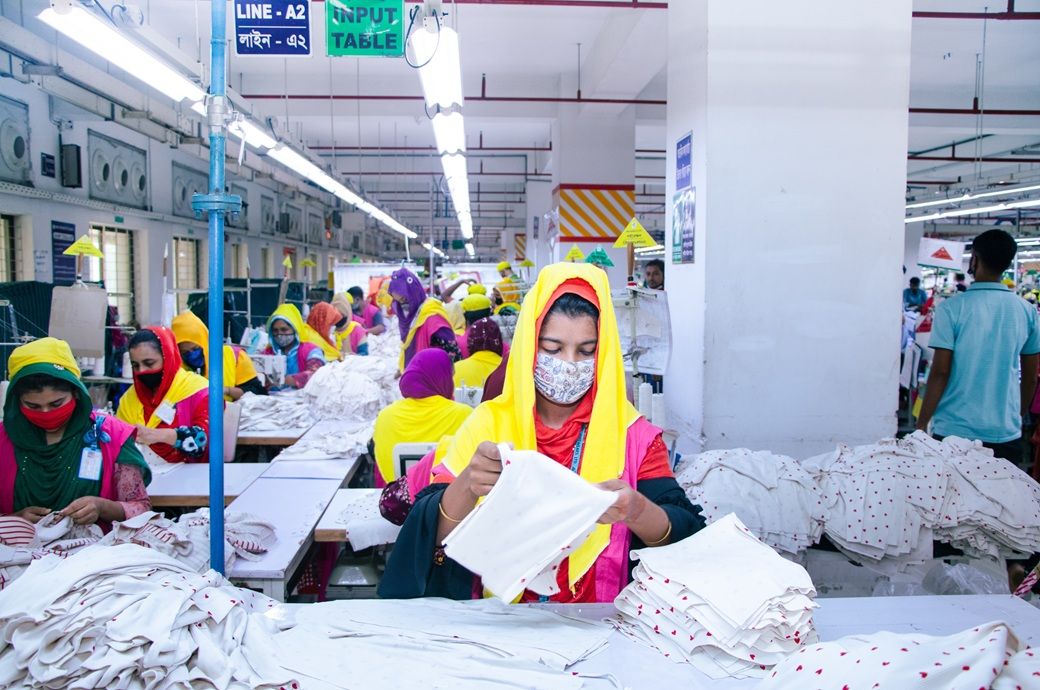
Foreseeing a ‘cautiously moderate’ near-term outlook for the RMG industry, Bangladesh Bank (BB) projected a combination of external demand uncertainty and emerging opportunities in key export markets.
Bangladesh’s RMG exports performance in the next few quarters will depend on the pace of economic recovery in major buying nations, stabilisation of global supply chains and the sector’s ability to diversify products and markets, the central bank noted.
Foreseeing a ‘cautiously moderate’ near-term outlook for the sector, it projected external demand uncertainty and emerging opportunities in key markets.
“Strengthening logistics, enhancing productivity and expanding into higher value apparel segments might be critical for maintaining the competitiveness of Bangladesh in the global garment market,” the bank’s ‘Quarterly Review of Readymade Garments (RMG): October-December of FY26’ noted.
The sector continued to occupy the dominant share in the country’s export basket, accounting for 80.36 per cent of total export earnings during the October-December period of fiscal 2025-26 (FY26).
Amid continuing demand uncertainty globally, the sector contracted during the quarter, with earnings reaching $9.74 billion, a 5.99 per cent year-on-year (YoY) decline.
Global demand conditions, inflationary pressures in importing countries, shifts in consumer spending patterns and supply chain adjustments continue to influence order volumes and export receipts, the bank observed.
In addition, production costs, exchange rate movements, and logistical conditions play a considerable role in shaping the competitiveness of Bangladesh’s garment exports.
These show a large and resilient industry providing the bulk of export earnings and employment facing growing short-term headwinds as it moves into the rest of FY26, the bank added.
Fibre2Fashion News Desk (DS)
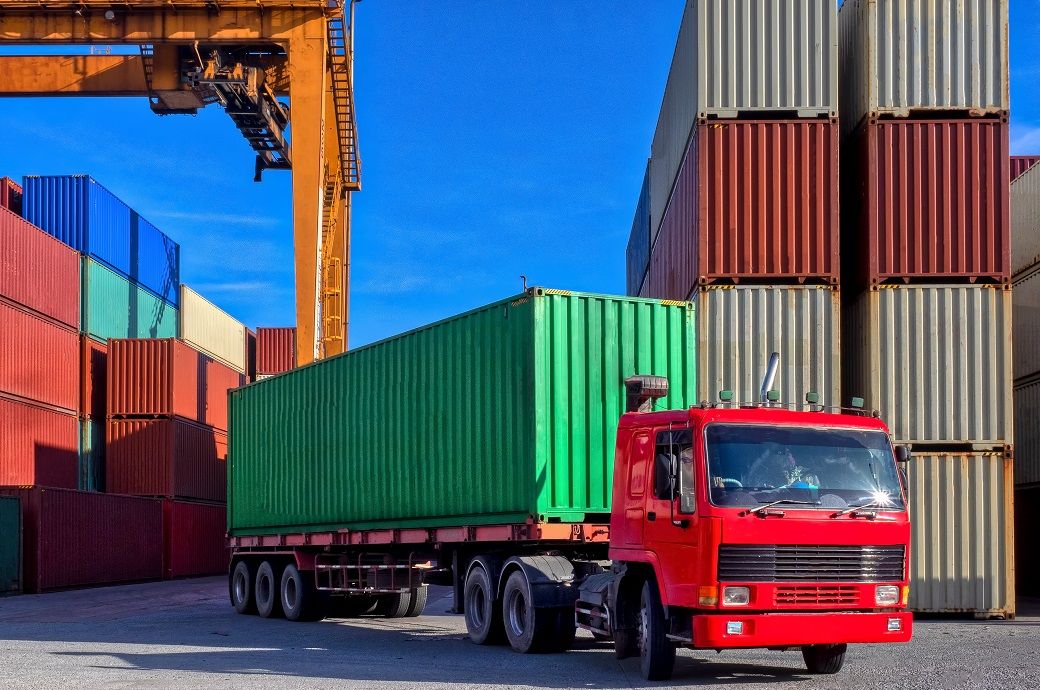
Rates on Asia–Europe trades have remained relatively stable despite ongoing tensions in the Middle East. Spot rates on Shanghai–Genoa inched up 2 per cent to $3,529 per 40ft container, while Shanghai–Rotterdam stayed unchanged at $2,543 per 40ft container. According to Drewry’s Container Capacity Insight, only 4 blank sailings have been announced for next week on the Asia–Europe trade, suggesting stable capacity. Meanwhile, Drewry expects spot rates to increase in the coming weeks as higher bunker fuel costs prompt carriers to implement emergency bunker fuel surcharges.
The Drewry WCI rose marginally to $2,287 per FEU, marking a fifth weekly gain, though overall freight trends remain stable across key routes.
Asia–Europe and Transpacific lanes saw limited movement, while bunker fuel surcharges may push rates higher.
Middle East-linked routes show sharper spikes, but disruption remains contained versus COVID-19 peaks.
On the Transpacific route, spot rates from Shanghai to New York increased 1 per cent to $3,434 per 40ft container, while those to Los Angeles decreased 1 per cent to $2,663. Maersk is seeking US regulatory approval to waive the 30-day notice period and introduce an emergency bunker surcharge, citing elevated and volatile fuel costs amid Middle East tensions. The proposed surcharge is $200 per Twenty-foot Equivalent Unit (TEU) for head-haul and $100 per TEU for backhaul dry shipments. With carriers continuing to push for rate increases, Drewry expects spot rates to increase further in the coming weeks.
Rates from New York to Rotterdam increased 3 per cent to $1,001 per FEU, while Rotterdam-New York increased 2 per cent to $1,579 per FEU. Rotterdam-Shanghai rose 2 per cent to $605 per FEU, and Los Angeles–Shanghai grew 2 per cent to $742 per 40-foot container.
Ongoing disruptions in the Strait of Hormuz, a key route for nearly 20 per cent of global oil, have tightened bunker fuel availability and pushed prices higher. In Asia, fuel supplies in key hubs like Singapore and China are starting to tighten, prompting carriers to adopt operational measures such as slow steaming, alternative refuelling strategies and emergency fuel surcharges to manage costs. These measures are expected to keep freight rates elevated in the short term.
A recent analysis by Drewry suggests not to panic as freight rates have surged amid the Middle East conflict but the situation remains relatively contained compared to the COVID-era spike. Capacity has largely held steady across most global routes, barring disruptions in Gulf-linked lanes, helping prevent extreme volatility. However, routes connected to the Middle East are witnessing sharper fluctuations, with elevated bunker surcharges adding to cost pressures.
Drewry data indicated that freight rate increases vary sharply by route. On non-Middle East routes, spot rates rose a relatively moderate 16 per cent between February and March 2026, far below the 35 per cent spikes seen during the COVID-19 peak. However, Middle East-linked routes have seen far steeper increases, with some lanes surging by as much as 316 per cent in March, alongside earlier gains of nearly 49 per cent. This divergence highlights a concentrated disruption, with bunker surcharges and route-specific risks significantly inflating logistics costs for affected trade corridors.
Fibre2Fashion News Desk (KUL)

The West Asia conflict has triggered a multi-layer disruption across India’s textile value chain, with sharp input cost inflation, logistics shocks, and production cuts converging simultaneously.
As demand weakens and margins tighten, the sector faces a critical inflection, with April likely to set the tone for sustained operational and export challenges.
Source link


This Smart Sprinkler Thinks It Knows Your Lawn Better Than You Do

Hackers Are Posting the Claude Code Leak With Bonus Malware

‘India solidly through global shocks’: EAM Jaishankar calls for ‘hedge, de-risk, diversify’ strategy amid Iran war – The Times of India

-

 Entertainment1 week ago
Lee Sang-bo dies at 45: Funeral details revealed
-

 Sports1 week ago
Illinois defense gets tough, ousts Houston to reach Elite Eight
-

 Sports6 days ago
USMNT handed reality check by Doku, Belgium ahead of World Cup
-

 Sports6 days ago
2026 NCAA men’s hockey tournament: Schedule, results
-
 Business1 week ago
How do you spot a fake online review?
-

 Fashion1 week ago
China rolls out tariff cuts on Congo imports from April 1
-

 Fashion1 week ago
EU apparel imports slump 15.48% YoY in Jan; Bangladesh hardest hit
-

 Sports7 days ago
Man City show why they are worthy WSL title winners as tired United wilt