

Politics
Six Afghan Migrants Killed by Iranian Border Guards in Sistan-Baluchestan

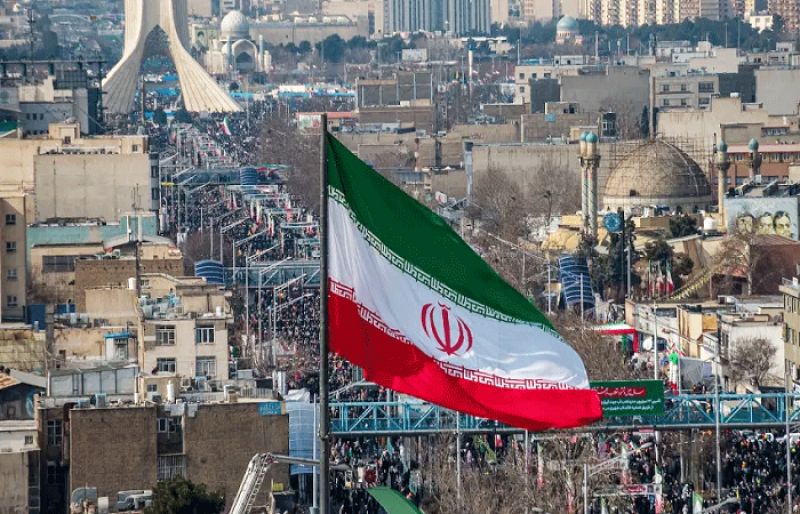

Iranian border guards opened fire on a group of Afghan migrants attempting to cross into Sistan-Baluchestan province, killing six and injuring five, according to rights group Haalvsh on Tuesday.
The incident took place on September 8 in the Golshan border district, where around 120 Afghan nationals, including women, children and elderly people, came under fire.
Haalvsh said Iranian forces used both heavy and light weapons, including a DShK heavy machine gun, without issuing any warning.
According to the group, five bodies were left at the scene, while one of the injured lost a leg due to heavy gunfire.
Three of the wounded remain in critical condition after being hospitalized in Saravan.
The group added that around 40 other migrants were detained by border forces.
The US-based Human Rights Activists News Agency (HRANA) condemned the attack as a violation of fundamental rights, citing the direct targeting of unarmed migrants with heavy weapons.
Lack of timely medical care and mass arrests as breaches of international law.
Haalvsh noted that similar incidents have been reported before.
In October 2024, Iranian border guards opened fire on Afghan migrants, leaving dozens dead, wounded or missing.
HRANA’s annual monitoring found that in 2024, Iranian security forces shot 484 civilians, killing 163 and wounding 321.
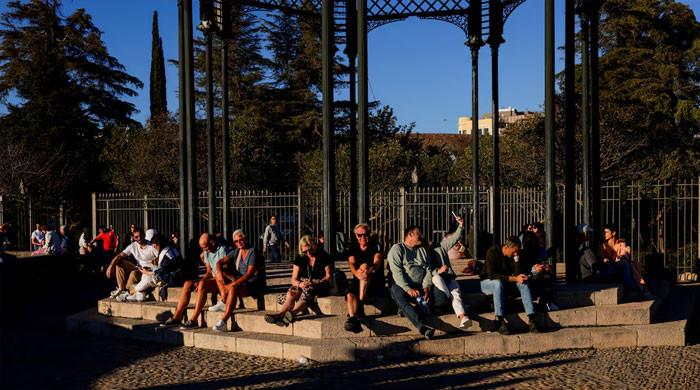
PARIS: Central Asia, the Sahel region, and northern Europe experienced their hottest year on record in 2025, according to AFP analysis based on data from the European Copernicus programme.
Globally, the last 12 months are expected to be the third hottest ever recorded after 2024 and 2023, according to the provisional data, which will be confirmed by Copernicus in its annual report in early January.
But the average, which includes land and oceans, masks the overall records for certain parts of the world.
Many poorer nations do not publish detailed climate data, so AFP has completed the global picture by independently analysing Copernicus data from climate models, measurements from about 20 satellites, and weather stations.
The data spans the whole world, hour by hour, since 1970.
Here is what the detailed analysis revealed for 2025, during which 120 monthly temperature records were broken in more than 70 countries.
Records shattered in Central Asia
Every country in Central Asia broke its annual temperature records.
Landlocked, mountainous Tajikistan, where only 41% of the population has access to safe drinking water, saw the highest abnormal temperatures in the world, at more than 3C above its seasonal averages from 1981 to 2010.
Monthly temperature records have been broken every month since May, with the exception of November.
Neighbouring countries such as Kazakhstan, Iran and Uzbekistan experienced temperatures 2C to 3C above the seasonal average.
Up to 1.5C hotter in Sahel
Temperature records were beaten in several countries in the Sahel and west Africa.
Mali, Niger, Nigeria, Burkina Faso, and Chad saw a rare divergence in temperatures, notching 0.7C to 1.5C above their seasonal average.
The last 12 months were the hottest ever recorded in Nigeria, and one of the fourth hottest in other countries.
Scientists from the World Weather Attribution (WWA) network, who assess the role of human-induced climate change in extreme weather events, wrote in their annual report published on Monday that extreme heat events “have become almost 10 times more likely since 2015”.
Countries in the Sahel — the semi-arid region of west and north-central Africa stretching from Senegal to Sudan — are among the most vulnerable to rising temperatures, with many already facing armed conflict, food insecurity and widespread poverty.
Scorching summer in Europe
Around 10 European countries are on the verge of, or coming close to, breaking their annual temperature record, notably due to an exceptional summer.
In Switzerland and several Balkan countries, summer temperatures were 2C and even 3C above their seasonal average.
Spain, Portugal, and Britain also recorded their worst summer on record, with extreme heat fuelling massive wildfires.
The driest spring in more than a century led to a UK water shortage.
Northern Europe was largely spared the heatwave that hit Europe at the end of June, but it instead experienced an abnormally warm autumn.
The last 12 months are expected to be one of the two warmest years on record in Norway, Sweden, Finland and Iceland.
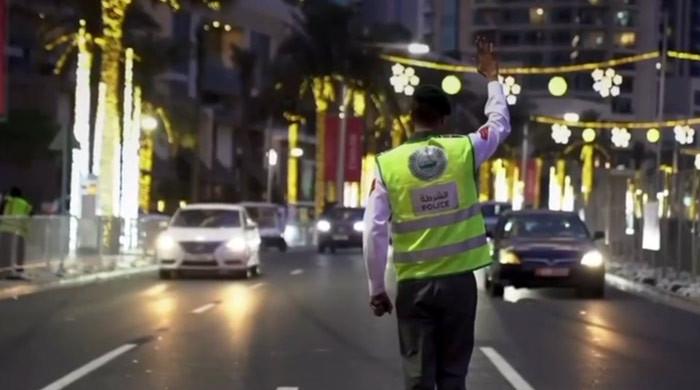

DUBAI: Millions of visitors are expected to flock to Dubai for the New Year celebrations in 2026.
Authorities are preparing for a large-scale security operation, ensuring the safety of residents and tourists alike during the festivities.
In anticipation of the crowds, Dubai will deploy 10,000 police officers across the emirate, according to a statement from the Dubai Police. In addition, more than 1,700 firefighters will be stationed to handle any emergencies that may arise during the New Year celebrations.
Dubai has planned an impressive spectacle with 48 fireworks displays at 40 key locations. As part of the security arrangements, 9,884 officers from Dubai Police will be present, along with 1,625 modern patrol vehicles, to monitor the celebrations.
Dubai’s famous landmarks, such as the Burj Al Arab, Palm Jumeirah, and Marina, will be visible from tourist boats and cruise ships, where many will enjoy fireworks displays on the water. To ensure marine safety, 53 marine boats will be deployed in case of emergencies.
The city has been divided into four operational sectors, and Dubai Police will coordinate closely with 55 government and private organisations to ensure a smooth operation. The Dubai Civil Defence has already completed inspections of 306 critical facilities, while 156 specialised firefighting vehicles and 12 marine fire boats will be on standby.
In preparation for the large crowds, several main roads in Dubai will be closed to traffic from 4pm on December 31 until 11pm. Sheikh Zayed Road and other key routes near the Burj Khalifa, such as Mohammed Bin Rashid Boulevard, will be among those affected. The closures are expected to ease congestion and ensure safe movement for pedestrians.
In 2024, over 2.5 million people used public transport in Dubai to attend the New Year’s celebrations, and authorities are expecting similar numbers this year.
Dubai’s public transport network will be closely monitored to ensure the smooth movement of passengers.
For the first time, the iconic Dubai Frame will host a spectacular drone show, along with a fireworks display to mark the start of 2026. With such large-scale celebrations, the authorities are leaving no stone unturned to ensure the safety and security of all involved.
With meticulous planning and coordination, Dubai is set to ring in the New Year with vibrant celebrations while prioritising the safety and security of its residents and visitors.
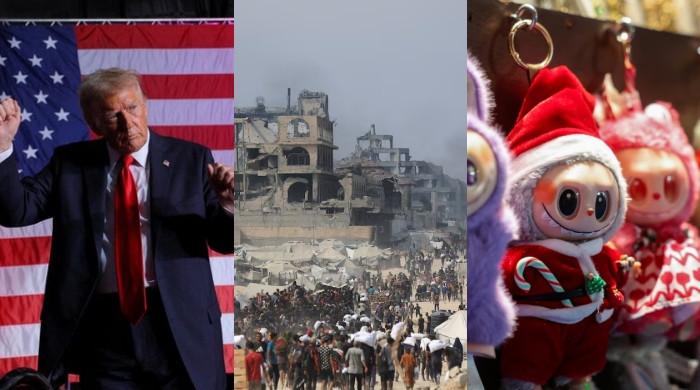
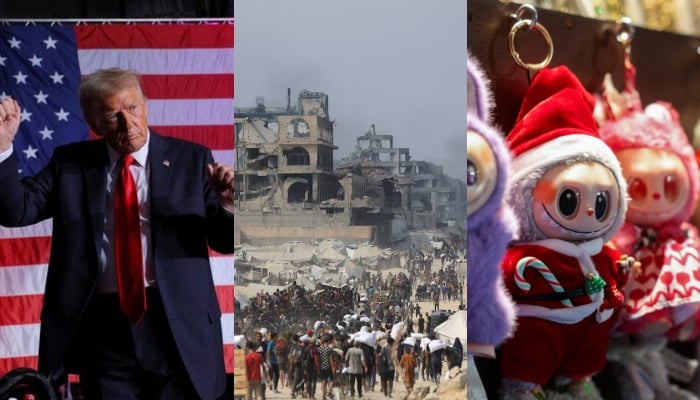
New Year’s Eve revellers toasted the end of 2025 on Wednesday, waving goodbye to 12 months packed with Trump tariffs, a Gaza truce and vain hopes for peace in Ukraine.
It was one of the warmest years on record, the stifling heat stoking wildfires in Europe, droughts in Africa and deadly rains across Southeast Asia.
There was a sombre tinge to party preparations in Australia’s harbour city Sydney, the self-proclaimed “New Year’s capital of the world”.
Barely two weeks have passed since a father and son allegedly opened fire on a Jewish festival at Bondi Beach, killing 15 people in the nation’s deadliest mass shooting for almost 30 years.
Parties will pause for a minute of silence at 11:00pm (1200 GMT) as the famed Sydney Harbour Bridge is bathed in white light to symbolise peace.
“It has been a difficult year for so many people,” said Steph Grant, a 32-year-old Sydney resident.
“Here’s hoping the world looks like a brighter place in 2026,” said Grant, who works in advertising.
Hundreds of thousands of spectators are expected to line Sydney’s foreshore as nine tonnes of fireworks explode on the stroke of midnight.
Security will be tighter than usual, with squads of heavily armed police patrolling the crowds.
Sydney kicks off a chain of celebrations stretching from glitzy New York to the Hogmanay festival on the chilly streets of Scotland.
More than two million people are expected to pack Brazil’s lively Copacabana Beach for what authorities have billed as the world’s biggest New Year’s Eve party.
Truce and tariffs
Labubu dolls became a worldwide craze in 2025, thieves plundered the Louvre in a daring heist, and K-pop heartthrobs BTS made their long-awaited return.
The world lost pioneering zoologist Jane Goodall, the Vatican chose a new pope, and the assassination of right-wing activist Charlie Kirk laid bare America’s deep political divisions.
Donald Trump returned to the White House in January, launching a tariff blitz that sent global markets into meltdown.
The US president used his Truth Social platform to lash out at his sliding approval ratings ahead of midterm elections in 2026.
“The polls are rigged,” he wrote, without providing evidence.
“Our Country is ‘hotter’ than ever before. Isn’t it nice to have a STRONG BORDER, No Inflation, a powerful Military, and great Economy??? Happy New Year!”
But many expect tough times to continue in 2026.
“The economic situation is also very dire, and I’m afraid I’ll be left without income,” said Ines Rodriguez, 50, a merchant in Mexico City.
“All our colleagues are in the same situation: very little work and not very profitable,” said Buenos Aires business owner Fernando Selvaggi, 61.
After two years of war that left much of the Gaza Strip in ruins, US pressure helped land a fragile ceasefire between Israel and Hamas in October.
But with each side already accusing the other of flagrant violations, no one is sure how long the break in hostilities will hold.
Hamas fighters stormed into southern Israel on October 7, 2023, resulting in the deaths of more than 1,200 people.
Israel’s retaliatory assault on Gaza has killed more than 70,000, also mostly civilians, according to the health ministry in the Hamas-run territory, a figure the UN deems credible.
World leaders including China’s Xi Jinping and Russian counterpart Vladimir Putin began exchanging New Year greetings.
Both countries have made much of their presidents’ supposedly close friendship, and Putin was an honoured guest at a spectacular Chinese military parade in September.
Xi said he was “ready to maintain close exchanges with Putin to jointly push for continuous new progress in bilateral ties”, Chinese state news agency Xinhua reported Wednesday.
The war in Ukraine — sparked by Russia’s full-scale invasion in 2022 — meanwhile grinds towards its four-year anniversary in February.
There were hopes a renewed burst of diplomacy might produce a breakthrough this year.
But Russia shot down any notion of a temporary ceasefire in the final days of 2025.
As envoys shuttle between Moscow, Washington and Kyiv, one major obstacle remains: Ukraine is reluctant to give up land, and Russia is unwilling to give it back.
Sports, space and AI
The coming 12 months promise to be full of sports, space travel and serious questions over artificial intelligence.
More than 50 years since the last Apollo lunar mission, 2026 looks to be the year that humankind once again sets its sights towards the moon.
NASA’s Artemis II mission, backed by Elon Musk, plans to launch a crewed spacecraft that will circle that moon during a 10-day test flight.
After years of unbridled enthusiasm, artificial intelligence is starting to face mounting scrutiny.
Nervous investors are already questioning whether the years-long AI boom might be starting to resemble something more like a market bubble.
Athletes will gather on Italy’s famed Dolomites to hit the slopes for the Winter Olympics.
And for a brief few weeks between June and July, nations will come together for the biggest football World Cup in history.
For the first time, 48 teams will compete in the world’s most-watched sports event, playing in venues across the United States, Mexico and Canada.
From the beaches of Brazil to the far-flung reaches of New Zealand, the tournament is expected to draw millions of fans.


South Indian cotton yarn prices steady, demand pickup seen ahead
.jpg?trim=0,0,0,0&width=1200&height=800&crop=1200:800 "What the UK bought in 2025 – from bucket hats to Labubu toys")
What the UK bought in 2025 – from bucket hats to Labubu toys

Kate Middleton eyes on key person to join her team in 2026: Details

-

 Sports4 days ago
Brooks Koepka should face penalty if he rejoins PGA Tour, golf pundit says
-
 Business5 days ago
Govt registers 144olive startups | The Express Tribune
-

 Politics1 week ago
Moscow car blast kills Russian general hours after US talks
-

 Politics1 week ago
2025 marks decisive reset in Pakistan-US ties: Washington Times
-
 Politics4 days ago
Thailand, Cambodia agree to ‘immediate’ ceasefire: joint statement
-

 Entertainment1 week ago
Timothée Chalamet in question for ‘Marty Supreme’ press tour attitude
-

 Fashion1 week ago
New Balance Americas SVP Melissa Worth departs
-

 Entertainment4 days ago
Second actor accuses Tyler Perry of sexual assault in new lawsuit