

Entertainment
SJC dismisses complaints against CEC Sikandar Raja, ECP members

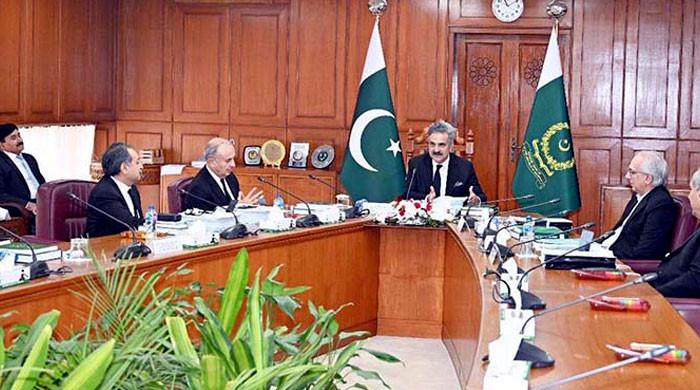
- Complaints dismissed over election rigging, irregularities.
- SC’s statement did not disclose identities of complainants.
- PM Shehbaz, opposition begin talks to appoint new CEC.
The Supreme Judicial Council (SJC) has dismissed all complaints filed against Chief Election Commissioner (CEC) Sikandar Sultan Raja and two members of the Election Commission of Pakistan (ECP), Nisar Ahmad Durrani and Shah Muhammad Jatoi.
The SJC released its decision on the complaints and published it on the Supreme Court’s official website. The verdict pertains to complaint Nos532/2021, 557/2022, and 563/2022, which were submitted against the CEC and two ECP members, according to The News.
These complaints were reviewed during SJC meetings held on November 8, 2024, and December 13, 2024. The complaints, reportedly filed by the Pakistan Tehreek-e-Insaf (PTI), alleged irregularities and rigging during the general elections.
However, the Supreme Court’s public statement did not disclose the identities of the complainants.
This dismissal comes at a time of heightened political tension over the credibility of the electoral process, with opposition parties frequently raising concerns about the impartiality of the ECP.
According to the Constitution, only the SJC is authorised to hear and adjudicate cases of alleged misconduct involving the CEC and ECP members. The latest ruling effectively exonerates CEC Sikandar Sultan Raja and the two members of all allegations brought against them.
While Sikandar Sultan Raja has completed his constitutional term, under the provisions of the 26th Constitutional Amendment, he will continue to serve until a successor is appointed.
In this regard, Prime Minister Shehbaz Sharif wrote to Opposition Leader Omar Ayub on June 4, 2025, initiating consultations for the appointment of a new CEC and two ECP members, whose terms have also expired.
According to the constitutional procedure, both the prime minister and the opposition leader are required to propose three names each.
If consensus cannot be reached, the issue is referred to a parliamentary committee for final consideration.

- IBO conducted on reported presence of India-backed militants: ISPR.
- Says weapons and ammunition also recovered from killed terrorists.
- Sanitisation operation continues to eliminate any other militants.
Security forces and law enforcement agencies neutralised at least 22 India-sponsored terrorists during an intelligence-based operation in the Khyber district of Khyber Pakhtunkhwa on April 21, a statement issued by the Inter-Services Public Relations (ISPR) said on Friday.
According to the military’s media wing, the joint operation was conducted in response to the reported presence of India-backed militants, also known as Fitna al-Khawarij.
It added that during the operation, the terrorists resorted to indiscriminate firing out of panic and in an attempt to avoid capture. As a result, a 10-year-old innocent child was martyred.
The ISPR added that weapons and ammunition were also recovered from killed India-sponsored terrorists, who remained actively involved in numerous terrorist activities in the area.
“Sanitisation operation is being conducted to eliminate any other Indian-sponsored kharji found in the area,” the ISPR said, adding that the relentless counter-terrorism campaign under vision “Azm-e-Istehkam” will continue at full pace to wipe out the menace of foreign-sponsored and supported terrorism from the country.
“Such sacrifices of our innocent civilians further strengthen our resolve.”
Pakistan has witnessed a spike in cross-border militant activity, particularly in Khyber Pakhtunkhwa and Balochistan, both of which share a border with Afghanistan, since the Afghan Taliban took control in 2021.
In response to the escalating attacks, Pakistan launched “Operation Ghazab lil-Haq,” during which approximately 796 Afghan Taliban fighters and allied militants were killed, according to Information Minister Attaullah Tarar.
More than 1,000 Afghan Taliban fighters and terrorists were also injured during the Operation Ghazab lil-Haq. The minister had said that 286 posts of the Afghan Taliban regime had been destroyed and 44 captured.
In October 2025, the two countries were also involved in border clashes after Afghan Taliban fighters and allied militants carried out unprovoked assaults on Pakistan’s border positions.
The ensuing fighting resulted in the deaths of over 200 Taliban and affiliated militants, while 23 Pakistani soldiers were martyred in the line of duty.
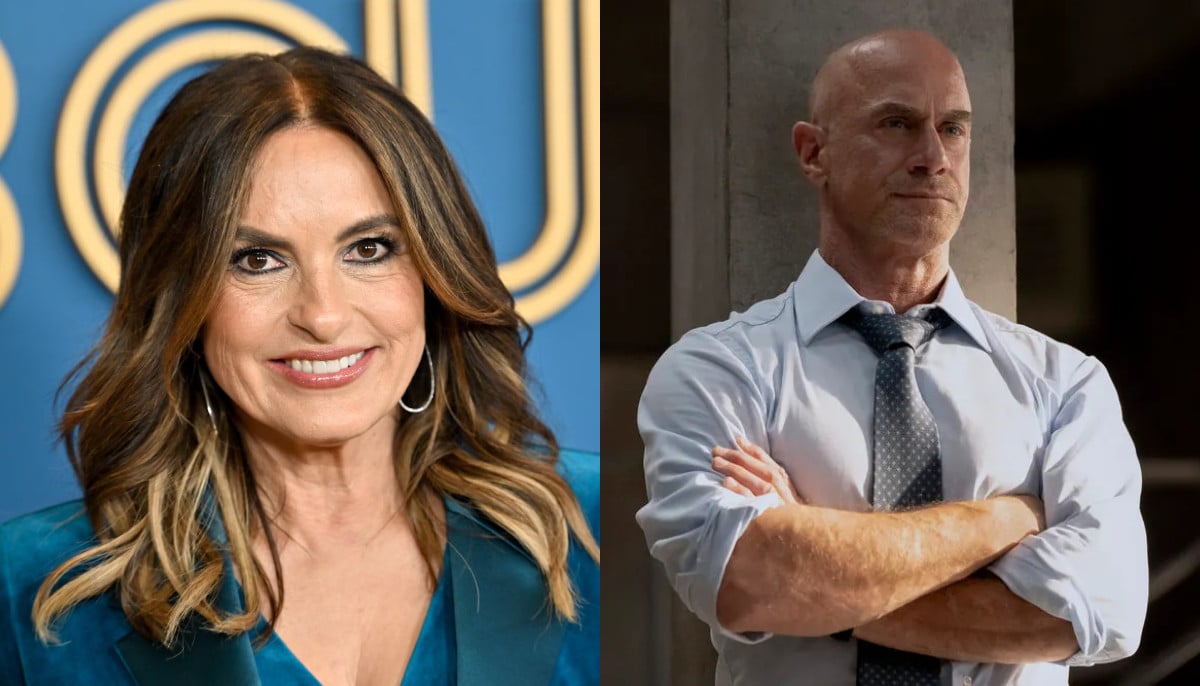
Mariska Hargitay has revealed she was moved to tears after seeing Christopher Meloni’s emotional response to the cancellation of Law & Order: Organized Crime, describing it as the closing of a significant chapter for her longtime co-star and friend.
Speaking to Extra, Hargitay said she watched Meloni’s Instagram video about the show ending and was immediately overcome.
“I saw it and burst out in tears, first of all,” she said.
“I immediately burst out in tears because it has, just like [Meloni] said, and he was so beautiful and open, because it has been a great ride. And it has been so beautiful and intimate and such a huge part of his life and was life-changing for him.”
She also said the news had come as a genuine shock.
“Chris is working and in demand and such a magnificent actor. But it’s, in a way, closing a chapter. So when that happens, one needs to take inventory. It’s a real marker in your life.”
Law & Order: Organized Crime was officially cancelled after five seasons earlier this month.
Meloni marked the occasion with a heartfelt video on Instagram.
“I wanted to take this moment to say thank you to the fans who not only helped give the character of Elliot Stabler life and longevity, but for sticking with him and welcoming him back. It was a good ride,” he said.
The series, which premiered in 2021, followed Stabler, the character Meloni first played on Law & Order: Special Victims Unit, as he returned to New York after a decade away to rebuild his life and take on organised crime.
It aired on NBC for its first four seasons before moving to Peacock for its fifth and final season, which concluded in June 2025.
The cast also included Danielle Moné Truitt, Rick Gonzalez, Ainsley Seiger and Dean Norris.

Luke Grimes has been playing cowboy Kayce Dutton on Yellowstone since 2018, but some fans are still coming to terms with a fundamental truth: he is an actor, not an actual cowboy.
The 42-year-old, who now continues the character’s story in the CBS spinoff Marshals, told Toronto radio station CHUM 104.5 that the strangest fan encounters often involve a version of the same realisation.
Some viewers, he said, “loved that show so much that they were, on a certain level, upset that it wasn’t real.”
The most common version of this comes in the form of a complaint. “A lot of times you’ll get the, ‘You’re not a real cowboy.'”
His response is straightforward.
“Well, of course I’m not, I’m an actor. That’s why I’m able to do this. If I was a real cowboy, I’d be, like, herding cattle right now. I wouldn’t be on this show.”
Even his one-year-old son, whom he shares with wife Bianca Rodrigues Grimes, has his own take on the cowboy persona.
“My son thinks my cowboy hat is really funny,” Grimes told PEOPLE at the Marshals LA premiere.
“He doesn’t understand why I have that big thing on my head.” That said, the baby loves visiting the set and got excited when he was brought along.
New episodes of Marshals air Sundays at 8pm ET on CBS.


UK retail sales rebound as motorists stock up on fuel

Pentagon email floats suspending Spain from Nato, other steps over Iran rift: source

Vietnam-India seminar boosts textile, leather ties

-

 Fashion1 week ago
France’s LVMH Q1 revenue falls 6%, shows resilience amid Iran war
-

 Entertainment1 week ago
Is Claude down? Here’s why users are seeing errors
-

 Sports1 week ago
PSL 11: Peshawar Zalmi win toss, opt to field first against Quetta Gladiators
-

 Tech1 week ago
The Deepfake Nudes Crisis in Schools Is Much Worse Than You Thought
-
 Business1 week ago
Standard Life buys rival in £2b deal to create savings giant
-

 Tech1 week ago
CYBERUK ’26: UK lagging on legal protections for cyber pros | Computer Weekly
-
 Business1 week ago
PepsiCo earnings beat estimates as North American food business improves
-

 Fashion1 week ago
Raymond unveils luxury Chairman’s Collection Store in Mumbai