

Sports
Soccer’s incredible shrinking shin guards could be a big problem

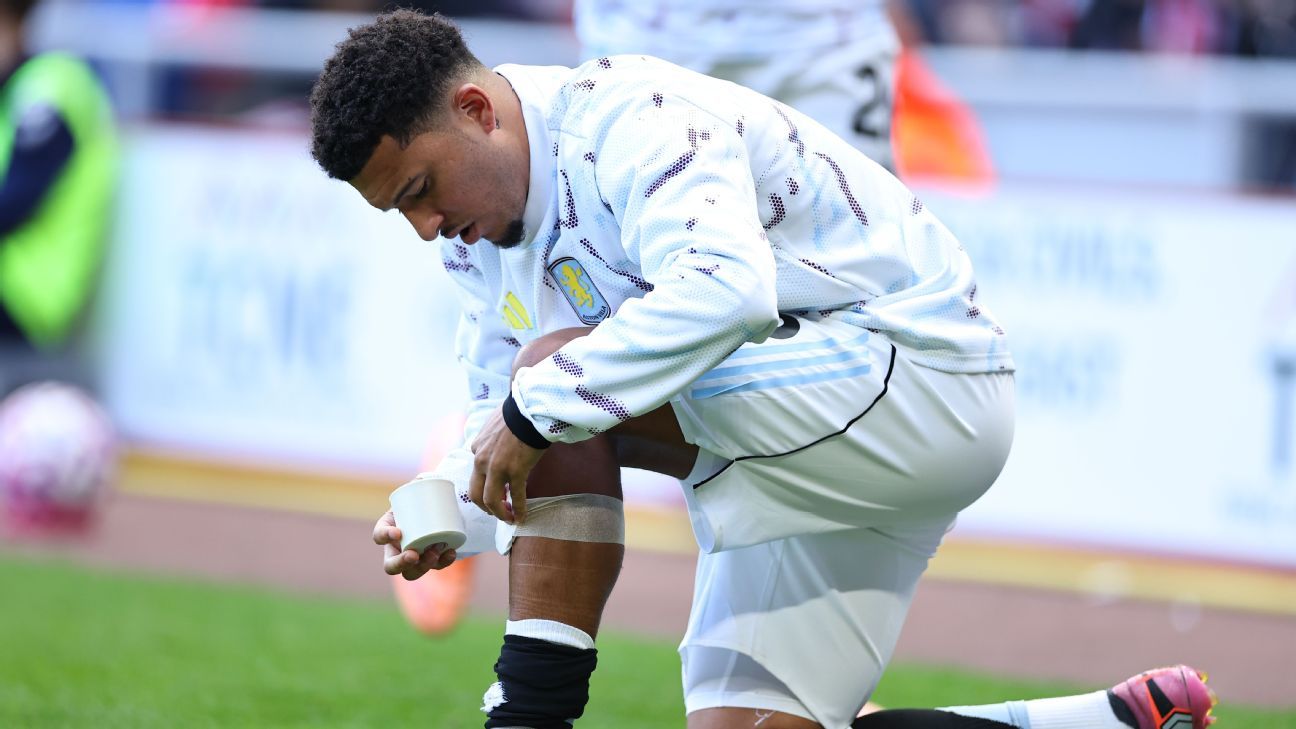
It is an issue that is dividing football, a classic example of one generation questioning the choices of another, but the sight of a former Tottenham and Germany player rolling on the pitch in agony with a severely gashed leg earlier this month might end up changing opinions about the ever-decreasing size of shin guards.
Until recently, shin guards covered the entire shin — sometimes up to 9 inches long — and they were made of foam or rubber with a hard plastic shell. But in recent years, some players have abandoned the protective element completely, wearing only tiny pieces of foam under their socks, and it seems only a matter of time before a serious injury leads to a rethink in what players are wearing.
Lewis Holtby‘s injury, sustained while playing for Dutch team NAC Breda against Fortuna Sittard in the Eredivisie on April 12, looks to have ended the 35-year-old’s season due to the depth of the wound on his left shin following a challenge with an opposition defender. It also led to a blame game centered on Holtby’s shin guards.
“I think it’s ridiculous that the referee [Jeroen Manschot] says something about it,” Breda coach Carl Hoefkens said after the game. “In the tunnel, it was said [by Manschot] that Holtby should just wear shin guards, or better shin guards. The officials also check the shin guards before the match, so it’s their responsibility as well.”
La aparatosa lesión de Lewis Holtby este fin de semana. 😬
Vía ESPNnl/X pic.twitter.com/WgHl4PL5xo
— ESPN Deportes (@ESPNDeportes) April 14, 2026
Breda defender Denis Odoi spoke about Holtby’s “small shin guards” and said “You’re never too old to learn,” when asked about players wearing “normal” shin guards again, while ESPN NL analyst, former Ajax and PSV Eindhoven winger Kenneth Perez, was more critical.
“They [players] are now wearing those tiny things, or basically toilet paper, just to have something there,” Perez said. “I have absolutely no sympathy for injuries that result from that.
“As a club, you can simply say: We require our players to wear proper shin guards.”
Watch any top-level fixture this season and you’re likely to see players with socks rolled down almost to their ankles — Everton‘s Jack Grealish and Tyler Dibling wear them low, covering tiny shin guards. Others have their socks just below the knee, but still sport shin guards half the size of a cellphone, as shown by Burnley midfielder Marcus Edwards during a game against West Ham in February. Arsenal forward Bukayo Saka has spoken this season about his preference for tiny shin guards — “I’m a fan of them; I don’t like big shin pads” — though Liverpool defender Virgil van Dijk harbors a more cautious approach to protecting his lower leg.
“If you get kicked on your shin and your shin pad is that size of an AirPod, then obviously that’s a big problem,” Van Dijk said.
Brighton forward Danny Welbeck has said that his younger teammates ridicule his old-school shin guards — “They say to me ‘Your shinnies are massive,’ but you need a bit more safety, you know?” — but just like Saka, Fulham winger Alex Iwobi prefers the small, lightweight guards because “I just don’t like having something heavy on my shin.”
Former England and Liverpool forward Peter Crouch regularly raises the shin guard issue on his podcast, That “Peter Crouch Podcast,” under the light-hearted “Make Shin Pads Great Again” banner, with Fulham midfielder Harry Wilson saying this season that some of his teammates “cut up the sponge you get from the physio and use that.”
If a high-profile player sustains this type of injury thanks to tiny shin guards, the kind of injury that forces them to miss the World Cup or that happens on the biggest stage this summer — the debate about the shrinking move towards smaller pads will likely increase in volume.
The trend toward smaller shin guards — and away from larger models that would also include ankle protectors — is rooted in many things, including the game becoming less physical with fewer tackles and players wanting to feel as light as possible to boost their sprinting speed. But it is also a result of a change in the Laws of the Game in July 2024 when IFAB (the International Football Association Board) amended the rule covering shin guards (Law 4) to place the responsibility on the player rather than the match officials to ensure sufficient shin protection was worn.
Prior to the change, the responsibility was on referees to police the rule, but many were being ignored by players and clubs and then criticized — or even sometimes challenged in court — for failing to impose the rules if a player was subsequently injured. But the Law remains vague and open to interpretation. There is no minimum size required, only that the shin guards are “covered entirely by the socks, are made of suitable material (rubber, plastic or similar substances) and provide a reasonable degree of protection.”
“The reason we changed the Law was because it is impossible to legislate and say a shin pad must be a certain size,” David Elleray, IFAB technical director and former Premier League referee told ESPN. “So two years ago, we put the responsibility on the players that they should wear something which they believe protects them.
“The challenge we had was partly legal. If we left the responsibility with the referees and the referees said, “Okay, that shin guard is okay,” then the player got injured, the player might decide to take action. So we put that very firmly in the court of the players and the coaches, and for young players, the parents.”
The change of the Law has led to players placing speed and aesthetics — many dislike the bulk of larger shin pads — above safety, however, and Elleray admits it has not led to a sensible approach by players and clubs.
“We [IFAB] had hoped, or expected, that they would take a responsible attitude to it, but there was one recently [Marcus Edwards] that was almost like a sticking plaster,” Elleray said. “The pressure needs to go on the individual players, the coaches and the clubs to make sure their players are protected because it’s impossible to legislate for.”
Former leading referee Pierluigi Collina, now the Chair of the FIFA referees’ committee, has urged players to be more mindful of their well-being when choosing their shin guards. “At the end of the day, the shin pad rule is for their own safety,” Collina told ESPN. “So they should care of what is really safe for them.”
But as shocking as Holtby’s injury was, it perhaps generated such attention because of the rarity of such incidents. Broken legs and deep cuts and gashes seem less prevalent despite the reduction in shin pad sizes, with muscle tears and ligament injuries to ankle and knee more likely to sideline a player.
The argument put forward by those who favor small shin guards is that players no longer suffer serious impact injuries, and that might be a valid point. In a recent example of a bad impact injury, Liverpool’s Alexander Isak was wearing small — but not tiny — shin guards when he suffered a fractured leg in a challenge with Tottenham’s Micky van de Ven last December, but it would be difficult to argue that larger shin pads would have diminished the severity of Isak’s injury.
Sources at the Professional Footballers’ Association (PFA) have told ESPN that “primary decisions around safety are taken by players in consultation with their club and medical teams” and that players ultimately “feel comfortable with different shapes and sizes of shin pads.” There is certainly no drive within the game to force players to re-think the protection being offered by their shin pads.
Football trends have changed since larger and heavier shin pads were the go-to model for top players. The Umbro Armadillo, which was manufactured during the early-2000s, was a large plastic guard with ankle protectors and was worn by Michael Owen and Alan Shearer, while Brazil forward Ronaldo wore Nike’s T90 model. Both designs were significantly larger, heavier and stronger than the pads now being preferred.
Today’s younger players prefer small, lightweight pads and the shifting trend led two brothers — Kaizer Chiefs midfielder Ethan Chislett and Zack, who plays for UAE-based Palm City — to develop their brand of Joga shinpads, which are tiny, much lighter and softer than traditional shin guards. The Joga Shinpad Sleeve, worn by Chelsea‘s João Pedro, is a cellphone-sized soft pad within a fabric sleeve that’s worn to cover the shin. Everton midfielder Grealish wears Joga’s Breathe pads that measure just 6 centimeters x 10 centimeters (2 inches x 4 inches).
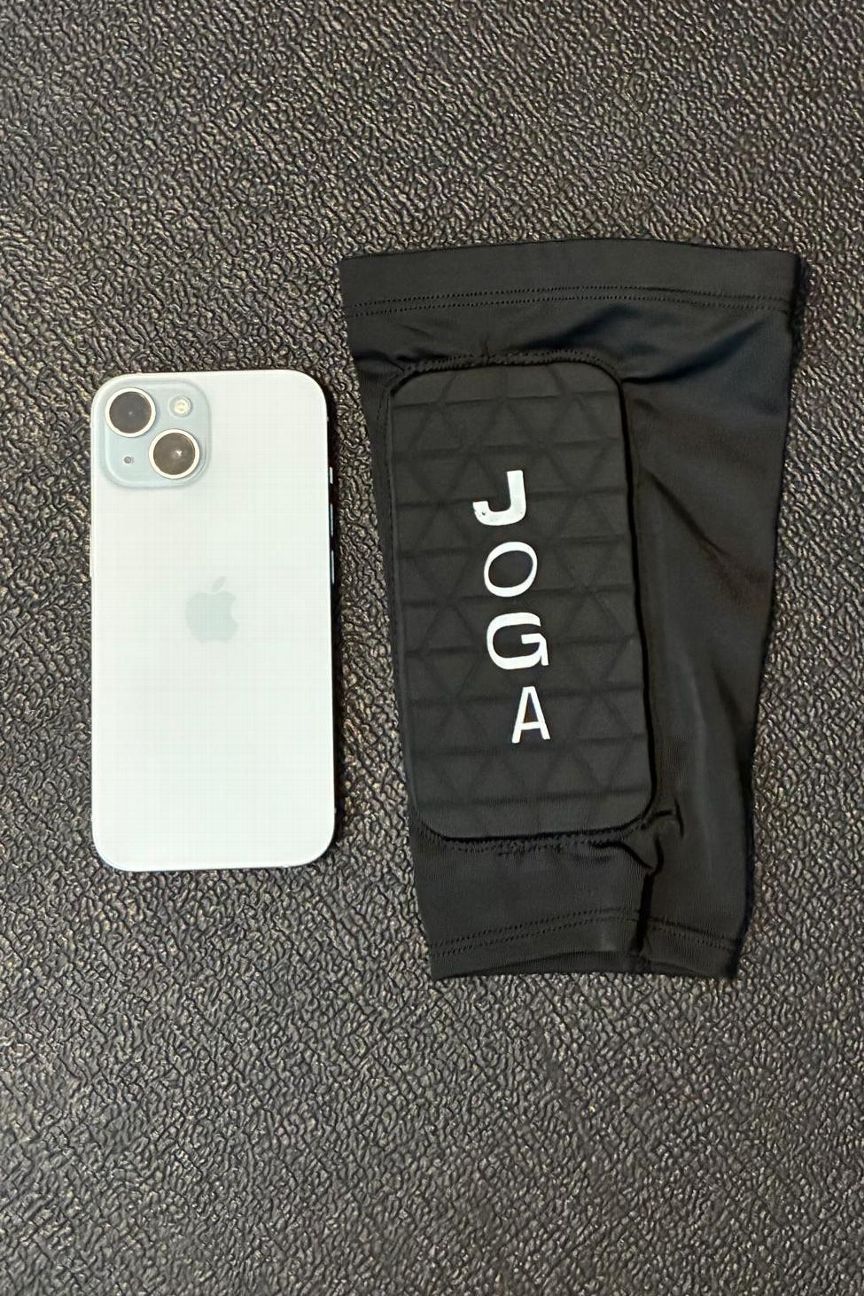
“We were the first ones to make a mini shin pad that you could buy,” Zack Chislett told ESPN. “I was playing nonleague at the time, my brother Ethan was playing for AFC Wimbledon, and we noticed that pads were getting smaller and smaller, but there was no-one giving players an option to buy them. They were just using anything they could find in the physio’s bag, so the demand was obviously there.”
But why do young players want their shin guards to be so small and lacking in protection?
“When you’re training the whole week without shin pads and you then put the big pad on, sometimes with ankle pads, on a Saturday, it doesn’t feel natural like when you’re training,” Zack said. “Some players will feel better with the big shin pad, but a lot of the younger, more attacking players don’t feel that way and they don’t want to feel as restricted when they go on the pitch.
“And the game has changed, 100%. The tackles aren’t coming in like they used to, it isn’t as aggressive or as physical. I’m 23, and players of my generation just don’t want to wear big shin pads — it would be like wearing old, heavy leather boots. It just isn’t going to happen.”
The likes of Welbeck and Van Dijk are being usurped by players such as Saka, Iwobi, Grealish and Joao Pedro when it comes to the size and protective elements of their shin pads.
Perhaps Holtby’s injury will prompt some players to think about the risks of playing without suitable protection and a high-profile injury at this summer’s World Cup could also lead to FIFA imposing stricter guidelines on what can, and can’t, be worn by players. But right now, footballers are putting risk to one side in favour of speed and freedom of movement, so shin pads could get smaller and smaller.
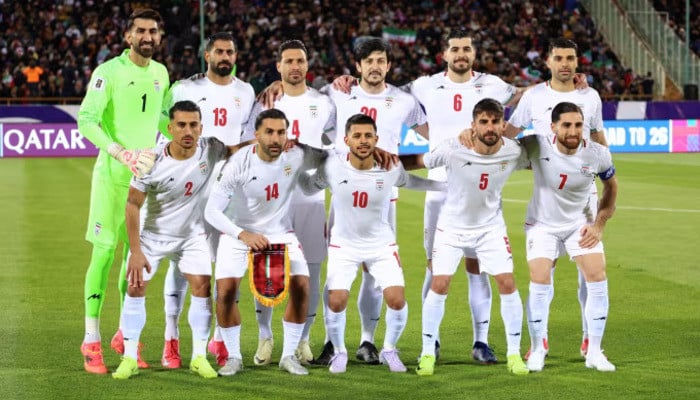
Secretary of State Marco Rubio said on Thursday Washington had no objections to Iranian players participating in the 2026 Fifa World Cup but he added the players will not be allowed to bring with them people with ties to Iran’s Islamic Revolutionary Guard Corps (IRGC).
“Nothing from the US has told them they can’t come,” Rubio told reporters.
President Donald Trump also said his administration “would not want to affect the athletes” in comments he made at the White House.
The 2026 soccer World Cup is set to begin on June 11 across the United States, Mexico and Canada.
Paolo Zampolli, a Trump envoy who has no official connection with the World Cup, had earlier suggested that Italy should replace Iran at the tournament.
“The problem with Iran would be not their athletes. It would be some of the other people they would want to bring with them, some of whom have ties to the IRGC. We may not be able to let them in but not the athletes themselves,” Rubio said.
“They can’t bring a bunch of IRGC terrorists into our country and pretend that they are journalists and athletic trainers,” Rubio added. Washington has designated the IRGC as a “foreign terrorist organisation.”
Currently there is no suggestion Iran will withdraw or be banned from the tournament that Italy missed out on.
After the start of the Iran war, Iran requested that Fifa move the team’s three group matches from the US to Mexico, which was rejected.
The US and Israel attacked Iran on February 28. Iran responded with its own strikes on Israel and Gulf states with US bases. US-Israeli strikes on Iran and Israeli attacks in Lebanon have killed thousands and displaced millions. A fragile ceasefire in the Iran war began over two weeks ago.
NEWYou can now listen to Fox News articles!
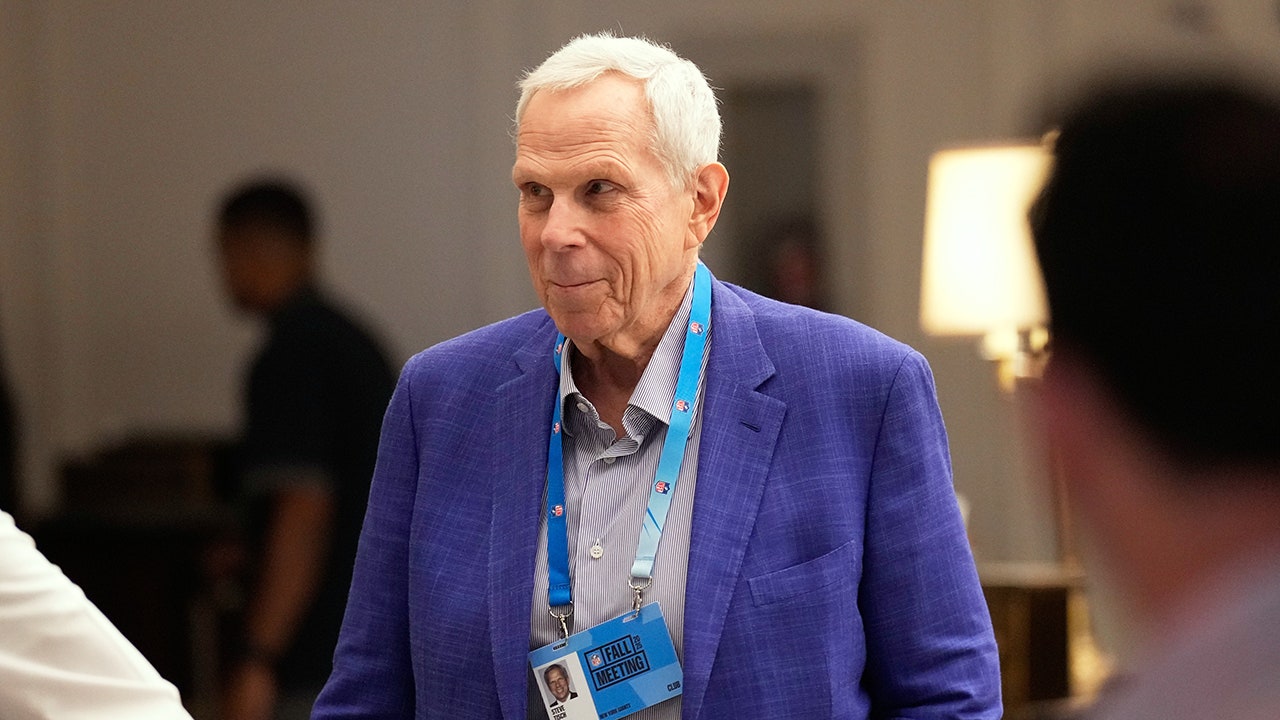
Cameras showed former New York Giants co-owner Steve Tisch in the team’s draft room Thursday night during the first round.
At one point, Tisch was seen standing near Giants head coach John Harbaugh. Despite no longer holding a majority stake in the NFL franchise, Tisch remains the Giants’ chairman of the board.
ESPN obtained an NFL memo last month detailing plans by Steve Tisch and his siblings to transfer their stake in the Giants to trusts for their children.
CLICK HERE FOR MORE SPORTS COVERAGE ON FOXNEWS.COM
New York Giants co-owner Steve Tisch warms up before the NFL game between the Washington Redskins and New York Giants at Met Life Stadium in East Rutherford, N.J., on Oct. 28, 2018. (Rich Graessle/Icon Sportswire)
“Prior transfers to these Trusts were completed pursuant to 2023 and 2024 Finance Committee approvals,” the memo stated. “The Sellers now propose to transfer their entire remaining interests, totaling 23.1% of the Club, to the Trusts. … Following the transactions, the Sellers will no longer own any interest in the Club.”
It was not clear if the transfer requests were in any way related to Tisch’s name appearing in the Epstein files released by the U.S. Justice Department in January. Tisch’s name came up more than 400 times in the files. Tisch at the time said he knew Epstein but denied visiting Epstein’s island.
As for draft night, the Giants made what some viewed as an unconventional pick at No. 10, selecting offensive lineman Francis Mauigoa.
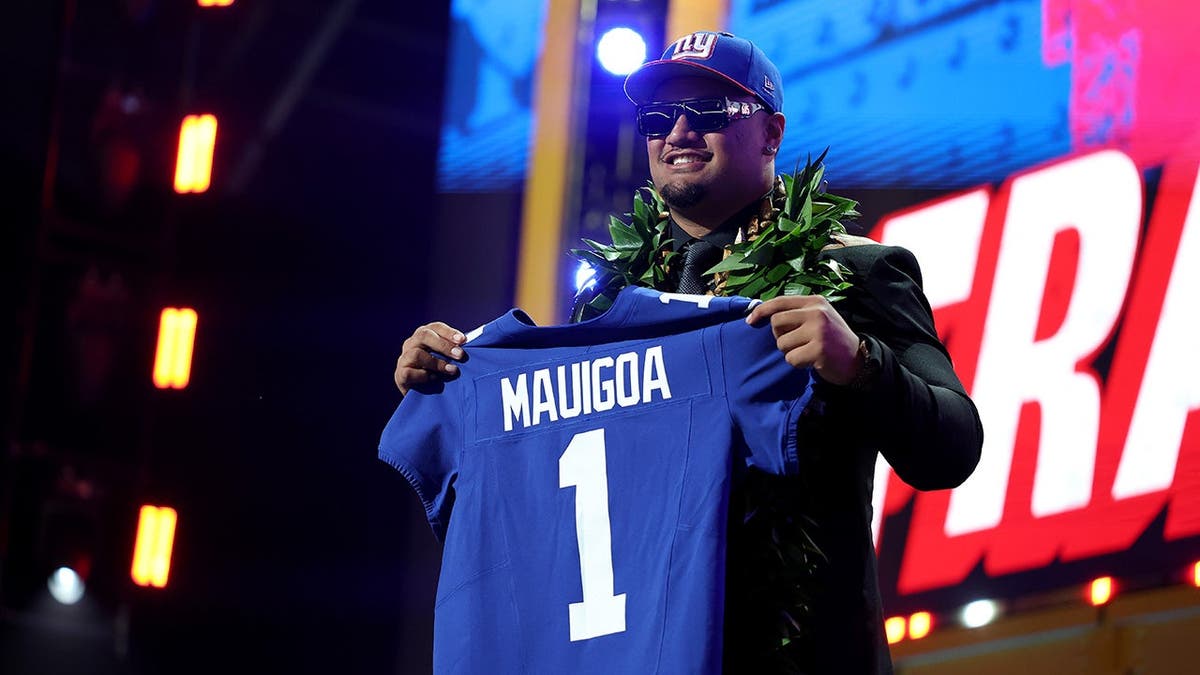
Francis Mauigoa of Miami celebrates after being selected as the tenth overall pick by the New York Giants during the first round of the 2026 NFL Draft at Acrisure Stadium in Pittsburgh, Pa., on April 23, 2026. (Emilee Chinn/Getty Images)
Before that, the Giants added another piece to their pass rush, selecting hybrid edge/off-ball linebacker Arvell Reese at No. 5.
Reese earned All-American honors at Ohio State and finished his first season as a full-time starter with 6.5 sacks.
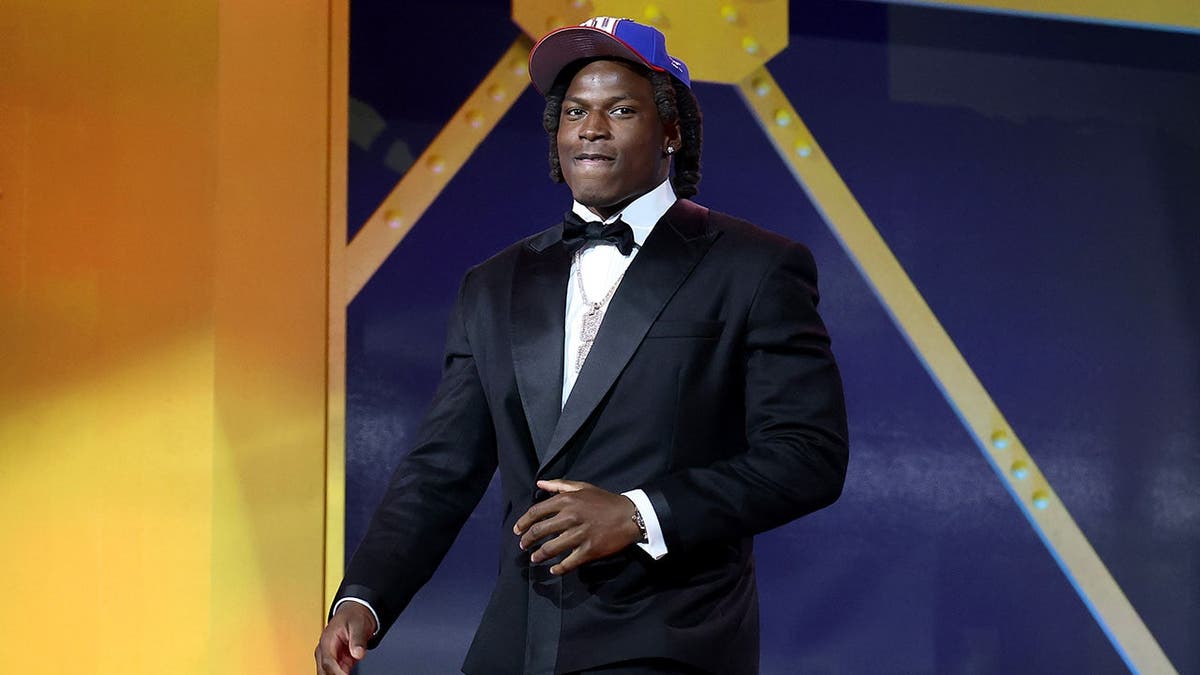
Arvell Reese of Ohio State celebrates after being selected as the fifth overall pick by the New York Giants during the first round of the 2026 NFL Draft at Acrisure Stadium in Pittsburgh, Pa., on April 23, 2026. (Emilee Chinn/Getty Images)
CLICK HERE TO DOWNLOAD THE FOX NEWS APP
Reese is set to join a pass rush that includes Brian Burns, Abdul Carter and, likely, Kayvon Thibodeaux.
Follow Fox News Digital’s sports coverage on X, and subscribe to the Fox News Sports Huddle newsletter.
NEWYou can now listen to Fox News articles!
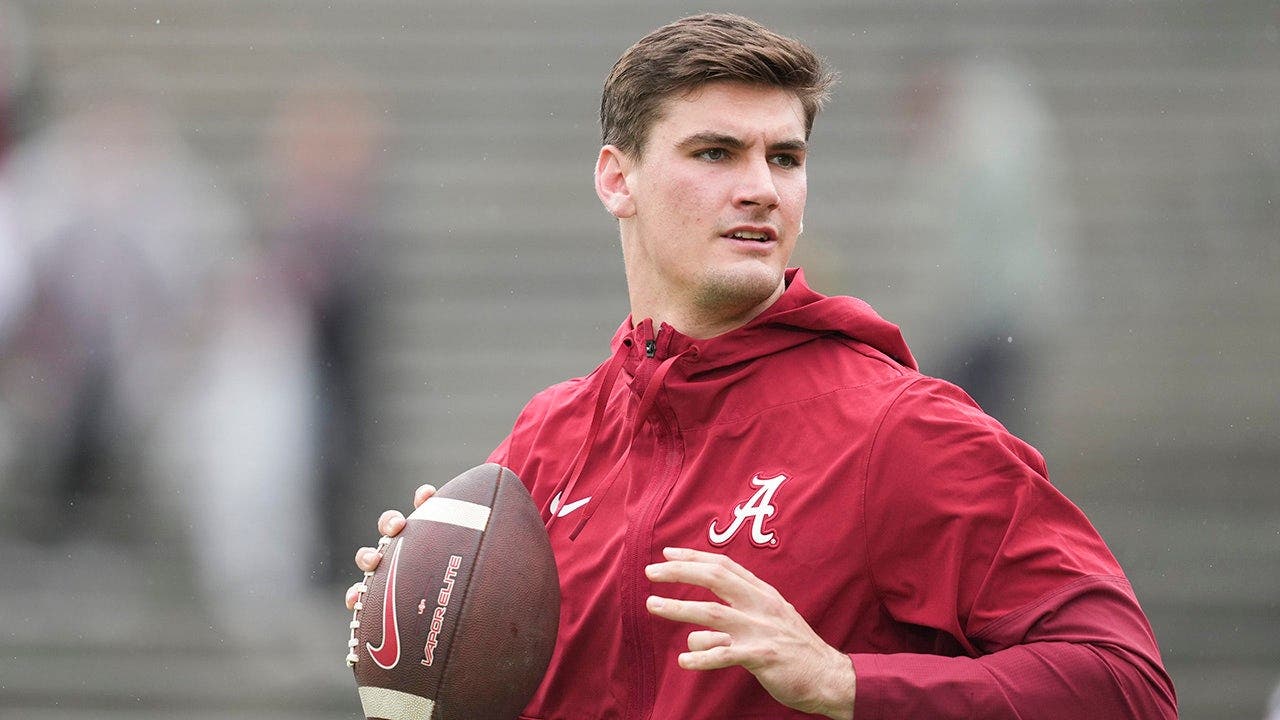
One of the most intriguing stories entering the first round of the NFL Draft was where Alabama quarterback Ty Simpson might land. Well, fans got their answer sooner than they expected.
The Los Angeles Rams surprisingly selected Simpson with the No. 13 pick in the 2026 NFL Draft.
The selection isn’t completely out of left field and is arguably the best-case scenario for Simpson. The Rams have Matthew Stafford as their starter for 2026, but Stafford has flirted with the idea of retirement each of the past two offseasons. It’s clear the clock is ticking on his NFL career.
CLICK HERE TO DOWNLOAD THE FOX NEWS APP
The Los Angeles Rams pulled a stunner and drafted Alababam QB Ty Simpson with the No. 13 pick in the NFL Draft. (CFP/Getty Images)
Now, Simpson gets to sit behind one of the NFL’s best veteran quarterbacks, learn the position while adapting to life in the NFL, and not face immediate pressure to succeed. Additionally, the Rams are one of the most well-run franchises in the league right now. Sean McVay is an elite head coach who led the team to a Super Bowl victory to cap the 2021 season and just had the team within one win of another Super Bowl berth before falling to the Seattle Seahawks in the NFC Championship.
ZERO BS. JUST DAKICH. TAKE THE DON’T @ ME PODCAST ON THE ROAD. DOWNLOAD NOW!
The most surprising aspect is the Rams looking toward the future, quite frankly. This is a team that has had no problem trading away first-round picks to make its team the best it can be each season. It seemed most likely the team would use the No. 13 pick to improve its team for next season, which could be Stafford’s last. Instead, the team decided to put itself in position for Stafford’s retirement without skipping a beat.
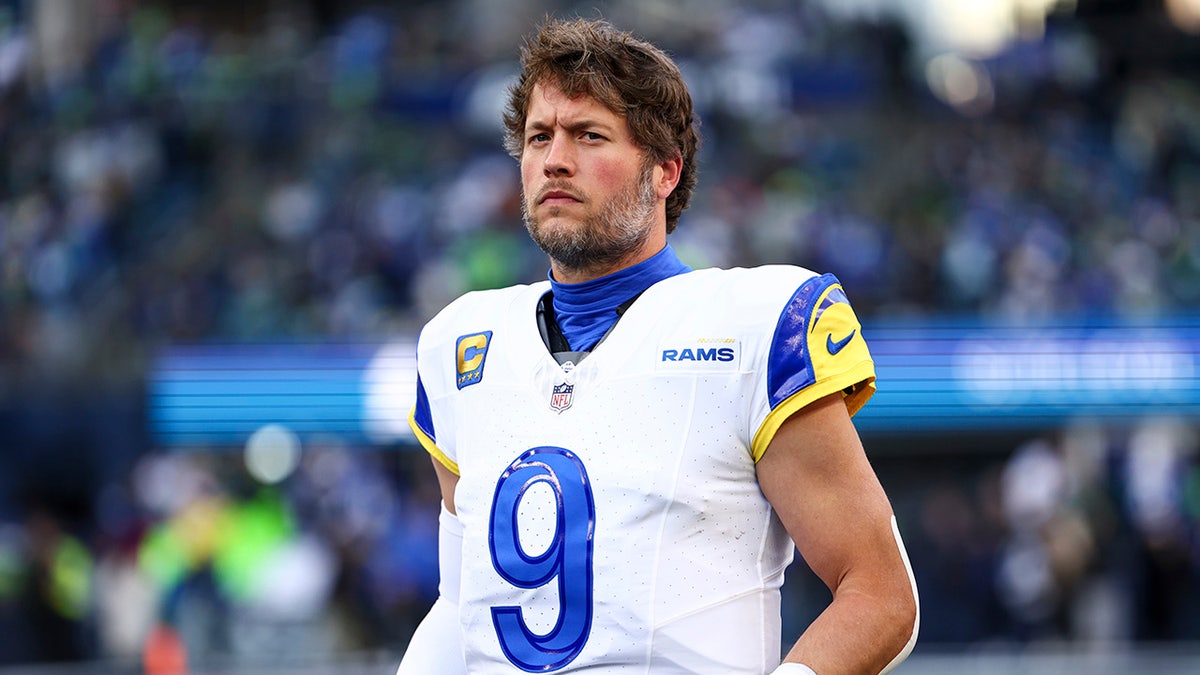
Los Angeles Rams QB Matthew Stafford, now 38-years-old, has flirted with retirement after each of the past two seasons. (Kevin Sabitus/Getty Images)
There were several surprises in the first 13 picks of the 2026 NFL Draft: the Cardinals taking Notre Dame running back Jeremiyah Love at No. 3, the Titans selecting Ohio State wide receiver Carnell Tate at No. 4, the Kansas City Chiefs trading up to take LSU cornerback Mansoor Delane at No. 6 and even the Cowboys trading up one spot to make sure they drafted Ohio State safety Caleb Downs at No. 11.
CLICK HERE FOR MORE SPORTS COVERAGE ON FOXNEWS.COM
But the Rams completely abandoning their recent strategy (usually trading away first-round picks and loading up for now) to select Stafford’s heir apparent is easily the biggest early shock of the 2026 NFL Draft.


North India cotton yarn steady despite continued push by spinners

The WIRED Gear Team’s Tips on Ways to Save Money

Bangladesh, EU sign Partnership and Cooperation Agreement

-

 Fashion1 week ago
France’s LVMH Q1 revenue falls 6%, shows resilience amid Iran war
-

 Entertainment1 week ago
Is Claude down? Here’s why users are seeing errors
-

 Sports1 week ago
PSL 11: Peshawar Zalmi win toss, opt to field first against Quetta Gladiators
-

 Tech1 week ago
CYBERUK ’26: UK lagging on legal protections for cyber pros | Computer Weekly
-
 Business1 week ago
PepsiCo earnings beat estimates as North American food business improves
-

 Sports5 days ago
WWE WrestleMania 42 Night 2: Live match results and analysis
-

 Fashion1 week ago
Raymond unveils luxury Chairman’s Collection Store in Mumbai
-

 Sports5 days ago
NCAA men’s gymnastics championship: All-time winners list